Restructuring that changes how things work, not just the chart
These are the situations that most often bring people to us - you'll likely recognise one or two.
- Restructured on paper, not in practice
- Designing a structure around what comes next
- Teams that slipped back into old patterns
- A structure people help design and own
- The people side, not just the process
- Pulling the old fragments into one whole
- Leaders living the change they have to lead
- A previous restructure that created new problems
Organisational restructuring in practice
No two organisations face the same restructuring challenge. These examples draw on experience helping leaders restructure around how the whole organisation needs to work, not just the shape of the chart.

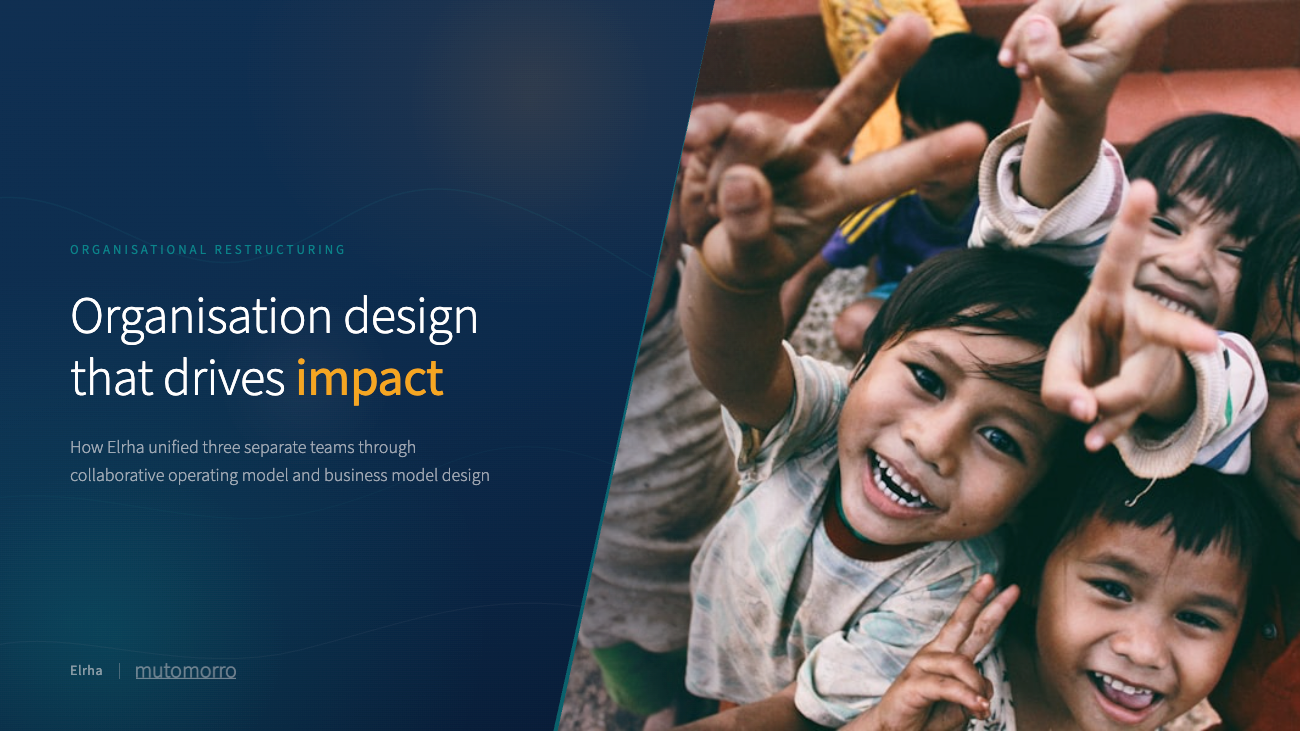
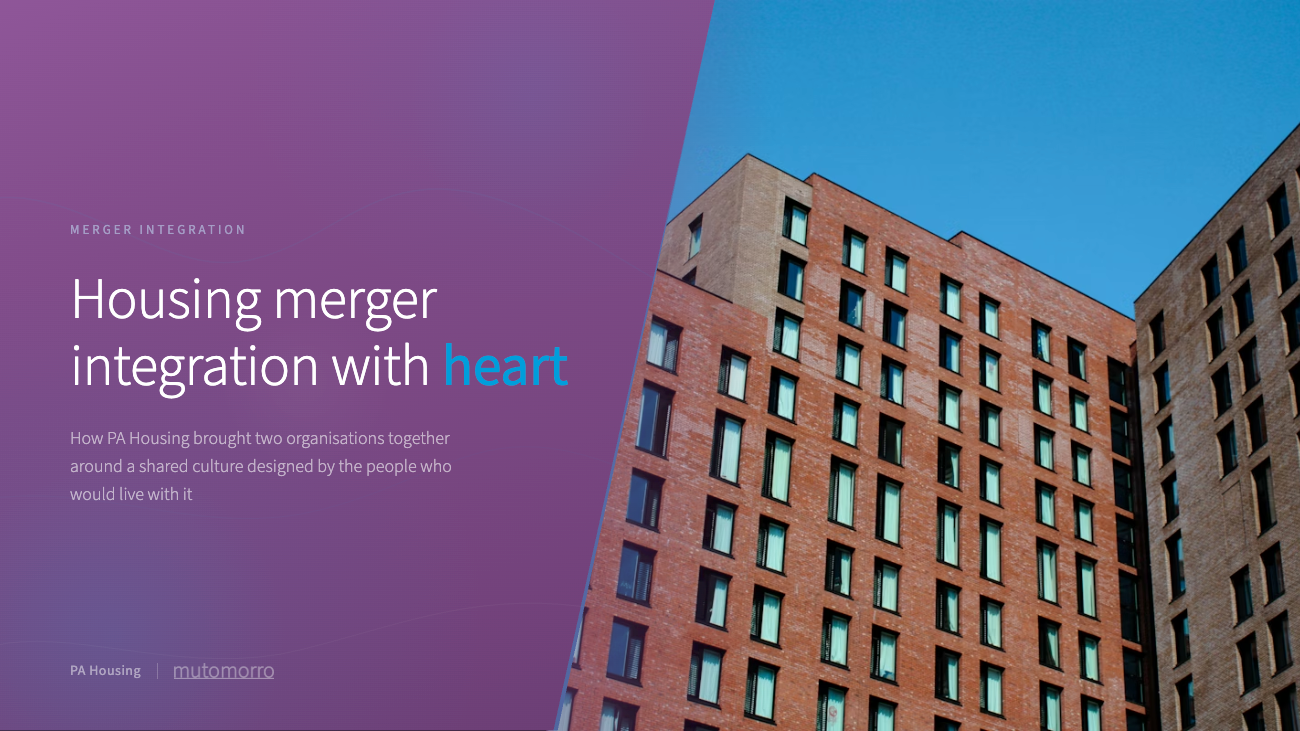
From new structure to new ways of working
A new structure on paper is the easy part. Start with how the work and the relationships actually need to shift.
- ClarifyRestructure Readiness ReviewSee what's really shiftingExplore more
- DesignRestructure Blueprint DesignDesign the restructure as a wholeExplore more
- TransitionRestructure Implementation ProgrammeSupport the real transitionExplore more
- SettleGuarding the New StructureKeep adapting as needs changeExplore more
Recognise your situation?
Let’s talk about what this could look like for your organisation.





























How we restructure organisations
A restructure usually starts with a trigger - costs that have to come down, a merger to absorb, growth the current shape can't carry. The danger is rushing to a new org chart before you're clear on what the structure actually needs to do. So that's where we start: with the work, not the boxes.
Our restructuring runs through four stages - getting clear on what the structure needs to do, designing the new shape, making the transition, and helping it settle so it doesn't unravel. They're not rigid. Some organisations need all four; others just need help at the point where things have stalled. We start wherever you are.
Get clear on what the structure needs to do
Before redrawing anything, we run an organisational structure review that starts from the trigger - the cost pressure, the merger, the growth - and asks what the new shape actually has to achieve. We look at where the current structure is getting in the way: the handoffs that snag, the decisions that stall, the accountability that's gone fuzzy. The point isn't to judge the old shape - it's to be precise about the work the structure exists to enable.

- Starting from the trigger and what the restructure has to achieve
- Finding where the current shape gets in the way of the work
- Mapping the handoffs, decisions and accountability that snag
- Being precise about the work the structure needs to enable
What you get
A clear brief for the redesign - what the new structure has to do, before anyone argues about the chart.
Design the new shape
Now we design the reorganisation to match that brief. We work through spans and layers, reporting lines, and where accountability actually sits - so decisions land with the people close enough to make them well. And we design the connections between teams, not just the boxes, because most structures fail at the seams, where work has to cross from one team to the next. Where it touches your operating model, we keep the two in step.

- Designing the structure around what the organisation needs to do
- Setting spans, layers and reporting that fit the work
- Putting accountability where decisions are best made
- Designing the connections between teams, not just the boxes
What you get
A new shape that fits the work - clear on who owns what, and how the parts join up.
Make the transition
Moving to a new structure is where a reorganisation gets hard - you have to change the shape while the work carries on. We plan a phased transition that manages the disruption rather than dropping it on everyone at once. And we handle the human side, which is the part most restructures underplay: the uncertainty, the changed roles, the real sense of loss. People need to know where they stand, and to hear it straight.

- A phased transition that keeps the work going
- Managing disruption instead of dropping it all at once
- Handling the uncertainty, changed roles and sense of loss
- Telling people where they stand, straight and early
What you get
A transition people can navigate - the new structure stood up without the work or the trust falling over.
Help the new structure settle
A new structure isn't done when the chart changes - it's done when people work the new way without thinking about it. Left alone, organisations drift back to the old shape, the familiar lines, the workarounds everyone knew. So we stay long enough to help the new patterns of working actually form and bed in. Done well, this is what spares you the next reactive restructure a year or two down the line.

- Helping the new shape bed in rather than revert
- Getting new patterns of working to actually form
- Catching the quiet drift back to the old structure
- Sparing you the next reactive restructure down the line
What you get
A structure that holds - working the way it was designed to, long after the reorganisation is over.
A restructure that holds - because structure and conditions are designed together
Our organisational restructuring consultancy works with the conditions a new structure depends on - not replacing the legal and HR process, but designing the collaboration, decisions and knowledge flow that decide whether the restructure actually lands.
The chart changes in a day. The organisation takes much longer to catch up.
A restructure moves more than reporting lines - it moves how decisions travel, where knowledge sits, how people collaborate; when those invisible shifts are not designed for, the new structure gets pulled back into the old ways.
We work alongside the structural change, designing the conditions around it
We complement the legal and HR process with the design work that makes a restructure function - the shifts in decision-making, collaboration and knowledge flow the new structure demands.
A restructure that lands - in how people work, not just where they sit
When structure and conditions change together, the restructure stops being something the organisation endures and starts being something it benefits from - and it holds, rather than drifting back.
Restructuring is more than the boxes
Our approach to organisational restructuring grows from something broader: a conviction that organisations work more like living systems than machines. Move the boxes and the relationships don't simply follow - people carry old patterns into new shapes. So a restructure that lasts works with how the organisation actually behaves, not just how it's drawn.
It's a way of seeing, and it shapes how we approach organisational restructuring - not as an isolated fix, but as something shaped by the whole organisation, and shaping it in turn. Our philosophy page is where the fuller picture comes together.
40%
productivity drop during major restructures
Workplace research 2025
1 in 3
major change initiatives fully meet their goals
ChangingPoint
70-79%
success rate when employees are engaged early
Workplace research 2025
42%
of employees feel included in change strategy
Gartner 2024
Common questions about organisational restructuring
They're complementary, not competing. Your HR team and legal advisors handle the essential structural and compliance work - consultation, TUPE, redundancy processes, contractual changes. We work alongside that process on the design and conditions side: how the new structure needs to function, what shifts in collaboration and decision-making the restructure creates, and how to support the organisation through the transition so the new design works in practice. The two workstreams reinforce each other - the structural change is sound, and the conditions are designed to support it.
Organisational design is the upstream question: how should this organisation work? Restructuring is one downstream answer: how do we move from here to there? Design without restructuring is common - sometimes the flows and conditions need reshaping without moving any boxes. Restructuring without design is riskier - you're changing the structure without understanding what the organisation needs the new arrangement to enable. We'd always recommend starting with the design question, even when a structural change is already in motion. If you're at that earlier stage, our organisational design consultancy is where that work lives.
That's one of the most common starting points we see. Restructures that disappoint often changed the structure but didn't account for what needed to shift around it - how decisions travel, how knowledge flows, how teams collaborate across the new boundaries. The structure is in place but the organisation hasn't learned to work within it. We can help you understand what the current design needs to function - and often, meaningful changes can be made to the conditions without restructuring again. If the challenge feels more cultural than structural, our culture change consultancy may be a better fit.
It depends on the scope and pace of the structural change. If a restructure is already in motion, we can work alongside it from wherever it's got to - the earlier the better, but it's never too late to bring in the conditions work. A focused piece of work might take 3-6 months. A larger restructure with implementation support typically unfolds over 6-12 months. The assessment and design phases are often faster than people expect; the transition and embedding is always longer - because changing how people work together takes more time than changing where they sit.
Often, the most effective restructuring involves less structural upheaval than people expect. When the design question comes first - what does the organisation need to be good at? - the answer isn't always "move the boxes." Sometimes the structure is broadly sound but the conditions around it need reshaping: decision patterns, information flow, collaboration across boundaries. These changes can shift how the organisation works without the disruption and fatigue of another full structural reorganisation.
The restructure is complete, and so is the capability to keep developing from it. We build internal understanding of how the organisation works as a connected system - so your leaders can read when the structure is creating friction, sense when conditions need adjusting, and respond without external support. An organisation that understands its own patterns can keep adapting its design.
Explore organisational restructuring



Why the organisational side is the hard part
Most of what stops a good plan is not the plan. It is the join between it and the organisation - who decides what, how work moves between teams, what people believe is really being asked of them. That is the part we work on, and it is what makes a change hold once we have gone.
Want to explore how this could work for your organisation?
Every organisation is different, so we always start with a conversation. No pitch, no obligation - just an honest discussion about where you are and whether our approach feels right.