Understanding what helps people thrive at work
These are the situations that most often bring people to us - you'll likely recognise one or two.
- Experience that matches what you stand for
- Engagement scores that don't match the effort
- Retaining people who hold deep institutional knowledge
- Managers stretched too thin to lead well
- A gap between what's said and what's felt
- An experience for everyone, not just head office
- Feedback that pulls in different directions
- Conditions for work people are proud of
Employee experience in practice
No two organisations face the same employee experience challenge. These examples draw on experience helping leaders shape the employee experience as a connected whole, across the moments that really matter.
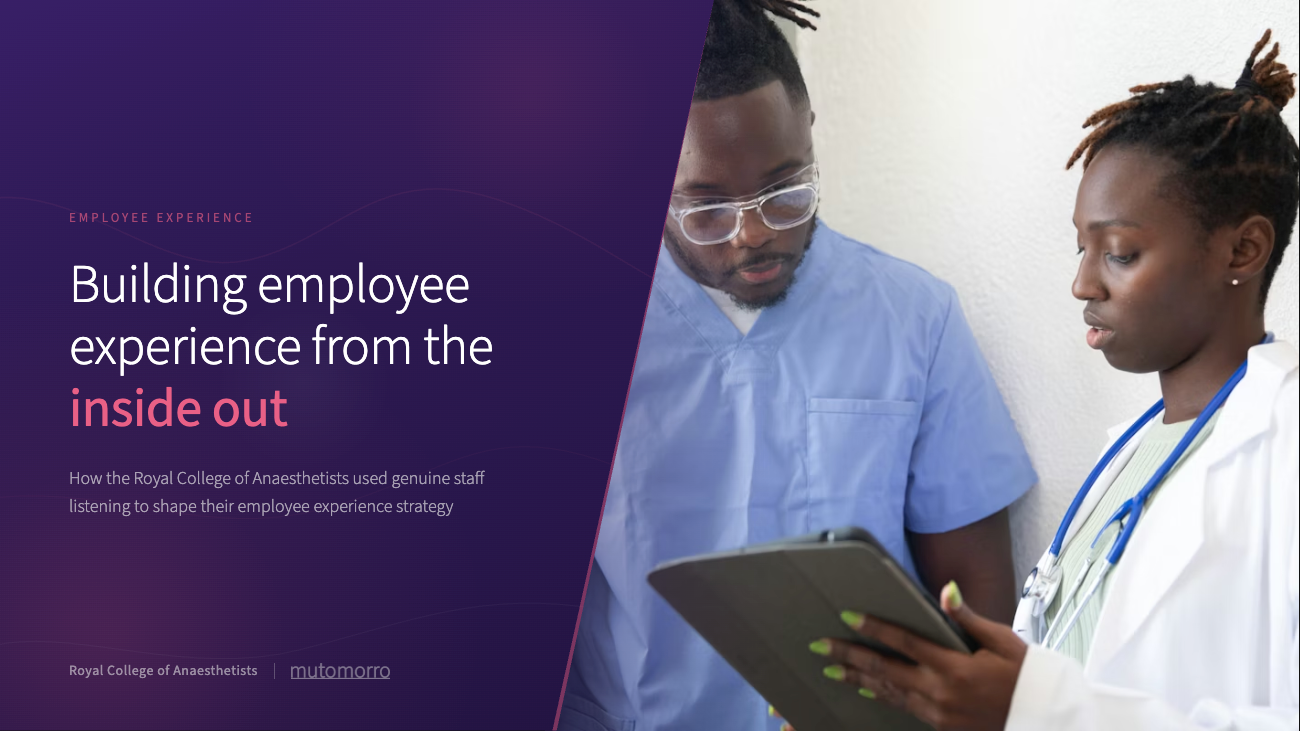
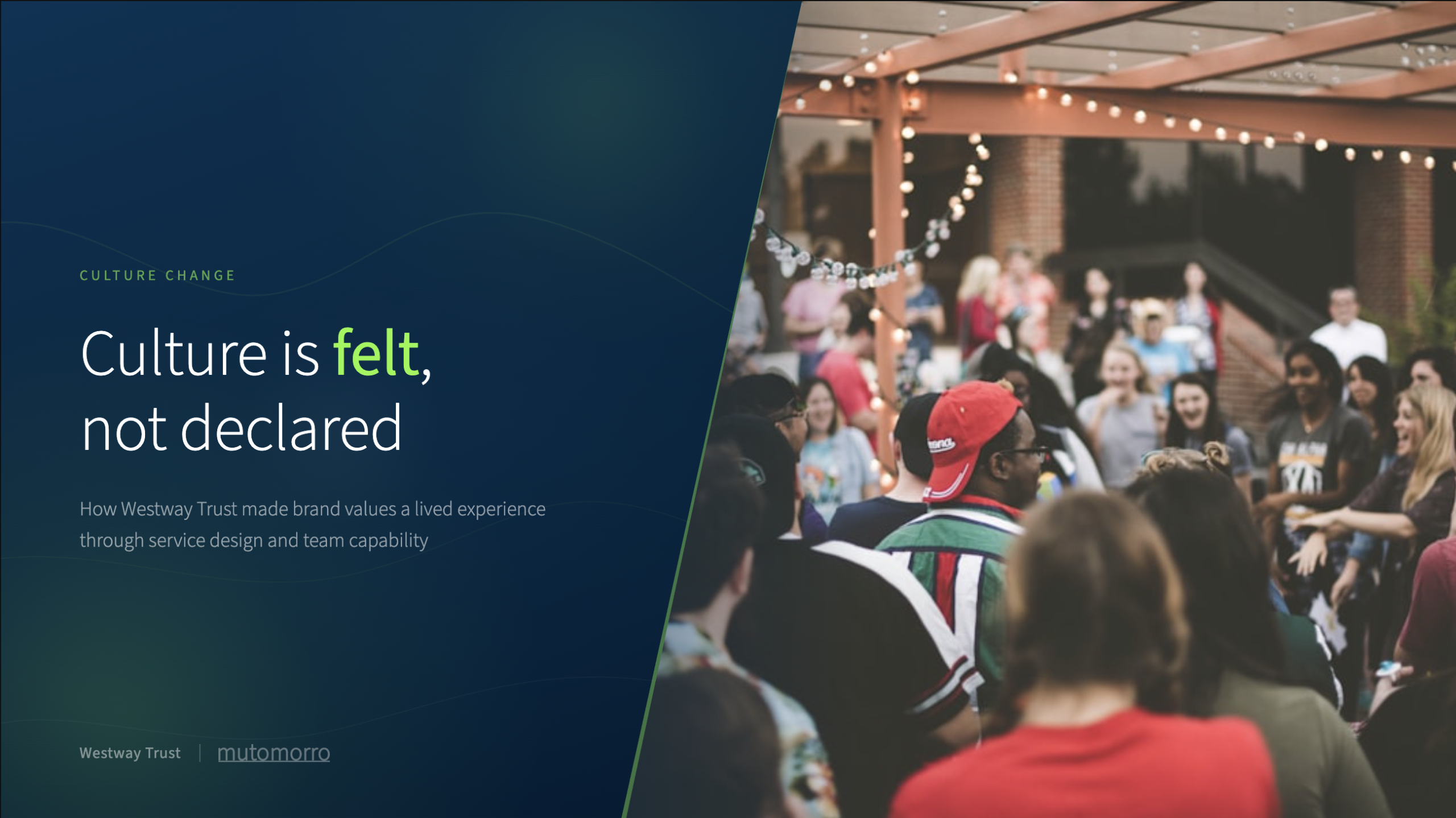
Shaping the experience people actually have
Engagement scores tell you something's off. Seeing the experience behind them tells you what.
- DiagnoseEmployee Experience AuditTrace experience to conditionsExplore more
- RedesignEmployee Experience BlueprintChange the conditions that matter mostExplore more
- EmbedEmployee Experience RolloutBuild the capability to keep improvingExplore more
- ListenEmployee Listening & ResponseUnderstand the lived experienceExplore more
Recognise your situation?
Let’s talk about what this could look like for your organisation.


















How we improve employee experience
We don't start with a survey. We start by understanding the conditions shaping how people really experience your organisation - the patterns no survey question quite captures. Then we work with you to change the things that matter most.
Our work runs through four stages - hearing how it really feels to work here, tracing it back to what's causing it, changing what matters most, and building the habit of keeping it good. They're not rigid. Some organisations need all four; others just need help where the experience has dipped. We start wherever you are.
Trace it back to what's causing it
Listening shows what the experience feels like; diagnosis shows why. We trace the patterns people describe back to the conditions creating them - how workload is shared, how decisions get made, how managers are supported, how information flows, how well purpose connects to daily work. Often the things shaping experience most aren't "EX issues" at all - they're structural decisions, leadership habits or operational rhythms nobody thought of as experience design. That's the point: the experience nobody designed is created by the conditions nobody examines.

- Mapping the conditions across the key dimensions of organisational health
- Tracing experience patterns back to their root causes
- Prioritising the conditions shaping experience most powerfully
- Comparing what the organisation intends with what its conditions produce
What you get
A diagnosis that connects how people feel to why - traceable to specific conditions that can be changed, not vague themes that resist action.
Change the conditions that matter most
With the conditions mapped, we work with you to redesign the ones that will shift the experience most. This isn't a new initiative - it's changing how the organisation actually operates, so the daily experience changes as a result. Some changes are structural (how workload is shared, how decisions get escalated), some cultural (what gets recognised, how feedback flows), some practical (what managers are expected to do, and whether they're given the time). All of them go after the root conditions, not the visible symptoms.

- Co-design sessions with the leaders and teams closest to what's changing
- Practical redesign of specific conditions - workload, decisions, management support, information flow
- Prototyping and testing changes before rolling them out
- Keeping experience improvements aligned with your broader priorities
What you get
Practical changes to the conditions that shape daily experience - designed with the people who live in them, tested before scaling.
Build the habit of keeping it good
Employee experience isn't a project you finish. The conditions that create it keep shifting - as you grow, as priorities change, as new pressures arrive - so the organisations with the strongest experience are the ones that can keep reading the atmosphere and responding. We build that capability before we leave: leaders who spot the patterns early, managers who see how their own practices shape the conditions, teams who can name what's working and what isn't, and simple, sustainable habits for listening, diagnosing and adjusting - so the experience keeps improving long after we've gone.

- Building internal capability to keep assessing the experience
- Manager development focused on how their practice shapes the conditions
- Simple, sustainable listening and response practices
- Handing over the tools and frameworks to keep improving
What you get
An organisation that can read its own atmosphere and keep improving the conditions that create it - without external help.
Hear how it really feels to work here
Before you can improve the experience, you need to understand it - not through survey scores, but through the stories and frustrations underneath them. What does it really feel like to work here? Where do people thrive, and where do they struggle? So we listen across the organisation, not just to what people say but to the conditions behind it. "I don't have time to think" is a workload condition. "Decisions happen without us" is an information-flow one. "My manager tries but can't help" is about support. Together they map the atmosphere - what's creating it, and where the biggest opportunities to change it are.

- Deep listening across roles, levels and locations - conversation and observation, not just focus groups
- Mapping that connects people's stories to the conditions behind them
- Reading your existing data (surveys, exit interviews, absence) through a conditions lens
- Finding where stated values and lived experience are furthest apart
What you get
A clear, honest picture of the lived experience - what's shaping it, where it's working, and where it's creating the frustrations people describe.
Conditions, not programmes
We change how the organisation works, not what sits on top of it.
Systemic, not symptomatic
We trace experience back to its root causes, not just its visible symptoms.
Designed with, not for
People across the organisation shape the changes, because they understand the experience best.
Capability-building
We leave you with the ability to keep reading and improving the experience, without depending on us.
People thrive when the organisation around them is joined up
Our employee experience consultancy works with the conditions that shape daily working life - the pace, the decisions, the support and the flow of information - not another initiative on top, but a change to how the organisation actually works.
The experience is shaped by conditions nobody thinks of as "experience"
Think of employee experience as the organisation's atmosphere - the combined effect of workload, trust, clarity and how recognition and opportunity move - not something wellbeing programmes can shift on their own.
We work with the conditions that create the lived experience
We help you see what is really shaping how people experience work - workload, manager support, how decisions land, how information flows - and design practical shifts to those conditions.
An organisation where good experience is a natural consequence, not a programme
When the conditions support it, good experience stops being something you manage through initiatives and becomes something the organisation produces naturally - because the conditions match the words.
People don't experience policies. They experience the whole thing.
Our approach to employee experience grows from something broader: a conviction that organisations work more like living systems than machines. Experience isn't a set of touchpoints to optimise one by one. It's how the whole feels to move through - how the parts of the organisation join up, or don't, in an ordinary working day.
It's a way of seeing, and it shapes how we approach employee experience - not as an isolated fix, but as something shaped by the whole organisation, and shaping it in turn. Our philosophy page is where the fuller picture comes together.
17%
higher productivity in organisations with positive employee experience
Gallup
21%
higher profitability in organisations with engaged teams
Gallup
59%
lower turnover in organisations with strong employee experience
Gallup
21%
global employee engagement - and falling
Gallup State of the Global Workplace 2025
Common questions about employee experience
Related, but different. Culture is the long-term pattern - the shared habits, values, and ways of working that characterise an organisation. Employee experience is what that culture feels like today, to the person living in it. We work with the conditions that create the lived experience - which often overlaps with culture, but focuses specifically on how things show up for people day to day. If the patterns you're noticing are more about the collective character of the organisation than the individual experience of working in it, our culture change consultancy works with that directly.
No. Surveys are a useful signal - but they're one input, not the whole picture. We help you understand what the survey scores are actually telling you by connecting the patterns in the data to the conditions creating them. Many organisations we work with find their survey becomes more useful after our work, because they can read it through a conditions lens rather than treating each score as an isolated problem to solve.
That's one of the most common starting points for the organisations we work with. The reason initiatives fade is usually that they're addressing the symptoms (the visible experience) without changing the conditions that create the symptoms. A wellbeing programme can't overcome a workload condition. A recognition platform can't replace the trust that comes from good management practice. We work at the conditions level - which is why the changes tend to be more durable. Where the friction is rooted in how work itself flows - decisions, hand-offs, autonomy at the point of delivery - our operational effectiveness work addresses those conditions directly.
We design specific indicators during the Redesign stage - some quantitative (changes in the patterns your existing surveys capture, retention data, absence patterns) and some qualitative (what people describe when asked about their experience, the stories managers tell about how work feels). The most important measure isn't a score. It's whether the conditions that were creating the problems have genuinely changed - and whether people can feel the difference. If you're thinking about building the internal capability to keep developing people and practices, our capacity building consultancy works with that.
Especially well. In dispersed and hybrid organisations, the conditions that shape experience become even more important - because you can't rely on proximity and informal interaction to compensate for conditions that aren't working. The experience of a remote team member is almost entirely determined by the conditions: how information reaches them, how decisions include them, how connection is maintained, and whether their contribution is visible. These are designable conditions, and they're where our work has the most impact.
The Listen and Diagnose stages typically take 6-10 weeks, depending on the size and complexity of the organisation. The Redesign stage varies significantly depending on the scope of conditions being changed - some shifts are quick (decision-making practices, meeting rhythms), while others are structural and take longer (workload distribution, management development). A realistic timeline for meaningful, embedded change is 6-12 months. But unlike initiative-based approaches, the changes are designed to be self-sustaining - they don't need relaunching.
Explore employee experience




Why the organisational side is the hard part
Most of what stops a good plan is not the plan. It is the join between it and the organisation - who decides what, how work moves between teams, what people believe is really being asked of them. That is the part we work on, and it is what makes a change hold once we have gone.
Want to explore how this could work for your organisation?
Every organisation is different, so we always start with a conversation. No pitch, no obligation - just an honest discussion about where you are and whether our approach feels right.