Scaling operations without losing what works
These are the situations that most often bring people to us - you'll likely recognise one or two.
- Outgrowing the systems that got you here
- Getting bigger without losing what makes you good
- New people absorbing culture, not just process
- Informal ways of working that stop scaling
- Keeping decisions fast as you grow
- Scaling impact without scaling complexity
- Readying the organisation for its next stage
- Operational foundations built for a mission-driven organisation
Scaling operations in practice
No two organisations face the same scaling challenge. These examples draw on experience helping leaders scale operations as a connected whole, so growth strengthens what works instead of fracturing it.
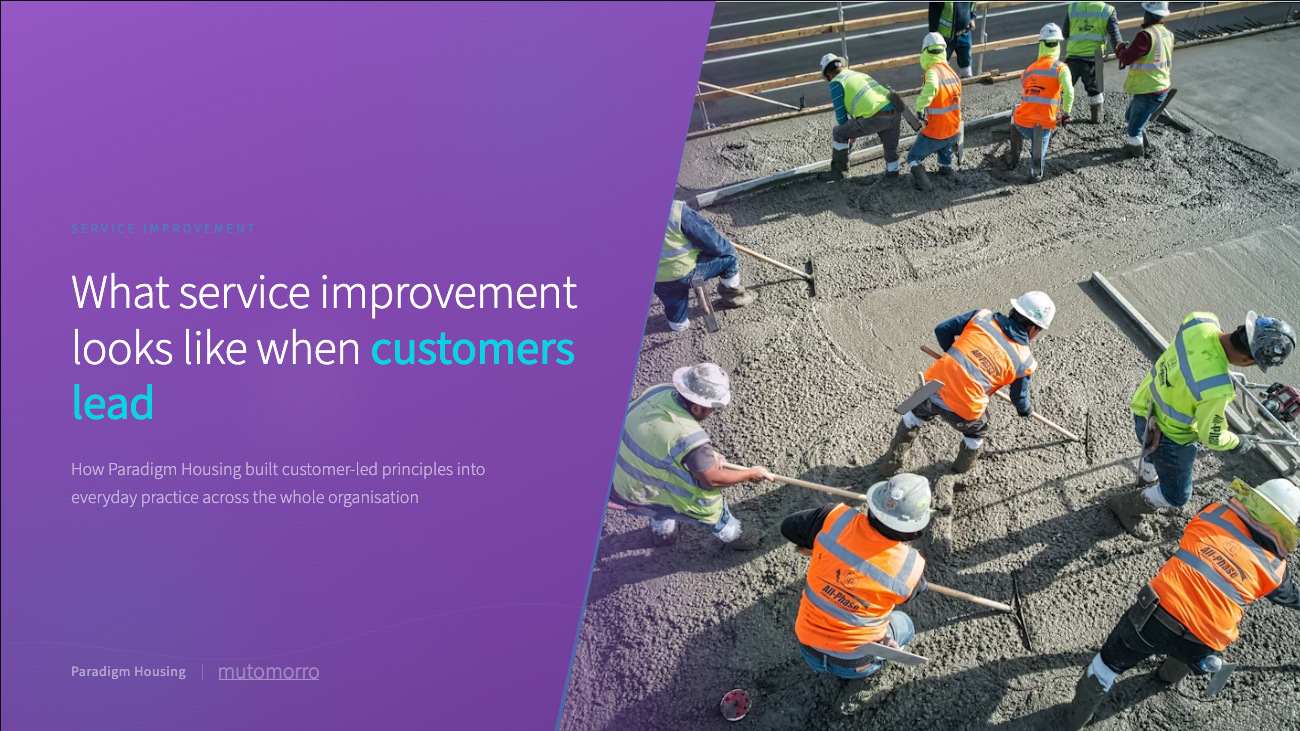
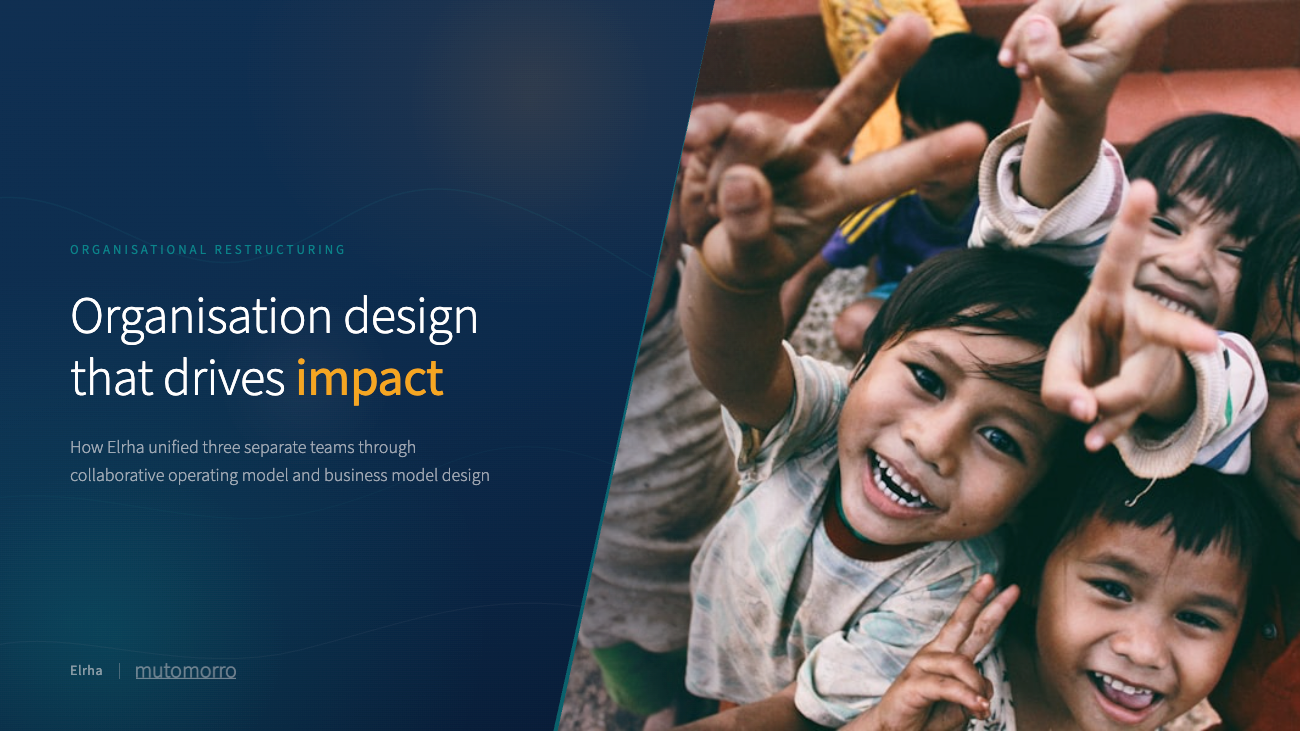
Scaling without losing what works
Scaling well starts with knowing what's worth protecting before you stretch it.
Recognise your situation?
Let’s talk about what this could look like for your organisation.






















How we scale operations
Growth happens to you. Scaling is the part you do on purpose - the deliberate work of functioning just as well at a bigger size as you did at a smaller one. The trick is getting bigger without losing the things that made you good in the first place. That's the work we do with you.
Our scaling work runs through four stages - understanding what's actually worth keeping, designing operations that hold at a larger size, growing deliberately rather than by accident, and leaving you able to take on the stage after this one. They're not rigid. Some organisations want all four; others just need a hand at the point where the current way of working has started to strain. We start wherever you are.
Understand what you're scaling
Before you grow, it's worth being clear about what makes the place work today - and what has to survive the journey. We run a scaling readiness assessment that reads the whole organisation before it's under strain: what's genuinely good and worth protecting, where the current way of working won't stretch to a bigger size, and which informal things are quietly holding everything together. Get this right and you grow what matters, rather than just scaling everything.

- A clear read on what makes the organisation work now
- Spotting where today's ways of working won't stretch
- Finding the informal glue that won't survive size
- Naming what's worth protecting as you grow
What you get
A clear-eyed picture of what you're actually scaling - what to keep, what to evolve, and where size will bite first.
Design to grow without breaking
A way of working built for thirty people rarely holds at a hundred. So we design for the organisation you're becoming, not the one you are - a scalable operating model where the operations, the structure and the everyday ways of working still function at a bigger size. The art is knowing what to formalise and what to leave well alone: enough structure to take the weight, not so much that you smother what makes the place good.

- Operations and structure designed for the size you're heading to
- Clear calls on what to formalise and what to protect
- Roles, decisions and handoffs that hold at scale
- Built for where you're going, not just where you are
What you get
An operating model designed for the next size up - sturdy enough to take the growth, light enough to keep what works.
Scale deliberately, not by accident
This is where scaling operations actually happens - and where managing growth on purpose pays off. We stay alongside you as the organisation gets bigger, helping it grow at a pace it can absorb rather than letting growth simply happen and hoping the place keeps up. We help you put the new ways of working in without losing the things that made you good, and support your people through what is, in the end, a real shift in what it feels like to work here.

- Growing at a pace the organisation can actually absorb
- Putting new ways of working in without dropping the old strengths
- Keeping decisions and information moving as you get bigger
- Supporting people through the shift in size
What you get
An organisation getting bigger on purpose - growing in a way it can carry, without losing what made it good.
Build an organisation that scales itself
The aim isn't to get you through this stage of growth - it's to leave you able to handle the next one without us. We spend the engagement building scalable capability into the organisation itself: leaders who can see the next size coming and prepare for it, teams who adapt their ways of working as they grow, and the habit of reading the strain early and adjusting before it bites. Scaling stops being a one-off project and becomes something the organisation simply knows how to do.

- Leaders who can see the next stage coming and ready for it
- Teams that reshape how they work as they grow
- The habit of catching strain early and adjusting
- Scaling treated as a skill the organisation owns
What you get
An organisation that knows how to grow itself - ready for the stage after this one, and the one after that, without us in the room.
Designed for your context
Scaling a housing association is not the same as scaling a tech company. We work with your reality, not a generic framework.
Conditions and machinery together
We build the operational foundations and work with the conditions that make them hold.
Capability-building
We work ourselves out of a job by building your ability to manage growth internally.
Purpose-first
Growth should deepen your impact, not dilute your identity.
Growth that strengthens the organisation, because the conditions grow with the size
Our scaling operations consultancy works with the conditions that growth changes - not just the processes and structures you add, but how decisions, information, trust and culture hold as the organisation gets bigger.
Growth changes the conditions, not just the size
Think of growth rings in a tree - each one records the conditions it grew in; organisations grow the same way, and when the conditions do not evolve with the size, the organisation gets bigger and more fragile at once.
We help you grow the conditions alongside the machinery
We help build the operational foundations you need - and the conditions that decide whether they hold: how decisions travel, how culture absorbs new people, how informal connections are replaced rather than lost.
An organisation that's bigger and still itself
When the conditions grow with the organisation, growth feels like strengthening rather than stretching - new people add to the culture, teams still collaborate, and the quality that built your reputation deepens.
Scaling reveals every weakness the organisation has been getting away with
Our approach to scaling operations grows from something broader: a conviction that organisations work more like living systems than machines. Scaling isn't bolting on more of the same machinery. What works at one size grew from a particular set of conditions - so growing well is as much about tending what made it work as adding capacity on top.
It's a way of seeing, and it shapes how we approach scaling operations - not as an isolated fix, but as something shaped by the whole organisation, and shaping it in turn. Our philosophy page is where the fuller picture comes together.
Common questions about scaling operations
Absolutely - and in many ways, it's more relevant for mission-driven organisations than for commercial businesses. Most scaling advice comes from the commercial growth world and doesn't translate well to organisations driven by purpose rather than profit. The challenges are different: you're scaling impact, not revenue. You're accountable to residents, beneficiaries, or communities, not shareholders. And the culture that drives your work is often the thing most at risk as you grow. We work specifically with organisations navigating this kind of growth.
Restructuring is about redesigning how the organisation is arranged - roles, teams, reporting lines, governance. Scaling operations is broader. It's about making the whole system work at a larger size - including structure, but also the conditions that determine whether any structure actually functions well: decision-making, information flow, culture, coordination, trust. If your challenge is specifically about restructuring, our organisational restructuring work addresses that directly. If it's about making the whole organisation work better as it grows, you're in the right place.
That's one of the most important questions in scaling - and one of the reasons we start with a thorough assessment. Some things need to evolve (the informal communication that worked at twenty people can't work at fifty). Some things need to be preserved and protected (the culture, the quality, the connection to purpose). And some things need to be deliberately redesigned (decision-making, governance, coordination). We work with your teams to understand which is which - because getting that wrong is how organisations lose what made them good. Where preserving culture through growth is the primary concern, our culture change consultancy works with the conditions that hold a culture together as the organisation evolves.
It depends on the pace and scale of growth. A focused piece of work - preparing for a specific growth phase - might take 3-6 months. A more sustained engagement, working alongside the organisation through an extended period of growth, might unfold over 12-18 months. The honest answer is that growth doesn't stop, so the question is really about building the internal capability to manage it well. Our role is to help establish that capability and then step back.
That's the pattern we hear most often. The operational machinery gets built - processes, reporting, governance - but the organisation still feels like it's struggling. That's usually because the conditions underneath weren't part of the design. Processes work when information flows to the right people. Structures work when decisions can travel through them at the right speed. Governance works when there's trust across the boundaries it creates. We work with both - the machinery and the conditions - because one without the other doesn't hold.
The organisation keeps growing well - because the capability to manage growth stays with you. Everything we do is designed to build internal capability: leaders who can read the signs of growth pressure early, teams who can adapt their ways of working, and organisational practices that keep the conditions healthy as things evolve. If you still need us after we've done our work, we haven't done our work properly.
Explore scaling operations
Articles




Why the organisational side is the hard part
Most of what stops a good plan is not the plan. It is the join between it and the organisation - who decides what, how work moves between teams, what people believe is really being asked of them. That is the part we work on, and it is what makes a change hold once we have gone.
Want to explore how this could work for your organisation?
Every organisation is different, so we always start with a conversation. No pitch, no obligation - just an honest discussion about where you are and whether our approach feels right.