We help you take organisational design beyond the org chart
We partner with you at the turning points - a merger, fast growth, a new strategy - where your structure and the way work flows have to change together.
- Designing a merged organisation that works as one
- An operating model that's outgrown its strategy
- A restructure that moved boxes, not behaviour
- One organisation, not two stitched together
- Connecting teams that work past each other
- An organisation that adapts without another restructure
- Getting decisions to the right people, faster
- Turning strategy into an organisation that delivers
Organisational design, applied to real challenges
Years of putting this to work across different sectors, structures and stages of growth.
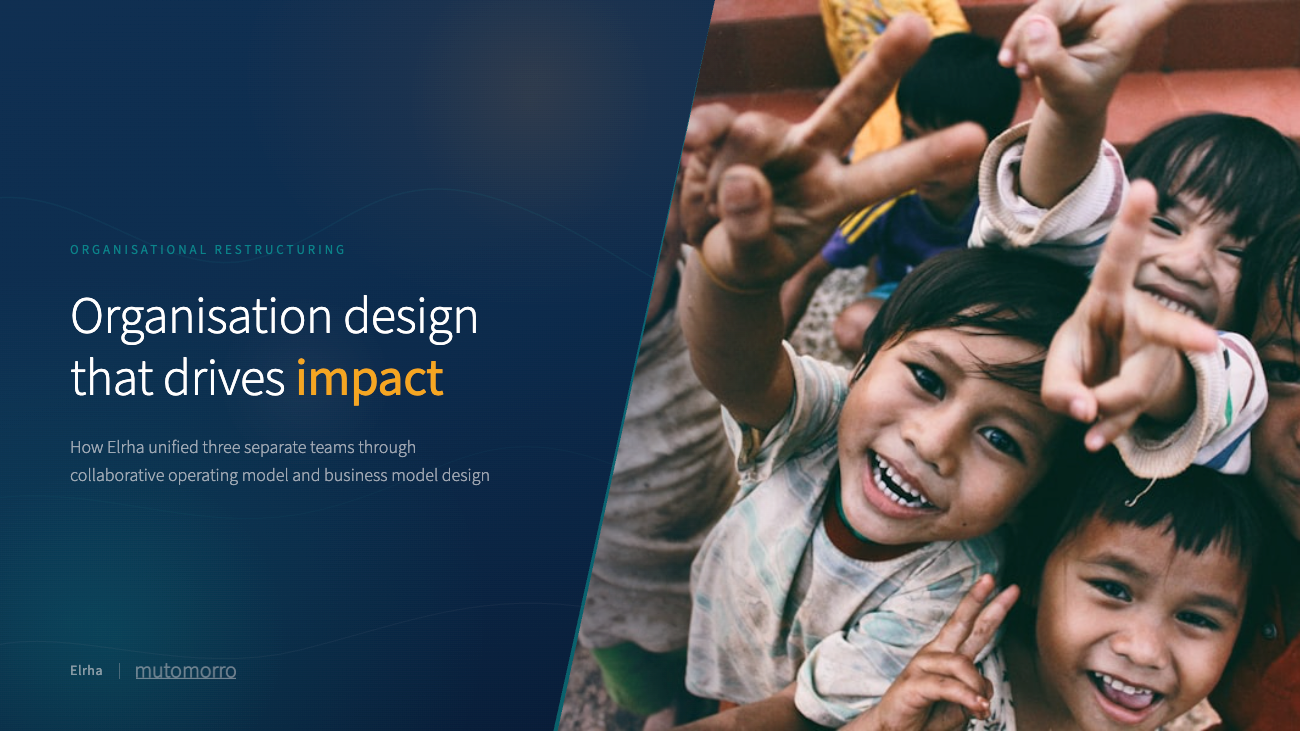

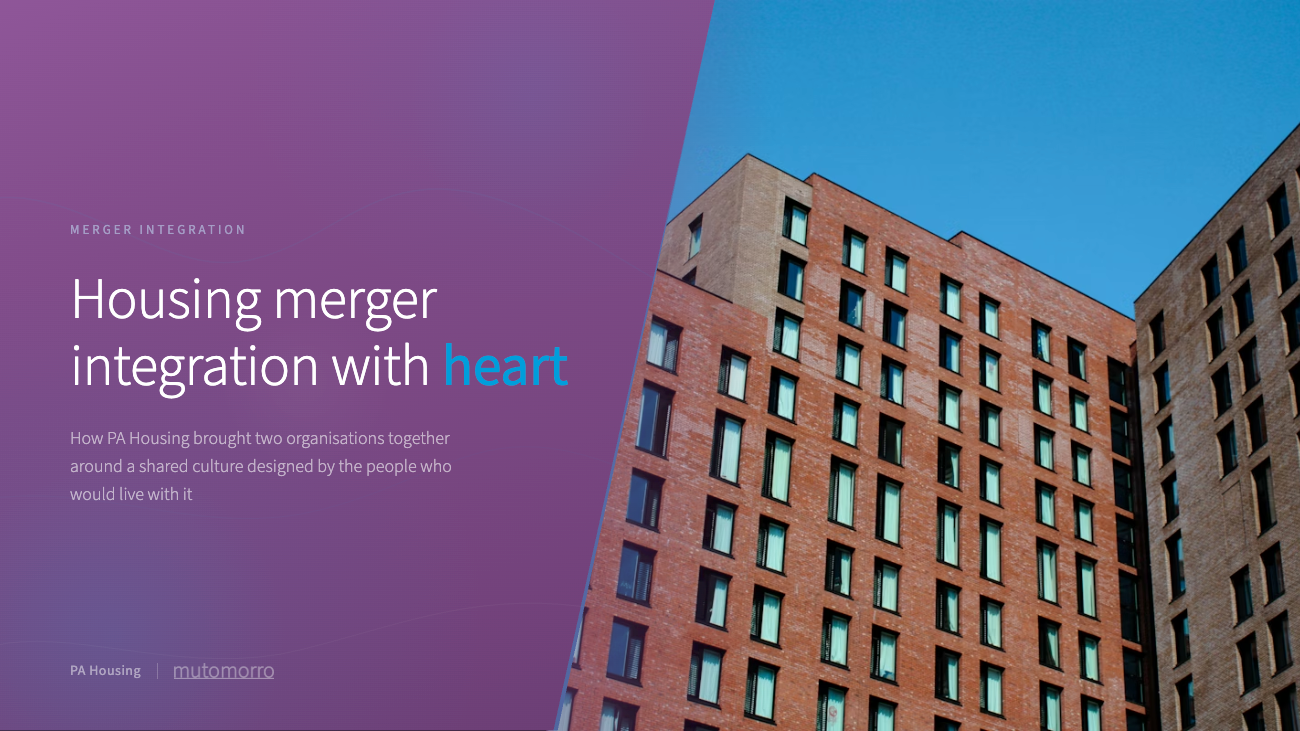
Design an organisation built to deliver
We design the structure, decisions and flow of work around what you're trying to achieve, so the organisation delivers in practice. Take the whole journey, or start with the one stage where your design has stopped working.
Recognise your situation?
Let’s talk about what this could look like for your organisation.


























How we design organisations
Most reorganisations start from the current chart and shuffle the boxes. We start from what the organisation is actually trying to do - your strategy, your purpose, the work that has to get done - and design back from there. It's the difference between rearranging what you've got and building something that genuinely fits.
Our organisational design runs through four stages - getting clear on what the organisation needs to do, designing how it all fits together, bringing that design to life, and leaving you able to keep it working as things change. They're not rigid. Some organisations need all four; others just want help where the current design has stopped working. We start wherever you are.
Start from what the organisation needs to do
Good organisational design starts with a clear question: what does this organisation actually need to be able to do well? So our diagnosis works back from your strategy and purpose, not from the chart you've already got. We look at the work that really matters, where the current setup helps it and where it gets in the way, and what any new design has to support. Get this part right and the structure almost designs itself.

- Designing back from strategy and purpose, not the current chart
- Naming what the organisation must be able to do well
- Finding where today's setup helps the work, and where it blocks it
- Setting the brief any new design has to meet
What you get
A clear, shared view of what the organisation needs to do - so the design that follows is built on the work, not the org chart.
Design how it all fits together
Structure is the part everyone sees, but it's only half the picture. Our operating model design covers the boxes and lines - structure, governance, who owns what - and the things that make them work: how decisions get made, how information moves, how teams actually join up. We design the whole landscape together, because a tidy structure with broken connections still leaves people fighting the system to get anything done.

- Structure, operating model and governance, designed as one
- Clear decision rights and accountabilities
- The information flows and handoffs between teams
- Designing the connections, not just the boxes
What you get
An operating model that holds together - where the structure, the decisions and the connections all pull the same way.
Bring the design to life
A new design on paper changes nothing until people start working inside it. So our organisational design implementation treats it as far more than a structural change - we help the organisation learn to work the new way, not just sit in the new shape. New roles, new decision rights and new ways of working take time to settle, and we stay alongside you while the structure and the behaviour grow into each other.

- Treating it as a change in how people work, not just a reshape
- Helping people settle into new roles and decision rights
- Getting structure and ways of working reinforcing each other
- Catching what isn't landing, and adjusting as you go
What you get
A design that's genuinely lived rather than just launched - working in practice, not only on the org chart.
Keep the design working as things change
Strategy moves, markets shift, and a design that fit perfectly last year can quietly stop fitting. The organisations that avoid endless restructuring are the ones that can read their own design and adjust it early, before the strain builds up. So we build that internal design capability into your leaders and teams - the habit of noticing when something's pulling against the work and the confidence to refine it themselves.

- Helping leaders read when the design is starting to strain
- Spotting and fixing small misfits before they force a reorg
- Refining the design as strategy moves on
- Keeping the capability with your own people
What you get
An organisation that keeps its own design in good shape - adjusting as things change instead of lurching from one restructure to the next.
Whole-landscape design
We design the structure AND the conditions that make it work - the flows, the connections, the space between the boxes.
Co-designed, not imposed
The people who'll live in the design help shape it, so the design has ownership from day one.
Capability-building
We work ourselves out of a job by building your internal design capability.
Evidence-led
We assess how the organisation functions before designing anything new.
Good design connects the structure with the conditions that make it work.
Our organisational design consultancy works with the whole landscape - not just the reporting lines and operating model, but the conditions between them that decide whether a structure comes to life or gets pulled back into old patterns.
The design that matters most is between the boxes
The org chart tells you who reports to whom but almost nothing about how the organisation works - the design that matters most is in the landscape between the boxes.
We design the whole landscape, not just the structure
We design the whole landscape, not just the structure - mapping how work actually flows and where decisions connect, alongside the leaders and teams who will live in it.
An organisation designed to work as one connected whole
When the whole landscape is designed well, the organisation stops fighting itself - structure supports the work, decisions flow where they are needed, and the design holds as things change.
Design is more than the chart
Our approach to organisational design grows from something broader: a conviction that organisations work more like living systems than machines. Design is more than the boxes and lines - it's how decisions flow, how information travels, how the parts actually fit together. The chart shows you the intent. The living system shows you what the design is really doing.
It's a way of seeing, and it shapes how we approach organisational design - not as an isolated fix, but as something shaped by the whole organisation, and shaping it in turn. Our philosophy page is where the fuller picture comes together.
What the evidence says about designing organisations that work
3x
more likely to succeed when design addresses structure, processes, and people together
McKinsey
63%
of operating model redesigns now meet most objectives - up from 21% a decade ago
McKinsey
7+
design elements targeted correlates with 3x higher success rate
McKinsey
36%
of employees believe a redesign will deliver, vs 88% of leaders
Bain
Common questions about organisational design
Organisational design is the upstream question: how should this organisation work to achieve what it needs to achieve? Restructuring is one downstream answer: how do we move from the current arrangement to a new one?
Design without restructuring is common - sometimes the structure is sound but the flows and conditions need reshaping. Restructuring without design is riskier - you're moving boxes without understanding the landscape they sit in.
We'd always recommend starting with the design question, even if the answer involves structural change.
It depends on scope and complexity. A focused design review might take 8-12 weeks. A full operating model redesign with implementation typically unfolds over 6-18 months.
The assessment and design phases are often faster than people expect; the implementation and embedding phases are always longer - because changing how people work takes more time than changing where they sit on a chart.
That's one of the most common starting points we see. Restructures that disappoint often changed the structure but didn't account for the conditions around it - how decisions travel, how information flows, how collaboration happens across the new boundaries.
The structure is in place but the organisation hasn't learned to work within it. We can help you understand what the current design needs to function - and make changes to the conditions without necessarily restructuring again. If a further structural change does turn out to be the right answer, our organisational restructuring consultancy picks up that work.
Yes, and often that's the better approach. Not every design change requires moving boxes on a chart. Some of the most effective work is in the space between the structures - reshaping decision patterns, improving information flow, strengthening connections across boundaries.
These changes can shift how the organisation functions without the disruption and fatigue of another restructure.
Designs that stick account for the whole landscape - structure AND conditions. McKinsey's 2025 research found that companies addressing structure, processes, and people together were nearly three times more likely to succeed than those that focused on structure alone.
A design that ignores how people work, make decisions, and collaborate will be quietly undone by the very patterns it was meant to replace.
The design stays, and so does the capability to keep developing it. We build internal understanding of how the organisation works as a connected system - so your leaders can read the design, spot emerging friction, and make informed adjustments without external support.
An organisation that understands its own landscape can keep shaping it.
Explore organisational design


Why the organisational side is the hard part
Most of what stops a good plan is not the plan. It is the join between it and the organisation - who decides what, how work moves between teams, what people believe is really being asked of them. That is the part we work on, and it is what makes a change hold once we have gone.
Want to explore how this could work for your organisation?
Every organisation is different, so we always start with a conversation. No pitch, no obligation - just an honest discussion about where you are and whether our approach feels right.