Carrying service design through to delivery
These are the situations that most often bring people to us - you'll likely recognise one or two.
- Designs that survive contact with delivery
- Built for staff as well as users
- A new service model the organisation can sustain
- Joining up a service split across teams
- From a successful pilot to reliable delivery
- Service design capability you can grow in-house
- Designing around users without ignoring operational reality
- A service that keeps improving on its own
Service design in practice
No two organisations face the same service design challenge. These examples draw on experience helping leaders design services as connected wholes, from user need through to the operations that deliver them.
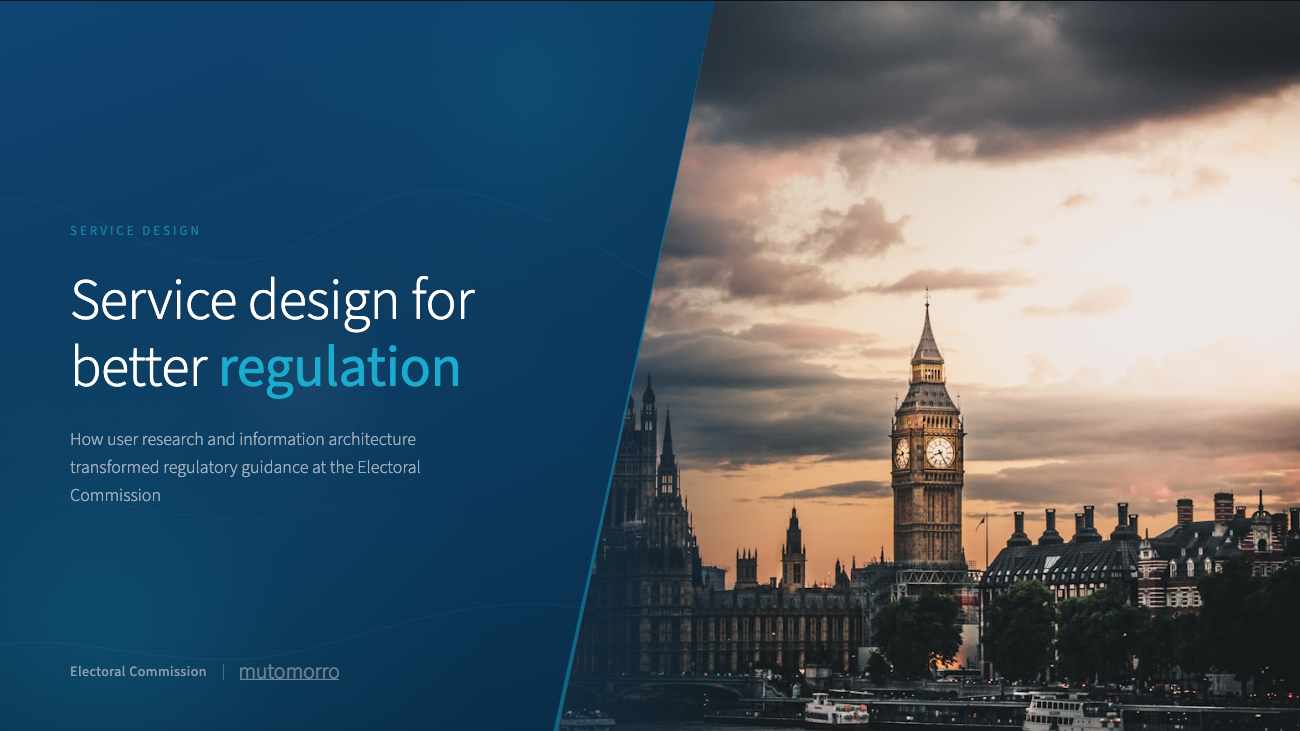
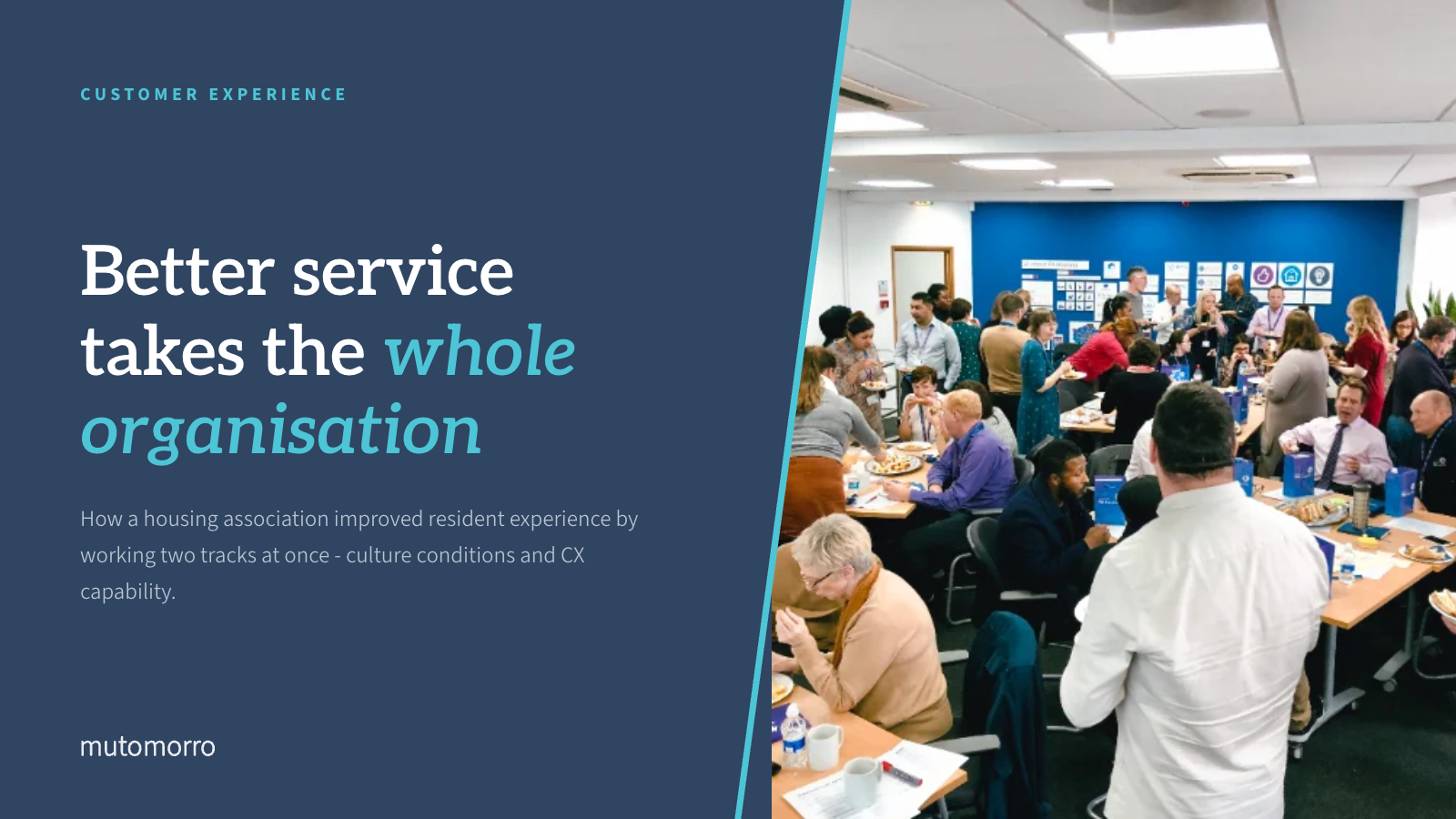
From service blueprint to service that delivers
Good service design tends to fray where it meets delivery. That's a useful place to look first.
Recognise your situation?
Let’s talk about what this could look like for your organisation.



































How we design services
Most services aren't designed at all - they're assembled, one decision at a time, until the experience makes sense to the people running it and not the people using it. We design the other way round: from what the user actually needs, back to how you deliver it.
Our service design runs through four stages - understanding the people you serve, designing the service around them, building and testing it before you commit, and keeping it improving once it's live. They're not rigid. Some organisations need all four; others just need help where the experience has broken down. We start wherever you are.
Understand the people you're designing for
Good service design starts with the people you're serving, not the service you already run. So we do the discovery and user research to understand what they actually need, then journey mapping to trace the experience they have today - step by step, including the bits that happen out of your sight. It shows you plainly where the service helps people and where it quietly lets them down.

- User research into what people actually need
- Journey mapping the experience as it really is
- The moments that work and the ones that fail people
- The gaps between what you intend and what they get
What you get
A clear, honest picture of the experience you deliver today - and exactly where it's letting people down.
Design the service around them
Now we design the service itself, working from the user's reality back to how you deliver it - not the other way round. This is co-design, done with the users and the frontline staff who know where things snag, not for them. And we design the whole service, the part people see and the part they don't, so it actually holds together end to end rather than just looking good in the brochure.

- Designing from the user's reality, not the org chart
- Co-design with users and the staff who deliver it
- The whole service - what people see and what they don't
- Joined up end to end, not patched at the edges
What you get
A service designed around the people who use it - coherent front to back, and built to actually work.
Build and test it for real
Before you commit to building the whole thing, we prototype it - a rough working version people can actually try. Service prototyping and testing puts it in front of real users early, so you find out what works and what doesn't while it's still cheap to change. We watch, learn and refine, then do it again. It's how you take the risk out of a big launch: you've already seen it stand up.

- Prototyping before you build the full thing
- Testing with real users, not a focus group
- Refining round by round on what you learn
- Finding the problems while they're still cheap to fix
What you get
A service you've seen work before you've fully built it - launched with the risk already taken out.
Keep improving it from what you learn
A service isn't finished the day it launches - the good ones keep getting better. We set up continuous service improvement so what you learn from real use flows straight back into the design, instead of sitting in a report no one reads. And we leave your team able to run that loop without us - reading the signals, spotting what's slipping, and reshaping the service as the people you serve change.

- Feedback from real use flowing back into the design
- Simple signals that show when something's slipping
- Small improvements made often, not big reviews rarely
- Your team running the loop without us
What you get
A service that keeps getting better on its own - and a team who can carry the designing forward without you.
Both halves, together
We design the service and the organisational conditions for delivery as one connected piece.
In the work, not separate from it
Design happens with your teams, not in a studio somewhere else.
Capability-building
We work ourselves out of a job by building your internal service design muscle.
From pilot to practice
We design for sustained delivery, not just a successful launch.
A service that works in practice, because the organisation was designed to deliver it
Our service design consultancy works with the organisational conditions a service has to live in - not just the journeys and prototypes, but how teams coordinate, how information flows and how decisions get made when it is delivered.
The gap between designed and delivered
A well-designed service depends on the organisational habitat it lives in - how fast information reaches front-line staff, how much autonomy they have, how feedback travels back; when the habitat does not support it, even the best design degrades.
We design the service and the organisation that has to deliver it
We do the service design work - research, journeys, blueprinting, prototyping - and the organisational conditions that make delivery possible, because designing them together is what makes a service work in practice.
Services that live and breathe
When the service and the organisation are designed together, the service does not just launch well - it adapts when things change, because the organisation behind it is set up to learn and respond.
A service is what you actually do
Our approach to service design grows from something broader: a conviction that organisations work more like living systems than machines. A service isn't the diagram on the wall - it's what the organisation actually does when someone needs it. Good design tends to fray where it meets delivery, at the seams between the teams who own different pieces of it.
It's a way of seeing, and it shapes how we approach service design - not as an isolated fix, but as something shaped by the whole organisation, and shaping it in turn. Our philosophy page is where the fuller picture comes together.
80%
of organisations believe they deliver a good experience - only 8% of customers agree
Bain
40%
of customer contacts are failure demand - avoidable if the service worked properly
Vanguard
6x
cheaper to fix a service at the design stage than after launch
Design Council
91%
of dissatisfied customers will not return
ThinkJar
Common questions about service design
Service design is about how the organisation designs and delivers its services to the people it serves - the architecture. Customer experience is about how people experience what the organisation delivers - the lived experience of being on the receiving end. They're connected but distinct. One is the design of the building, the other is the experience of living in it. If your question is more about how people experience your organisation from the outside, our customer experience work addresses that directly.
Either works. If you've already done user research, journey mapping, or service design work, we build on that - we're not going to redo good work. What we add is the organisational conditions dimension that's often missing: understanding the internal system that has to deliver whatever has been designed. If you're starting from scratch, we do both from the beginning, which is often the most effective approach because the service and the conditions are designed together from day one.
That's one of the most common patterns we see - and it's the reason we work the way we do. When a redesigned service doesn't stick, the issue is usually that the design was done in isolation from the organisational conditions needed to deliver it. The service looked great on paper, but the teams delivering it didn't have the information, autonomy, or coordination they needed. We design both together, so the service is grounded in what the organisation can actually sustain.
It depends on the scope and complexity. A focused service redesign might take 12-16 weeks from research to implementation. A larger piece of work - redesigning a service that crosses multiple departments, or building internal service design capability across the organisation - might unfold over 6-12 months. We always start with a scoping conversation to understand what's needed and design an engagement that fits.
Yes. If you have an in-house design team or an agency doing the user research and service design work, we can focus specifically on the organisational conditions side - making sure the organisation is set up to deliver whatever is being designed. The two streams work best when they're connected from the start, so we'd want to collaborate closely rather than work in parallel.
The service keeps improving - because the capability to improve it stays with you. Everything we do is designed to build internal service design capability alongside delivering the immediate project. We build in transition planning, leave you with practical tools and frameworks, and make sure the feedback and improvement practices are embedded in how the organisation works. If you still need us after we've done our work, we haven't done our work properly.
Explore service design




Why the organisational side is the hard part
Most of what stops a good plan is not the plan. It is the join between it and the organisation - who decides what, how work moves between teams, what people believe is really being asked of them. That is the part we work on, and it is what makes a change hold once we have gone.
Want to explore how this could work for your organisation?
Every organisation is different, so we always start with a conversation. No pitch, no obligation - just an honest discussion about where you are and whether our approach feels right.