Leaders come to us at moments like these
These are the situations that most often bring people to us - you'll likely recognise one or two.
- Merged, but it still feels like two organisations
- Building one culture from two strong ones
- Key people quietly drifting away
- Operational integration on track, the people side behind
- Both organisations shaping what comes next
- A leadership team that's still two groups
- Integration fatigue from a process dragging on
- Something genuinely new, not a takeover
Post-merger integration in practice
No two organisations face the same integration challenge. These examples draw on experience helping leaders bring two organisations together as one connected whole, not a patchwork of both.
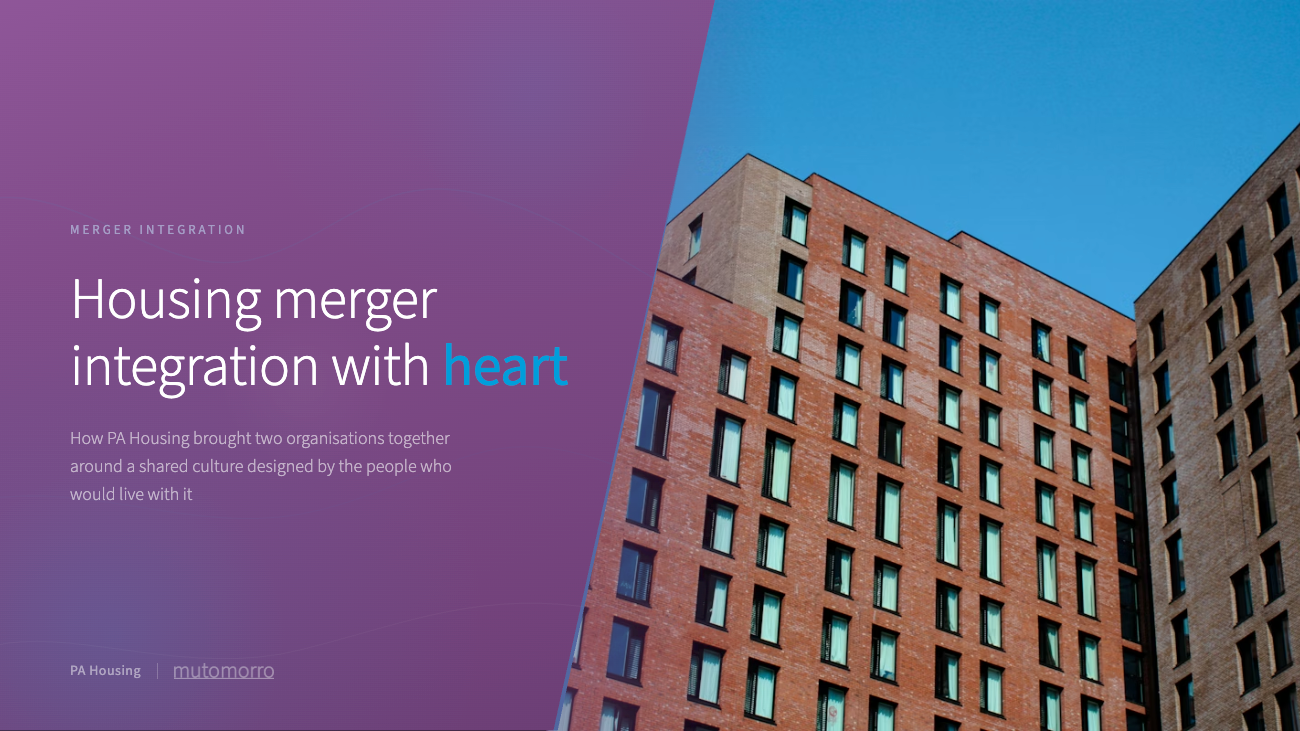

Integration that goes deeper than the org chart
Two organisations become one in the day-to-day, not the deal. That's where the real work starts.
- AssessIntegration readiness assessmentUnderstand both organisations honestlyExplore more
- DesignIntegration Blueprint DesignDesign how the new organisation worksExplore more
- IntegrateIntegration Delivery ProgrammeMake integration realExplore more
- EmbedMaking the Integration WorkKeep becoming oneExplore more
Recognise your situation?
Let’s talk about what this could look like for your organisation.








How we integrate after a merger
A merger looks done when the deal closes. It isn't. The hard part is everything after - getting two organisations that each have their own way of working, deciding and getting things done to operate as one. That's the part we handle, and we design for one organisation rather than two bolted together.
Our merger integration runs through four stages - understanding both organisations as they really are, designing how the combined one works, bringing people and systems together, and getting the value the deal was meant to create to actually land. They're not rigid. Some come to us before the deal closes; others call when the integration has stalled. We start wherever you are.
Understand both organisations as they really are
Good integration planning starts with an honest read of both organisations - and not the version on the deal sheet. We look at how each one actually works: how it decides, how people get things done, what each side genuinely values about the way they work. Then where the two will fit, and where they'll grind. It's the cultural and operational reality the financials don't show - and it's usually what decides whether the integration lands.

- How each organisation really decides and gets things done
- Where the two fit, and where they'll grind
- What each side values and won't give up quietly
- The realities the deal sheet and the financials miss
What you get
An honest picture of both organisations - so you go in knowing where they'll join smoothly and where the friction will be.
Design how the combined organisation works
Then we design the shape of the merged organisation - the structure, the operating model, where decisions sit. The work here is deciding what to integrate fully, what to integrate part-way, and what's better left alone. We do it with people from both sides, not for them, so the answers fit how the work actually happens. The aim throughout is one organisation by design, not two stitched together and hoping they knit.

- The structure and operating model for the combined organisation
- Where decisions sit once the two become one
- What to integrate fully, partly, or leave alone
- Designed with people from both sides, not imposed on them
What you get
A clear design for how the new organisation works - one that fits both sides rather than forcing one onto the other.
Bring people and systems together
Day 1 is where the plan meets reality. We stay alongside your teams through it and well beyond - because this is where two cultures actually meet and where the uncertainty bites hardest. We help people through the wobble, get new teams working across the old divide, and read how the post-merger integration is really unfolding against the plan. When something isn't landing, you find out early enough to do something about it.

- Day 1 readiness, then the long stretch after it
- The human reality of two cultures meeting
- Supporting people through the uncertainty
- Reading how it's actually going versus the plan
What you get
An integration that's felt in how people work day to day - not just announced on Day 1 and left to settle on its own.
Build one organisation, not two stitched together
A merger only pays off when the value behind it actually lands - the savings, the reach, the capability the deal promised. So we stay until the new ways of working are the normal ways, and the combined organisation runs as one without us in the room. The old seams stop showing. People stop saying which side they came from. What you're left with is a single organisation that holds together on its own.

- The value the merger promised actually landing
- New ways of working becoming the normal ways
- The old seams between the two sides fading out
- One organisation that runs without us alongside
What you get
A genuinely combined organisation - delivering the value the merger was for, and standing on its own once we've gone.
Two organisations, one place to work - by design, not by accident
Our post-merger integration consultancy is about the part that decides whether a merger works: one organisation pulling in the same direction, joined up in how decisions get made, how people work together, and what it feels like to be here.
The deal closes in months. The integration unfolds over years.
A merger brings two living systems together - each with its own patterns of decision-making, collaboration, knowledge, and culture. The financial and structural integration has a timeline, a project plan, milestones. But the deeper integration - how two ways of working find each other, how a shared identity forms, how "the way things are done here" emerges from two different starting points - that doesn't follow a project plan. It unfolds through thousands of daily moments where people from two backgrounds figure out how to work as one. When that process is supported and designed for, it happens faster and with less friction. When it's left to sort itself out, the organisation can stay divided long after the deal is done.
We work alongside the operational integration, designing the human one
We complement the financial and operational workstreams with the integration work that determines whether two organisations genuinely become one. That means understanding how both organisations work in practice - not just their structures, but their decision-making patterns, collaboration habits, and the things people value about how they work. It means designing how those ways of working will meet and what emerges from them - not imposing one side's approach on the other, and not splitting the difference into something that satisfies nobody. And it means supporting people through the most complex organisational challenge most of them will ever face.
One organisation that works - not two that coexist
When the people and culture integration is designed alongside the operational one, something shifts. The organisation stops feeling like a merger and starts feeling like a place. Decisions flow because people understand how they're made here - not at the old organisation, but this one. Collaboration happens across old boundaries because the design makes it natural. People identify with what the new organisation is becoming, not just where they came from. The integration doesn't just hold together - it creates something that neither organisation could have been alone.
Two organisations become one in the corridors, not on the chart
Our approach to post-merger integration grows from something broader: a conviction that organisations work more like living systems than machines. Two organisations don't become one when the deal closes - they become one in the day-to-day, where two ways of working meet and have to find a single rhythm. Integration is the patient work of joining what was separate.
It's a way of seeing, and it shapes how we approach post-merger integration - not as an isolated fix, but as something shaped by the whole organisation, and shaping it in turn. Our philosophy page is where the fuller picture comes together.
~70%
of M&As fail or underperform
McKinsey / EY 2025
68%
cite cultural clashes as the biggest integration challenge
Global PMI Partners 2026
30%
of failed deals attributed to cultural misalignment
Mercer 2024
70%
of executives now rate their latest deals as successful
Global PMI Partners 2025
Common questions about post-merger integration
They're complementary. The integration management office (IMO) typically coordinates the operational, financial, and structural workstreams - the mechanics of bringing two organisations together. We work alongside that on the people, culture, and identity dimensions: how two ways of working meet, how a shared culture forms, how the new organisation becomes one in practice. The IMO manages the integration programme. We support the integration that can't be programme-managed - the human one. Where the integration involves significant structural change, our organisational restructuring consultancy works with that specific dimension.
The earlier the better, but it's never too late. Ideally, we're involved before day one - helping you understand the cultural and organisational differences while the deal is still being shaped. But we regularly start later: during the integration when the people side is stalling, or even months after the structural merger when the organisation still doesn't feel like one. Wherever you are in the process, there's meaningful work to do.
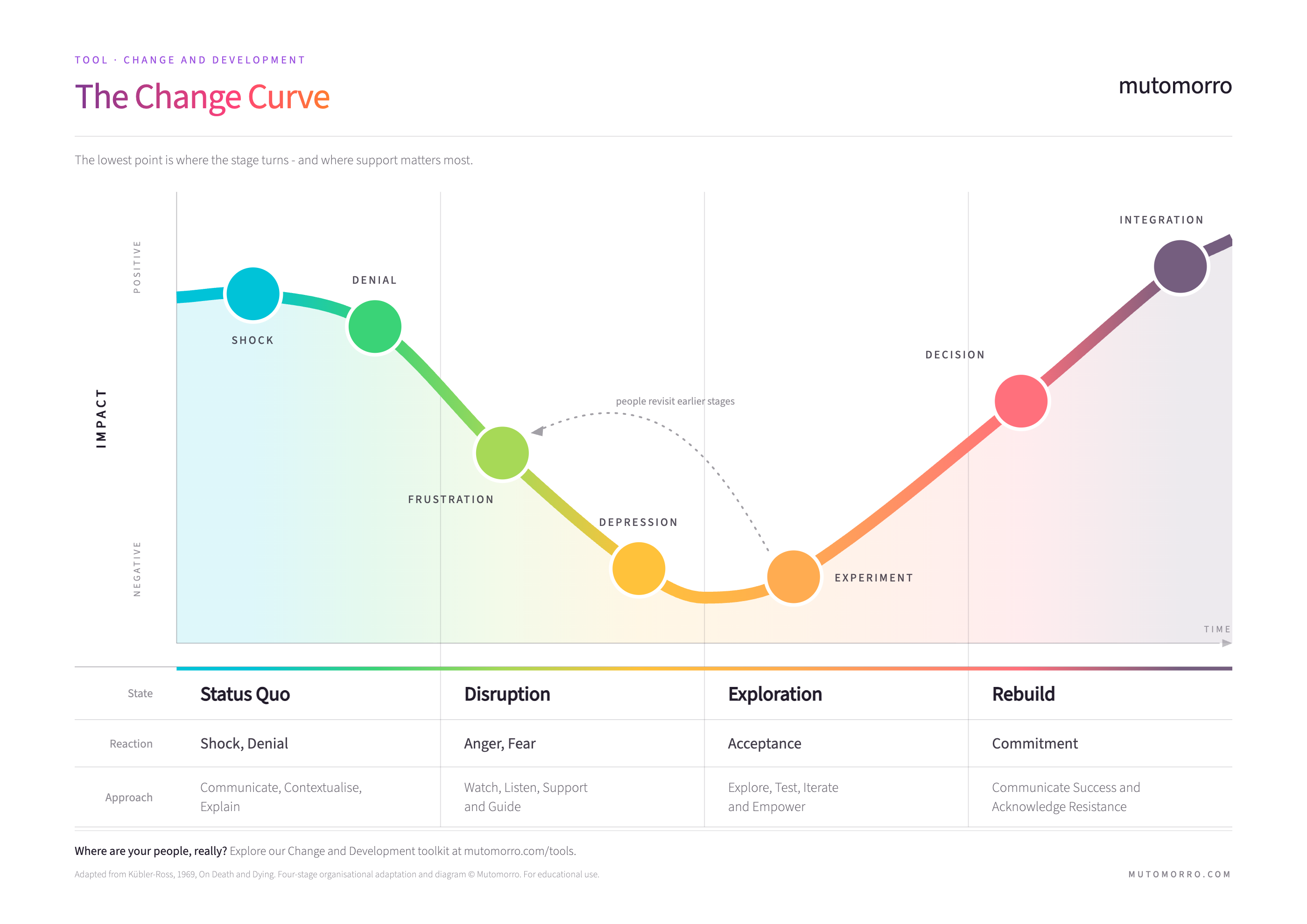
More common than most people realise. The structural and operational integration often completes within the first year. The cultural and identity integration takes longer - typically two to three years before the new organisation genuinely feels like one. If you're a year in and it still feels divided, that's not a sign of failure. It's a sign that the deeper integration needs deliberate attention - which is exactly where we focus.
Not by picking a winner. The worst integration outcomes come from imposing one side's culture on the other, or from pretending the differences don't exist. We start by understanding what each culture is - in practice, not just in stated values - and what people genuinely value about how their organisation works. Then we help design what the new culture looks like: something that carries the strengths of both, belongs to the new organisation, and is shaped by the people who live in it. That's the difference between a culture that's imposed and one that emerges. Our approach to culture change runs through everything we do here - working with the conditions that shape culture, not trying to change culture directly.
The research is remarkably consistent: culture is the primary reason. Between 50% and 75% of integrations fail to meet their objectives, and cultural misalignment is cited as the biggest challenge in the majority of cases. But "culture" is often used as shorthand for something more specific: the failure to design for how two groups of people will work together. When decision-making patterns clash, when collaboration across old boundaries feels forced, when people can't see themselves in what the organisation is becoming - that's where integration stalls. The operational and financial sides are usually well managed. The people side is where value is lost.
The integration continues - and the organisation has the capability to keep developing it. We build internal understanding of how the new organisation works as a connected system, so your leaders can sense where old patterns are reasserting, where new collaboration is forming, and what needs attention. An organisation that understands its own dynamics can keep becoming one - long after any integration programme has ended.
Explore post-merger integration
Articles






Why the organisational side is the hard part
Most of what stops a good plan is not the plan. It is the join between it and the organisation - who decides what, how work moves between teams, what people believe is really being asked of them. That is the part we work on, and it is what makes a change hold once we have gone.
Want to explore how this could work for your organisation?
Every organisation is different, so we always start with a conversation. No pitch, no obligation - just an honest discussion about where you are and whether our approach feels right.