POLISM Canvas
The POLISM Canvas is an operating model tool that maps how an organisation actually functions across seven areas - from its value proposition to its management systems. It helps leaders visualise and redesign how work gets done.
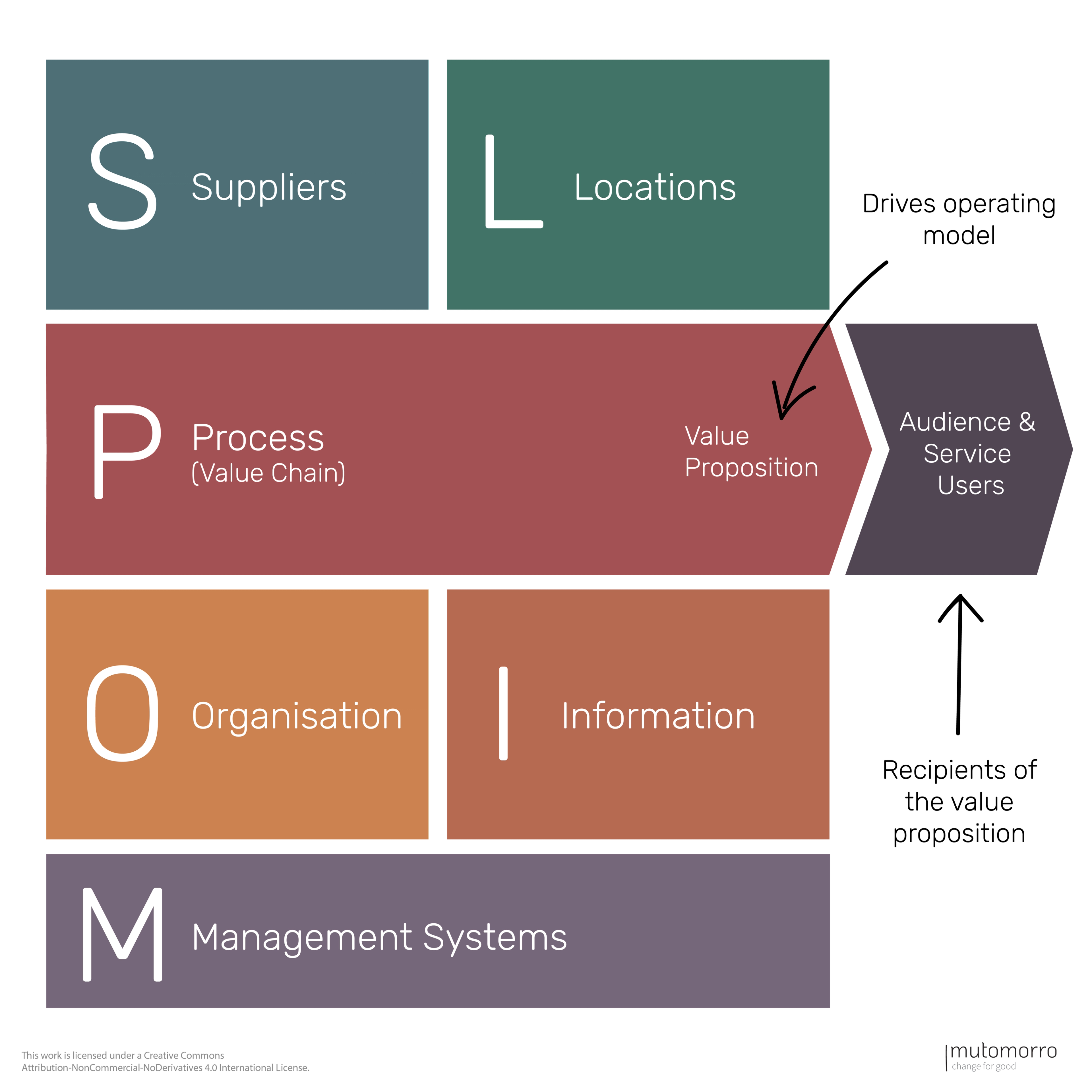
The POLISM Operating Model Canvas, developed by Andrew Campbell, is a strategic tool designed to help organisations visualise and articulate their operating models. The POLISM Canvas is one of many ways to visualise how an organisation functions (its operating model) and the interplay between different parts. Developing a visualisation of your operating model is a great way to begin improving how you deliver your service, as it creates a singular source of truth to guide decisions.
POLISM stands for:
- Processes
- Organisation
- Locations
- Information
- Suppliers
- Management systems
The POLISM model creates the framework for organisations to analyse and design their operating models - and in turn, aim to deliver the most value (or impact). Since its inception in 2007, it's remained a popular model because:
- It drives everything from a core value proposition and works backwards - using the value proposition to inform how the organisation functions and operates.
- It encourages a comprehensive view, combining a range of important organisational factors to ensure they're aligned and work together to support the core value proposition.
The approach can be useful for both your current state Operating Model (how you do things today) and working on a Future State OM (how you want to do things tomorrow). By using this canvas, we can identify gaps, opportunities for improvement, and areas that require alignment to enhance overall performance and adaptability in a changing environment and wider system.
This model is instrumental in strategic planning, organisational design, and transformation initiatives, helping teams collaboratively map out their current state and envision future ways of delivering their value proposition.
Creating a POLISM Operating Model Canvas
There are 7 steps to develop your POLISM, each one referencing a part of the canvas. The canvas is divided up in this way so that the value chain forms the central line with the 4 quadrants supporting its delivery.
A note on Audiences & Service Users: This guide won't cover audiences and end users as that's a topic in itself! Developing user profiles and audience personas is an important step to refining your value proposition. If you don't know what matters to your audience, it's difficult to nail your Value Proposition.
1. Value Propositions
The first area to define in the model is your Value Proposition. This is an articulated expression of the value your service, product or project delivers. This can often go hand in hand with a value proposition canvas to help articulate the problems your organisation is designed to solve, and what pain/issue you're addressing.
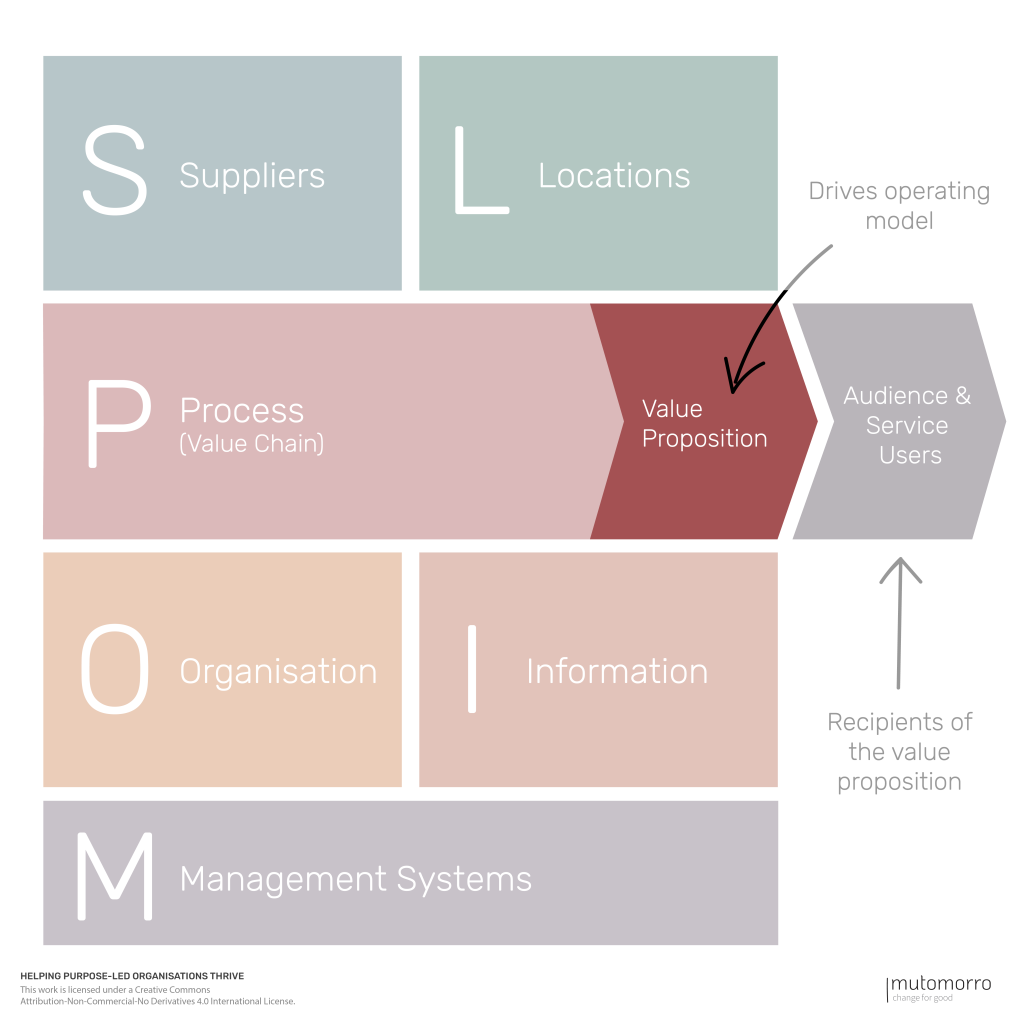
For nonprofits, this might be the impact they want to deliver, or how their work supports other actors or agencies in delivering on their objectives. It can be focused on a singular audience or encompass multiple audience types.
Within this model, developing and refining a clear set of Value Propositions is crucial for several reasons:
- Clarifies Mission and Impact: A well-defined Value Proposition articulates the unique benefits that the organisation offers to its beneficiaries and stakeholders. For nonprofits, this clarity helps communicate their mission effectively and demonstrates how they address specific social issues.
- Attracts Support and Funding: Donors and supporters are more likely to contribute to organisations that clearly articulate their value. A compelling Value Proposition can differentiate a nonprofit from others, making it easier to attract funding, volunteers, and partnerships.
- Guides Programme Development: By understanding their Value Propositions, nonprofits can align their programmes and services with the needs of their target audience. This alignment ensures that resources are used effectively and that the organisation remains focused on its core mission.
- Enhances Stakeholder Engagement: A clear Value Proposition fosters stronger relationships with stakeholders, including beneficiaries, donors, and community partners. It helps stakeholders understand the organisation’s goals and how they can contribute to achieving them.
- Facilitates Strategic Decision-Making: A well-articulated Value Proposition serves as a guiding principle for decision-making within the organisation. It helps leaders prioritise initiatives and allocate resources in a way that maximises impact.
Articulating Value Propositions
Your value propositions can be as simple or as complex as your organisation requires. For some, it can be focused on solving a simple, clear issue and for other organisations the proposition might be more nuanced. To effectively articulate Value Propositions, it can be helpful to follow these steps:
- Identify Target Audiences: Understand who the beneficiaries, donors, and other stakeholders are. Tailor the Value Proposition to address their specific needs and interests.
- Define Unique Benefits/Outcomes: Clearly outline what makes the organisation unique. This could include specific programmes, community impact, or innovative approaches to solving social issues.
- Use Clear and Compelling Language: Avoid jargon and use straightforward language that resonates with the audience. The Value Proposition should be easy to understand and memorable. This is particularly important for organisations that have a less concrete outcome. The clearer and more direct the language, the easier to know how to achieve it.
The Nonprofit Business Model Canvas provides a complementary view of how value propositions connect to revenue models and partnerships.
2: Processes
For any organisation, processes are the backbone of effective delivery. With this model, we map out processes based on a "value chain". A value chain is simply a set of steps which lead to delivering your intended value/outcome - each process adds some level of value to the end result and is an important step in creating the desired outcomes.
For a detailed method of documenting these, see Process Mapping.
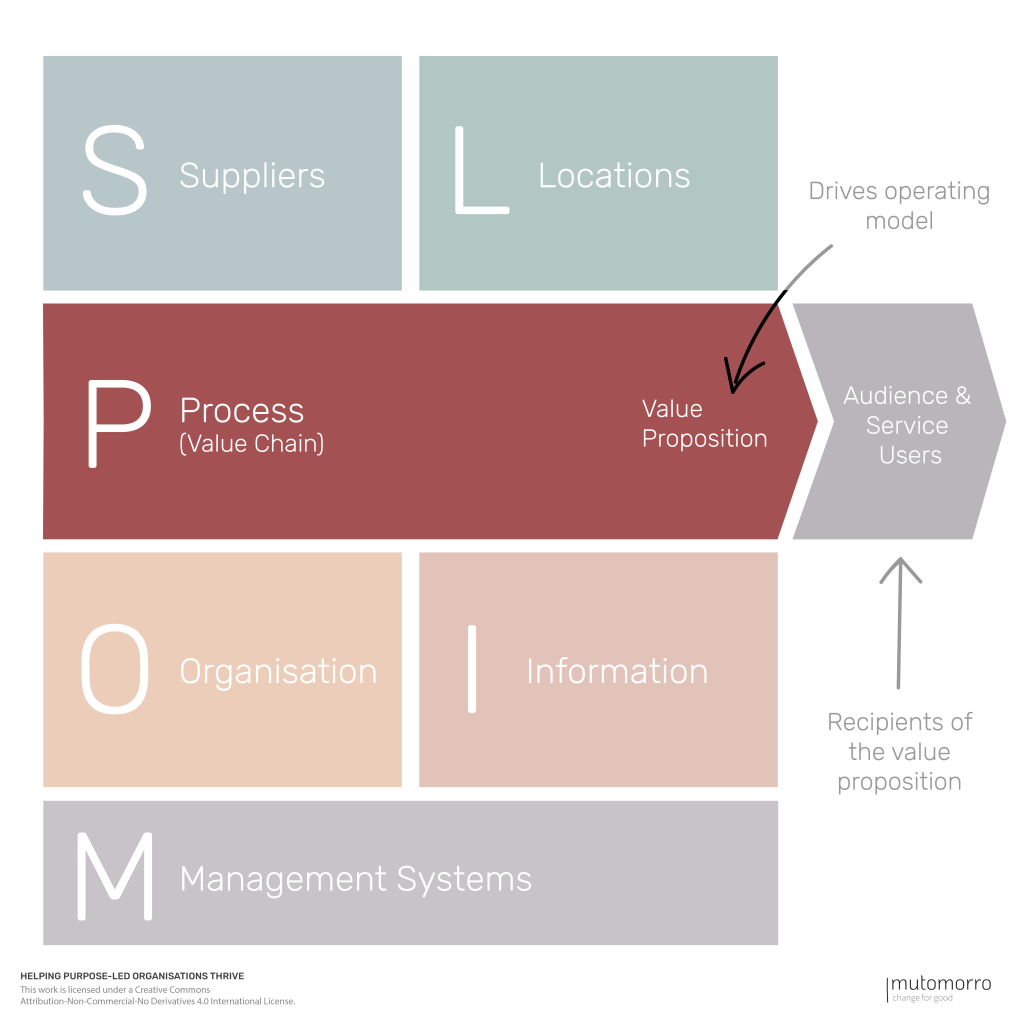
When mapping out the value chain, each process should be directly related to delivering your value proposition, and be a logical and meaningful step in the process.
If your value chain involves service delivery, Service Blueprints can help map the front-stage and back-stage activities in more detail.
Mapping out the value chain
We want to map out the processes that lead to you delivering your desired outcome. There are lots of ways to do this, but for a simple but effective approach, try this:
- Identify Audiences: These are the people you're delivering value to. They could be at the end of the process, receiving your service or they could be partners through the process. Either way, these are the audiences and actors that you deliver value to. Define each audience and the value you deliver to them.
- Identify Primary Activities: Next, we want to establish the primary activities involved in the value stream. These are the essential stages or steps needed, and how they interplay with one another. Primary Activities may include operational functions, service delivery, logistics, liaison, etc. These should be activities, not departments or specific roles.
- Sub-Activities of Primary Activities: Once we've established the primary activities (processes) needed, we then want to document any sub-activities which are important to the value stream. This list doesn't need to be exhaustive but it's useful to highlight anything you think is important or influences the overall outcome.
3: Organisation (O)
Steps 1 and 2 are focused on the value proposition and the process to deliver it. The subsequent steps are focused on the support structure that enables that value delivery to happen. These are the essential building blocks and components that are designed to enable that value to be delivered.
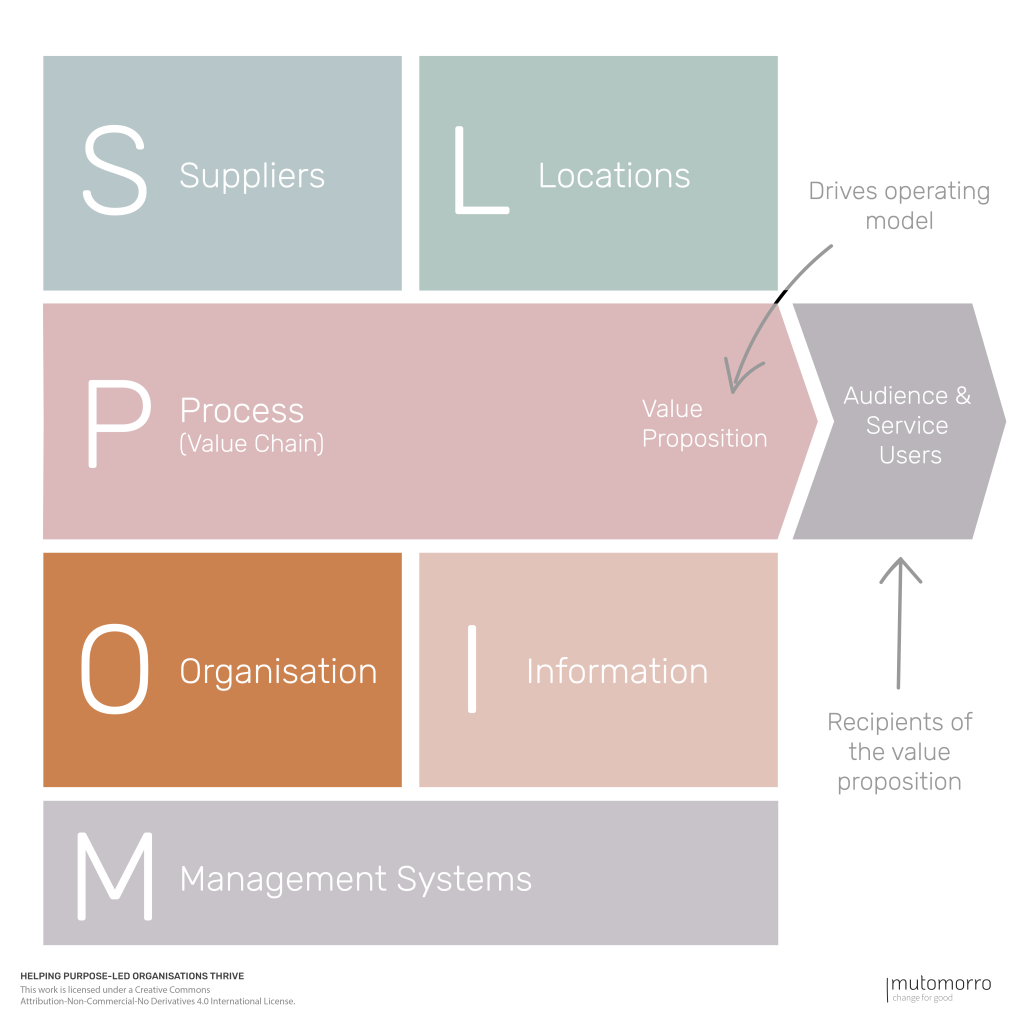
The "Organisation" part of the POLISM Operating Model Canvas is a crucial component that focuses on the human resources and organisational culture necessary for the successful implementation of an operating model.
What It Includes
- Roles and Responsibilities: Clearly defined roles for individuals and teams within the organisation, outlining who is responsible for what tasks.
- Skills and Competencies: Identification of the skills and competencies required for each role to ensure that the right people are in the right positions.
- Organisational Structure: The hierarchy and reporting lines within the organisation help clarify how teams and individuals interact.
- Culture and Values: The shared beliefs and behaviours that shape how work gets done, influencing employee engagement and performance.
- Talent Management: Strategies for recruiting, developing, and retaining talent, including training programmes and career development paths.
- Collaboration and Communication: Mechanisms for effective communication and collaboration among team members are essential for operational efficiency.
Why It's Important
- Alignment with Strategy: Ensures that the workforce is aligned with the organisation's strategic goals, enhancing overall effectiveness.
- Employee Engagement: A well-defined people strategy fosters a positive work environment, leading to higher employee satisfaction and retention.
- Adaptability: A strong focus on skills and competencies allows the organisation to adapt to changes in the market or industry.
- Performance Improvement: Clearly defined roles and responsibilities help in measuring performance and accountability, driving continuous improvement.
What to Consider When Documenting the People Aspects
- Stakeholder Involvement: Engage various stakeholders to gather insights and ensure that the documented roles and responsibilities reflect actual practices.
- Current vs. Future Needs: Assess the current capabilities of the workforce against future needs to identify gaps and areas for development.
- Cultural Fit: Consider how the documented people aspects align with the desired organisational culture and values.
- Flexibility: Ensure that the documentation is flexible enough to adapt to changes in the business environment or organisational strategy.
- Communication: Plan how to communicate the people aspects to the organisation to ensure understanding and buy-in from all employees.
By carefully considering these elements, organisations can effectively document the People aspect of their operating model, leading to improved performance and alignment with strategic objectives.
4: Locations (L)
Next, we'll look at the Locations aspect of the POLISM model. For charities, location can significantly impact your ability to serve beneficiaries but it can also highlight distinctions between central office locations and where the value gets delivered (which may be in an entirely different country).
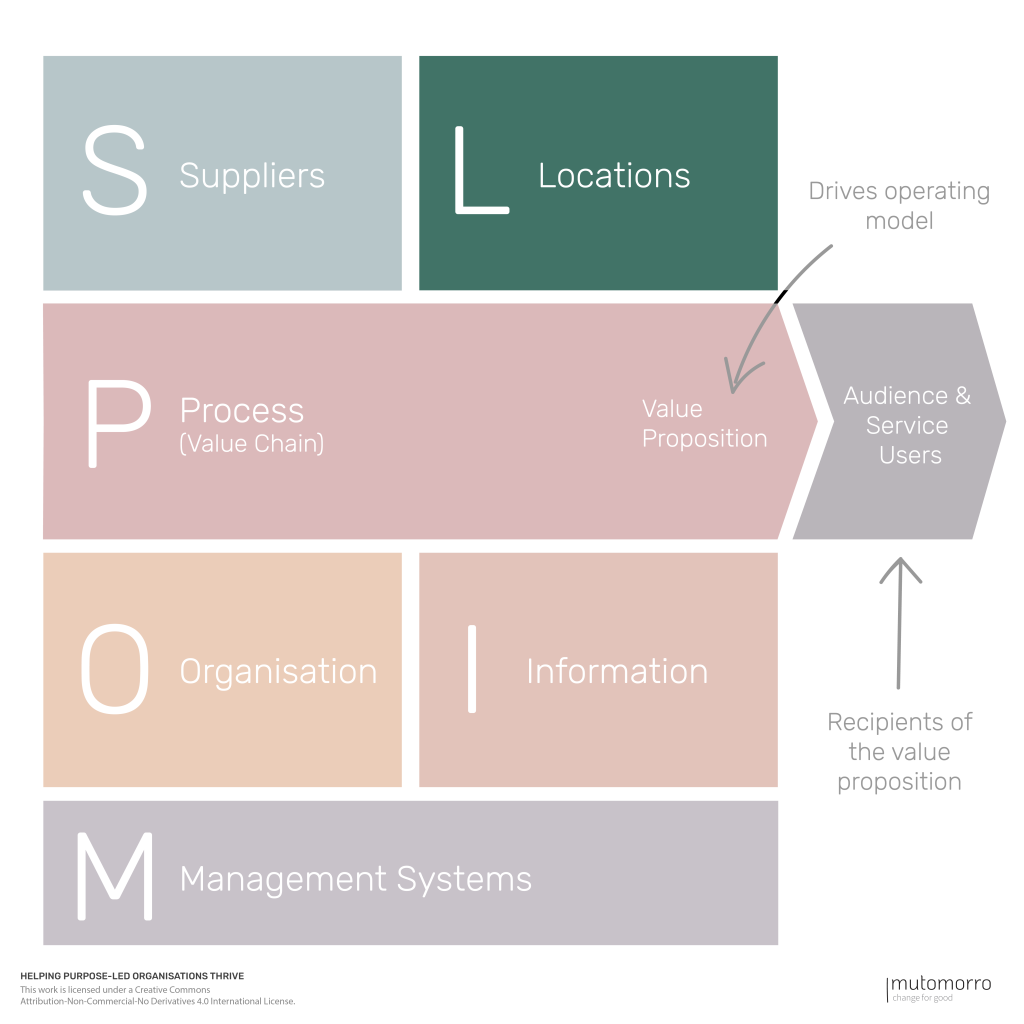
When charities delivering work overseas consider their head office location versus working with remote stakeholders, several key factors come into play regarding visibility, empowering local actors, and supporting staff:
- Visibility and Accessibility:
Proximity to Stakeholders: A head office located closer to the regions of operation can enhance visibility and accessibility to local stakeholders, including beneficiaries, partners, and government entities.
Local Presence: Establishing a local office or representative can improve relationships and trust with the community, allowing for better engagement and understanding of local needs. - Empowering Local Actors:
Decentralised Decision-Making: Charities should consider empowering local teams to make decisions that affect their communities, fostering a sense of ownership and accountability.
Capacity Building: Investing in training and resources for local actors can enhance their capabilities and ensure the sustainability of initiatives, rather than relying solely on remote headquarters. - Supporting Staff:
Communication and Collaboration Tools: Effective remote working requires robust communication tools to ensure that staff can collaborate seamlessly, regardless of location.
Cultural Sensitivity and Training: Staff should receive training on cultural nuances and local contexts to ensure that their work is relevant and respectful to the communities they serve. - Operational Efficiency:
Cost Considerations: The location of the head office can impact operational costs, including travel expenses and the cost of maintaining local offices.
Flexibility and Responsiveness: A remote structure may allow for quicker responses to emerging needs, but it can also lead to challenges in coordination and consistency. - Monitoring and Evaluation:
Local Feedback Mechanisms: Establishing systems for local feedback can help charities assess the impact of their work and make necessary adjustments in real-time.
Data Collection: Remote stakeholders should prioritise collecting and analysing data from local operations to inform strategy and improve outcomes. - Sustainability and Long-Term Impact:
Community Engagement: Engaging local communities in the planning and implementation of projects ensures that initiatives are sustainable and aligned with local priorities.
Partnerships: Building partnerships with local organisations can enhance the effectiveness of programmes and ensure that they are culturally appropriate and impactful.
By carefully considering these factors, charities can create a balanced approach that maximises their effectiveness while empowering local stakeholders and supporting their staff in delivering on their mission.
5: Information Systems (I)
Effective information management is crucial for measuring impact. This is more than technology as it encompasses the flow of information throughout the organisation and how this supports the delivery of the value stream. The POLISM model includes all the factors within this quadrant.
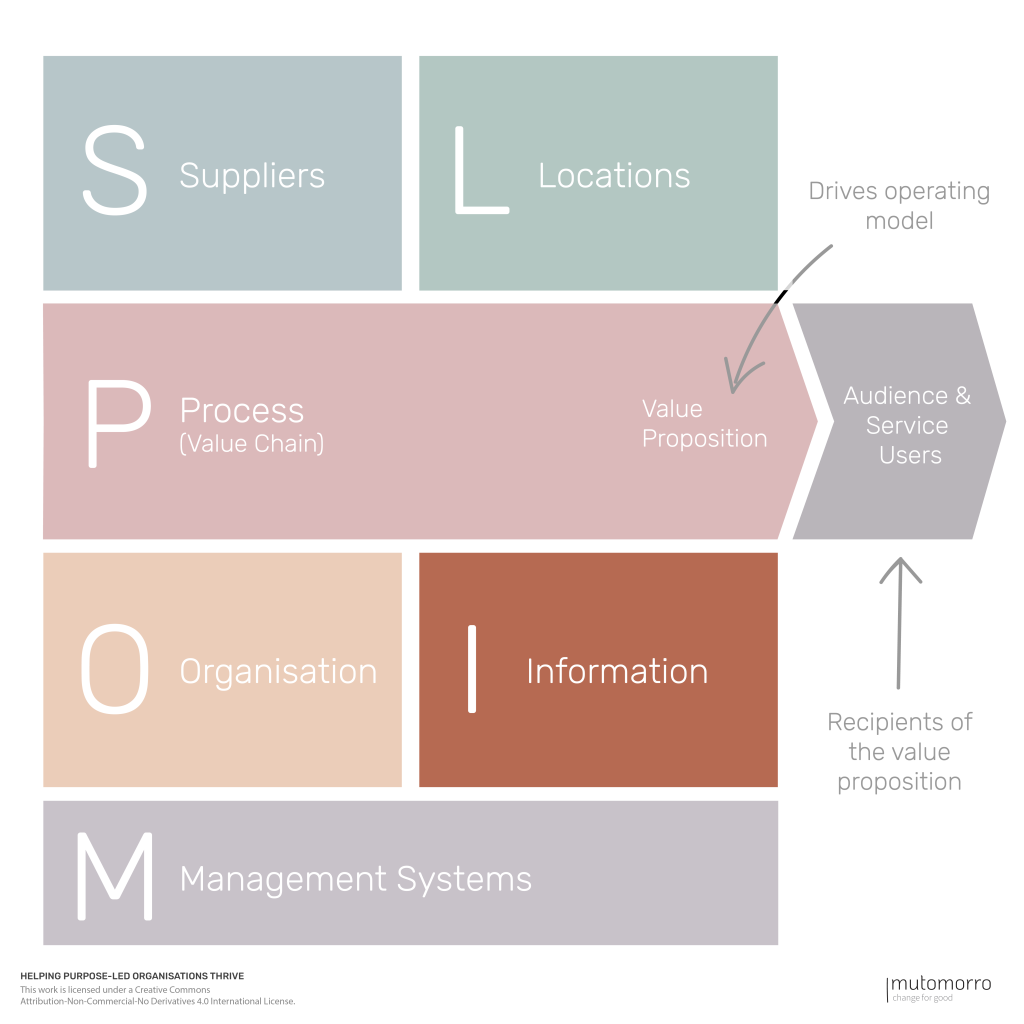
This could also include internal information (and communication) needed for the organisation to effectively deliver on objectives. Consider the management information needed to make the right decisions at the right time, and then disseminate the right information to the right people. This, often complex, web makes up your information systems.
Additionally, some nonprofits require external information flows to aid with advocacy, awareness and informing policy. These also play a factor in your information systems.
Finally, systems that help you track and measure outcomes would form part of this quadrant. Monitoring, evaluation, accountability, and learning are all essential information systems that help decision-makers track impact and learn lessons.
6: Suppliers (S)
The supplier quadrant is a little different for nonprofits and charities because we need to broaden the scope a little. Nonprofits often rely heavily on donors and partners to deliver their service and these relationships should all be considered when exploring how they support the delivery of the operating model. Equally, funding may play a part in this equation too - depending on donor relationships and funding streams.
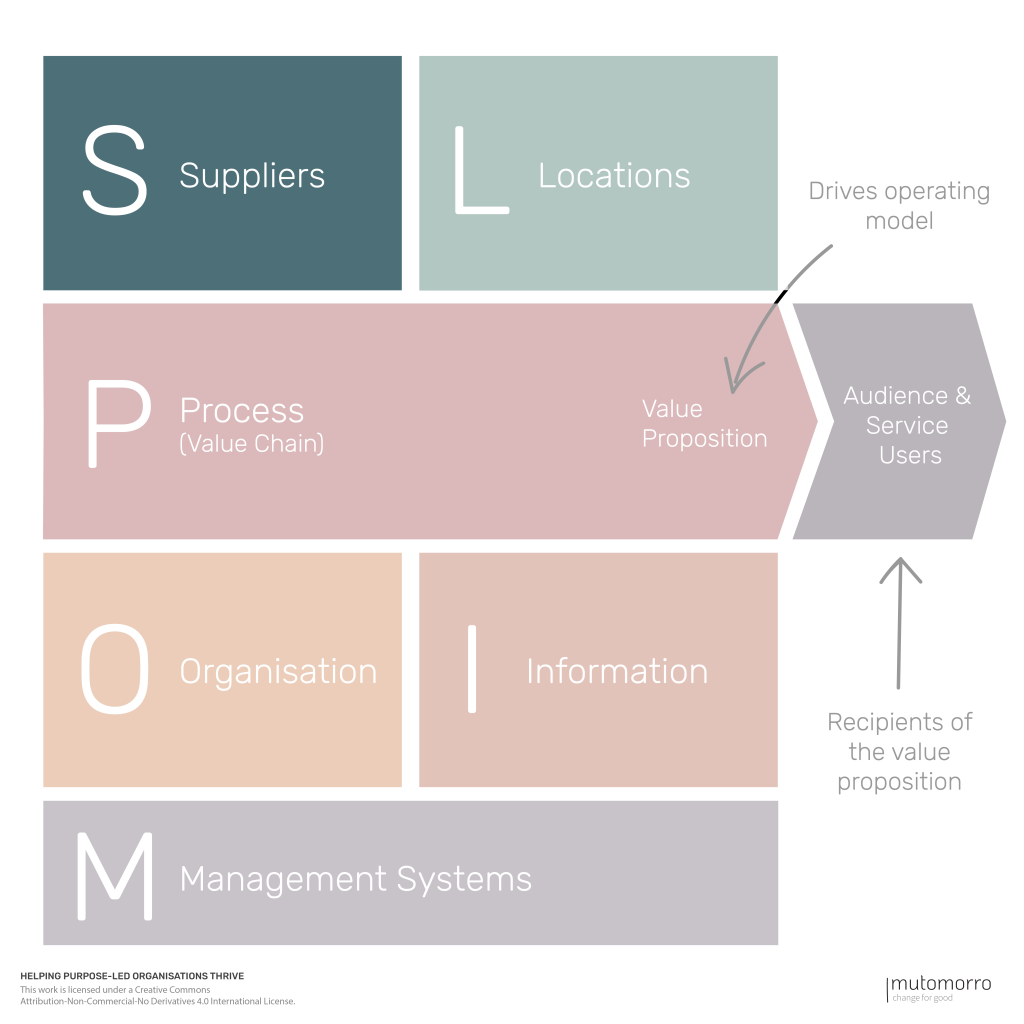
When nonprofits are looking to improve their operating model it's useful to consider a range of relationships that influence the value chain.
- Collaborative Partnerships: Working with other nonprofits or organisations to achieve common goals, share resources, and leverage strengths.
- Corporate Partnerships: Engaging with businesses for sponsorships, donations, or joint initiatives that align with the nonprofit's mission.
- Government Partnerships: Collaborating with local, state, or federal agencies for funding opportunities, program support, or policy advocacy.
- Community Engagement: Building relationships with community members and local leaders to foster trust, gather feedback, and enhance program relevance.
- Volunteer Networks: Establishing strong connections with volunteers to enhance engagement, retention, and support for the nonprofit’s activities.
- Donor Relationships: Cultivating relationships with individual donors, foundations, and grant-making organisations to ensure sustainable funding.
- Academic Partnerships: Collaborating with universities and research institutions for data analysis, program evaluation, and access to expertise.
- Media Partnerships: Engaging with local and national media to raise awareness, promote events, and share success stories.
- Advocacy Coalitions: Joining forces with other organisations to advocate for policy changes that align with the nonprofit’s mission.
- Technology Partnerships: Partnering with tech companies for tools, platforms, or expertise that can enhance operational efficiency and outreach.
Step 7: Management Systems (M)
Management Systems within the POLISM Canvas refers to the structured processes and practices that organisations use to manage their resources, operations, and performance effectively. They are the control (or enablement) systems in place to enable the organisation to deliver the value chain.
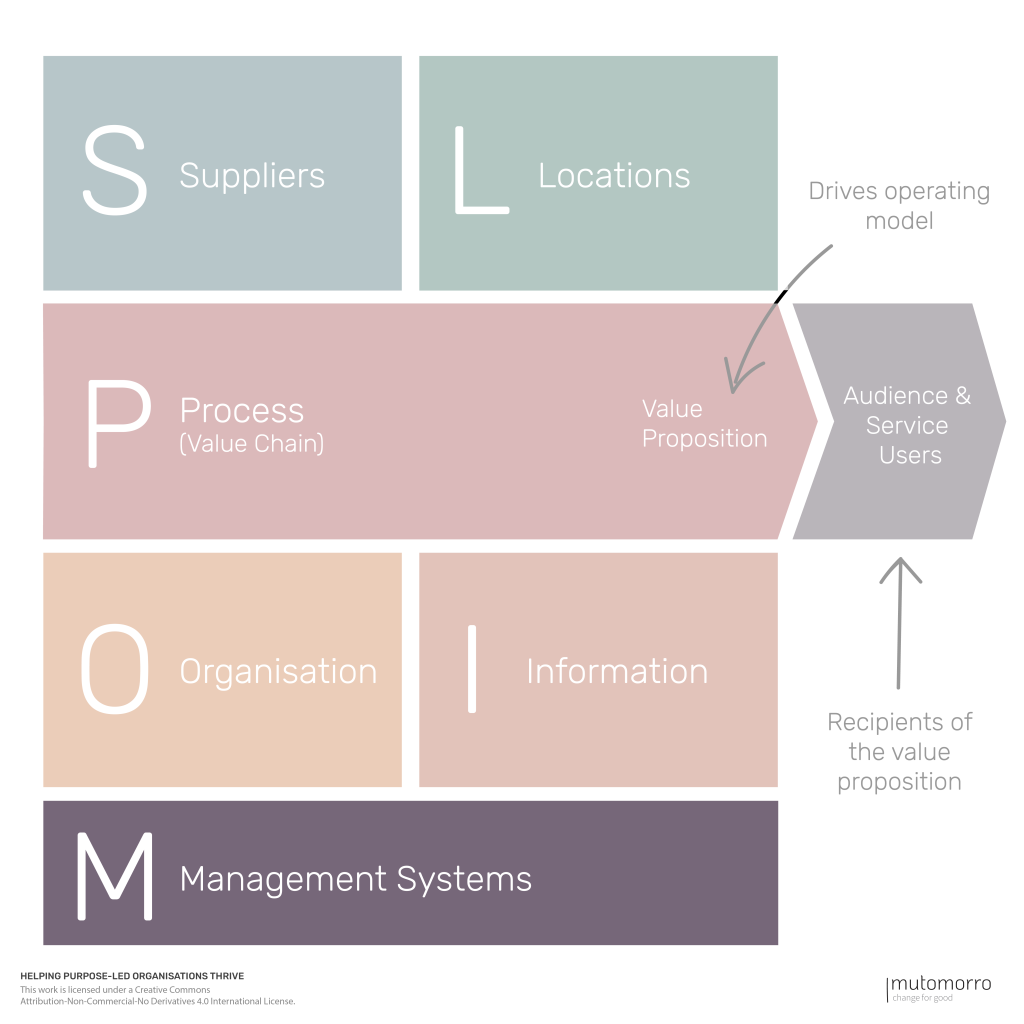
Key Aspects of Management Systems in the POLISM model:
- Resource Allocation: Management systems help nonprofits allocate their limited resources (financial, human, and material) efficiently to maximise impact.
- Performance Measurement: These systems establish metrics and KPIs to evaluate the effectiveness of programmes and initiatives, promoting accountability and transparency.
- Risk Management: Effective management systems identify potential risks and develop strategies to mitigate them, which is crucial for maintaining trust with stakeholders.
- Compliance and Governance: Nonprofits must adhere to various regulations and standards. Management systems ensure compliance with legal and ethical guidelines.
- Continuous Improvement: By implementing feedback loops and evaluation processes, management systems foster a culture of continuous improvement, enabling organisations to adapt and evolve.
Importance for Nonprofits and Charities:
- Sustainability: Strong management systems contribute to the long-term sustainability of nonprofits by ensuring that they operate efficiently and effectively.
- Impact Measurement: Nonprofits need to demonstrate their impact to attract funding and support. Management systems provide the framework for measuring and reporting outcomes.
- Stakeholder Engagement: Transparent management practices build trust with donors, beneficiaries, and the community, enhancing stakeholder engagement and support.
- Strategic Alignment: Management systems help align day-to-day operations with the organisation's mission and strategic goals, ensuring that all efforts contribute to the overall vision.
Summary
For more on how these design elements work together in practice, see our article on adaptive organisational design.
The McKinsey 7-S Model covers similar ground with seven interconnected elements - useful for checking organisational coherence.
The POLISM Operating Model Canvas is a valuable tool for nonprofits because it provides a structured framework for organisations to visualise and align their operations with their mission. It helps nonprofits identify key components such as purpose, outcomes, leadership, infrastructure, systems, and metrics. By using this canvas, nonprofits can clarify their strategic direction, enhance collaboration among stakeholders, and improve resource allocation. Additionally, it facilitates better communication of the organisation's goals and operational strategies, ultimately leading to more effective program delivery and impact measurement.
The Galbraith Star Model provides a complementary lens, focusing on how strategy, structure, processes, rewards and people need to align.
We share thinking on organisational change and development on LinkedIn - practical ideas for people doing this work inside their own organisations.
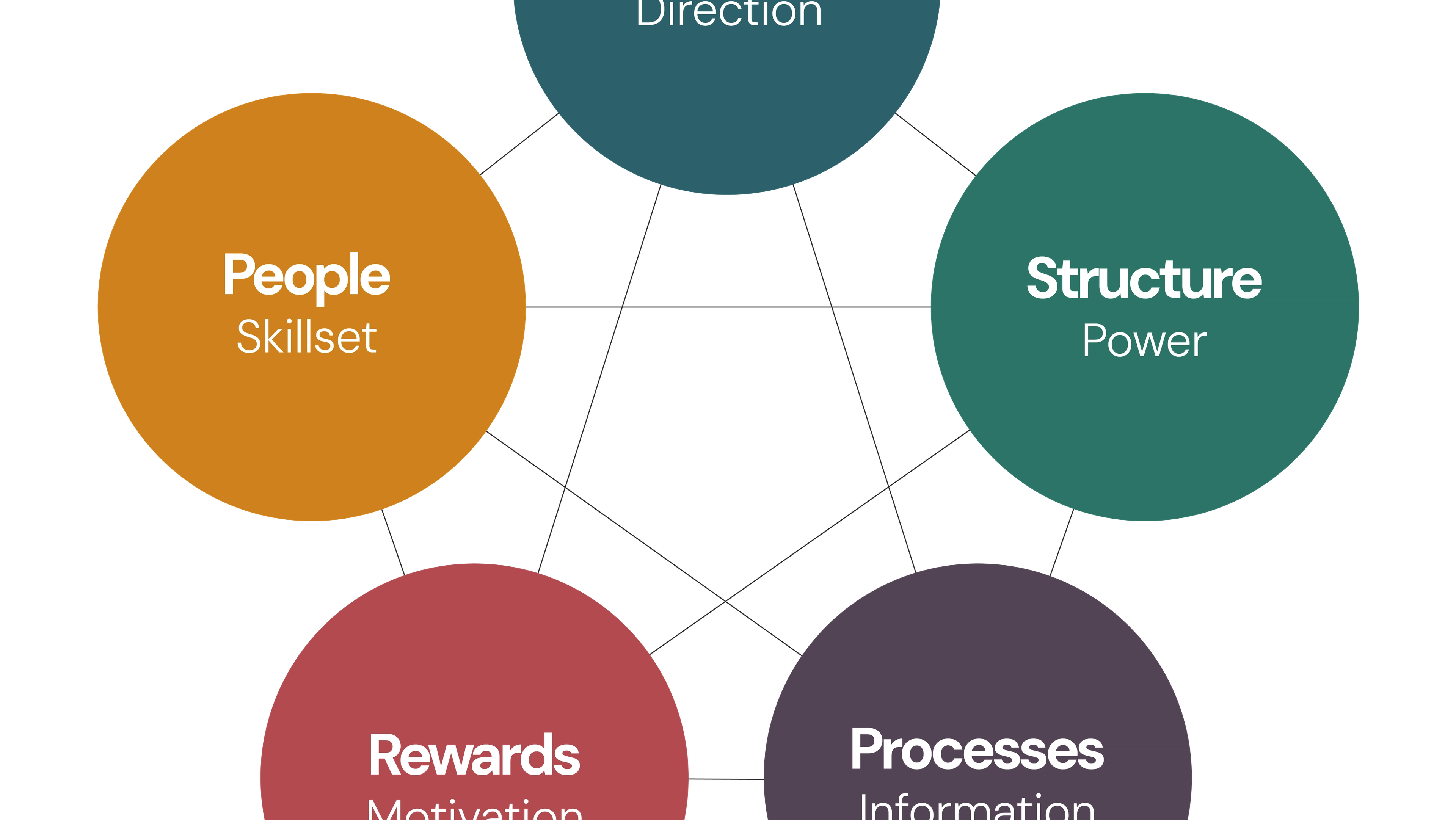
The Galbraith Star Model is an organisational design framework that maps five interconnected elements - strategy, structure, processes, rewards, and people. It helps leaders see how these elements need to align for the organisation to work well.
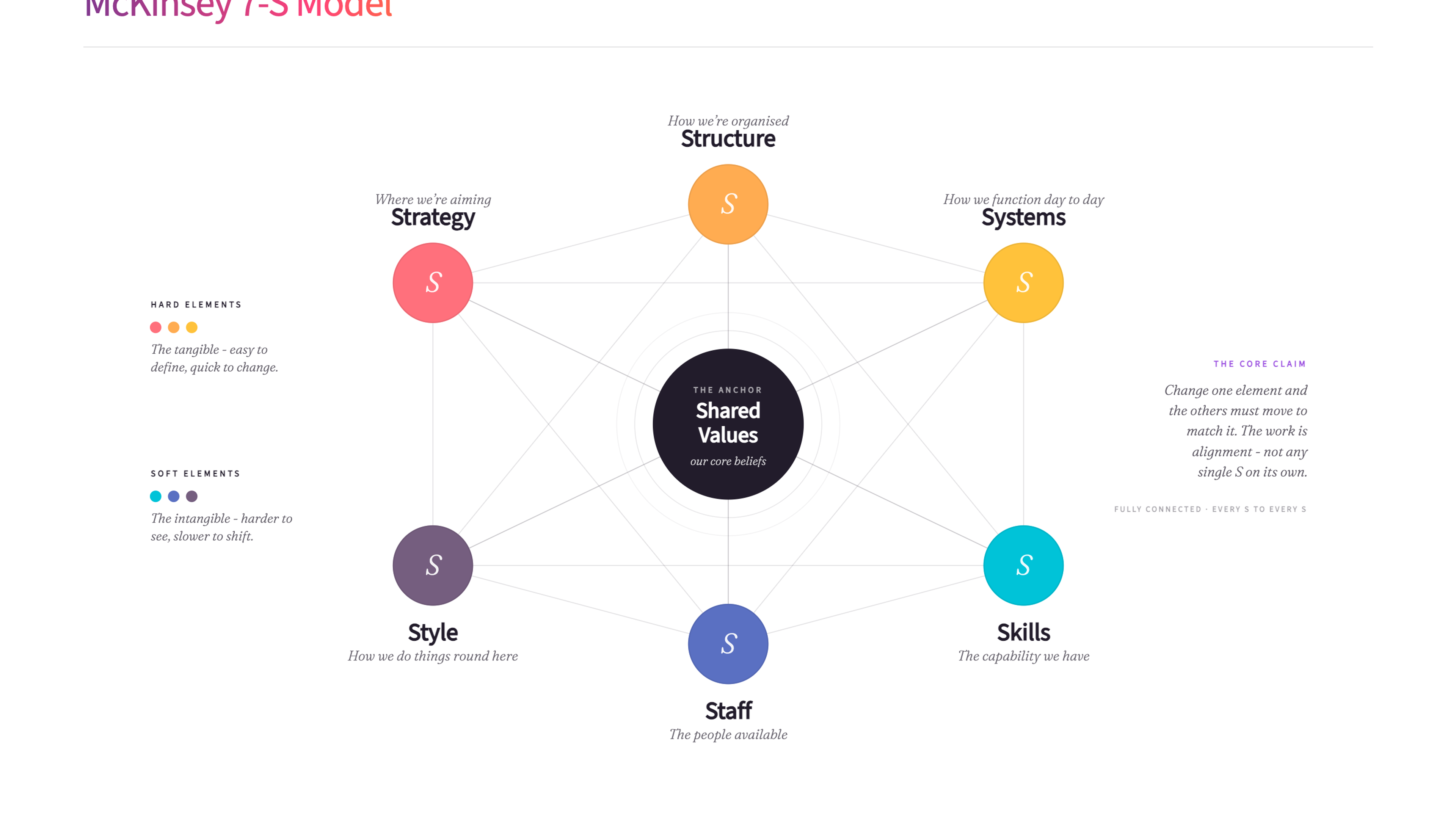
The McKinsey 7-S Model is a strategic framework that maps seven interconnected elements of an organisation - from strategy and structure to skills and shared values. It helps leaders understand how changing one part of the organisation affects everything else.
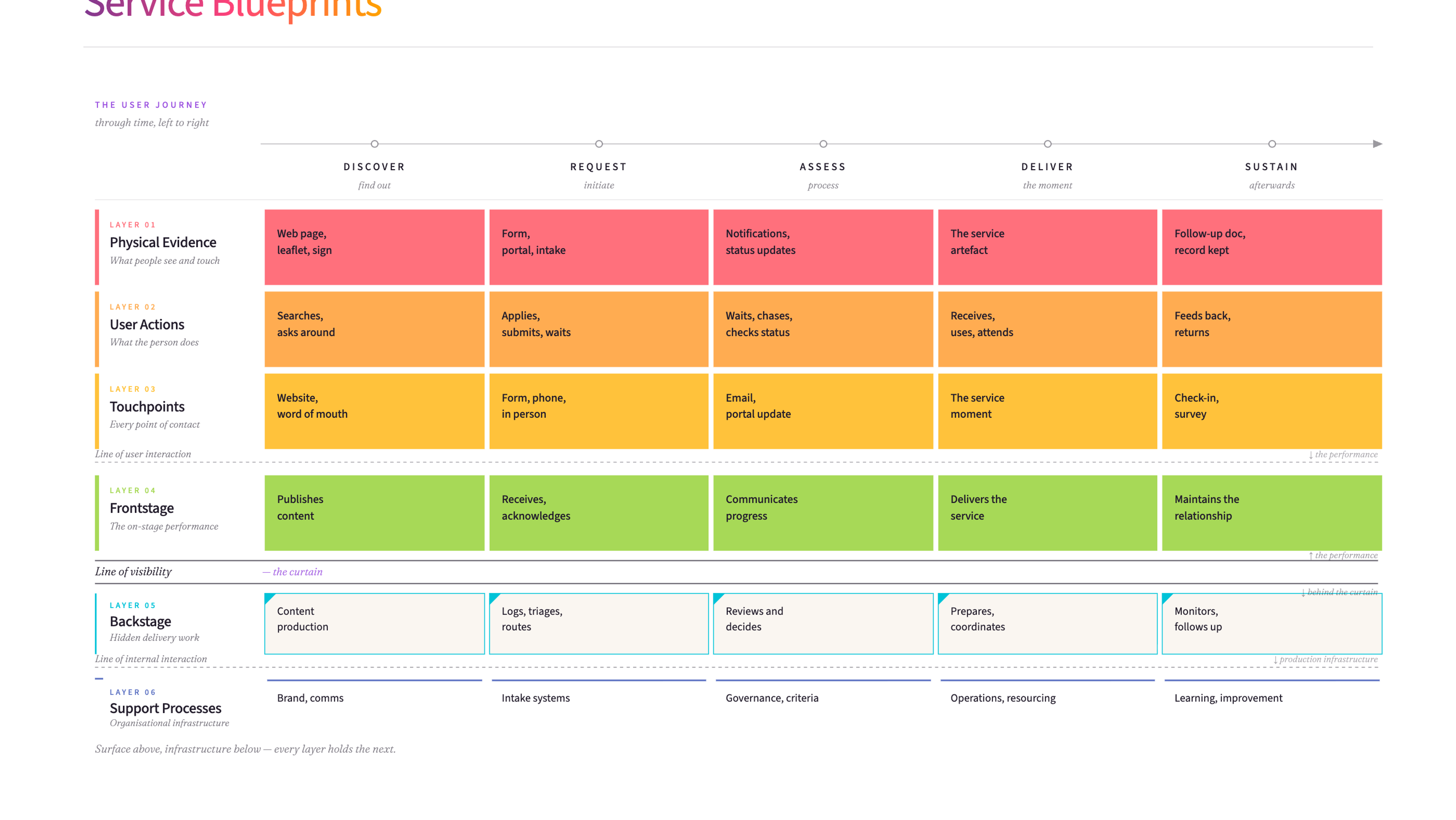
A service blueprint is a detailed map of how a service actually works - what the user sees and experiences on the front end, and everything happening behind the scenes to make it possible. It helps organisations redesign services by showing the full picture.
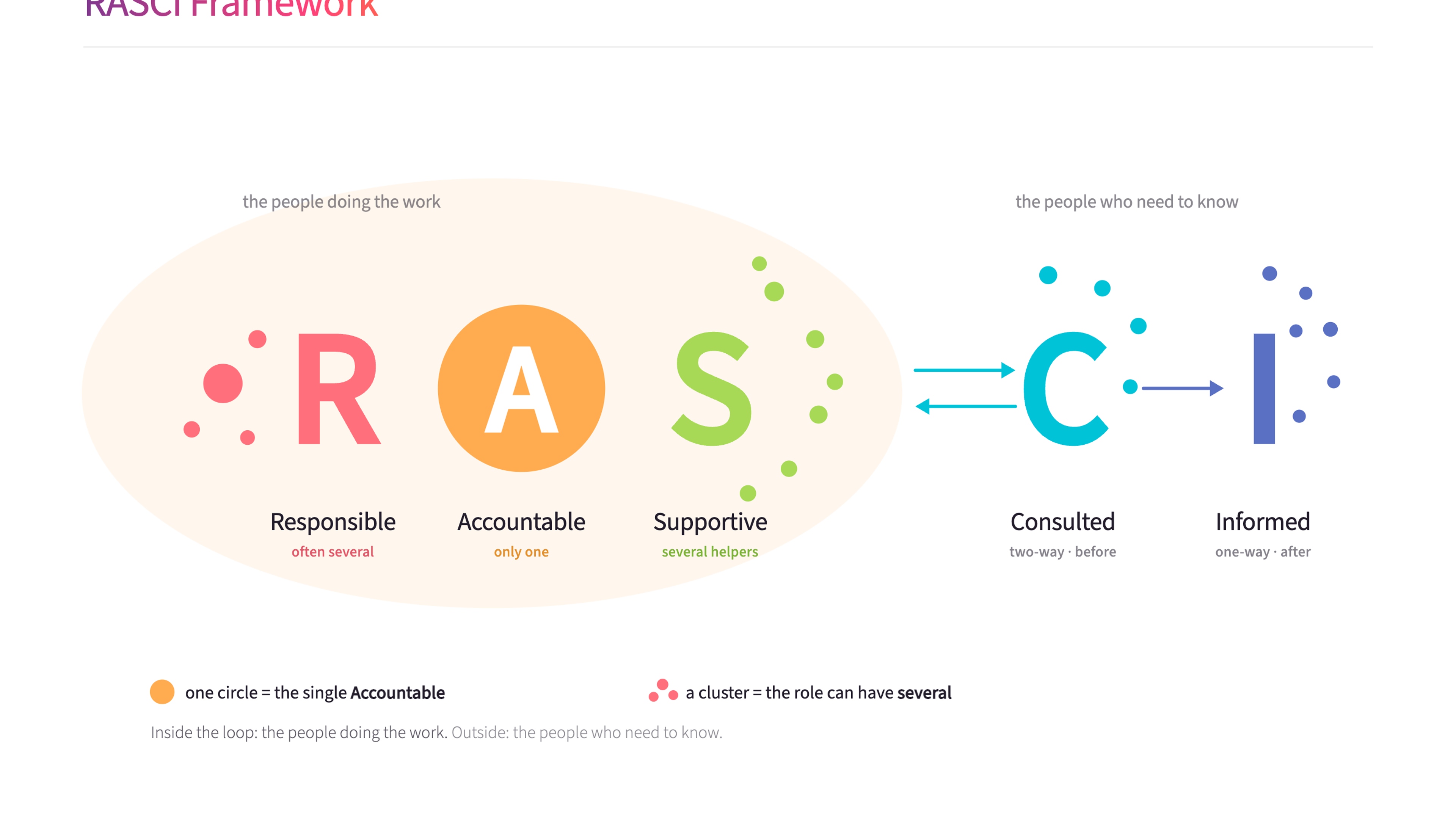
The RASCI Framework maps five roles in any project or decision - Responsible, Accountable, Supportive, Consulted, and Informed. It helps organisations clarify who does what, reducing confusion and speeding up delivery.
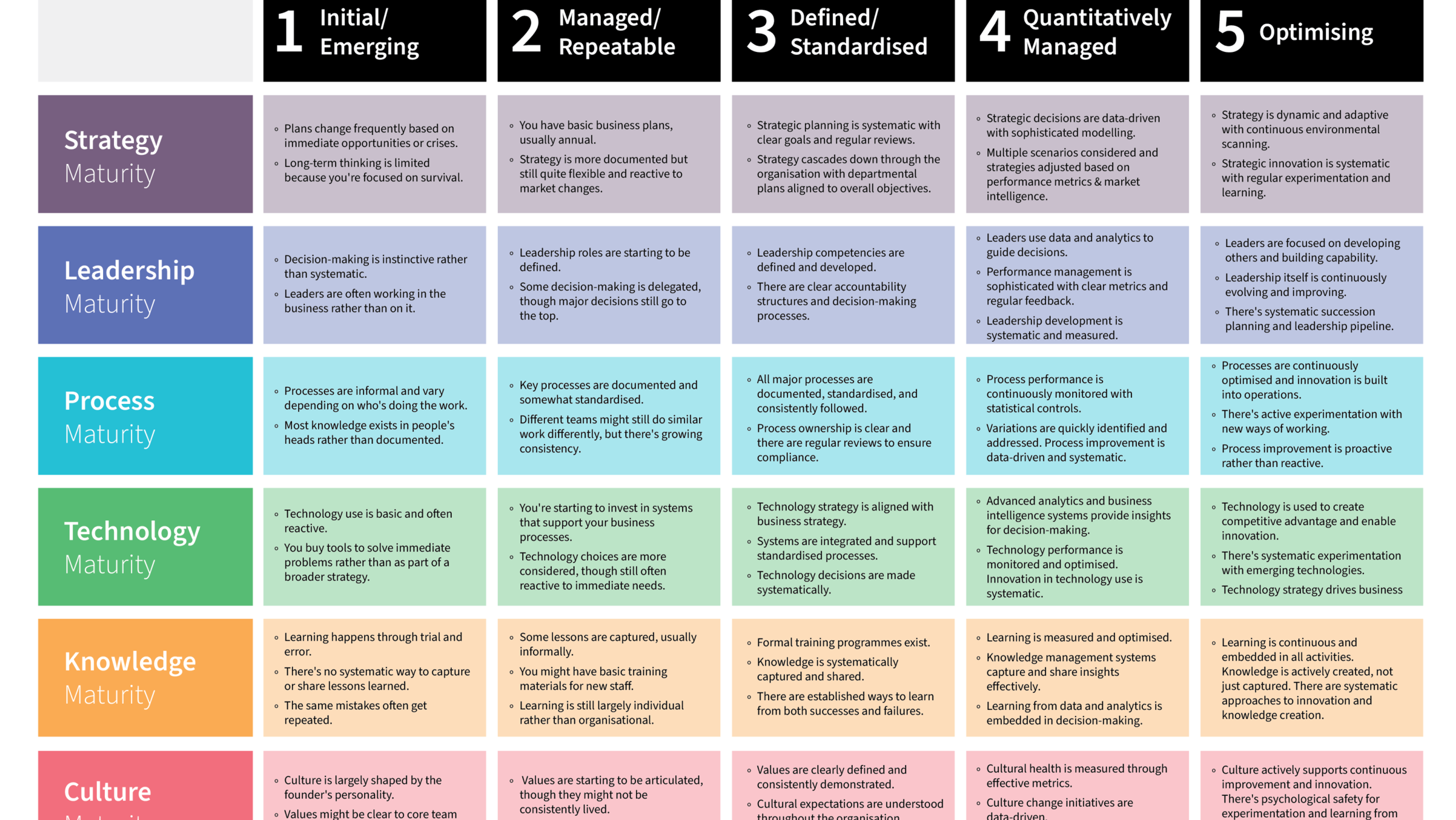
An Organisational Maturity Model maps how developed your organisation's processes and capabilities are across five stages - from ad-hoc and reactive through to optimising and continuously improving. It helps you see where you are and what the next step looks like.

Most organisational structures were designed for a different era - one where stability was the goal and change was the exception. This article explores what it means to design structures that can adapt when conditions change, and why getting this right matters more than getting the perfect org chart.

How to design governance that enables innovation rather than constraining it. This article explores the balance between oversight and freedom, and how the right governance structures can become a genuine advantage.
Most organisations run on invisible infrastructure - the corridor conversation, the person who just knows, the relationships that bridge gaps between teams. Growth puts all of it under pressure. Scaling well means designing what replaces it.
Thinking about restructuring?
A restructure readiness review tests the case, the structure you actually run, and the risks before anything moves.
James Freeman-Gray is the founder of Mutomorro. He's an organisational development practitioner who has spent over twenty years working with leaders across public, private and nonprofit sectors - helping organisations pull together around a common purpose, joined up in how they work. More about who we are and what it's like to work with us.
I use the POLISM Canvas when a leadership team needs to see how their organisation really runs, not just how it's drawn on the chart. Working through processes, organisation, locations, information, suppliers and management systems together tends to show where they don't fit each other - and those gaps are usually where the day-to-day friction comes from.
Last reviewed: May 2026

Want to put these ideas into practice?
Whether you're navigating a merger, rethinking how you're structured, or trying to shift a culture that isn't working - underneath, it's the same job: getting the whole organisation pulling in the same direction. Start with a conversation.