Scenario planning for leaders
Equip leadership teams with powerful tools—2x2 scenario planning, PESTLE analysis and more—to anticipate risks, shape strategy and strengthen organisational foresight.
The world your organisation operates in is changing. Some of those changes you can see coming. Others will surprise you. The question is not whether things will change - it is whether your organisation is ready for what comes next.
A PESTLE Analysis helps identify the external forces that should inform your scenario thinking - political, economic, social, technological, legal and environmental.
Strategic foresight is the practice of thinking seriously about the future - not to predict it, but to prepare for it. Scenario planning is the practical tool that makes foresight actionable. Instead of betting on a single forecast, you explore multiple plausible futures and develop strategies that work across them.
The 2x2 Scenario Matrix is the core tool you will use - a practical framework for mapping how two critical uncertainties could combine to create four distinct futures.
This course teaches your leadership team how to use scenario planning to make better strategic decisions. It is a practical day where you will build real scenarios for your organisation and use them to stress-test your strategy.
What you will work on
You will spend the day building scenarios that are specific to your organisation and its operating environment. These are not generic futures - they are carefully constructed stories about how the world around you could change, and what that would mean for your strategy.
The day covers three areas:
Scanning the horizon - Before you can build scenarios, you need to know what forces are shaping your environment. You will learn structured techniques for identifying the trends, uncertainties, and potential disruptions that matter most to your organisation. This is not about reading trend reports - it is about developing the habit of looking outward and thinking critically about what you see.
Building scenarios - With the key forces identified, you will construct a set of plausible future scenarios - typically three or four distinct futures that are different enough to challenge your thinking. You will learn how to make scenarios vivid and specific enough to be useful, without falling into the trap of prediction. Good scenarios are not forecasts. They are stories that help you think.
Stress-testing strategy - This is where the real value lands. You will take your current strategy and test it against each scenario. Where does it hold up? Where does it break? What assumptions is it built on, and how robust are those assumptions? You will identify the strategic choices that work across multiple futures and the vulnerabilities that need addressing - giving your leadership team a much more resilient basis for decision-making.
Who this is for
This course is designed for leadership teams and senior strategists who are responsible for setting direction. It works best when the people who make strategic decisions attend together, because the scenarios you build and the strategic conversations they provoke are most valuable when shared.
It is also valuable for organisations facing significant uncertainty - a changing market, a shifting policy environment, a sector in transition - where the usual planning assumptions feel less reliable than they used to.
What you will take away
You will leave with a set of plausible future scenarios specific to your organisation, a stress-tested view of your current strategy showing where it is robust and where it is vulnerable, and a practical approach to strategic foresight that you can use as an ongoing practice - not just a one-off exercise.
How the session works
The day is facilitated and collaborative. You will work together as a team through a structured scenario planning process, with the facilitator guiding the conversation and introducing techniques at each stage. The pace balances creative thinking with analytical rigour - building scenarios requires both imagination and discipline.
What makes this different
For more on building your organisation's capacity to think about the future, see our article on developing future literacy.
A lot of scenario planning feels like an academic exercise - interesting but disconnected from real decisions. This course is built entirely around your real strategy. The scenarios you build are specific to your organisation. The stress-testing targets your actual strategic choices. You leave with insight you can act on, not a report that gathers dust.
We also take a systems perspective on strategy. Your organisation does not exist in isolation - it operates within a wider ecosystem of stakeholders, competitors, regulators, and communities. The scenarios you build will account for those connections, giving you a more realistic picture of how the future might unfold for your specific organisation.
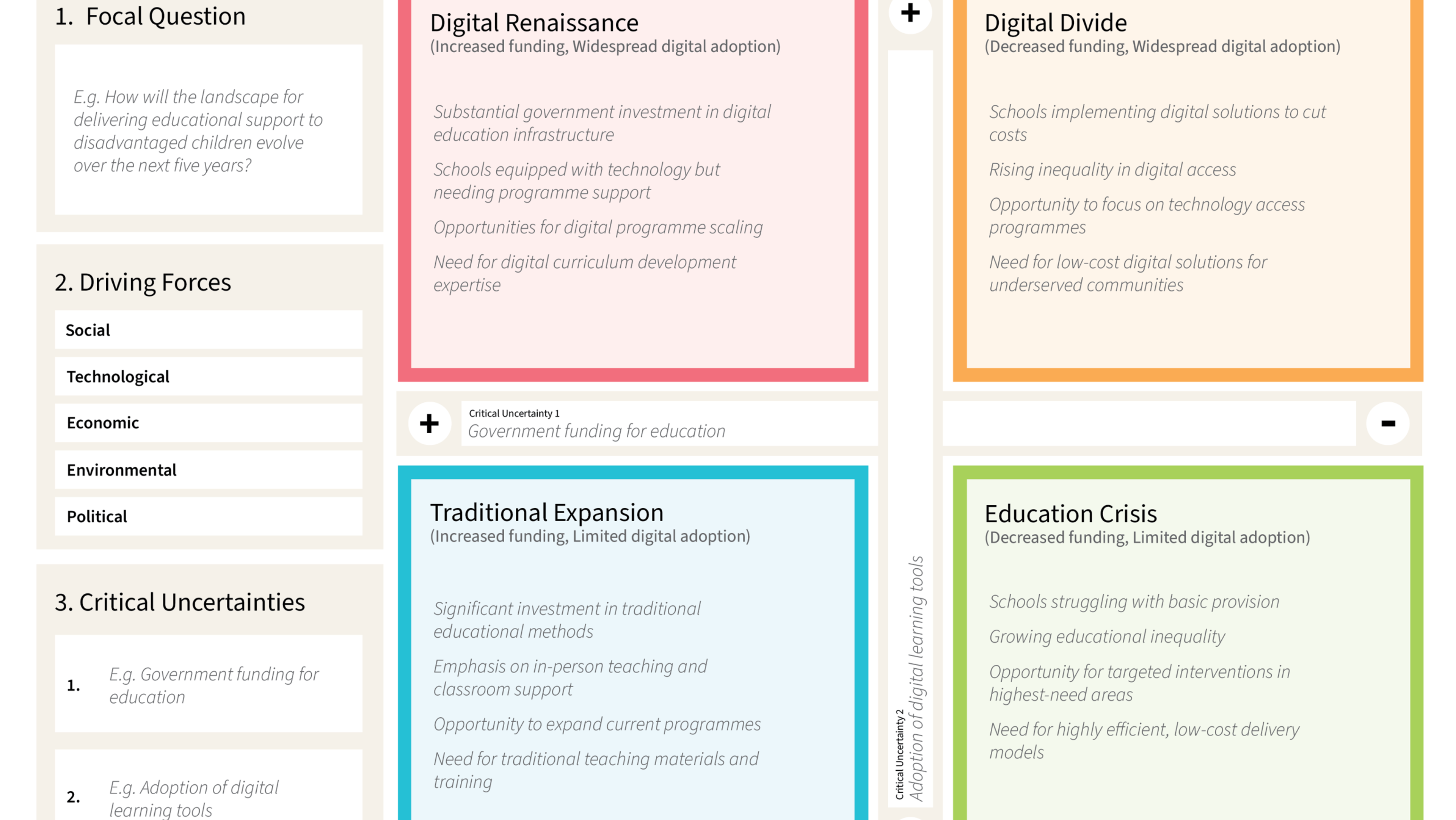
The 2x2 Scenario Matrix is a strategic planning tool that helps organisations explore different possible futures. By mapping two key uncertainties against each other, it creates four distinct scenarios you can plan and prepare for.
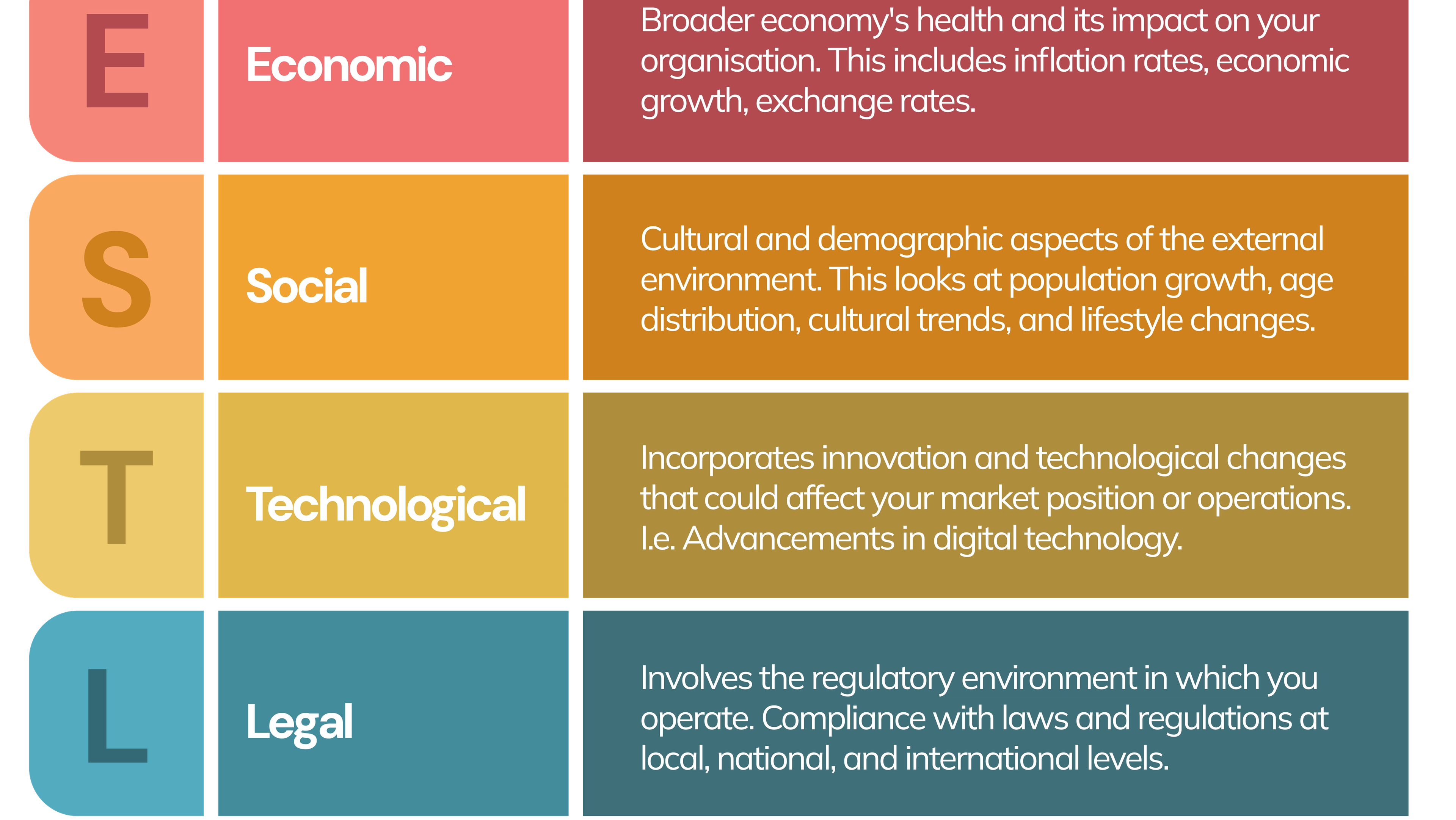
A PESTLE Analysis is a framework for scanning the external environment across six areas - Political, Economic, Social, Technological, Legal, and Environmental. It helps organisations understand the bigger forces that could affect their strategy and planning.

Why futures thinking needs to become an everyday organisational capability rather than an occasional planning exercise. This article explores how developing future literacy helps organisations navigate uncertainty with confidence.

Resilience isn't about bouncing back to where you were. It's about developing the capacity to adapt, learn, and come through difficulty stronger than before. This article explores what organisational resilience actually looks like and what leaders can do to build it.
Get in touch to find out more or book a place
Whether you're navigating a merger, rethinking how you're structured, or trying to shift a culture that isn't working - start with a conversation.