CEDAR™ Feedback Model
The CEDAR Feedback Model is a structured framework for leading feedback conversations that feel collaborative rather than top-down. It walks through Context, Examples, Diagnosis, Action, and Review to turn feedback into genuine development.
Get the free template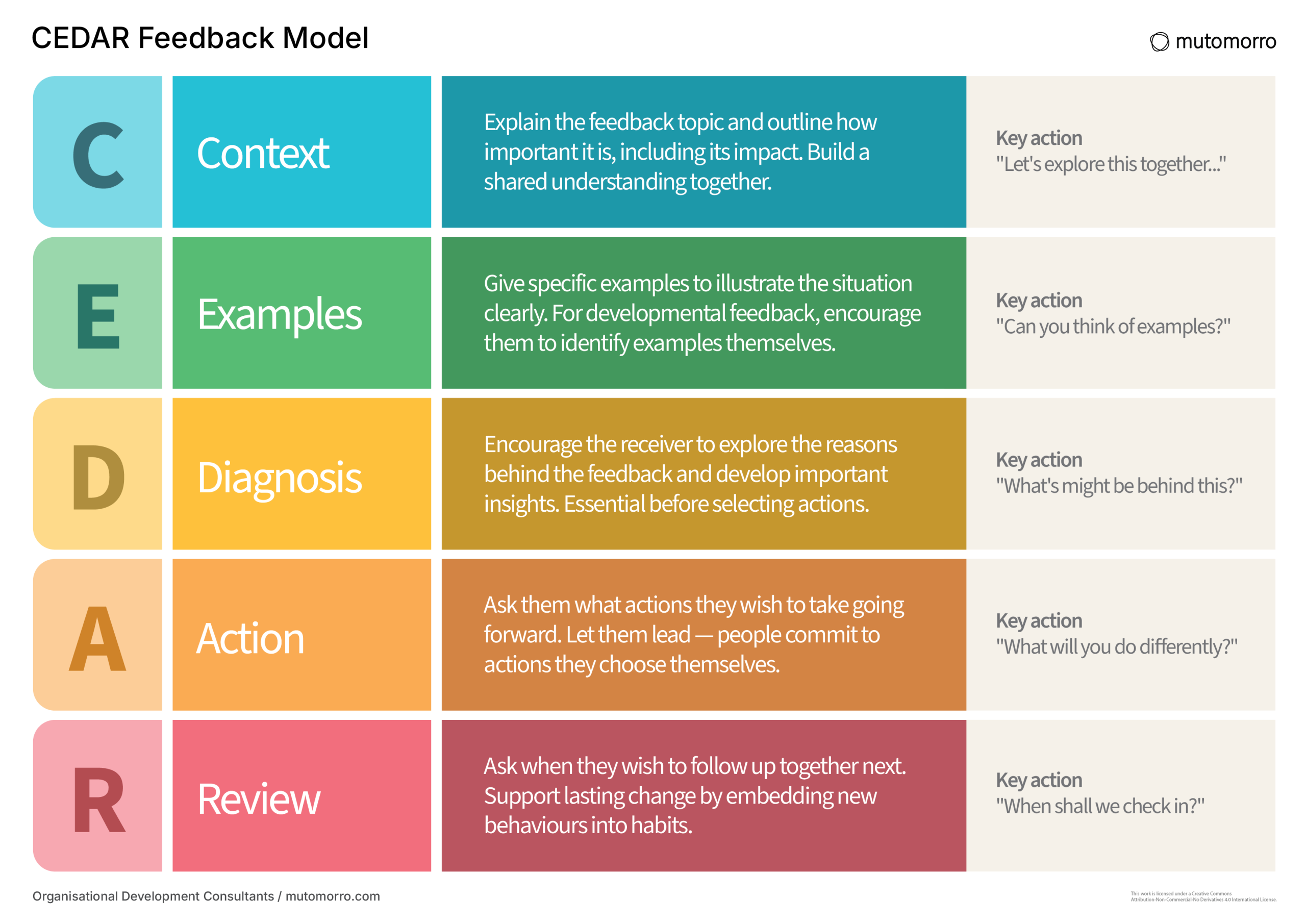
The CEDAR Feedback Model is a structured framework for leading collaborative feedback conversations that encourage genuine dialogue, reflection, and ownership.
What makes the CEDAR Feedback Model different
Unlike traditional feedback approaches where the manager delivers their assessment, this model is designed to be fully collaborative. The framework encourages the person receiving feedback to play an active part in the discussion - exploring examples, developing their own insights, and deciding on their own actions.
This collaborative approach is not just a nice-to-have. The CEDAR Feedback Model is based on a fundamental truth about feedback: people are far more likely to act on insights they have discovered themselves than conclusions handed to them by someone else.
History of the CEDAR Feedback Model
The CEDAR Feedback Model was developed by Anna Wildman in 2003. While demonstrating how to handle a difficult feedback conversation during a workshop for a Hong Kong government department, she realised that not having a framework for the discussion is like being without a map - you may be moving, but you are not entirely sure it is in the right direction.
Over the following years, she observed thousands of real-life conversations, paying particular attention to what feedback receivers need to buy into the discussion. The result was CEDAR - five steps that help managers guide feedback conversations confidently and constructively, even when addressing tough situations.
The model has since been adopted globally, with organisations including KPMG using it across their international network to help people leaders develop skilled feedback conversations.
How the CEDAR Feedback Model can be used
Understanding someone's DiSC style can help you tailor your approach to giving feedback - what works for a D style won't land the same way with an S.
The CEDAR Feedback Model works for both positive and developmental feedback. The framework applies equally whether you are recognising excellent performance or addressing areas that need improvement - the action step can be about building on strengths just as much as improving performance.
The model provides a structured approach that ensures feedback conversations are clear, specific, and lead to genuine commitment. By following the five steps, you create space for the individual to reflect, develop insight, and take ownership of their development.
The 5 steps of CEDAR
1. Context
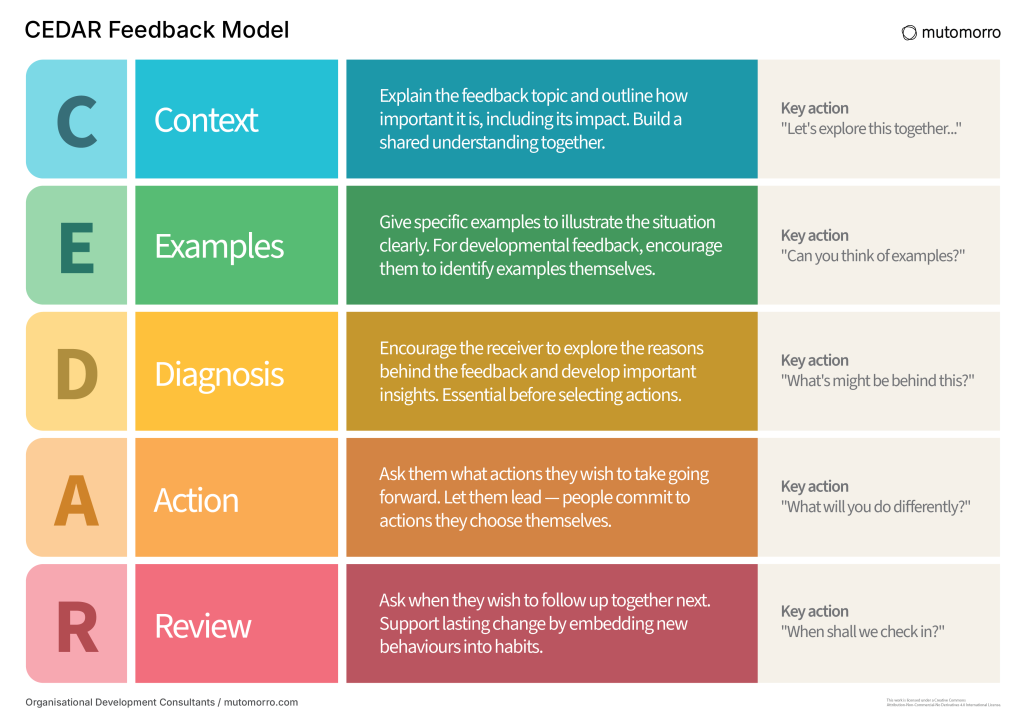
Explain the feedback topic and outline how important it is, including its impact.
The first step anchors the feedback within the bigger picture. Without perspective, information is a free-floating fragment, and it can be hard for people to understand its significance.
When setting context:
- Introduce the area of feedback and explain that the purpose is to explore both your perspectives
- Explain the level of impact - how significant it is, who is affected, and the outcomes
- Explore their perspective and jointly build a combined view of the context
This collaborative approach to context-setting ensures both parties have a shared understanding before moving into specifics.
The 4 Stages of Psychological Safety model is useful preparation here - people are far more receptive to feedback when they feel safe enough to be open about what's not working.
2. Examples
The STAR Method complements CEDAR by providing a clear structure for describing the specific situations and behaviours you want to give feedback on.
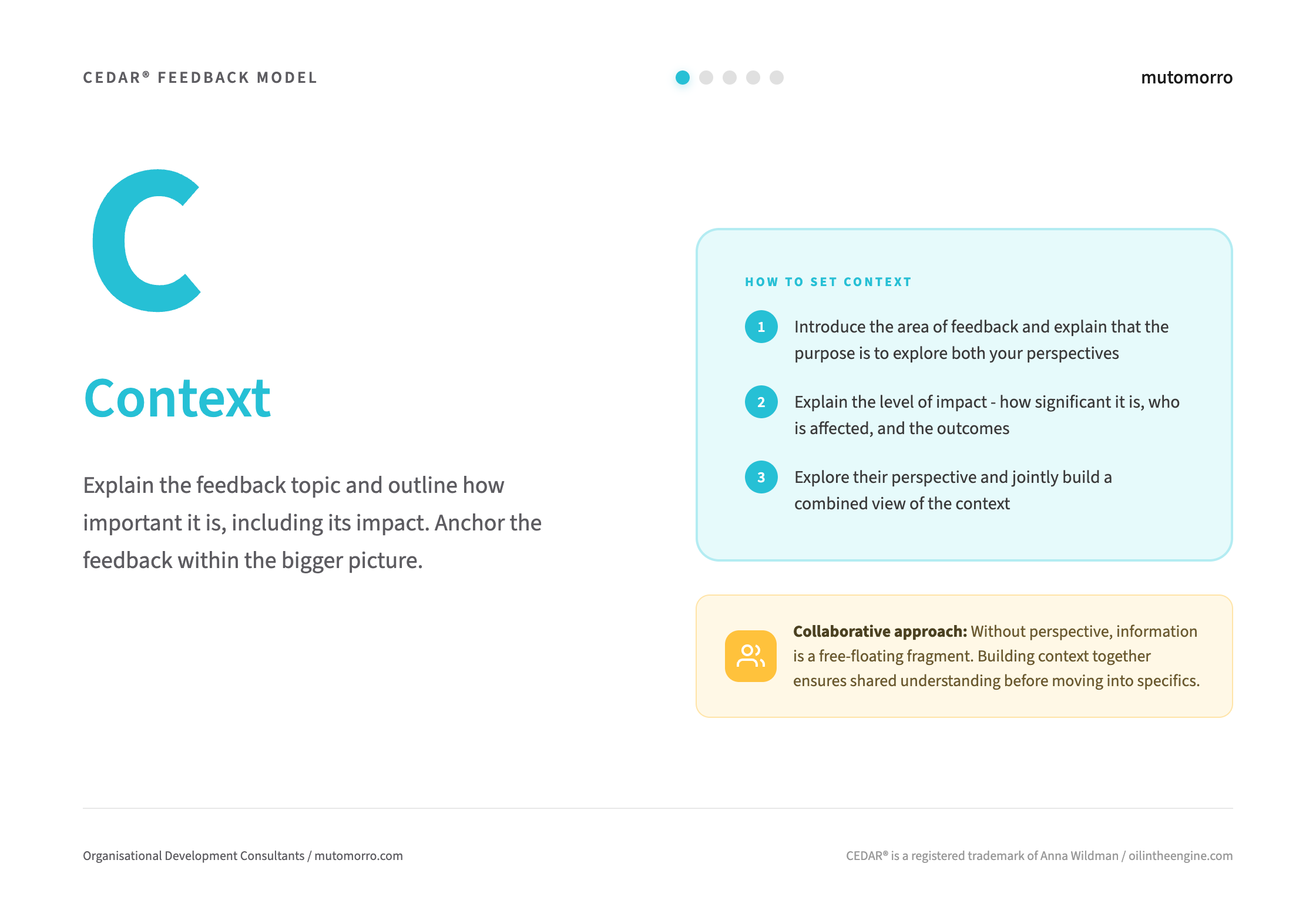
Give a couple of specific examples to illustrate the situation clearly.
Concrete examples make feedback tangible and actionable. However, who leads this step depends on the nature of the feedback:
- For developmental feedback, encourage the individual to identify examples themselves - this builds ownership from the start
- For positive feedback, it is often more powerful if you lead, emphasising behaviours that add particular value
Use enough examples to illustrate the situation clearly. This might be a single substantial example or two or three smaller ones grouped together. Avoid overwhelming the individual - while it is important to build the picture, more than four examples can feel like drinking from a fire hose.
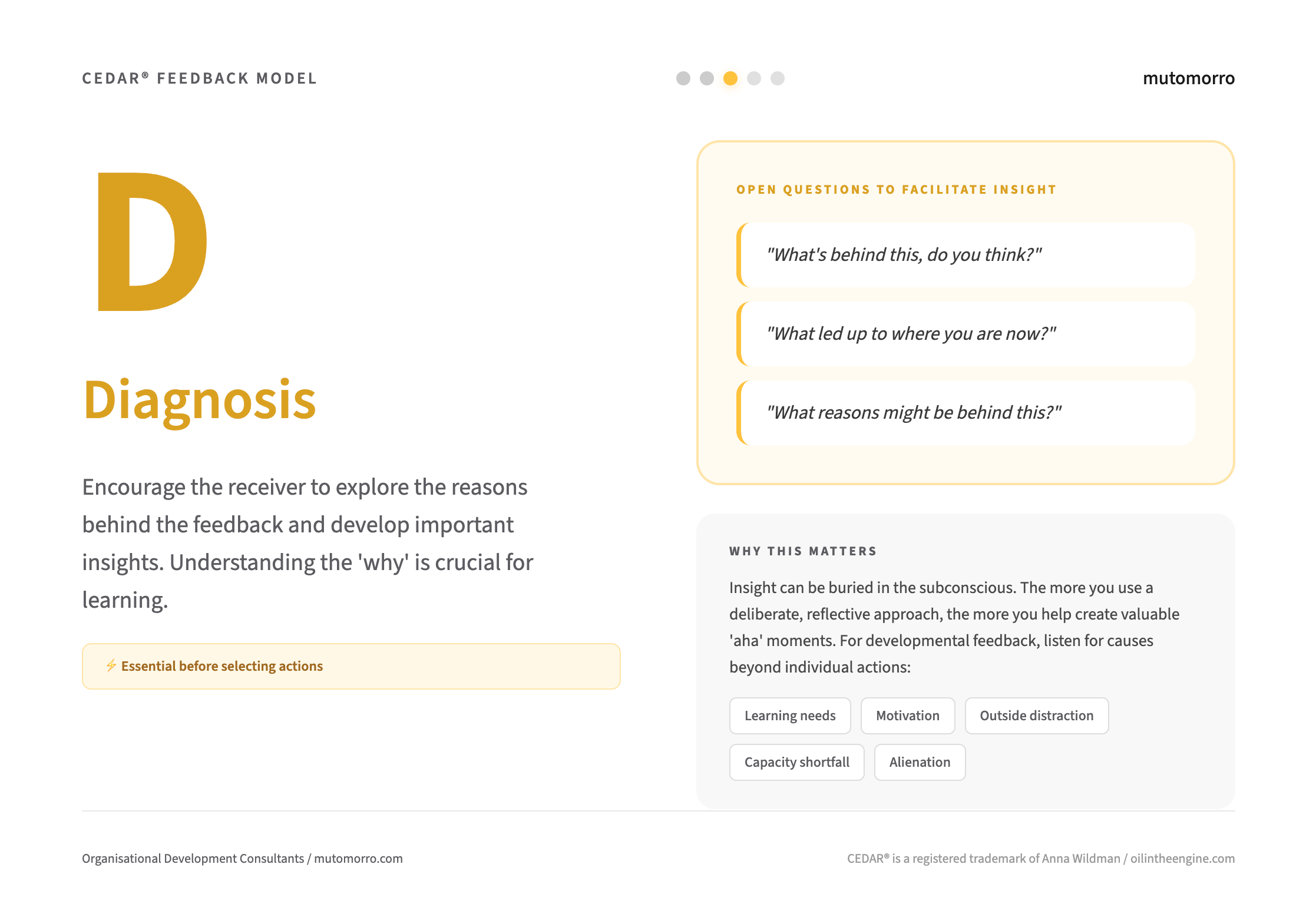
3. Diagnosis
Encourage the receiver to explore the reasons behind the feedback and develop important insights.
This step is essential before selecting the right actions. Understanding what is behind performance - whether strong or needing development - is crucial for genuine learning.
Rather than offering your interpretation, ask open questions that help the individual make connections and create valuable insights:
- "What's behind this, do you think?"
- "What led up to where you are now?"
- "What reasons might be behind this?"
Insight can sometimes be buried in the subconscious. The more you use a deliberate and reflective approach, the more you help the individual to develop meaningful understanding of their own performance.
For developmental feedback, listen for problems that might stem from processes or leadership as much as from individual actions. Common causes of underperformance include learning needs, motivation, outside distraction, capacity shortfalls, or - in extreme cases - alienation.
If the feedback touches on how someone handles disagreement, the 5 Conflict Styles model can help both of you understand the pattern and explore alternatives.
4. Action
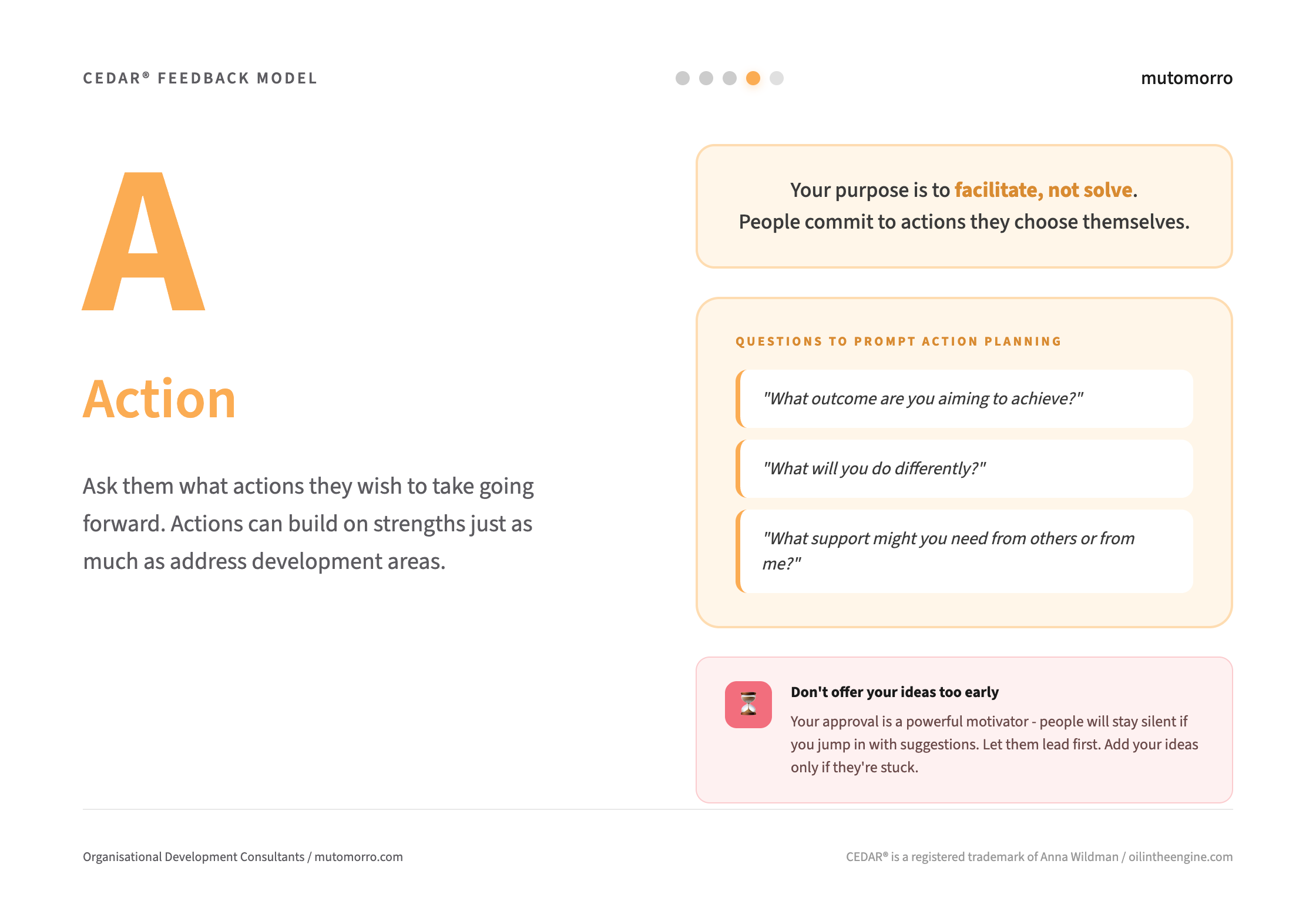
Ask them what actions they wish to take going forward.
Up to this point, the conversation has built awareness. Now the individual applies that understanding to decide what actions matter going forward.
Unless the person is inexperienced in their role, encourage them to lead this step. Your purpose is to facilitate, not to solve - people are far more likely to implement actions they have chosen for themselves.
Help them be as concrete as possible. The more they can visualise the difference between where they are now and where they are aiming, the easier it is to see how to achieve it. Ask questions like:
- "What outcome are you aiming to achieve?"
- "What support might you need from others or from me?"
- "What will you do differently?"
In some instances, the individual might not know what to do, or you may need to be more directive. When this happens, add your suggestions - just do not do this too early. Your approval is a powerful motivator, and people will stay silent if you offer your ideas too soon.
Remember: actions can be about building on strengths just as much as addressing gaps.
5. Review
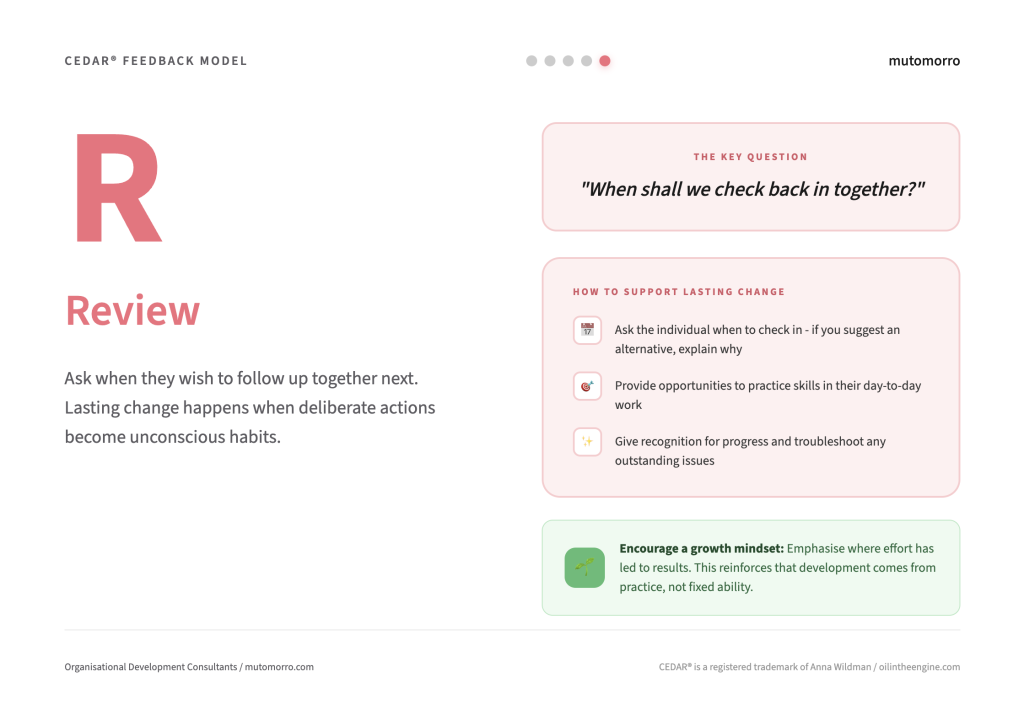
Ask when they wish to follow up together next.
Following up to support and embed new behaviours is critical. Lasting change only happens when deliberate actions become unconscious habits.
When planning the review:
- Ask the individual when you should check back in together
- If you need to suggest an alternative date, explain why
- Provide opportunities for them to practise skills in their day-to-day work
- Give recognition for progress and troubleshoot any outstanding issues
- Emphasise where effort has led to results, encouraging a growth mindset
Key principles for using CEDAR effectively
Encourage collaboration throughout. The framework's power comes from genuine dialogue, not one-way delivery. Create space for the individual to share their perspective at every step.
Let them lead where possible. Particularly in the Diagnosis and Action steps, resist the urge to provide your analysis or solutions. Questions that prompt reflection create far more lasting impact than answers handed over.
Do not skip Diagnosis. It is tempting to jump from examples straight to actions, but understanding the 'why' is essential for selecting the right path forward. This is what sets the CEDAR Feedback Model apart from simpler feedback frameworks.
Use it for all feedback. The CEDAR Feedback Model works equally well for recognising strengths as for addressing development areas. The collaborative approach ensures people feel valued when things go well and supported when they need to improve.
Summary
Our employee recognition training draws on CEDAR, among other approaches, for practical feedback skills.
Google's Project Oxygen research identified coaching and giving feedback as one of the behaviours that most distinguishes effective managers - CEDAR gives you a structure to do it well.
Giving effective feedback is a core leadership skill - see our guide to emotional intelligence for leaders for more on developing this capability.
The CEDAR® Feedback Model transforms feedback from something done to people into a conversation done with them. By following the five steps - Context, Examples, Diagnosis, Action, and Review - you create structured space for genuine reflection, insight, and commitment to change.
Whether you are addressing performance concerns or celebrating success, CEDAR provides a consistent approach that builds trust and drives lasting improvement. The result is feedback conversations that do not just communicate information but build understanding, ownership, and positive change.
CEDAR® is a registered trademark of Anna Wildman / Oil in the Engine. For more information, training resources, and the book "Now You're Talking!", visit oilintheengine.com
We share thinking on organisational change and development on LinkedIn - practical ideas for people doing this work inside their own organisations.
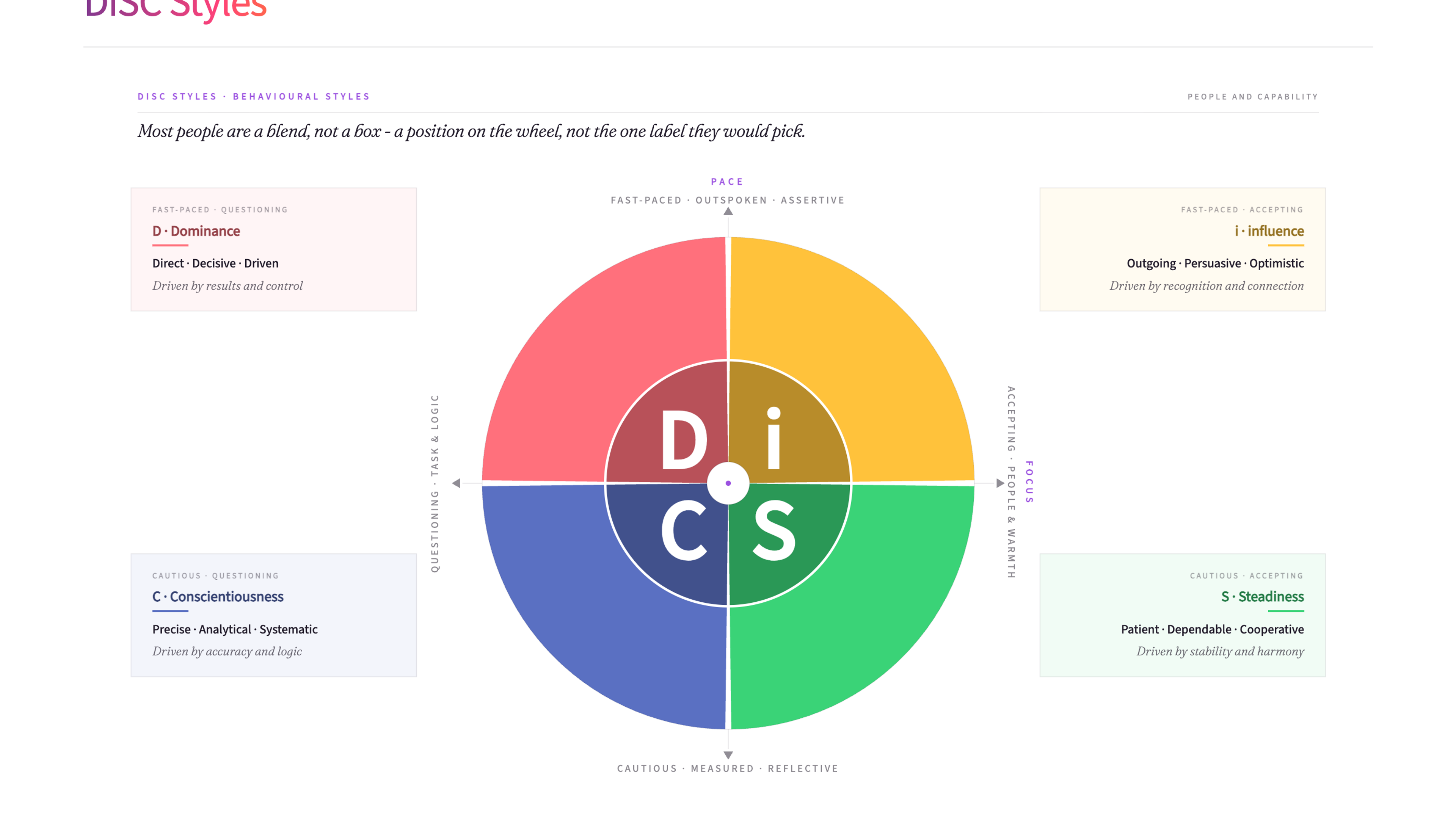
The DiSC model is a behavioural profiling tool that maps four personality styles - Dominance, Influence, Steadiness, and Conscientiousness. It helps teams understand how different people communicate, make decisions, and approach work.
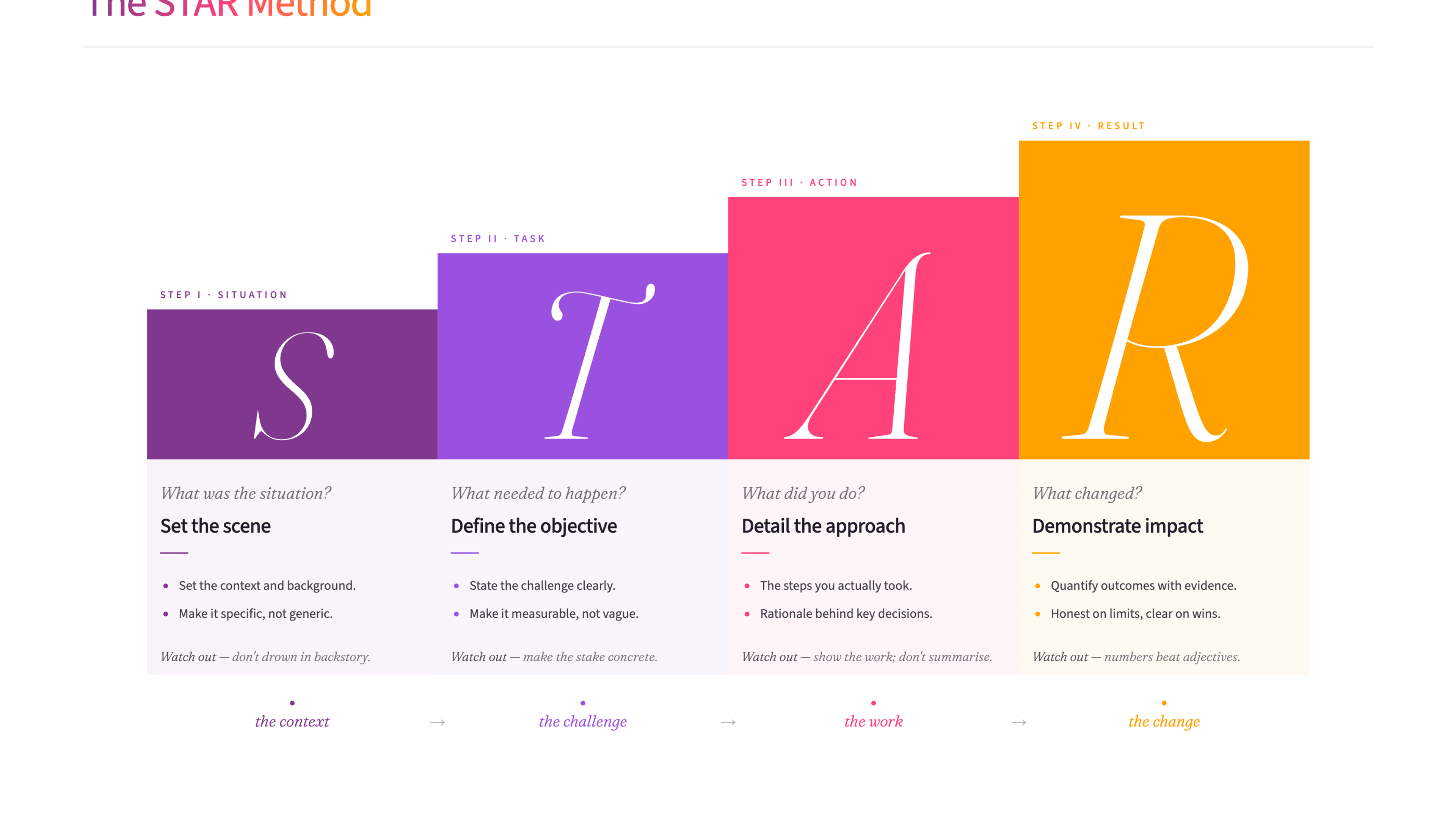
The STAR method is a structured storytelling framework that uses Situation, Task, Action, and Result to create clear, compelling narratives that demonstrate impact and engage audiences through concrete examples rather than abstract claims.
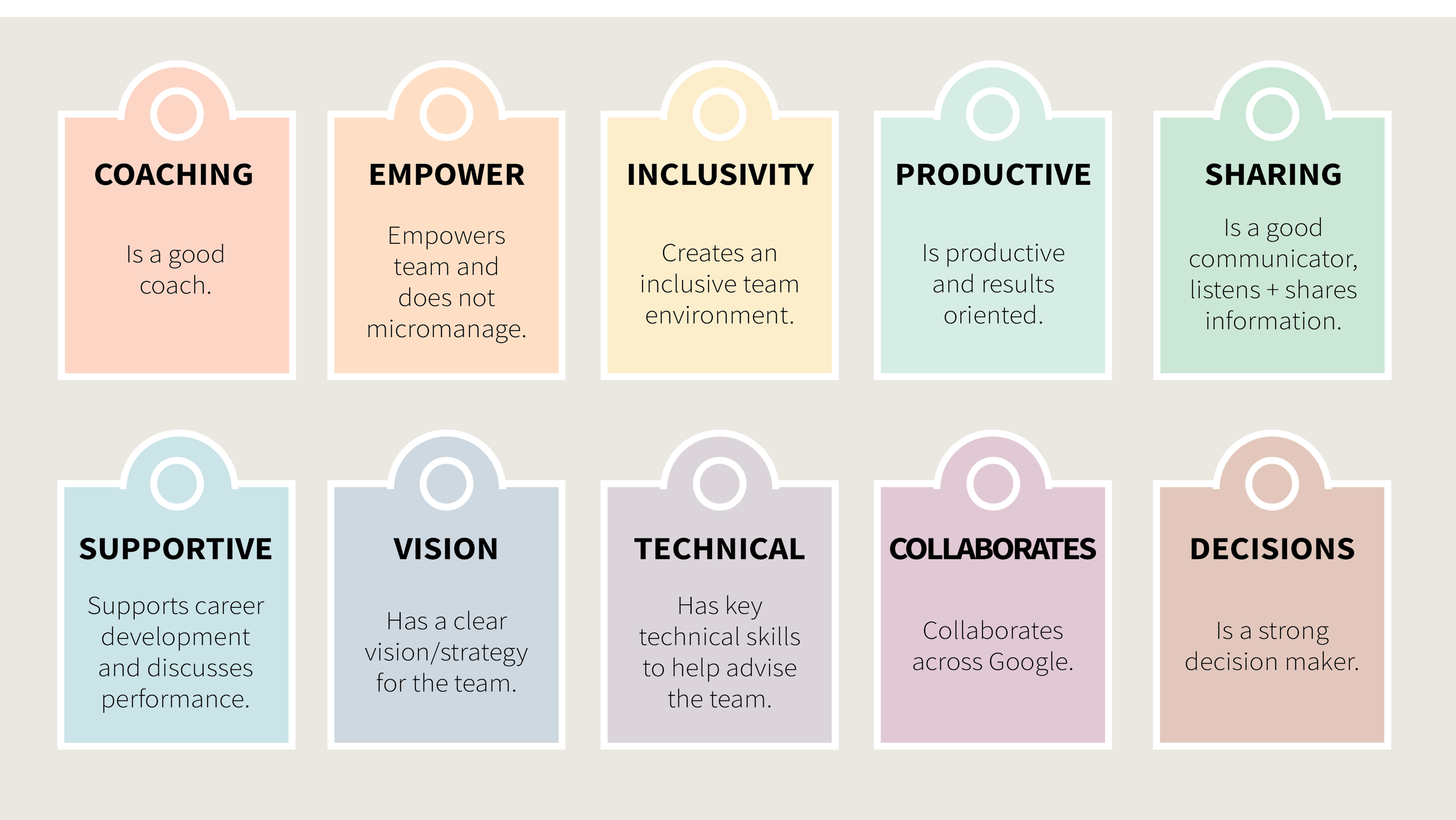
Project Oxygen is Google's research into what makes a great manager. It identified key behaviours - from being a good coach to supporting career development - that consistently lead to better team outcomes.
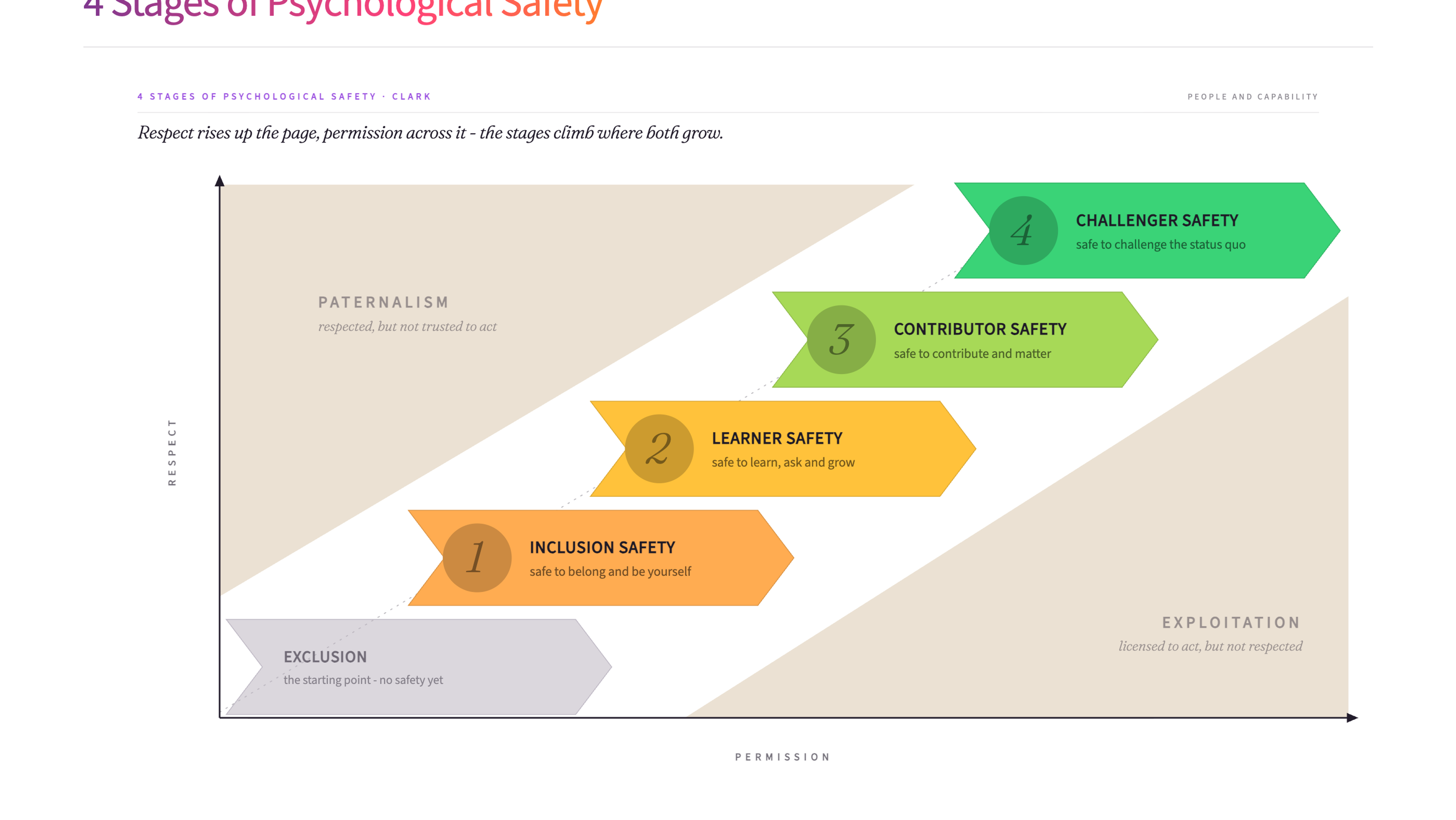
The 4 Stages of Psychological Safety is a framework that maps how safe people feel to be themselves, learn, contribute, and challenge the status quo. It helps leaders understand what conditions people need before they'll speak up and take risks.

Emotional intelligence in leadership isn't about being nice or reading a room. It's about the quality of attention you bring to how people are experiencing your leadership - and the willingness to adjust what you do based on what you notice.

Psychological safety is one of the strongest predictors of team performance - but it's often misunderstood. This article explores what it actually looks like in practice, why it matters beyond the research headlines, and what leaders can do to build the conditions where honesty, learning, and real collaboration become possible.
Team Effectiveness Training
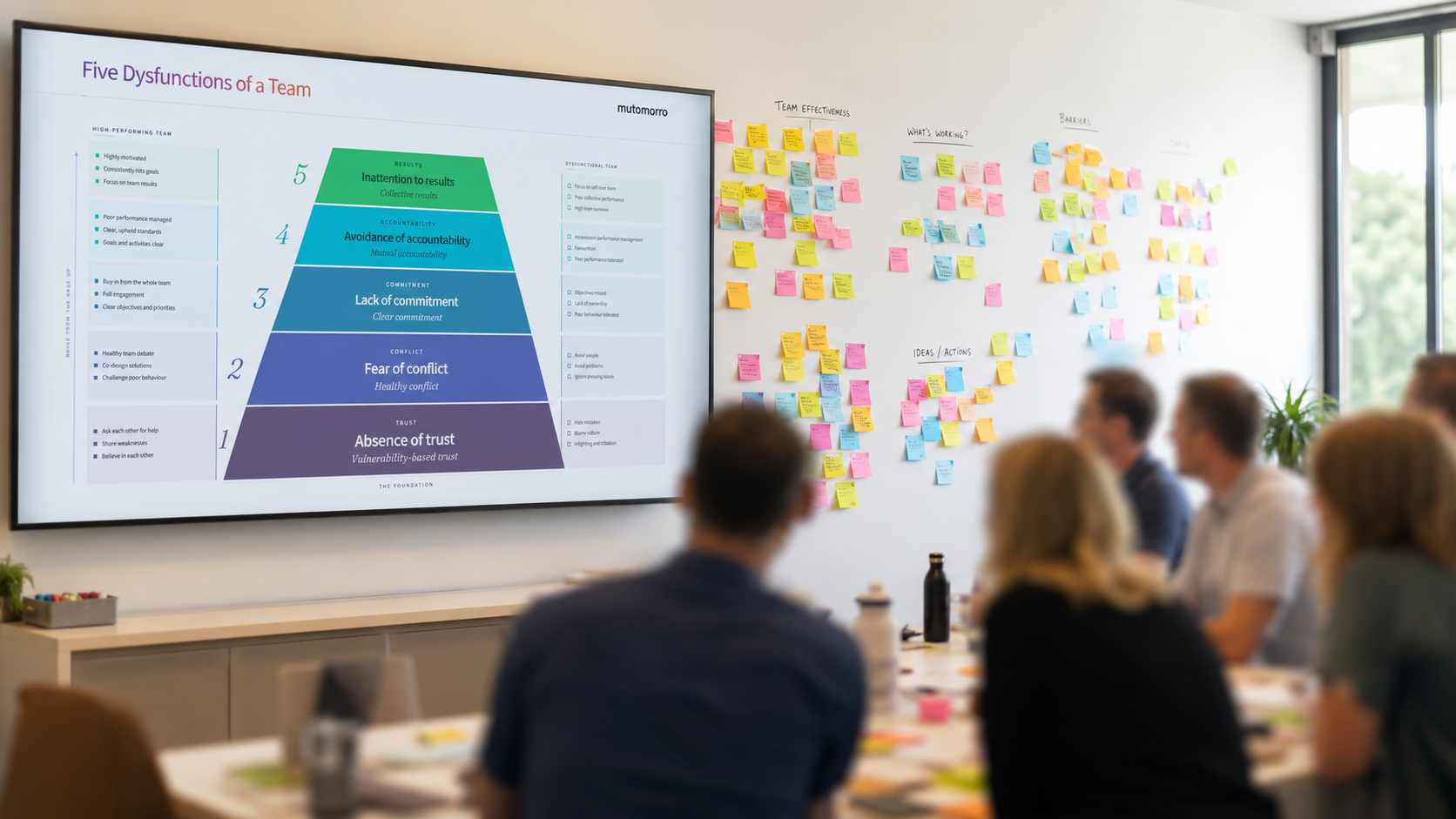
Good feedback is part of what makes a team effective, and CEDAR is one of the models we draw on in our Team Effectiveness training.
James Freeman-Gray is the founder of Mutomorro. He's an organisational development practitioner who has spent over twenty years working with leaders across public, private and nonprofit sectors - helping organisations pull together around a common purpose, joined up in how they work. More about who we are and what it's like to work with us.
CEDAR gives structure to feedback conversations that would otherwise feel awkward or unproductive. I've used it in leadership development programmes to help managers move from avoiding difficult conversations to approaching them with confidence. The "Actions" and "Review" stages are what make it stick - without them, feedback stays theoretical.
Last reviewed: May 2026
Ready to use CEDAR™ Feedback Model?
Download the free template - includes practical guidance for workshops and team sessions.
Get the free template
Want to put these ideas into practice?
Whether you're navigating a merger, rethinking how you're structured, or trying to shift a culture that isn't working - underneath, it's the same job: getting the whole organisation pulling in the same direction. Start with a conversation.