STAR Method
The STAR method is a structured storytelling framework that uses Situation, Task, Action, and Result to create clear, compelling narratives that demonstrate impact and engage audiences through concrete examples rather than abstract claims.
Get the free template
You have done good work. The challenge is explaining it clearly - to an interviewer, a manager, a funding panel, or a room full of people who were not there when it happened. The STAR Method gives you a simple structure for turning experience into a clear, concrete story that lands.
What is the STAR Method?
The STAR Method is a structured way of describing what you have done and what came of it. It breaks any experience into four parts:
- Situation - the context and circumstances
- Task - what you needed to achieve
- Action - what you did
- Result - what happened as a consequence
That is the whole thing. Four prompts, in order, that turn a vague "it went well" into something specific enough for other people to understand - and remember.
The method originated in behavioural interviewing research in the early 1980s, where industrial psychologists found that asking people for structured examples of past behaviour predicted future performance far better than hypothetical questions. It was designed for recruitment, and that is still where most people first encounter it. But the same structure works anywhere you need to communicate what happened and why it mattered - performance reviews, project reports, case studies, funding applications, team retrospectives, or a conversation with your manager about what you have been working on.
The reason it works is straightforward. STAR mirrors how people naturally process stories about events: they want to know the context, the challenge, what someone did about it, and how it turned out. When you leave out any of those four, the listener fills in the gaps themselves - usually less generously than the reality deserves.
How the STAR Method works
Each element does a specific job. Getting the balance right between them is what separates a clear STAR response from a rambling one.
Element | The question it answers | Example (from the worked story) |
|---|---|---|
Situation | What was the context, and what was at stake? | Repair requests logged on paper, then keyed into two systems - four days from call to contractor, and steady complaints. |
Task | What did you personally need to achieve? | Cut request-to-contractor time to under 48 hours, no extra headcount, keeping the compliance audit trail. |
Action | What did you do, and why? | Mapped the process, found double-entry was the bottleneck, piloted a single-entry platform, then ran rollout and training. |
Result | What happened as a result? | Time dropped to 18 hours; admin data-entry fell from ~70% to ~25%; repair satisfaction rose from 3.4 to 4.2. |
Situation

The situation sets the scene. Not a full history lesson - just enough context for your listener to understand why this mattered and what was at stake.
Good situation descriptions are specific. "We were under pressure" tells your listener nothing. "Our team had three weeks to deliver a programme that would normally take eight, because the client brought the launch date forward after a regulatory change" - now they can picture it.
Include the constraints, the scale, and the people involved. Leave out anything your listener does not need in order to follow the rest of the story. If you are spending more than a quarter of your total response on the situation, you are probably over-explaining.
Task

The task is what you personally needed to achieve within that situation. This is where many people slip - they describe what the team or organisation needed, rather than their own specific responsibility.
Be precise. "My job was to make it work" is too vague. "I was responsible for redesigning the delivery schedule and getting sign-off from three department heads within a week" gives your listener a clear picture of what success looked like for you.
The task should connect directly to the situation you have just described. If the connection is not obvious, your situation probably needs tightening.
Action

The action is the core of your response - what you did, step by step. This is where you show your thinking, your decisions, and your approach.
Focus on what you did, not what the team did collectively. Use "I" more than "we" here - not to claim all the credit, but because your listener wants to understand your specific contribution. Where collaboration mattered, describe your role within it: "I coordinated the three workstreams" rather than "we all worked together."
Describe the reasoning behind key decisions, not just the decisions themselves. "I chose to run parallel workstreams rather than sequential ones because we could not afford the time risk of dependencies" tells your listener something about how you think.
Keep it concrete. Vague actions ("I managed the process effectively") are as unhelpful as vague situations. Specific actions ("I set up daily fifteen-minute check-ins with each workstream lead and built a shared tracker so the client could see progress in real time") show what you bring.
Result

The result is what happened because of your actions. Wherever possible, make it measurable: numbers, percentages, timelines, feedback scores, money saved, people reached.
Strong results connect back to the task. If your task was to reduce delivery time, your result should tell the listener whether you did - and by how much. If there were unexpected benefits beyond the original goal, mention those too. They show that your approach had broader impact.
Be honest. If the result was mixed - you hit the deadline but over budget, or the project succeeded but the client relationship was strained - say so. Then explain what you learned. Credibility matters more than a perfect ending, and the ability to reflect on experience is itself a valuable capability.
How to use the STAR Method
STAR is most commonly used in three contexts, each with slightly different emphasis.
Interviews. This is where most people meet STAR for the first time. When an interviewer asks "tell me about a time when you..." they are looking for a structured example, not a general claim. A STAR response gives them something specific to assess. Preparation matters here - before an interview, identify six to eight strong examples from your recent experience and practise structuring each one. You will not use all of them, but having them ready means you can select the right one in the moment rather than scrambling.
Feedback and development conversations. STAR works well for giving feedback because it keeps you grounded in specific observable behaviour rather than general impressions. "You handled that client situation well" is nice to hear but hard to learn from. Walking through the situation, the task you faced, what you did, and the result gives the other person something they can repeat and build on. For more structured feedback conversations, STAR pairs naturally with the CEDAR Feedback Model - use STAR to describe the specific behaviour, then CEDAR to structure the conversation around it.
Reports, case studies, and presentations. Any time you need to communicate the impact of work - a project review, a funding report, a case study for your website, a board presentation - STAR gives you a backbone. It stops you jumping straight to the result (which is tempting but leaves your audience wondering how you got there) or getting lost in the process detail (which loses people who just want to know whether it worked). The structure is invisible to your audience, but it keeps your narrative tight. For longer, more complex narratives - a transformation story, a multi-year programme - the Hero's Journey offers a richer arc that builds on the same underlying logic of challenge, action, and resolution.
STAR also works well as a team tool. Running a retrospective where each person shares one STAR story from the past quarter builds a shared picture of how capability and learning flow through the team - and surfaces achievements that might otherwise go unnoticed.
Example
Imagine you are in an interview and the question is: "Tell me about a time you improved a process."
Situation: "I was leading a small operations team at a housing association. Our tenant repair requests were being logged on paper forms, then manually entered into two separate systems - one for the contractor and one for our internal tracker. It was taking an average of four days from a tenant calling in to a contractor receiving the job, and we were getting regular complaints about delays."
Task: "I was asked to reduce the time from request to contractor assignment to under 48 hours, without adding headcount. We also needed to maintain our audit trail for regulatory compliance."
Action: "I mapped the full process end to end and found that the double entry was the main bottleneck - it took up roughly 60% of the admin time per request. I researched three digital platforms that could handle both functions from a single entry point, ran a pilot with one of them over six weeks using a small batch of non-urgent repairs, and then presented the results and a costing to the director. Once approved, I managed the rollout, including training for the five-person admin team and a parallel-running period where we kept the paper system as backup."
Result: "Within two months of going live, the average time from request to contractor assignment dropped to 18 hours. The admin team went from spending roughly 70% of their time on data entry to about 25%, which freed them up to do proactive follow-ups with tenants - something we had never had capacity for. Tenant satisfaction scores for repairs went up from 3.4 to 4.2 out of 5 over the following quarter. The director later used the same platform for two other processes."
Notice how each element earns its place. The situation gives you the stakes without over-explaining. The task is specific and measurable. The actions show the thinking, not just the doing. And the result connects directly back to the original task - then adds the wider impact.
Limitations
STAR is a strong tool, but it has edges.
It suits bounded experiences. STAR works well for projects, decisions, and events with a clear beginning and end. It is less natural for ongoing work, gradual culture shifts, or situations where the "result" is still unfolding. If you try to force open-ended complexity into four boxes, you lose the nuance.
It can feel formulaic. When several people in a row deliver textbook STAR responses - especially in group interviews or panel presentations - the structure becomes visible and the stories start blending together. The framework is a starting point, not a script. The best STAR responses feel like natural stories that happen to be well-structured, not like someone filling in a template.
It centres individual contribution. The "what did you do" emphasis in the Action section can make it awkward to describe genuinely collaborative work without either claiming too much or underselling your role. In team-oriented cultures, this framing can feel uncomfortable - and interviewers in those contexts are often listening for how you talk about others as much as what you did yourself.
It rewards preparation. People who have practised structuring their experiences in STAR format will almost always come across better than people who have not, regardless of whether their underlying experience is stronger. This is worth knowing both as someone using STAR and as someone assessing others through it.
Getting started
Pick one thing you have done in the past month that you are pleased with - a problem you solved, a project you delivered, a conversation that went well. Set a timer for five minutes and write it out in STAR format. Situation in two to three sentences. Task in one. Actions in three to five. Result in two to three, with at least one number.
Read it back. If someone who was not there could follow the story and understand why it mattered, you have got it. If any section feels thin, that is usually where the interesting detail lives - dig in.
Then do the same for two more experiences. By the time you have three solid STAR stories written out, the structure will start to feel natural - and you will find yourself reaching for it instinctively the next time someone asks you what you have been working on.
For building this kind of structured communication as a team-wide capability, it helps to make STAR part of how you run retrospectives and share learning - not just something individuals practise before interviews.
We regularly share thinking on organisational change and development on LinkedIn - ideas, practical approaches, and useful tools for people working on making their organisations better.
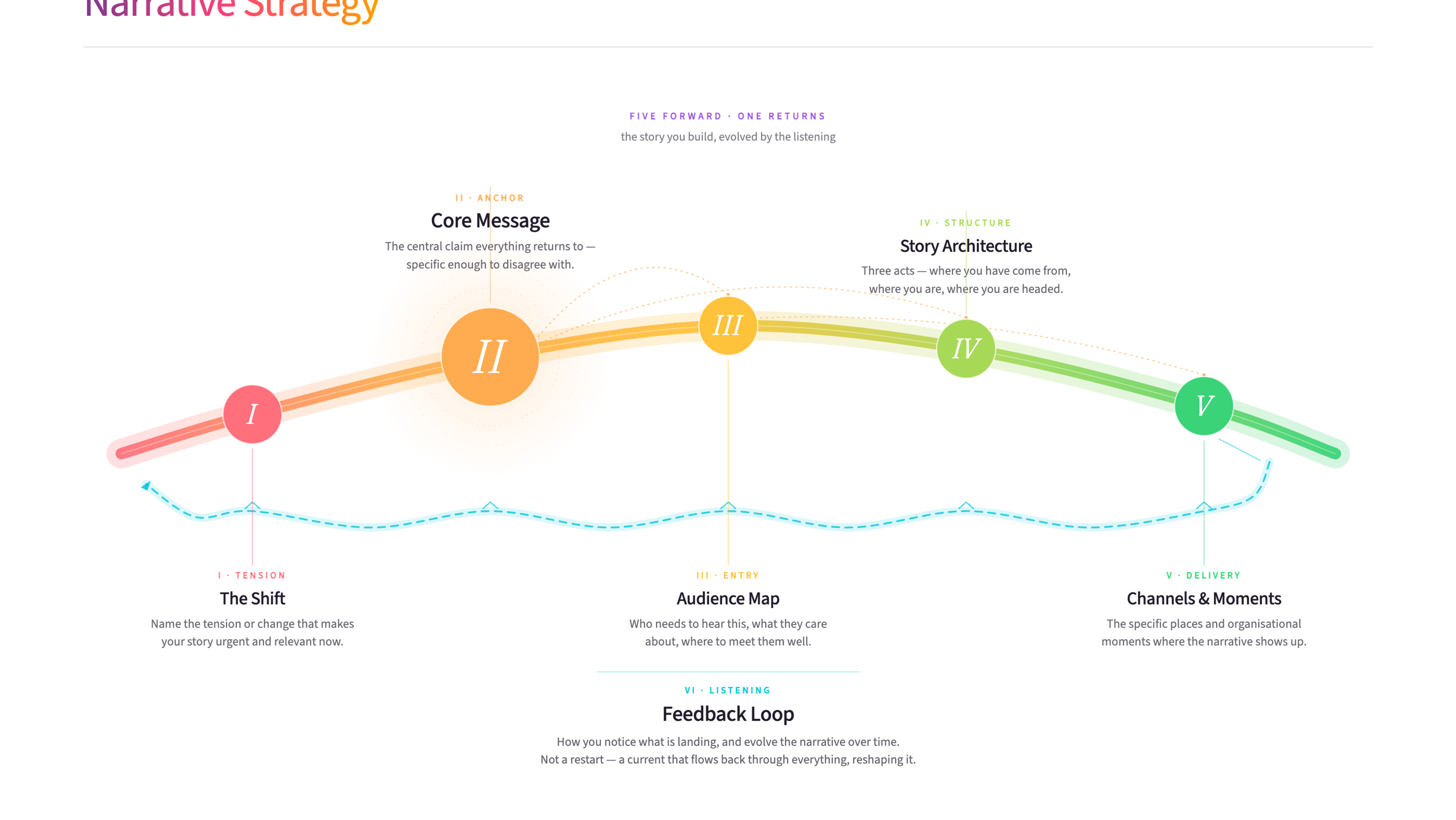
A Narrative Strategy is a plan for how your organisation tells its story in a way that connects with people and advances your goals. It goes beyond individual stories to create a consistent, compelling narrative that runs through everything you communicate.
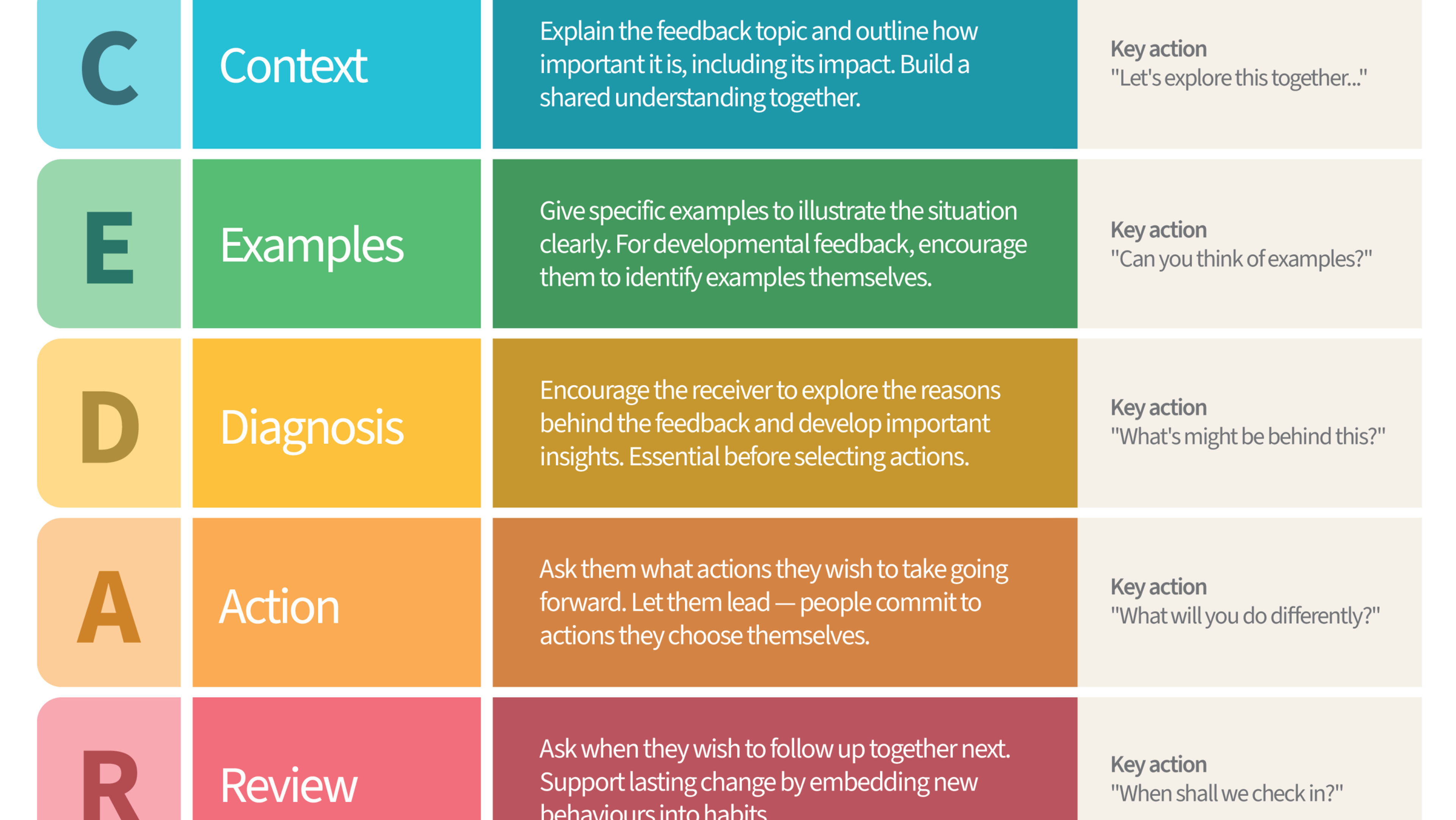
The CEDAR Feedback Model is a structured framework for leading feedback conversations that feel collaborative rather than top-down. It walks through Context, Examples, Diagnosis, Action, and Review to turn feedback into genuine development.

James Freeman-Grayis the founder of Mutomorro. He's an organisational development practitioner who has spent over a decade working with leaders across public, private, and nonprofit sectors - helping organisations navigate change, strengthen culture, and design better ways of working.
The STAR method is useful well beyond interviews - I use it in coaching and development contexts to help people reflect on their own experiences more clearly. Structuring reflection around Situation, Task, Action, and Result helps people recognise their own capability in a way that vague self-assessment never does.
Last reviewed: June 2026
Ready to use STAR Method?
Download the free template - includes practical guidance for workshops and team sessions.
Get the free templateWant to put these ideas into practice?
Whether you're navigating a merger, rethinking how you're structured, or trying to shift a culture that isn't working - start with a conversation.