DiSC Styles
The DiSC model is a behavioural profiling tool that maps four personality styles - Dominance, Influence, Steadiness, and Conscientiousness. It helps teams understand how different people communicate, make decisions, and approach work.
Get the free template
The DiSC model is a way of understanding behaviour - how people communicate, make decisions, and respond under pressure. It sorts those tendencies into four styles: Dominance, influence, Steadiness, and Conscientiousness. Most of us are a blend of more than one, and knowing your own mix - and your team's - makes it easier to work well together.
What is the DiSC model?
DiSC is a behavioural model. It doesn't measure how clever or capable someone is - it describes how they prefer to work: how they like to communicate, how quickly they move, and what they pay attention to. That makes it a useful shared language for a team, because a lot of friction at work isn't about ability, it's about people reading the same situation in different ways.
The idea traces back to the psychologist William Moulton Marston, who described human behaviour along two broad dimensions in his 1928 book Emotions of Normal People. Marston never built a test - that came later, when Walter Clarke and others turned the theory into the assessment used in team development today. The lettering has shifted over the years, but the core idea has held: behaviour clusters into four recognisable styles.
The most important thing to understand up front is that these aren't four boxes. They're four regions of a continuous space. People sit somewhere on the wheel - usually leaning toward one style, with a second close behind - rather than belonging neatly to a single type.
How the DiSC styles work
The model rests on two simple questions about how someone tends to behave:
- How fast-paced are they? Some people are outspoken and quick to act; others are more measured and reflective. That's the vertical axis - fast-paced at the top, cautious at the bottom.
- Where's their focus? Some people lead with the task and the logic; others lead with the people and the relationship. That's the horizontal axis - questioning on the left, accepting on the right.
Cross those two and you get four regions, each a recognisable style:
Style | What they're like | Driven by | At their best | Watch for |
|---|---|---|---|---|
Dominance (D) | Direct, decisive, fast-moving | Results and control | Driving decisions, cutting through | Coming across as blunt or impatient |
influence (i) | Outgoing, persuasive, energetic | Recognition and connection | Building momentum and buy-in | Glossing over the detail and follow-through |
Steadiness (S) | Patient, dependable, calm | Stability and harmony | Holding a team together, listening | Avoiding conflict, finding change unsettling |
Conscientiousness (C) | Precise, analytical, careful | Accuracy and logic | Ensuring quality, spotting risk | Getting lost in detail, over-caution |
Dominance (D)

High-D people are direct and fast-moving. They focus on results, make decisions quickly, and are comfortable taking charge and challenging the way things are done. At their best they give a team momentum and the nerve to make hard calls. The trade-off is that in a hurry they can come across as blunt or impatient, and skip the detail or the people side. They tend to welcome change - especially change they're driving - but bristle at anything that limits their control.
influence (i)

High-i people are outgoing and persuasive. They build relationships easily, think out loud, and are good at bringing others round to an idea. At their best they create energy and buy-in that a team can't manufacture any other way. The trade-off is follow-through - enthusiasm can outrun the detail, and they may dodge a difficult conversation to keep things warm. They're usually open to change, particularly when it opens up new connections, and less keen when it isolates them or asks for solo, heads-down work.
Steadiness (S)

High-S people are patient and dependable. They value stability and cooperation, listen well, and keep things moving at a steady pace. At their best they're the glue - the people who hold a team together and make others feel safe enough to do their best work. The trade-off is that they can avoid conflict when it's needed, and find fast or frequent change unsettling. Given the reasoning and a little time to adjust, though, they become some of the most reliable supporters of a new way of working.
Conscientiousness (C)

High-C people are precise and analytical. They care about accuracy and quality, weigh the evidence, and spot the risks others miss. At their best they keep a team honest and head off avoidable mistakes. The trade-off is that they can get lost in detail, or hold back on a decision while they gather more certainty. They approach change cautiously - they want the rationale and a clear plan - but once convinced, they're meticulous about making the transition stick.
How to use DiSC with your team
DiSC works best as a shared conversation, not a label you hand out. A simple way through it:
- Map the team together. Share the four styles and ask everyone to place themselves on the wheel. Self-identifying beats being sorted by someone else - people own a profile they chose. Do it in a session, not over email; the value is in the talking.
- Read each profile as a blend. Almost nobody is a pure single style. Note people's primary and secondary leanings, and where they sit close to a boundary. That nuance is the point - it stops the model collapsing into four stereotypes.
- Flex, don't fix. The aim isn't to change anyone's style. It's to adapt how you approach each one - lead with the bottom line for a D, leave room to talk for an i, give an S time to settle, bring the detail for a C.
- Use it to name what's happening. When two people keep rubbing each other up the wrong way, DiSC gives you neutral language for it - a pace difference, a focus difference - rather than "they're difficult". It sits naturally alongside a structured approach to feedback like the CEDAR Feedback Model, since different styles hear feedback differently, and next to the 5 Conflict Styles, since your style colours how you tend to handle disagreement.
Example
Imagine a small leadership team that keeps getting stuck in the same argument. The managing director wants decisions made in the room and acted on by Friday. The finance lead wants another week to model the options properly. Each leaves the meeting frustrated - one feels blocked, the other feels rushed.
A DiSC conversation reframes it. The MD is a strong D: fast-paced, results-first. The finance lead is a strong C: careful, accuracy-first. They sit at opposite ends of both axes, so friction is almost built in - and neither of them is wrong. Once the team can name that, the argument changes shape. They agree a rhythm: the D gets a firm decision deadline, the C gets a defined window and scope to do the analysis before it. The disagreement doesn't disappear, but it stops being personal - and the team starts using the difference instead of fighting it.
Limitations of the DiSC model
DiSC is a starting point, not a verdict. It helps to know where it stops being useful.
- It's a simplification. Four styles can't capture everything about a person. Treat the model as a way into a conversation, not a complete description of anyone.
- It's a snapshot, not a fixed type. People adapt by context, by role, and over time. Someone's profile in a stressful week isn't who they are for good - so steer clear of "once a D, always a D".
- It describes, it doesn't predict. DiSC tells you how someone tends to prefer working. It won't tell you exactly how they'll act in a given moment, and it's no substitute for getting to know them.
- It grew from one cultural setting. The model has Western roots, and what reads as "direct" or "reserved" varies a lot across cultures. Hold the labels lightly with international or cross-cultural teams.
Used well - as a prompt for discussion rather than a box to file people in - none of these are dealbreakers. They're just the edges worth knowing.
Getting started
The simplest way to try DiSC is to put the wheel in front of your team and ask everyone to place themselves on it, then talk about what they see. Where does the team cluster? Who sits at opposite corners? What does that explain about how meetings tend to go?
You're not trying to balance the team like a recipe - you're building a shared language for difference, so people can flex toward each other instead of talking past one another. That shared language is part of a team's generative capacity - its ability to keep improving how it works. From there, DiSC pairs well with Belbin's Team Roles for the functional side of teamwork, and with the 6 Team Conditions for what a team needs around it to perform.
If you'd like a hand running that conversation, we use behavioural insights like DiSC as part of our employee experience and high-performing teams work.
We share thinking on organisational change and development on LinkedIn - practical ideas for people doing this work inside their own organisations.
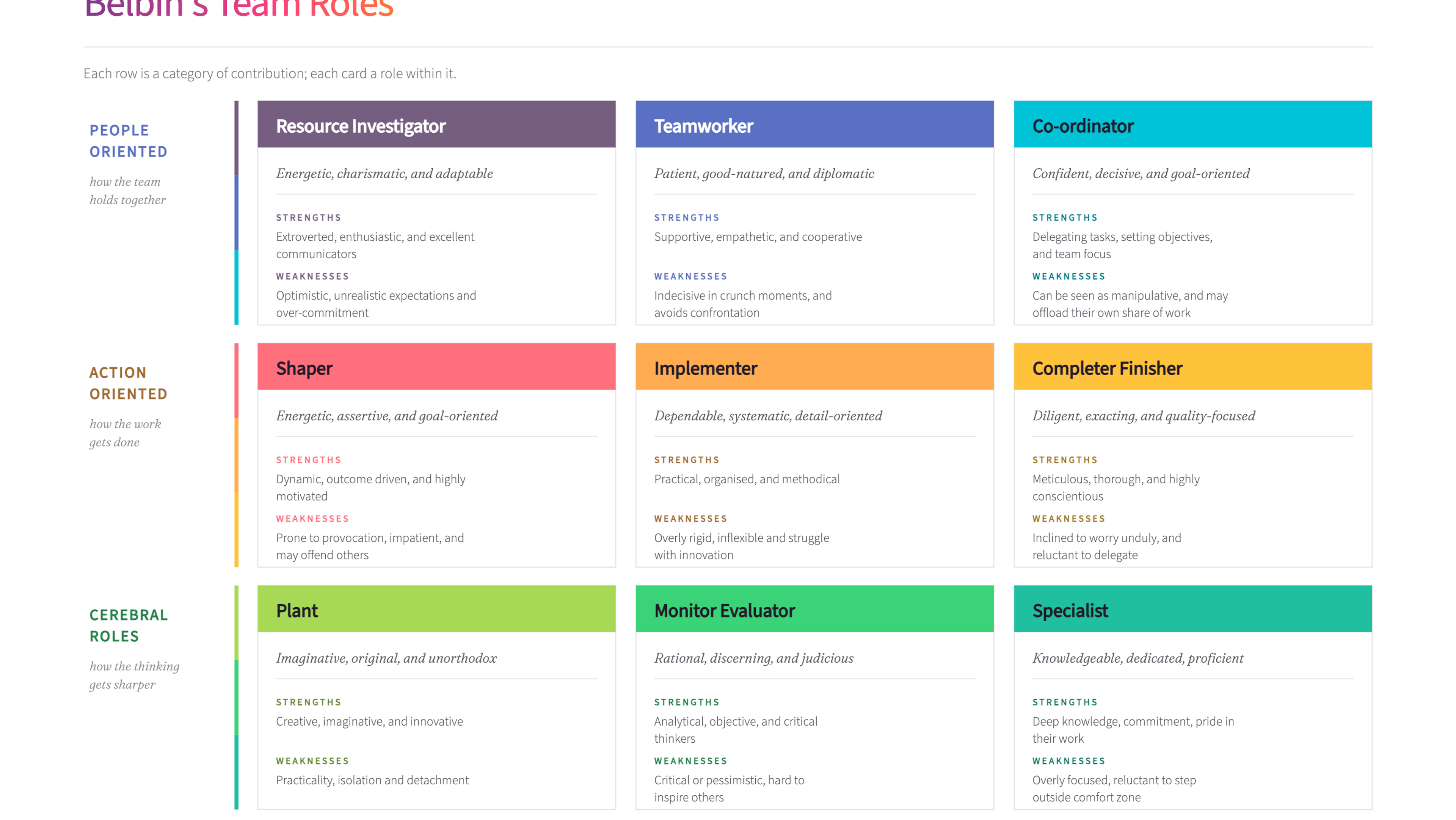
Belbin's Team Roles identify nine distinct roles that people naturally take on in a team. Understanding these roles helps you build more balanced teams and get the best from each person's strengths.
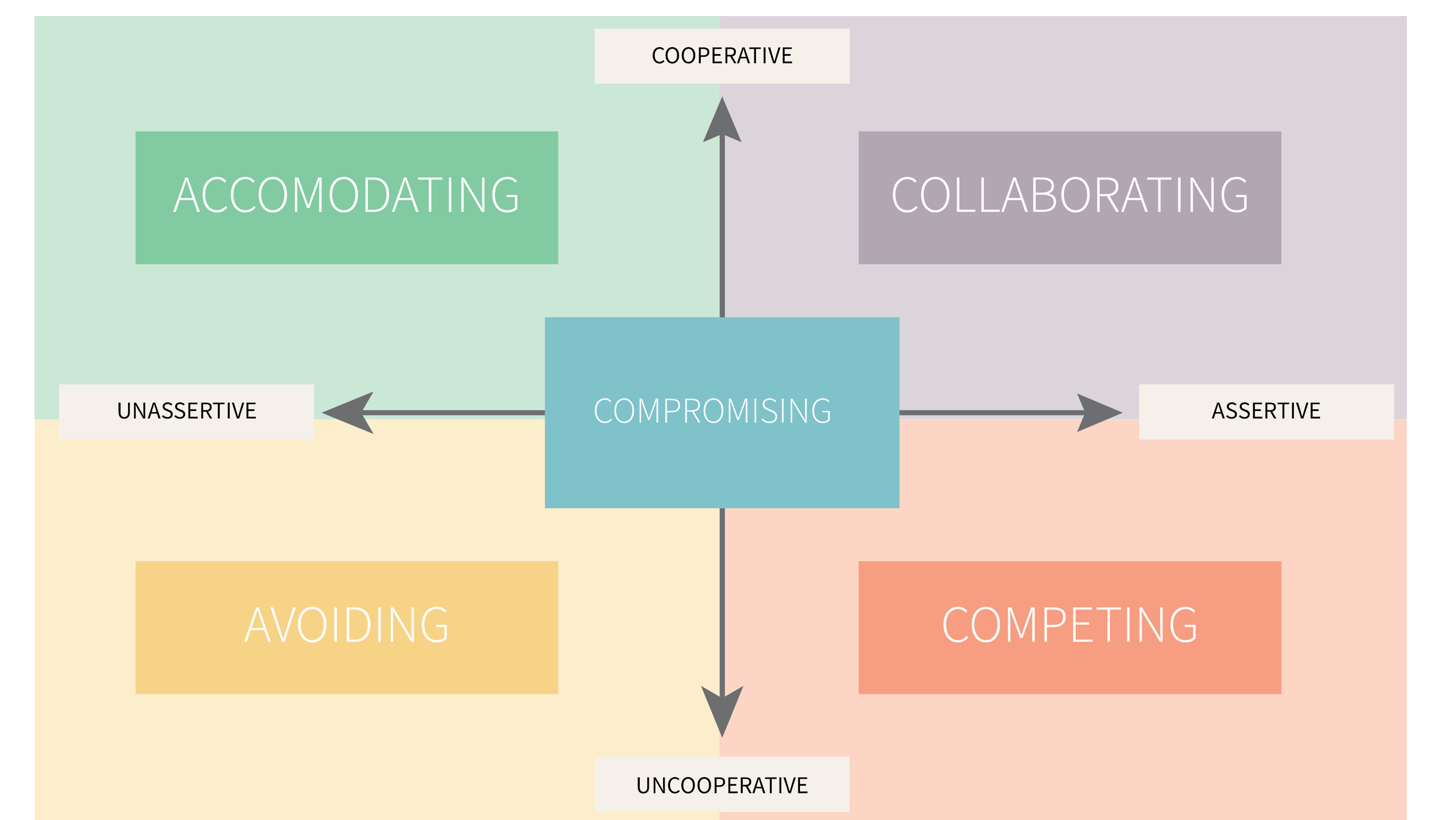
The 5 Conflict Styles model (Thomas-Kilmann) maps five different ways people approach conflict - from avoiding it to collaborating through it. It helps teams understand their default patterns and choose more effective approaches.
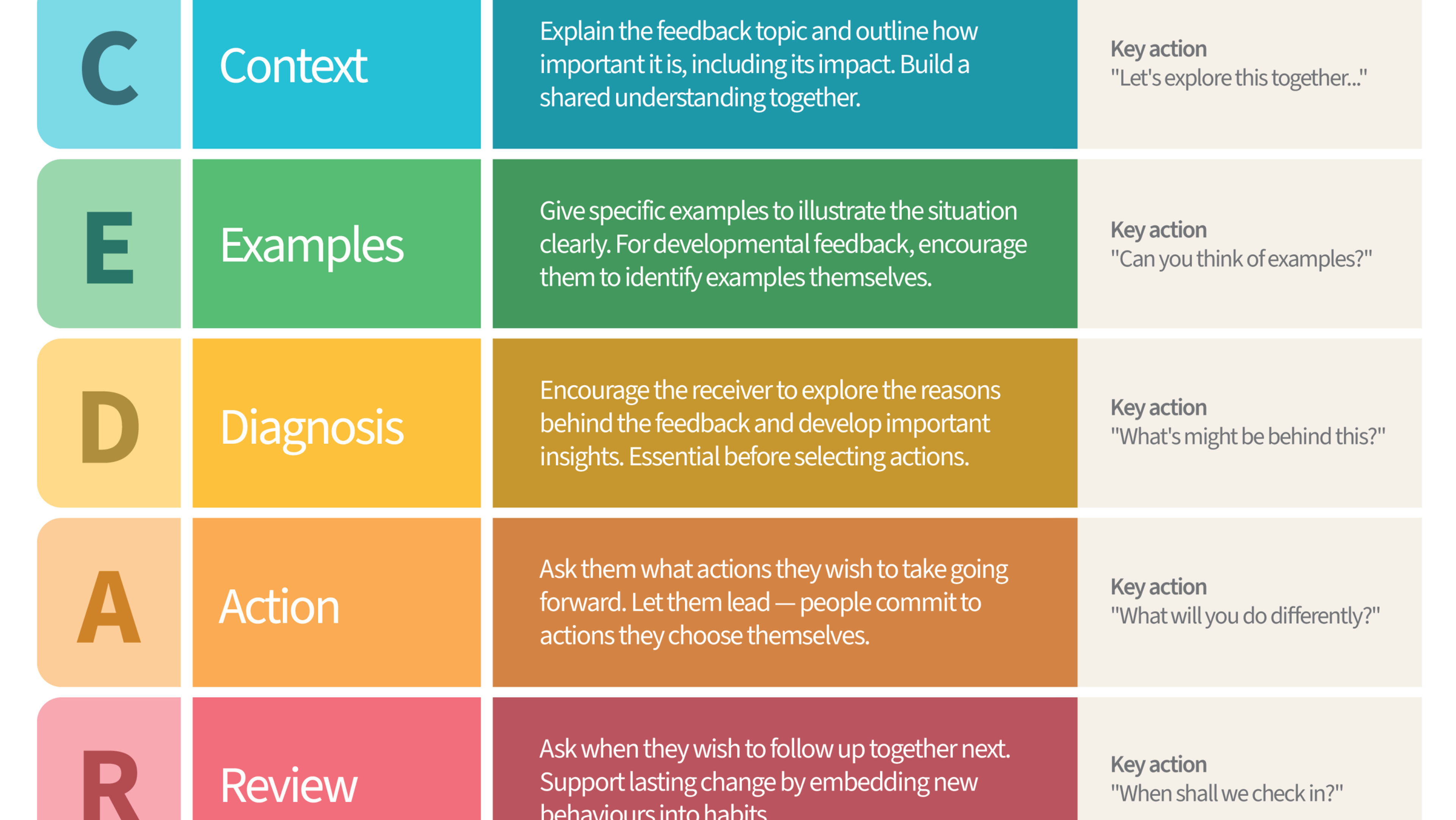
The CEDAR Feedback Model is a structured framework for leading feedback conversations that feel collaborative rather than top-down. It walks through Context, Examples, Diagnosis, Action, and Review to turn feedback into genuine development.
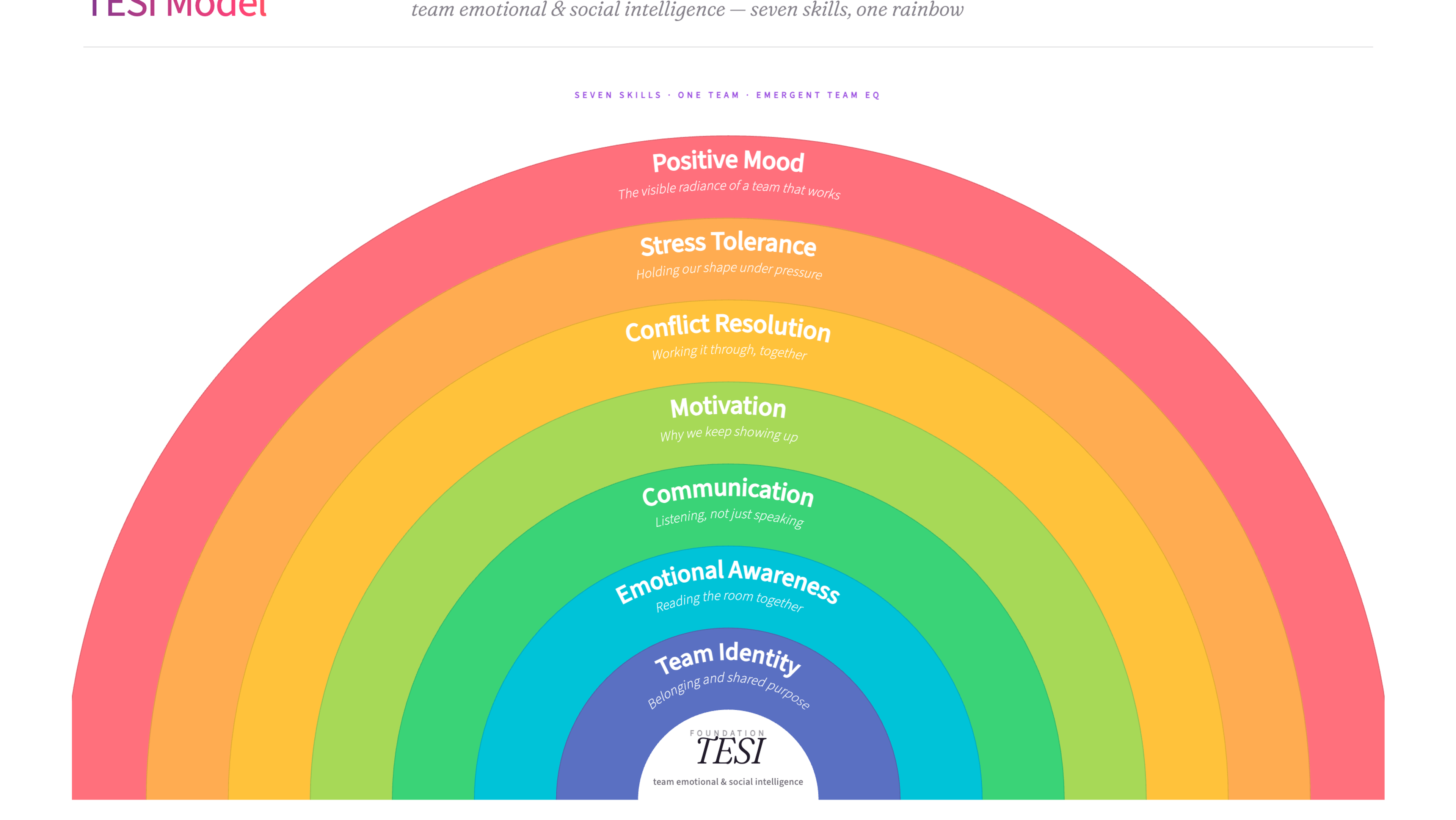
The TESI model (Team Emotional and Social Intelligence) is a framework for understanding how emotions and relationships affect team performance. It helps teams recognise their patterns and build stronger ways of working together.

Emotional intelligence in leadership isn't about being nice or reading a room. It's about the quality of attention you bring to how people are experiencing your leadership - and the willingness to adjust what you do based on what you notice.
Psychological safety is one of the strongest predictors of team performance - but it's often misunderstood. This article explores what it actually looks like in practice, why it matters beyond the research headlines, and what leaders can do to build the conditions where honesty, learning, and real collaboration become possible.
Team Effectiveness Training
DiSC is one way of understanding working styles - one of several lenses we draw on in our Team Effectiveness training.
James Freeman-Gray is the founder of Mutomorro. He's an organisational development practitioner who has spent over twenty years working with leaders across public, private and nonprofit sectors - helping organisations pull together around a common purpose, joined up in how they work. More about who we are and what it's like to work with us.
DISC is a useful starting point for teams that have never done any profiling work. I tend to use it as a conversation opener rather than a definitive assessment - the value is in the team discussion it generates about how different people prefer to communicate, make decisions, and work through problems.
Last reviewed: June 2026
Ready to use DiSC Styles?
Download the free template - includes practical guidance for workshops and team sessions.
Get the free template
Want to put these ideas into practice?
Whether you're navigating a merger, rethinking how you're structured, or trying to shift a culture that isn't working - underneath, it's the same job: getting the whole organisation pulling in the same direction. Start with a conversation.