All leaders want to build cultures where people can do their best work. We help you create the conditions to make it happen.
Those conditions live in the everyday patterns of your organisation - how decisions get made, how knowledge flows between teams, how people connect to purpose, how change is experienced. They shape whether collaboration happens naturally or people default to silos. Whether change feels like a natural step or gets resisted at every turn.
You cannot change culture by talking about culture. It shifts when you change the conditions it grows from.
Our culture change consultancy works with those conditions. Not running a programme alongside everything else, but making practical improvements to how your organisation functions - and letting culture develop as a natural consequence.
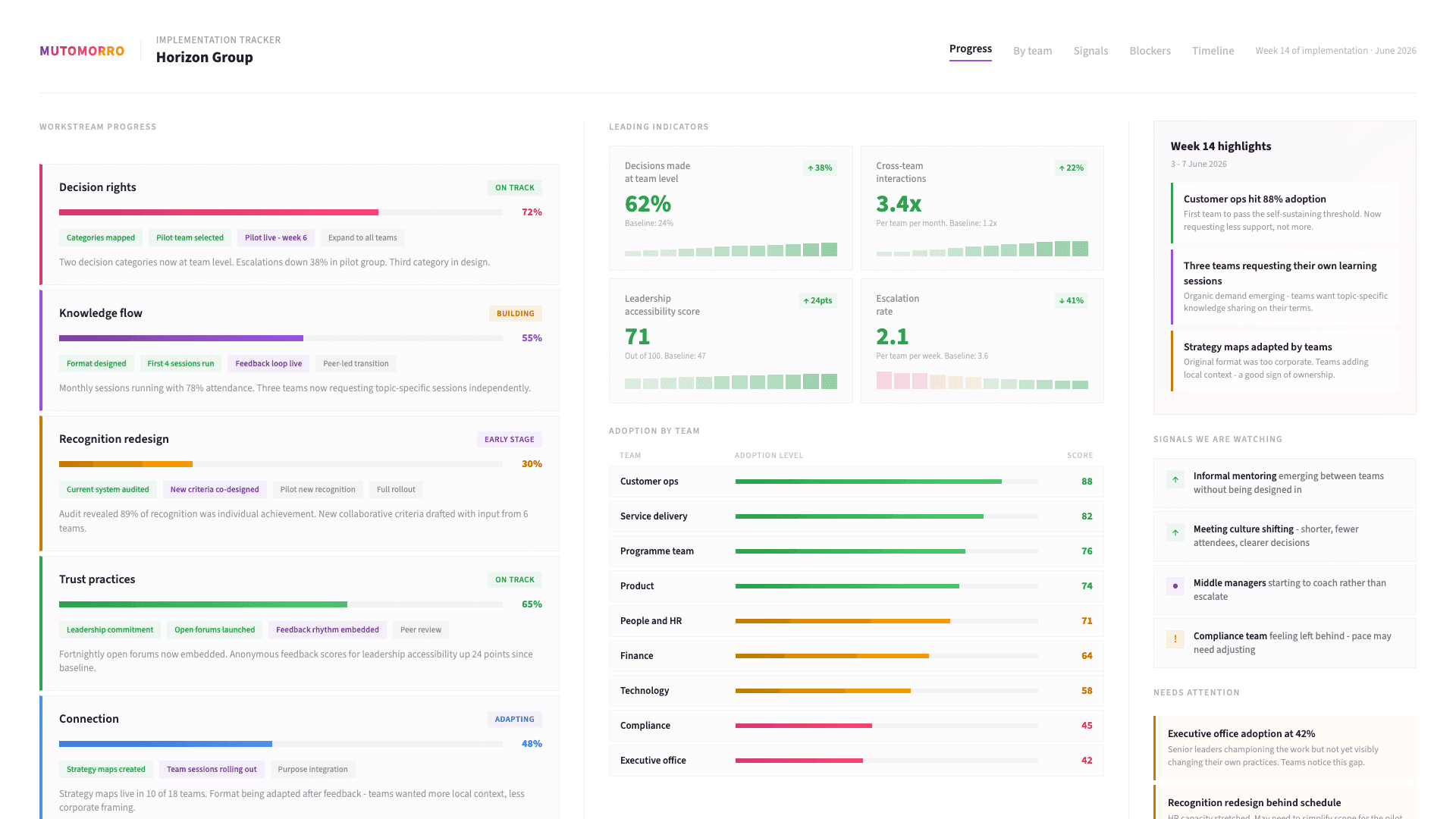
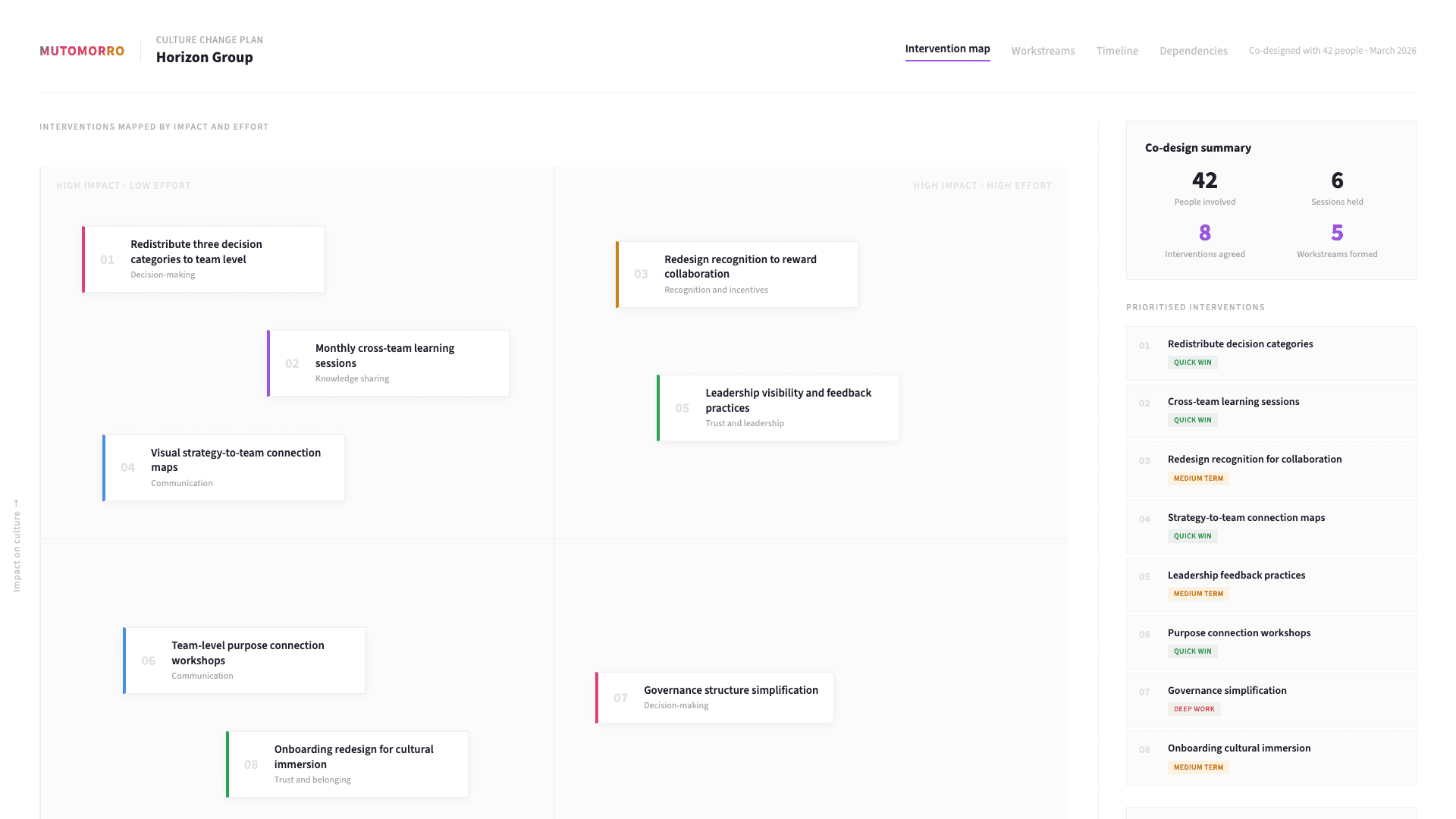













Lasting culture change starts with the conditions that create it. We help you find and shift them.
Culture is shaped by everyday conditions - and that's where we start
Every organisation has conditions that shape how people work together - how decisions get made, how knowledge flows between teams, how trust builds, how purpose connects to daily practice.
Think of it like climate. You can't change the weather by talking about the weather. But you can change the conditions that create it. The same is true of culture - it grows from the environment people work in. Change that environment, and culture shifts. That's where we start.
Leaders come to us at moments like these
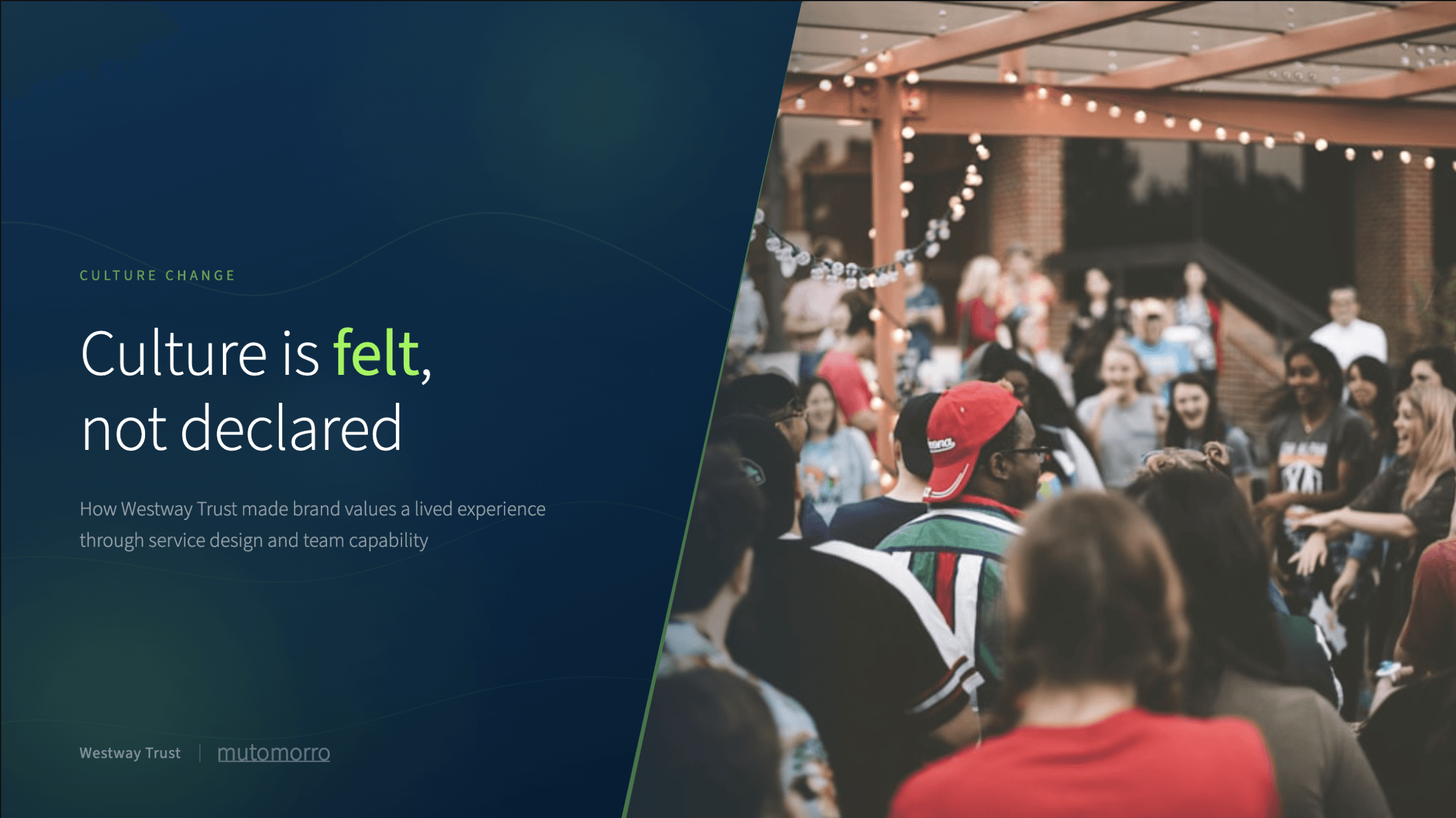
See how this works in real organisations
Every organisation navigates culture change differently. Here are some recent examples of how we've helped leaders shift the conditions.
What the research says about investing in conditions
4x
higher retention
SHRM 2024
23%
higher profitability
Gallup
2.2%
higher ROE
Deloitte 2024
21%
higher productivity
Gallup
Want to explore how this could work for your organisation?
Every organisation is different, so we always start with a conversation. No pitch, no obligation — just an honest discussion about where you are and whether our approach feels right.
Explore culture change
Articles
- How to Assess Change Readiness in Your Organisation
How to assess whether your organisation is genuinely ready for change - looking at the whole system, not just the surface. Covers what to examine, how to gather honest insight, and how to use what you find to build a change plan that works with your organisation rather than against it.
Read article → - Change Fatigue in the Workplace: What's Really Going On
Change fatigue in the workplace is growing fast. This article explores what's really driving it - not just the volume of change, but how organisations approach it - and what leaders can do to rebuild capacity without slowing down.
Read article → - Change Management vs Change Leadership: What's the Difference?
Change management and change leadership are often used interchangeably, but they're fundamentally different. This article explains what each involves, why the distinction matters, and how to develop both capabilities in your organisation.
Read article → - Developing Organisational Culture: A Practical Guide
A practical guide to developing organisational culture. Cuts through the theory to explain what culture actually is, why most culture change programmes fail, and how to develop culture in a way that lasts - by working with your organisation as a living system, not a machine.
Read article →
Related tools
- 4 Stages of Psychological Safety
The 4 Stages of Psychological Safety is a framework that maps how safe people feel to be themselves, learn, contribute, and challenge the status quo. It helps leaders understand what conditions people need before they'll speak up and take risks.
Explore tool → - 5 Conflict Styles
The 5 Conflict Styles model (Thomas-Kilmann) maps five different ways people approach conflict - from avoiding it to collaborating through it. It helps teams understand their default patterns and choose more effective approaches.
Explore tool → - Competing Values Framework
The Competing Values Framework is a model for understanding organisational culture by mapping it across two dimensions - flexibility versus stability, and internal versus external focus. It reveals which of four culture types your organisation leans towards.
Explore tool → - Cultural Web
The Cultural Web is a model for understanding and mapping organisational culture across six interconnected elements. It helps you see how stories, rituals, symbols, power structures, controls, and organisational structures shape the way things are done.
Explore tool → - Edgar Schein's Culture Model
Edgar Schein's Culture Model explores organisational culture at three levels - visible artefacts, stated values, and the deeper underlying assumptions that really drive behaviour. It helps organisations get beneath the surface of what their culture actually is.
Explore tool → - Iceberg Model
The Iceberg Model is a systems thinking tool that helps you look beneath surface-level events to find the patterns, structures, and mental models driving them. It's a way of seeing the deeper causes behind what's happening in your organisation.
Explore tool →
Part of a bigger picture
Our approach to culture change grows from something broader: a conviction that organisations work more like living systems than machines. When you see an organisation this way, culture isn't a separate problem to solve - it's a quality that emerges from how the whole system works together.
We call this perspective Intentional Ecosystems. It shapes how we approach culture, strategy, design, and transformation. Our philosophy page is where the full picture comes together.
Common questions about culture change
Most culture change programmes focus on the visible layer - values statements, engagement campaigns, leadership messaging. These aren't wrong, but they're working on the surface while leaving the underlying conditions untouched. If decisions still get made the same way, if knowledge still doesn't flow between teams, if recognition still rewards individual performance over collaboration - the underlying patterns will reassert themselves once the programme energy fades.
Lasting culture change happens when you work with the conditions that create culture, not with culture itself. That means redesigning how your organisation actually functions - practically, specifically, and with the people who live with it every day. If you're focused specifically on how people experience the organisation day to day, our employee experience consultancy works with those conditions directly.
Competence and Conduct Standard - free culture readiness toolkit
The Competence and Conduct Standard takes effect in October 2026. The qualification requirements are well documented elsewhere. The culture and behaviour side - how your organisation evidences conduct, gives residents genuine influence, and demonstrates that training translates into better outcomes - is where the real leadership challenge sits.
We built a free toolkit for housing leadership teams preparing for this side of the standard. It includes a breakdown of the culture requirements, six practical challenges providers are navigating, reflective questions for leadership teams, and a diagnostic you can complete in five minutes.

Want to explore how this could work for your organisation?
Every organisation is different, so we always start with a conversation. No pitch, no obligation — just an honest discussion about where you are and whether our approach feels right.