Culture Change
Culture isn't a project with an end date. It's the lived experience of everyone in the organisation, shaped by hundreds of small decisions every day. These resources explore how to understand, influence, and develop a culture people recognise themselves in.
Start with the Cultural Web to map the culture you have, then read how organisational culture actually develops.
Services
The hands-on work behind these resources - start with the consultancy, or go straight to a stage.

Strong cultures come from shared ways of working, common goals, and an environment that makes coming together easier than pulling apart. We work with leaders to cultivate exactly that - conditions where people can bring their best, find meaning in work, and translate culture into how work happens.
A clear picture of your organisational culture and how it’s affecting the day to day - how your organisation really runs, and the few changes that would make the most difference.
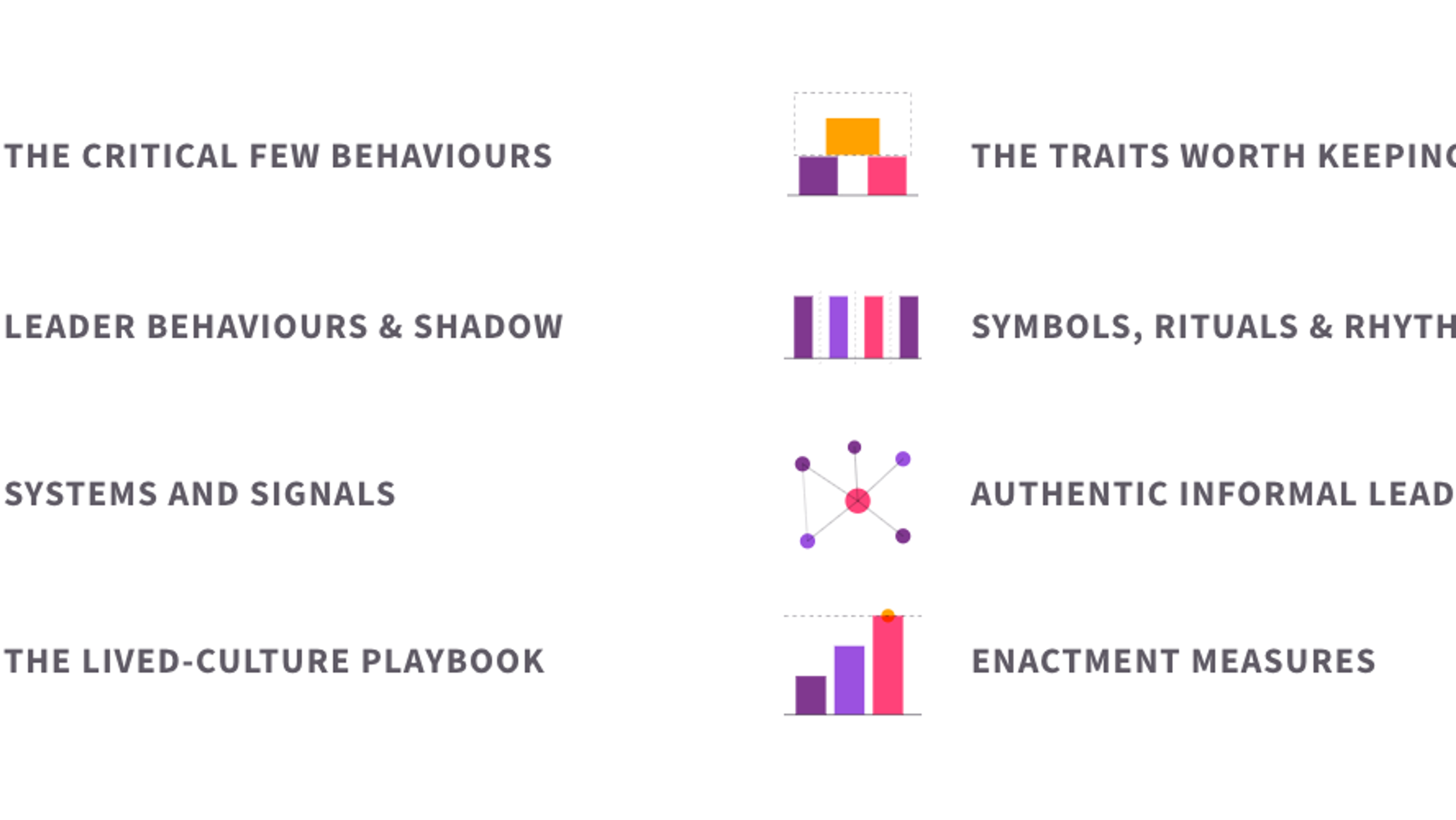
Target culture design gives you your target culture: the critical few behaviours your people will actually live, the traits worth keeping, and the redesigned signals - reward, recognition, promotion, leader modelling - that produce them, mapped from where you are today to where you are heading. We design it with your people, so the culture is genuinely theirs.
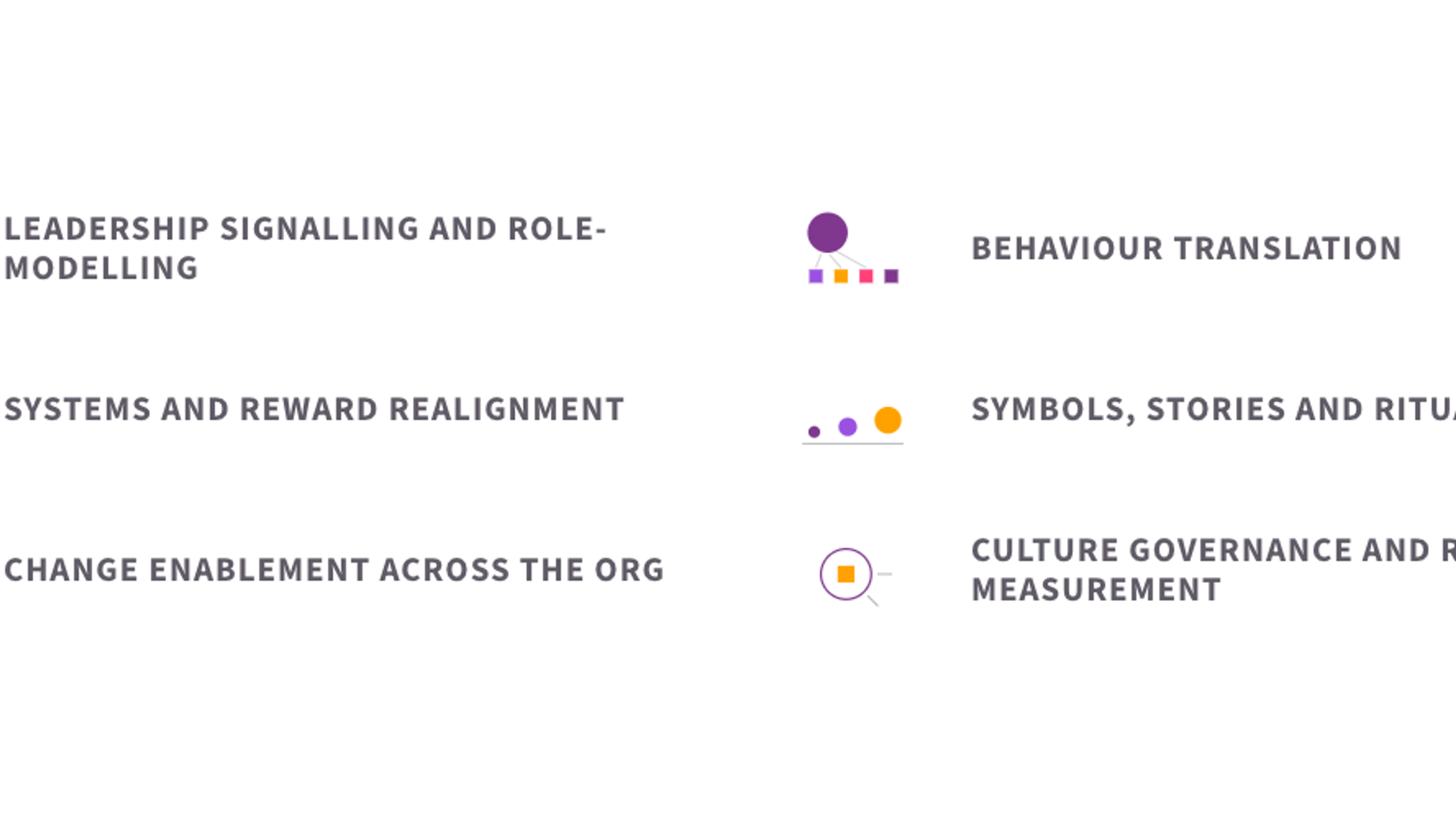
A Culture Change Programme is the governed set of workstreams that takes your Target Culture Design and makes it real across the organisation: the leadership signals, the everyday behaviours, the reward systems and the rituals that carry a culture, running day to day. We deliver it with your people, so the new culture is owned rather than imposed.
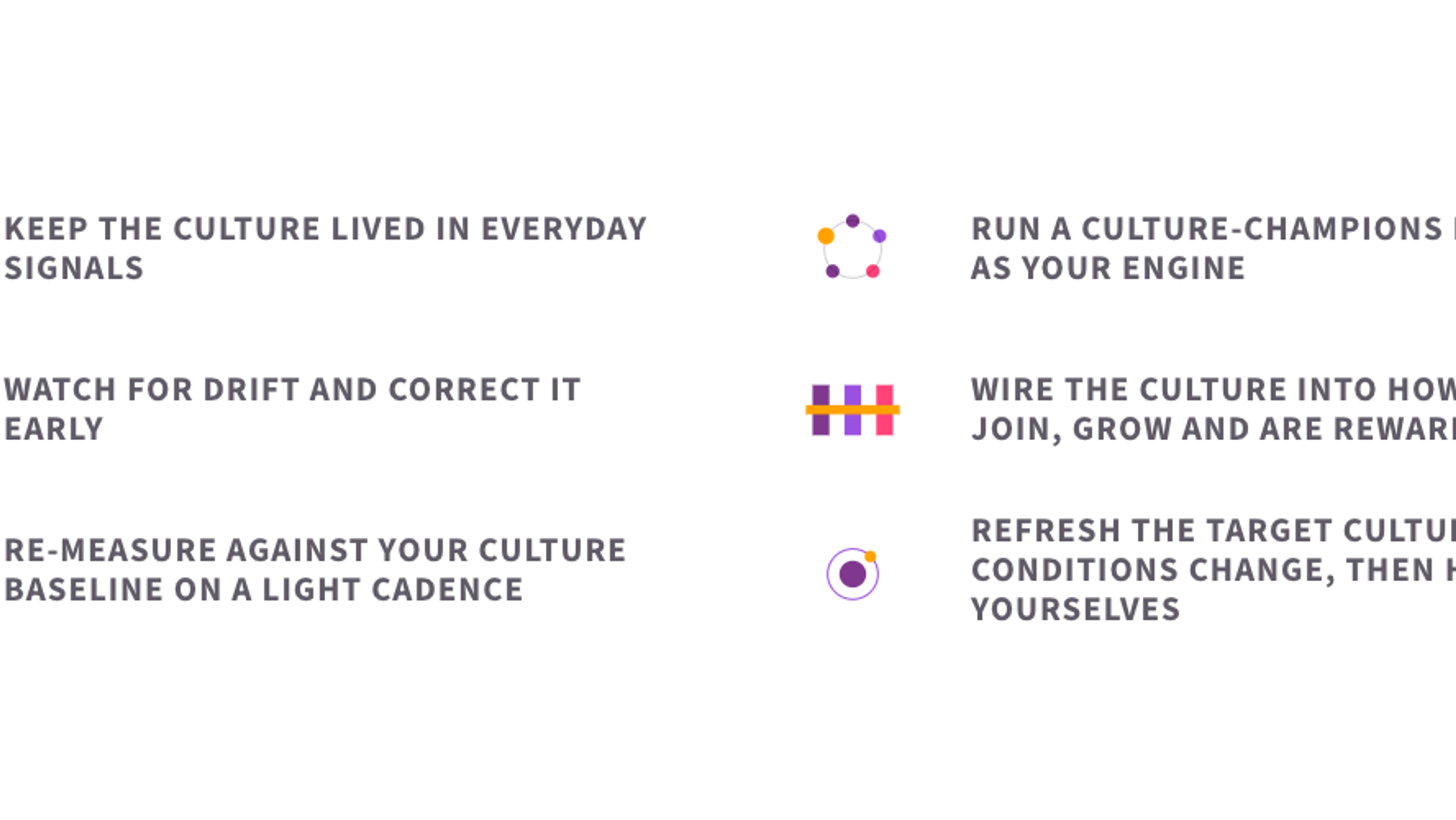
Keeping Culture Embedded keeps the culture you changed lived in everyday behaviour, and builds your own people's ability to tend it. Your leaders' attention, your champions network and your everyday routines carry the culture, so it stays the way things are done here. You run it, with an optional light rhythm from us as much or as little as you want.
Case Studies
Stories from our culture change work across different sectors and contexts.

How we ran an organisational culture assessment that stopped asking how people felt about work, and started examining how the work actually got done. This is what assessing the culture of a professional body found underneath its own engagement scores.

A community trust born from decades of activism, with brand values that felt bold on paper but hadn't yet changed how services were delivered or how teams worked day to day. Sports, housing and arts ran as different organisations to the person walking through the door.
Two of London's largest housing associations becoming one - 66,000 homes, two distinct cultures, and the question of how to build something genuinely shared rather than one organisation absorbing the other.
Tools
Frameworks for understanding, assessing, and influencing organisational culture - from surface-level behaviours to the deeper assumptions that drive them.
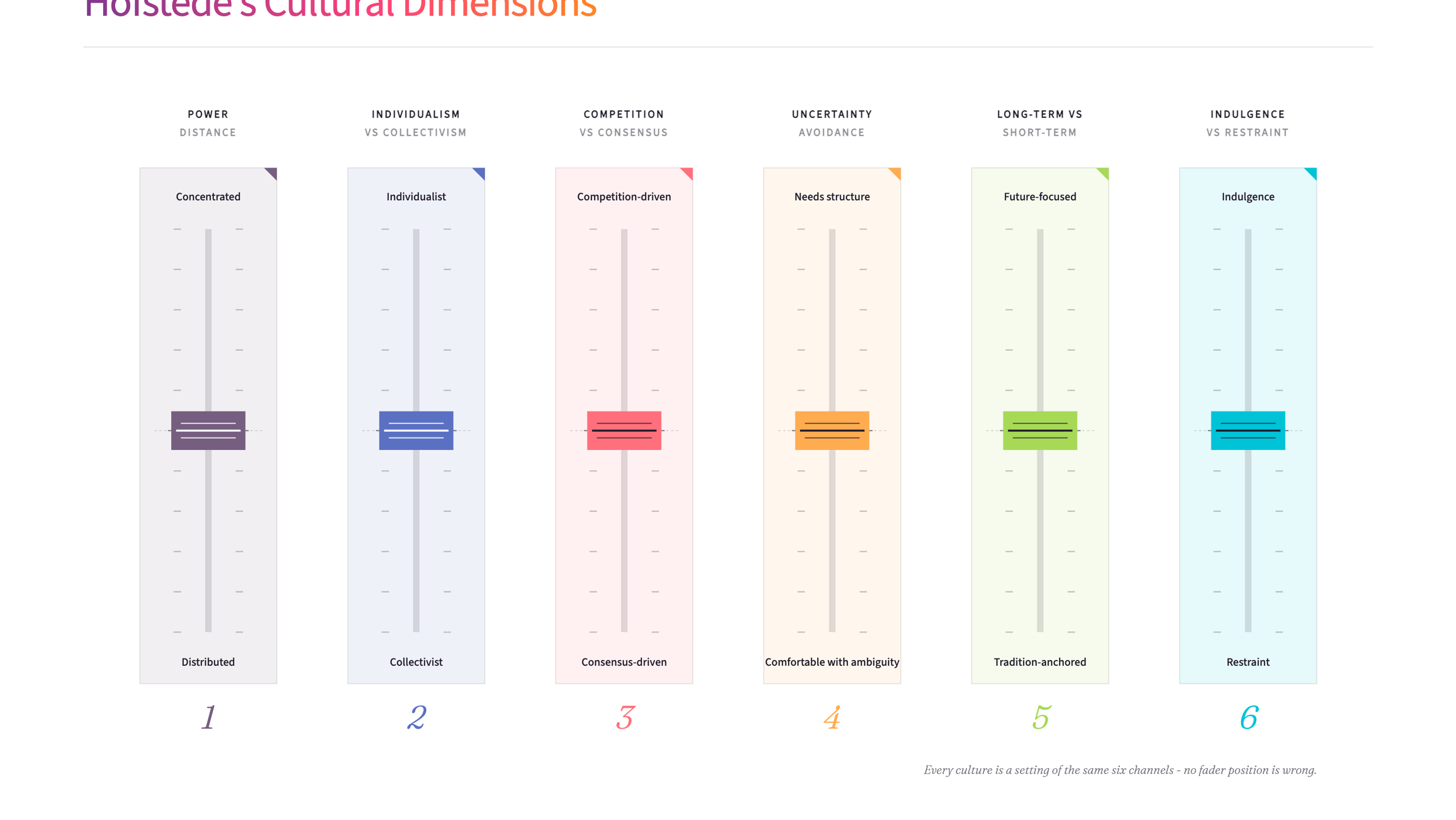
A six-dimension framework for understanding how national and organisational culture shapes values, behaviour, and expectations. Each dimension is a spectrum - use it to surface invisible differences before they become friction.
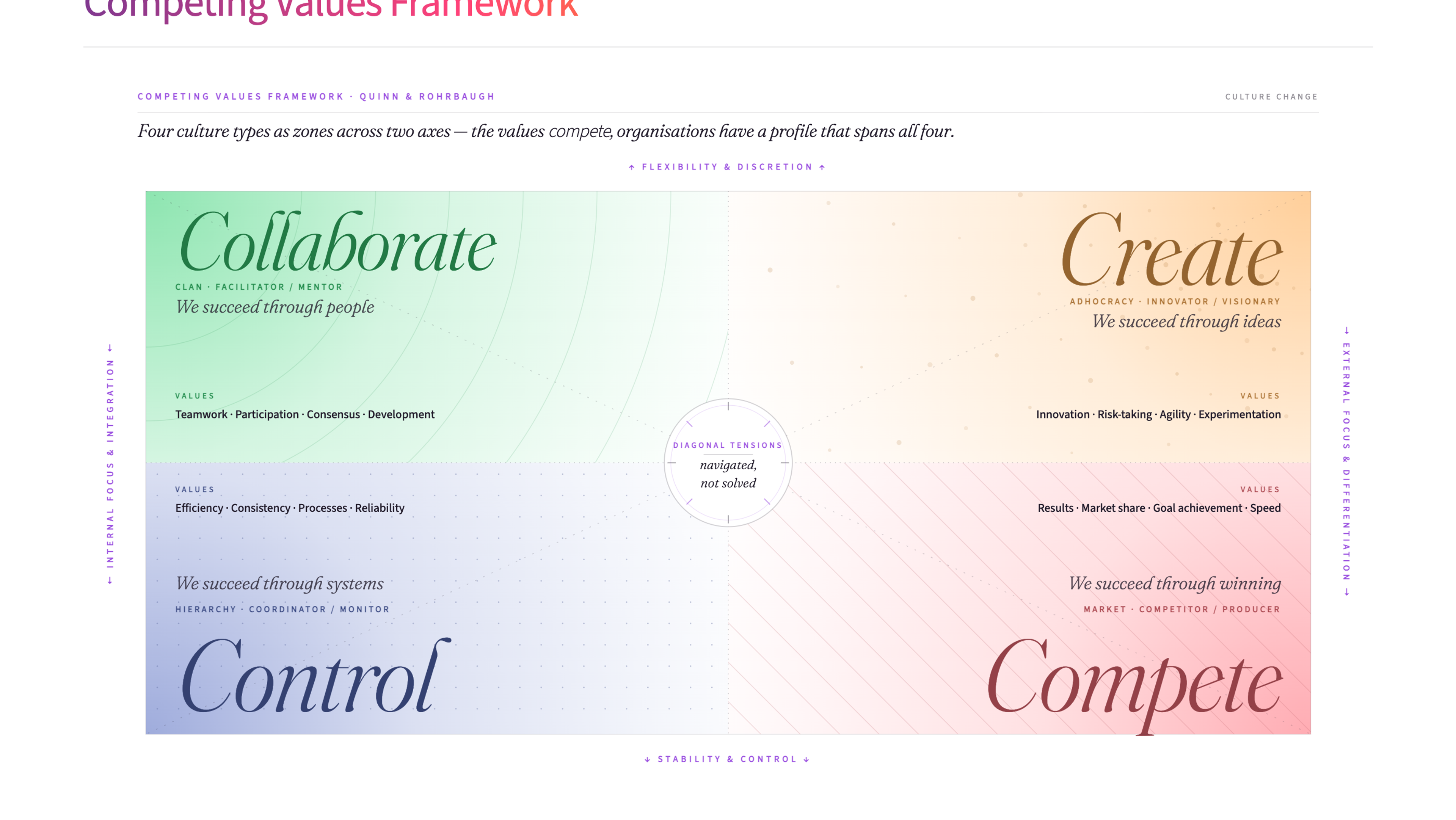
The Competing Values Framework is a model for understanding organisational culture by mapping it across two dimensions - flexibility versus stability, and internal versus external focus. It reveals which of four culture types your organisation leans towards.
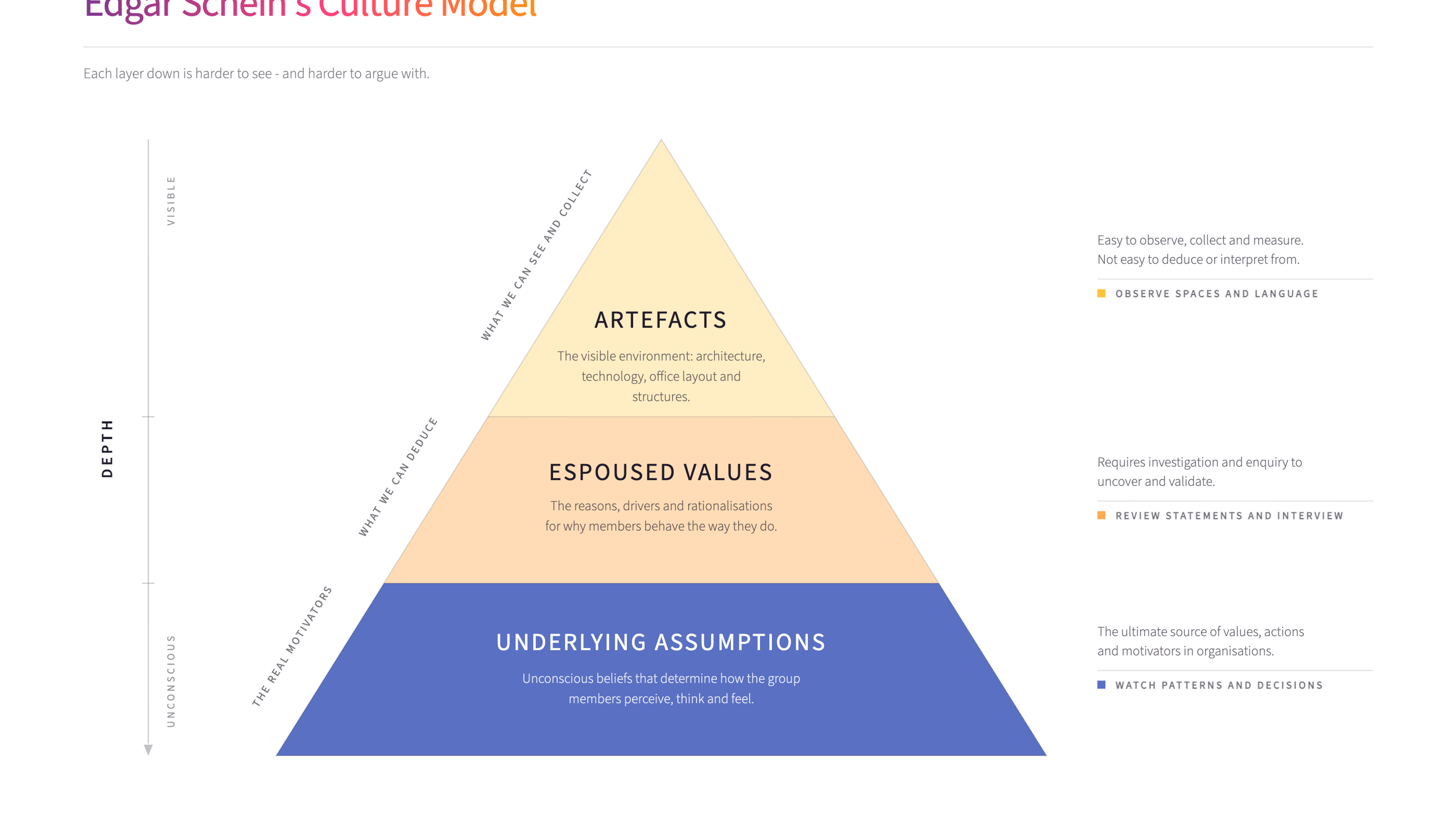
Edgar Schein's Culture Model explores organisational culture at three levels - visible artefacts, stated values, and the deeper underlying assumptions that really drive behaviour. It helps organisations get beneath the surface of what their culture actually is.
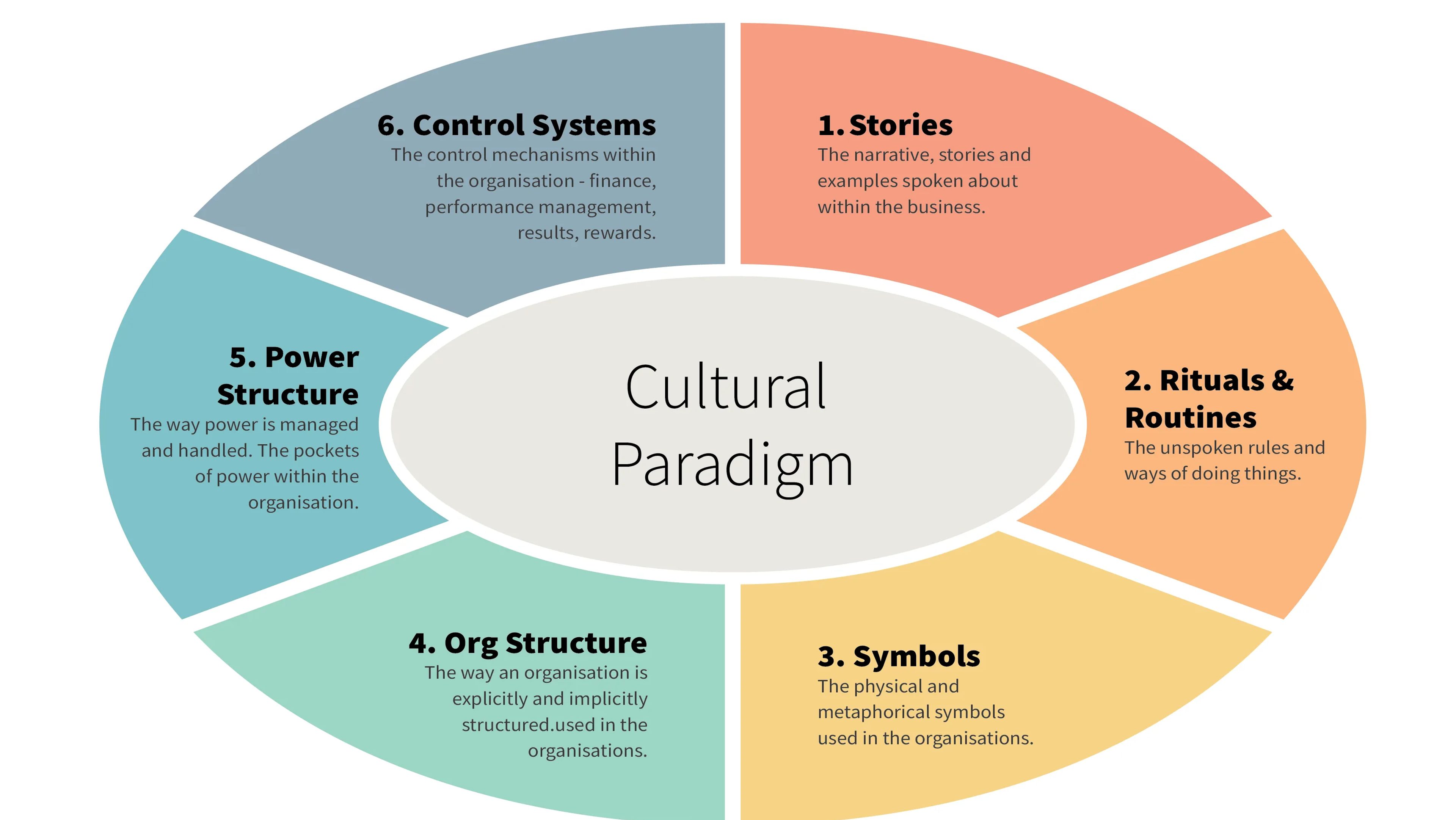
The Cultural Web is a model for understanding and mapping organisational culture across six interconnected elements. It helps you see how stories, rituals, symbols, power structures, controls, and organisational structures shape the way things are done.
Articles
Exploring how culture develops, how it connects to strategy, and what it takes to create lasting cultural change.
Most values statements prescribe behaviour rather than creating the conditions for it - which is why the poster and the practice so rarely match. What separates values that change culture from words on a wall, and the shift from labels to tools.

The strategy is clear. So why does the organisation keep doing something different? The answer usually isn't about communication or buy-in. It's about the conditions nobody designed for.

A merger changes structures, systems and reporting lines. But whether two organisations genuinely become one depends on something integration plans rarely design for.
Silos between teams aren't the problem - they're a signal. What organisational silos reveal about the conditions shaping how your people work.
Most culture change efforts don't last. The pattern is remarkably consistent - and it points to something fundamental about how culture actually works.
Psychological safety is one of the strongest predictors of team performance - but it's often misunderstood. This article explores what it actually looks like in practice, why it matters beyond the research headlines, and what leaders can do to build the conditions where honesty, learning, and real collaboration become possible.
A practical guide to developing organisational culture. Cuts through the theory to explain what culture actually is, why most culture change programmes fail, and how to develop culture in a way that lasts - by working with your organisation as a living system, not a machine.
Let's talk about what you're working on
Whether you're navigating a merger, rethinking how you're structured, or trying to shift a culture that isn't working - underneath, it's the same job: getting the whole organisation pulling in the same direction. Start with a conversation.