6 Team Conditions - Free Template
A three-page PDF toolkit for diagnosing and strengthening the conditions around your team. Includes a visual overview of the six conditions, a summary card with diagnostic questions and practical tips, and a guide to connecting the framework with broader organisational development work.
Based on our full guide to 6 Team Conditions.
Get this PDF template
Fill in your details and download the PDF straight away.
What's in this 6 Team Conditions template
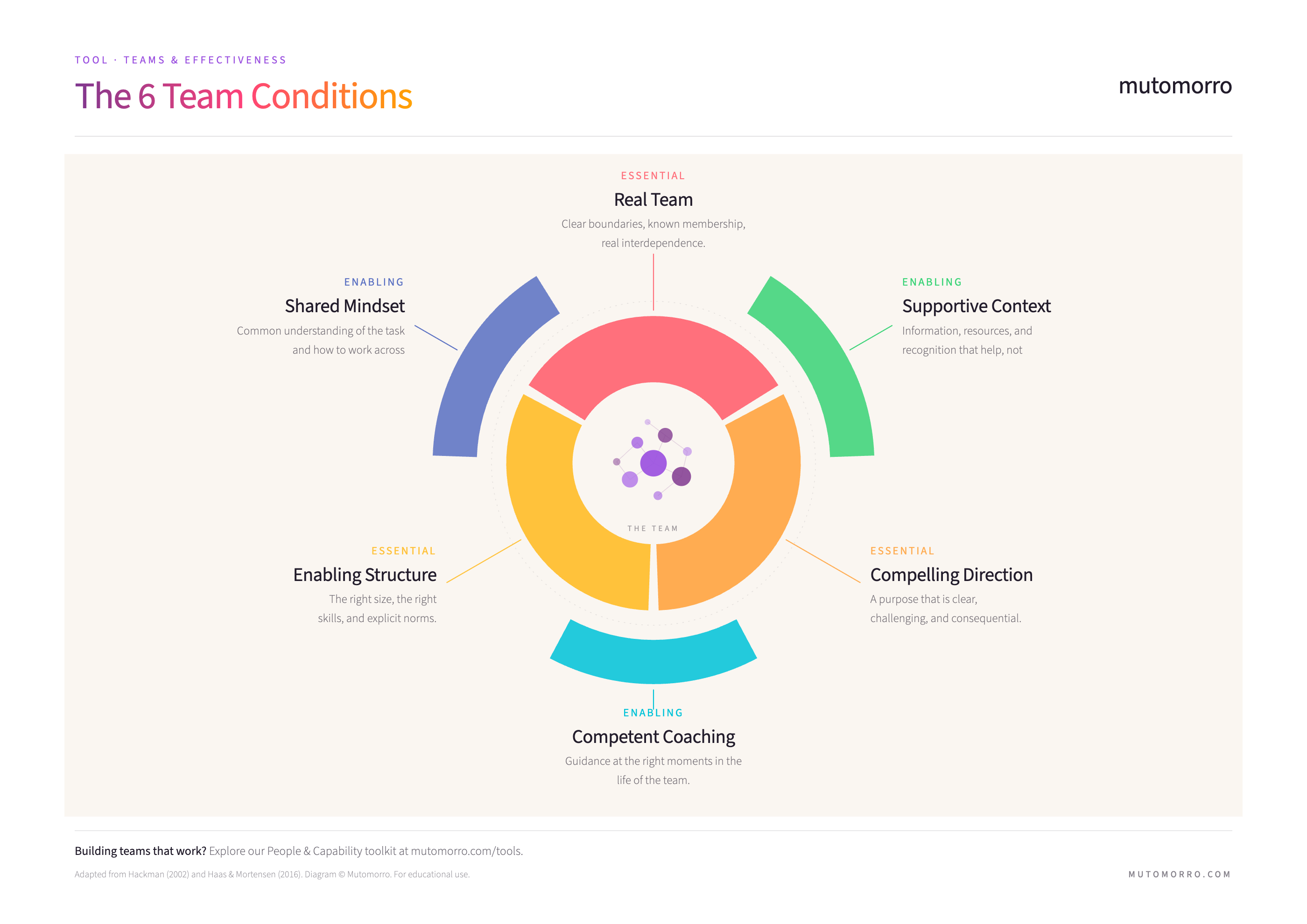
The toolkit opens with the 6 Team Conditions diagram - a visual map showing how three essential conditions (Real Team, Compelling Direction, Enabling Structure) and three enabling conditions (Supportive Context, Competent Coaching, Shared Mindset) work together around your team.
The summary card gives you the framework at a glance: what each condition means, four diagnostic steps for assessing your team, and the most common pitfalls to watch for. It also maps the 6 Team Conditions to related frameworks like Project Aristotle and Five Dysfunctions, so you can see where this tool fits in a wider picture.
The final page connects the framework to organisational development practice - how to move from diagnosis to structured improvement when the conditions need more than a team-level fix.
Tips for using it
- Start by rating each condition honestly. Base your assessment on evidence you can point to, not aspiration. The gap between your assessment and your team's is often where the most useful insight lives, so run the diagnostic as a team conversation rather than a solo exercise.
- Check the essentials first. If Real Team, Compelling Direction, or Enabling Structure are weak, working on coaching or shared mindset will not compensate. The hierarchy matters.
- Revisit the conditions when the work changes. A team that had a compelling direction six months ago may have lost it after a restructure. Build the habit of periodic reassessment rather than treating this as a one-off exercise.
- If the binding constraint sits in the supportive context, that is an organisational issue, not a team one. Resources, systems, and recognition sit beyond the team's control. Escalate it clearly.
Capacity Building
When a team has the right people but the conditions around them are not working, the fix often sits beyond the team itself. Mutomorro's capacity building work helps organisations put the structural and cultural conditions in place that let teams do their best work consistently.
Change Management Training
A housing association in the middle of a significant transformation, with more change on the horizon than its managers had the tools or training to lead.
Read the case study →