6 Team Conditions
The 6 Team Conditions for Team Effectiveness is a research-based framework that identifies what high-performing teams actually need to thrive. It covers everything from having a clear direction to getting the right coaching and support.
Get the free template
Most teams are not short of talent. They are short of the conditions that let talent work together. The 6 Team Conditions framework identifies what needs to be in place - not what individuals need to do differently, but what the team as a whole needs around it and within it to perform well. If your team has the right people but is still underdelivering, the answer is almost certainly in the conditions, not the personnel.
What are the 6 Team Conditions?
The 6 Team Conditions framework comes from decades of research into what separates high-performing teams from the rest. The foundation was laid by J. Richard Hackman, a Harvard organisational psychologist whose work through the 1980s and 1990s established that team effectiveness depends far more on structural conditions than on the chemistry between individuals. Hackman originally identified five conditions. In 2016, Martine Haas and Mark Mortensen extended the model in their Harvard Business Review research, adding a sixth condition - shared mindset - to account for the increasing complexity of modern teams working across boundaries, time zones, and disciplines.
The six conditions are:
- Real Team - clear boundaries, known membership, and genuine interdependence
- Compelling Direction - a purpose that is clear, challenging, and consequential
- Enabling Structure - the right size, the right mix of skills, and clear norms for how the team works
- Supportive Context - organisational systems that help rather than hinder - resources, information, recognition
- Competent Coaching - guidance that helps the team develop, not just deliver
- Shared Mindset - a common understanding of the work, each other's perspectives, and how the pieces fit together
The first three conditions (real team, compelling direction, enabling structure) are Hackman's essentials - the conditions without which a team cannot function well regardless of anything else. The fourth and fifth (supportive context and competent coaching) are enabling conditions - they amplify what the essentials make possible. The sixth (shared mindset) is Haas and Mortensen's addition, reflecting a reality that Hackman's earlier research predated: teams today are more diverse, more distributed, and more cross-functional than ever, and alignment on perspective has become a condition in its own right.
What makes this framework different from models like Belbin's Team Roles (which focuses on individual contributions) or Lencioni's Five Dysfunctions (which diagnoses what breaks down) is that the 6 Team Conditions focuses on what needs to be designed and maintained. It treats team effectiveness as something you create the conditions for, rather than something you fix when it goes wrong.
How the 6 Team Conditions work
The six conditions work as a system. Strengthening one without attending to the others produces diminishing returns - a team with brilliant coaching but no compelling direction will develop skills with nowhere to apply them. A team with a shared mindset but no enabling structure will agree on what matters but stumble over how to get it done.
Condition | What it means | What it looks like when it's missing |
|---|---|---|
Real Team | Clear boundaries, genuine interdependence, and stable membership - not just a group reporting to the same manager. | Unclear accountability, people unsure if they're in or out, work falling between the gaps. |
Compelling Direction | A goal that's clear, challenging, and consequential - all three at once. | Competent compliance, wasted energy, or disengagement. |
Enabling Structure | The practical architecture: the right (usually smaller) size, the right skills, clear norms for decisions and disagreements. | Time lost navigating ambiguity instead of doing the work. |
Supportive Context | An organisation that provides the information, resources, systems, and recognition the team needs. | Teams compensating through heroic individual effort that can't last. |
Competent Coaching | Guidance that helps the team improve how it works - motivational, consultative, or educational, at the right moment. | Help that arrives at the wrong moment, or not at all. |
Shared Mindset | A common understanding of the task and shared language for working across differences. | Misaligned assumptions, duplicated work, late surprises. |
Real Team

This is the foundation, and it is less obvious than it sounds. A real team has clear boundaries (everyone knows who is on the team and who is not), genuine interdependence (the work requires people to coordinate, not just co-exist), and stability (membership does not churn every few weeks).
Many groups that call themselves teams are not, by this definition. A collection of individuals who report to the same manager but work independently on separate projects is not a team - it is a working group. That is not a problem unless you try to apply team-based approaches to a group that does not need them. The first question the framework asks is: do you need a team here at all?
Where this condition is weak, you will see unclear accountability, people unsure whether they are in or out, and work that falls between the gaps because nobody owns the join-up.
Compelling Direction

A compelling direction does three things simultaneously: it is clear enough that people know what they are working towards, challenging enough that it stretches them, and consequential enough that the outcome matters - to the team, to the organisation, or to the people they serve.
Direction that is clear but not challenging produces competent compliance. Direction that is challenging but not clear produces wasted energy. Direction that is challenging and clear but not consequential - where the outcome does not feel like it matters - produces disengagement. All three need to be present.
The team leader's role here is not to dictate the direction but to make sure one exists and that the team connects to it. In practice, that often means translating organisational strategy into something the team can see themselves in - what embedded strategy looks like at team level.
Enabling Structure

This is the practical architecture of the team: how big it is, what skills are represented, how work gets allocated, how decisions get made, and what norms govern day-to-day interaction.
Research consistently shows that smaller teams outperform larger ones for most tasks - not because small is inherently better, but because coordination costs rise steeply with each additional member. The right size is the smallest group that has the skills and perspectives needed for the work.
Beyond size, enabling structure includes the norms the team operates by. How do disagreements get handled? How are decisions made when the team cannot reach consensus? What does "good enough" look like for different types of work? Teams that have explicit answers to these questions spend less time navigating ambiguity and more time doing the work.
Supportive Context

Teams do not operate in a vacuum. Even a well-structured team with clear direction will struggle if the wider organisation works against it - if information is hoarded, if systems create friction, if recognition goes to individuals while the rhetoric is about collaboration.
A supportive context means the organisation provides what the team needs: access to relevant information, adequate resources, systems that enable rather than obstruct, and recognition that reinforces collaborative behaviour. This is the condition that team leaders have least direct control over and that organisational development work most often addresses - it is about the environment the team sits within, not just the team itself.
Where this condition is weak, teams often compensate through heroic individual effort, which works for a while but is not sustainable. If your team is consistently overworking to deliver what should be straightforward, the issue may be contextual rather than internal.
Competent Coaching

Coaching here does not mean a formal coaching programme. It means the team receiving guidance that helps it improve how it works - at the right moments and in the right way.
Hackman's research identified three particularly valuable coaching interventions, each suited to a different phase of the team's work. At the start of a piece of work, motivational coaching helps the team engage with the task and commit effort. At the midpoint, consultative coaching helps the team review its approach and adjust strategy. At the end, educational coaching helps the team learn from the experience and build capability for next time.
The timing matters as much as the content. Coaching that arrives at the wrong moment - detailed strategy advice when the team is still trying to get motivated, or motivational encouragement when what they need is honest feedback on their approach - does more harm than good.
This does not need to come from a designated coach. It can come from a team leader, a peer, or anyone with the perspective and skill to help the team see what it cannot see for itself. The key is that someone is paying attention to how the team works, not just what it produces - building generative capacity rather than just output.
Shared Mindset

Haas and Mortensen's addition reflects a modern reality: teams today are often composed of people from different functions, backgrounds, locations, and even organisations. Each person brings their own mental model of what the work is, what good looks like, and how things should be done.
A shared mindset does not mean everyone thinks the same way - that would defeat the purpose of having a diverse team. It means the team has a common understanding of the task, appreciates each other's knowledge and perspectives, and has established shared language and norms for working together across those differences.
Where this condition is weak, you see the same problems that plague cross-functional collaboration more broadly: misaligned assumptions, duplicated work, surprises late in the process, and a vague sense that the left hand does not know what the right hand is doing. Psychological safety plays a role here - people are more willing to surface different perspectives and check assumptions when they trust that doing so will not be held against them.
Building a shared mindset takes deliberate effort: shared experiences, structured dialogue about how different parts of the team see the work, and regular check-ins that go beyond status updates to explore how people are thinking about the challenges ahead.
How to use the 6 Team Conditions
The framework works best as a diagnostic rather than a prescription. Rather than trying to implement all six conditions from scratch, use it to identify which conditions are already strong and which are the bottleneck.
Step 1: Assess honestly. Take the six conditions and rate your team against each one - not in theory, but in practice. Where do you see evidence that the condition is present? Where is it noticeably absent? It often helps to do this as a team rather than as a leader working alone, because the view from different seats is usually different.
Step 2: Find the binding constraint. Rarely are all six conditions equally weak. More often, one or two are the primary drag on the team's effectiveness, and the others are adequate or strong. Identify which conditions, if strengthened, would make the biggest difference. The essentials (real team, compelling direction, enabling structure) are worth checking first - if these are not in place, working on the enabling conditions will not help much.
Step 3: Design interventions at the right level. Some conditions are within the team's control to change (norms, how meetings work, how decisions are made). Others require organisational action (resource allocation, information systems, recognition practices). Be clear about which is which, and do not expect the team to fix what the organisation needs to change.
Step 4: Revisit regularly. Conditions shift. A team that had a compelling direction six months ago may have lost it after a restructure. A team that was the right size for one project may be too large or too small for the next. Build the habit of checking the conditions periodically - not as a formal audit, but as a standing question: are the conditions still right for the work we are doing now?
For teams that want to go deeper, the framework pairs well with Project Aristotle's findings from Google - which confirmed that psychological safety, dependability, structure, meaning, and impact are the conditions that matter most, aligning closely with Hackman's model while adding rich data from a very different context.
Example
Imagine you lead a product team of eight people. You have strong designers, capable engineers, and a skilled product manager. But delivery is inconsistent - the team hits some targets and misses others, retrospectives keep surfacing the same issues, and there is a persistent undercurrent of frustration that you cannot quite pin down.
You run the team through the six conditions:
Real Team - strong. Membership is clear, the group is stable, and the work genuinely requires collaboration. No issues here.
Compelling Direction - mixed. The team knows what it is building this quarter, but nobody can articulate why it matters to users or how it connects to the wider product strategy. The "what" is clear; the "why" and "so what" are missing.
Enabling Structure - mixed. The team is the right size and has the right skills, but decision-making norms are unclear. Design and engineering regularly reach different conclusions about priorities and there is no agreed way to resolve the tension. Small decisions escalate to you by default.
Supportive Context - weak. The team depends on data from another department that arrives late and incomplete. The tooling for deployment is outdated and creates friction. Both issues have been flagged but nothing has changed.
Competent Coaching - adequate. You give feedback regularly, but it is mostly focused on output rather than process. Nobody is helping the team look at how it works together.
Shared Mindset - weak. Designers and engineers have very different assumptions about what "ready" means and what quality looks like. These differences surface as friction in every sprint but have never been explicitly discussed.
The binding constraints are compelling direction, supportive context, and shared mindset. You address them in order: first, you spend a session reconnecting the team to the user problem and the strategic rationale (direction). Then you escalate the data and tooling issues formally, with specific examples of their impact (context). Finally, you facilitate a conversation between design and engineering about their different definitions of quality, working towards explicit shared standards (mindset).
The structural and coaching conditions were not the problem. Without the diagnostic, you might have spent months reorganising the team or introducing new coaching practices that addressed the wrong things entirely.
Limitations
It focuses on formal teams. The framework assumes a defined group with clear boundaries. It is less helpful for the loose, fluid collaborations that increasingly characterise modern work - project-based groups, communities of practice, cross-organisational partnerships. If your "team" is really a network, a different lens may be more useful.
Conditions three and four overlap. The boundary between enabling structure and supportive context can feel blurry in practice - is a decision-making process a structural condition or a contextual one? For practical purposes, the distinction matters less than asking the question, but it can make the framework feel less crisp than it looks on paper.
It underplays interpersonal dynamics. By focusing on structural conditions, the framework deliberately steps away from the personality and relationship dynamics that models like Belbin and Lencioni centre on. This is a feature - it stops you blaming individuals when the problem is structural - but it means you may miss genuinely interpersonal issues that the conditions framework will not surface.
It requires honest assessment. The framework is only as useful as the honesty of the people applying it. If a team (or a leader) is not willing to name what is really going on - especially around supportive context, which often implicates senior leadership - the diagnostic will produce polite fictions rather than useful insights.
Getting started
Pick one team you lead or belong to. Without overthinking it, score each of the six conditions out of five based on your gut sense of how well each one is present. Write a sentence next to each score explaining why you rated it that way.
Look at the pattern. Where are the lowest scores? Are they in the essentials (first three) or the enabling conditions (last three)? If the essentials are weak, start there - no amount of coaching or mindset work will compensate for unclear boundaries or missing direction.
Then have the same conversation with your team. The gap between your assessment and theirs is often where the most useful insight lives - and the conversation itself begins to build the kind of shared understanding that the framework identifies as a condition for effectiveness.
For teams ready to work on this more systematically, high-performing teams training provides structured sessions built around exactly these diagnostic questions - moving from assessment to a practical plan for strengthening the conditions that will make the biggest difference.
We share thinking on organisational change and development on LinkedIn - practical ideas for people doing this work inside their own organisations.
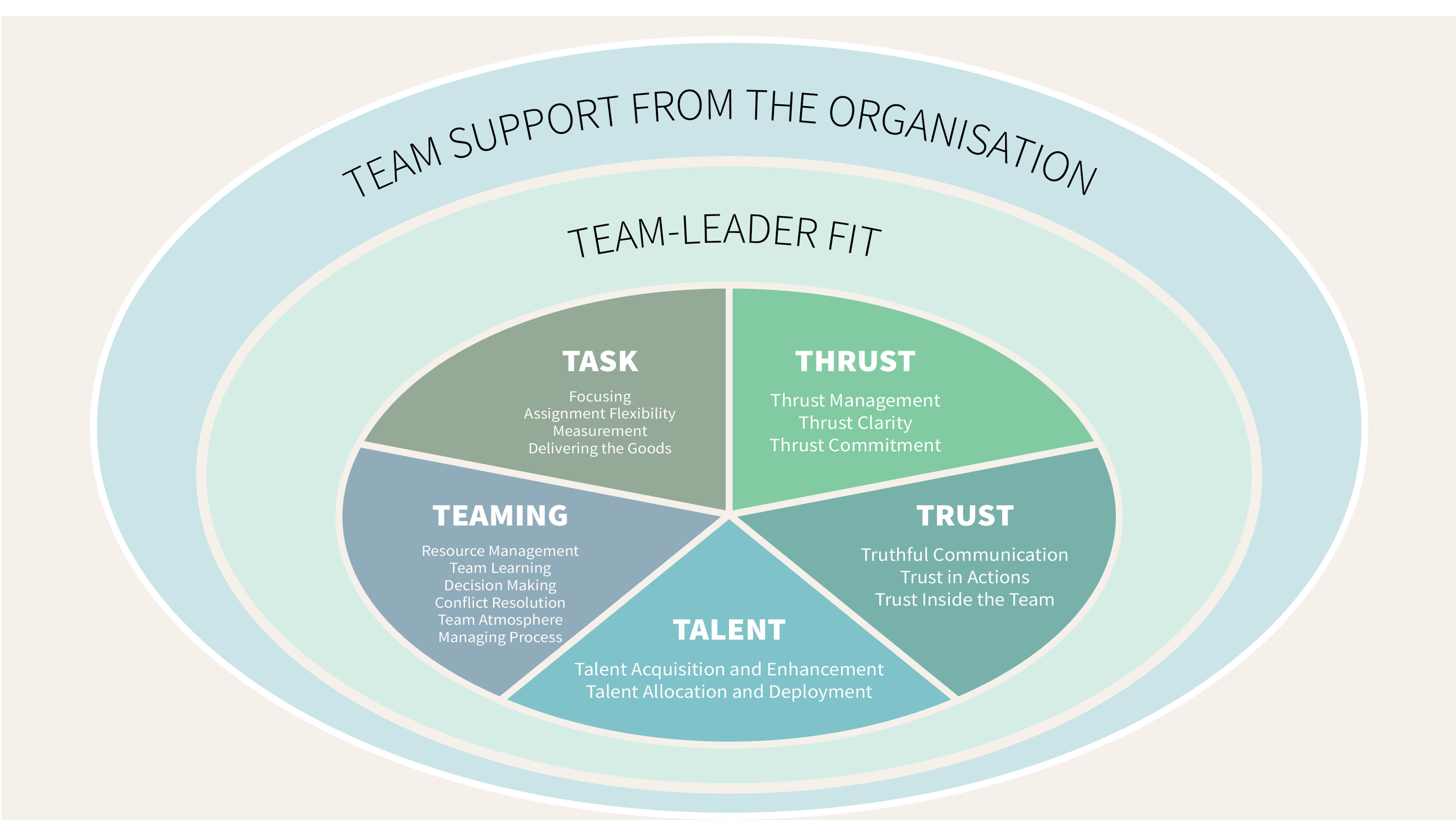
The T7 Model is a framework that identifies seven factors driving team effectiveness - five internal (like trust and talent) and two external (like team-leader fit and organisational support). It helps you diagnose where a team is strong and where it needs work.
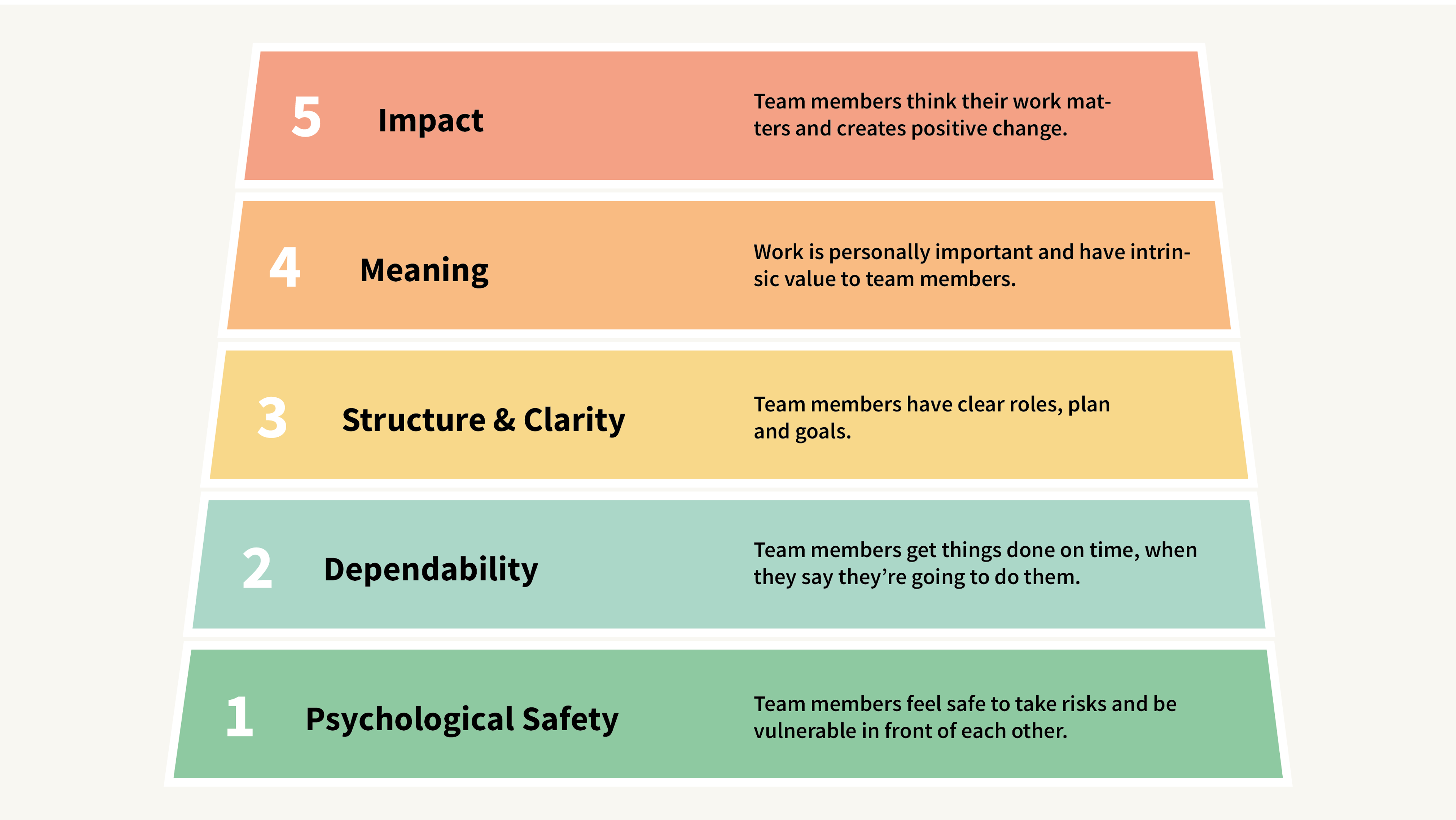
Project Aristotle is Google's research into what makes teams effective. It found that psychological safety - feeling safe to take risks and be vulnerable - matters more than who is on the team.
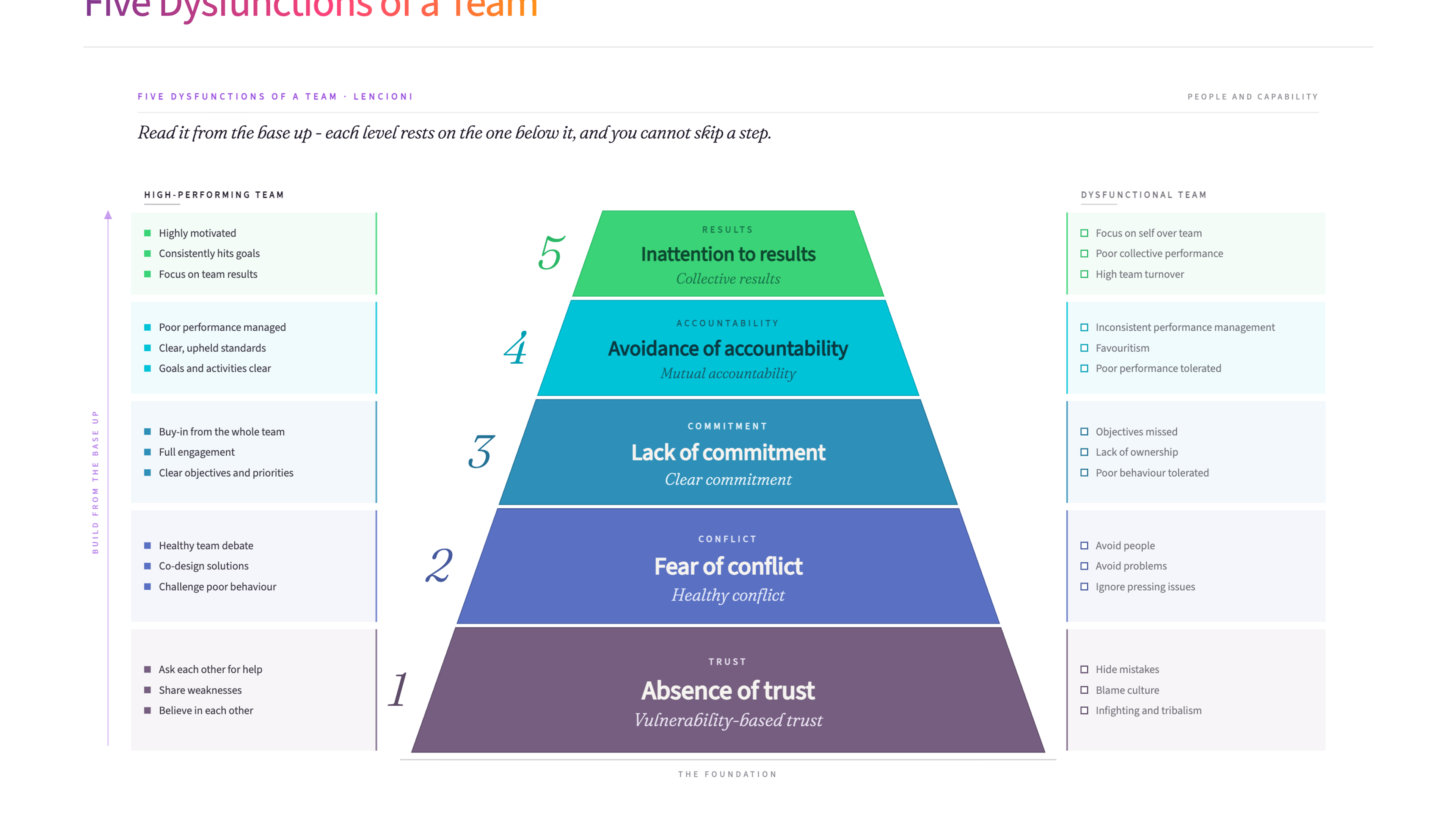
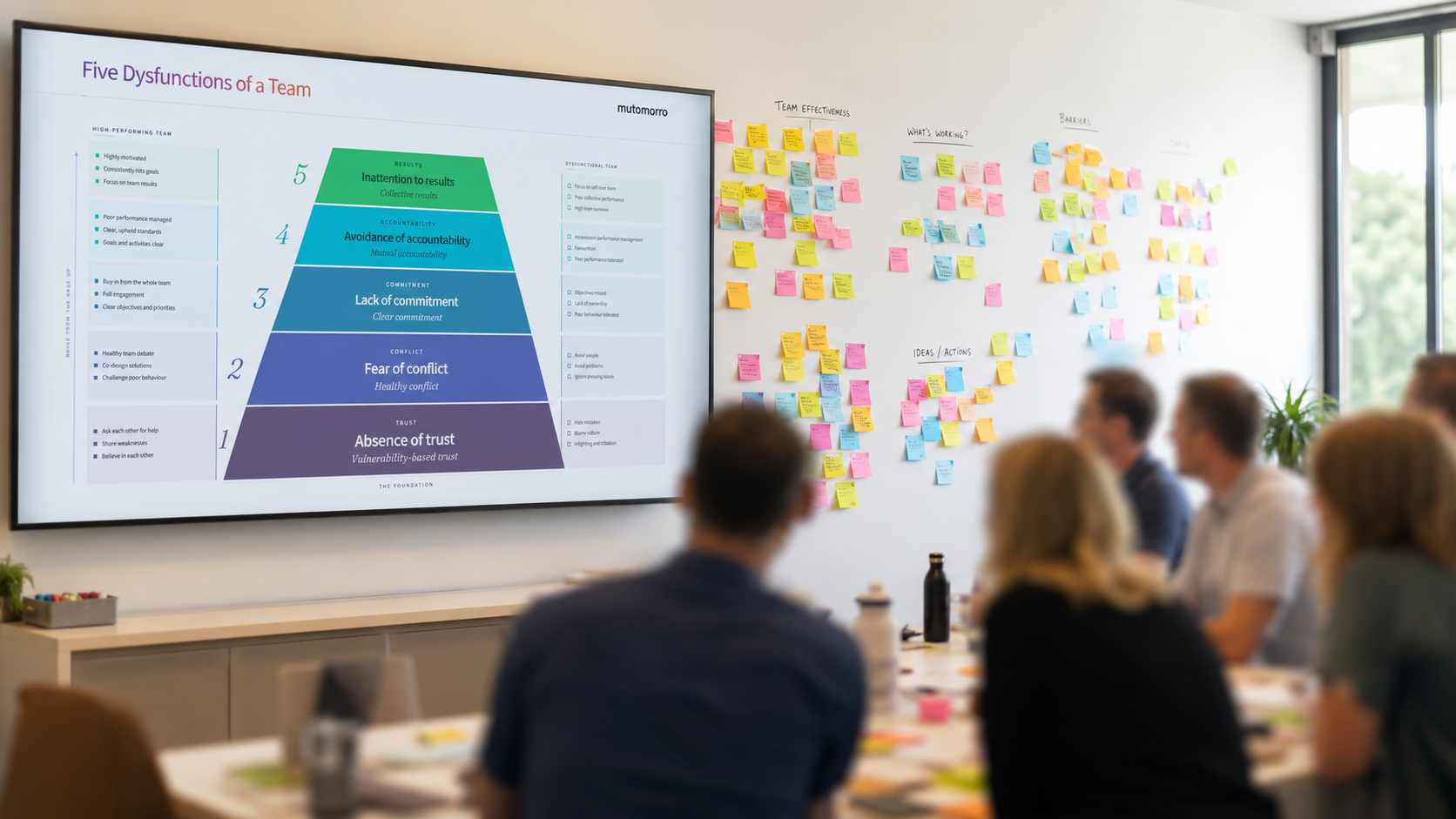
The Five Dysfunctions of a Team is Patrick Lencioni's framework for understanding why teams struggle. It maps five connected problems - from absence of trust to inattention to results - that build on each other when left unaddressed.
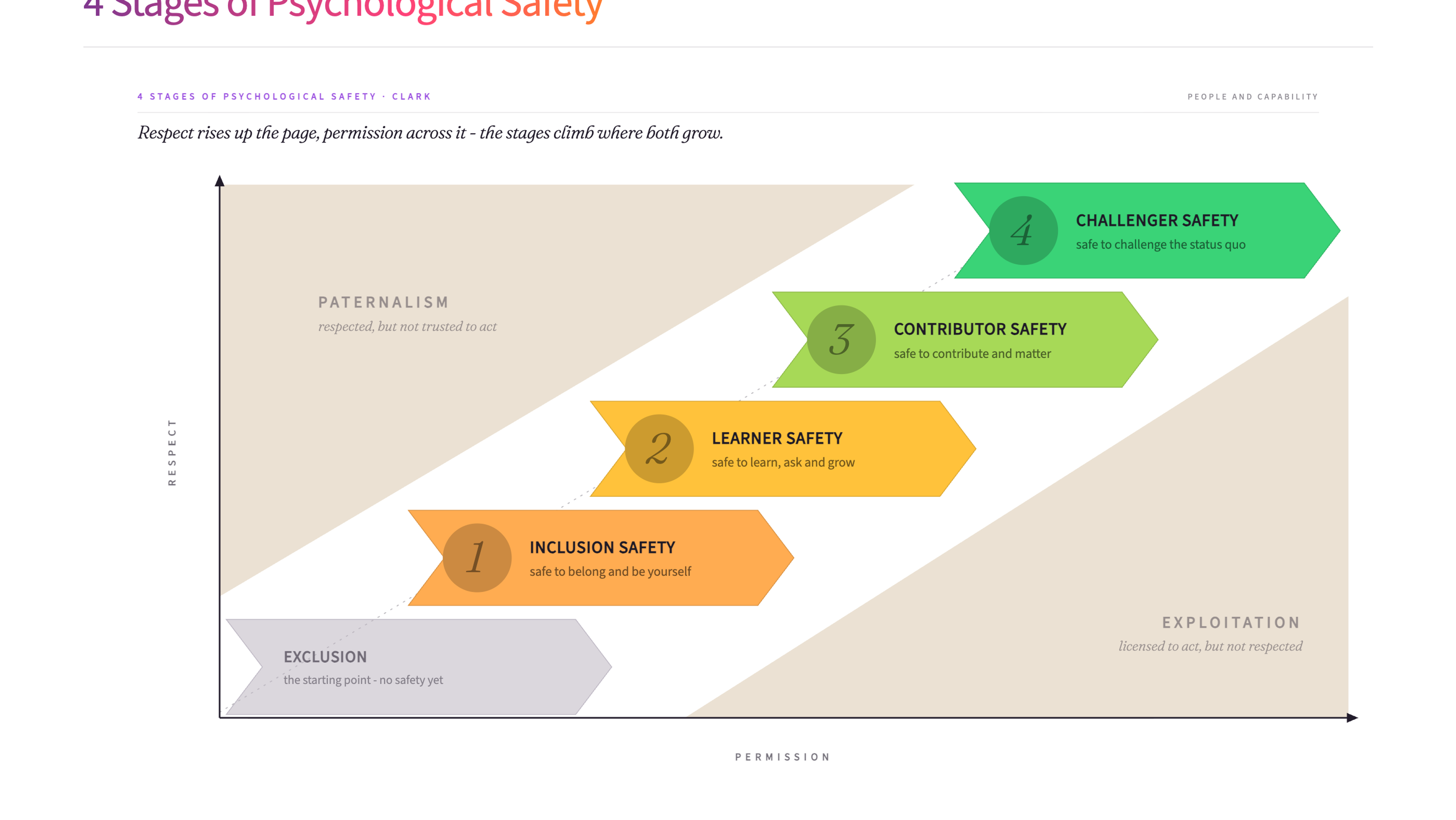
The 4 Stages of Psychological Safety is a framework that maps how safe people feel to be themselves, learn, contribute, and challenge the status quo. It helps leaders understand what conditions people need before they'll speak up and take risks.

Psychological safety is one of the strongest predictors of team performance - but it's often misunderstood. This article explores what it actually looks like in practice, why it matters beyond the research headlines, and what leaders can do to build the conditions where honesty, learning, and real collaboration become possible.
A practical guide to developing organisational culture. Cuts through the theory to explain what culture actually is, why most culture change programmes fail, and how to develop culture in a way that lasts - by working with your organisation as a living system, not a machine.
Team Effectiveness Training
The Six Team Conditions are one of several frameworks we use in our Team Effectiveness training, applied to the teams you actually lead.
James Freeman-Gray is the founder of Mutomorro. He's an organisational development practitioner who has spent over twenty years working with leaders across public, private and nonprofit sectors - helping organisations pull together around a common purpose, joined up in how they work. More about who we are and what it's like to work with us.
Hackman's six conditions model is a well-researched approach to team design. I use it when organisations are setting up new teams or restructuring existing ones. It shifts the focus from "let's find the right people" to "let's create the right conditions" - which is usually where the real leverage is.
Last reviewed: June 2026
Ready to use 6 Team Conditions?
Download the free template - includes practical guidance for workshops and team sessions.
Get the free template
Want to put these ideas into practice?
Whether you're navigating a merger, rethinking how you're structured, or trying to shift a culture that isn't working - underneath, it's the same job: getting the whole organisation pulling in the same direction. Start with a conversation.