4 Stages of Psychological Safety - Free Template
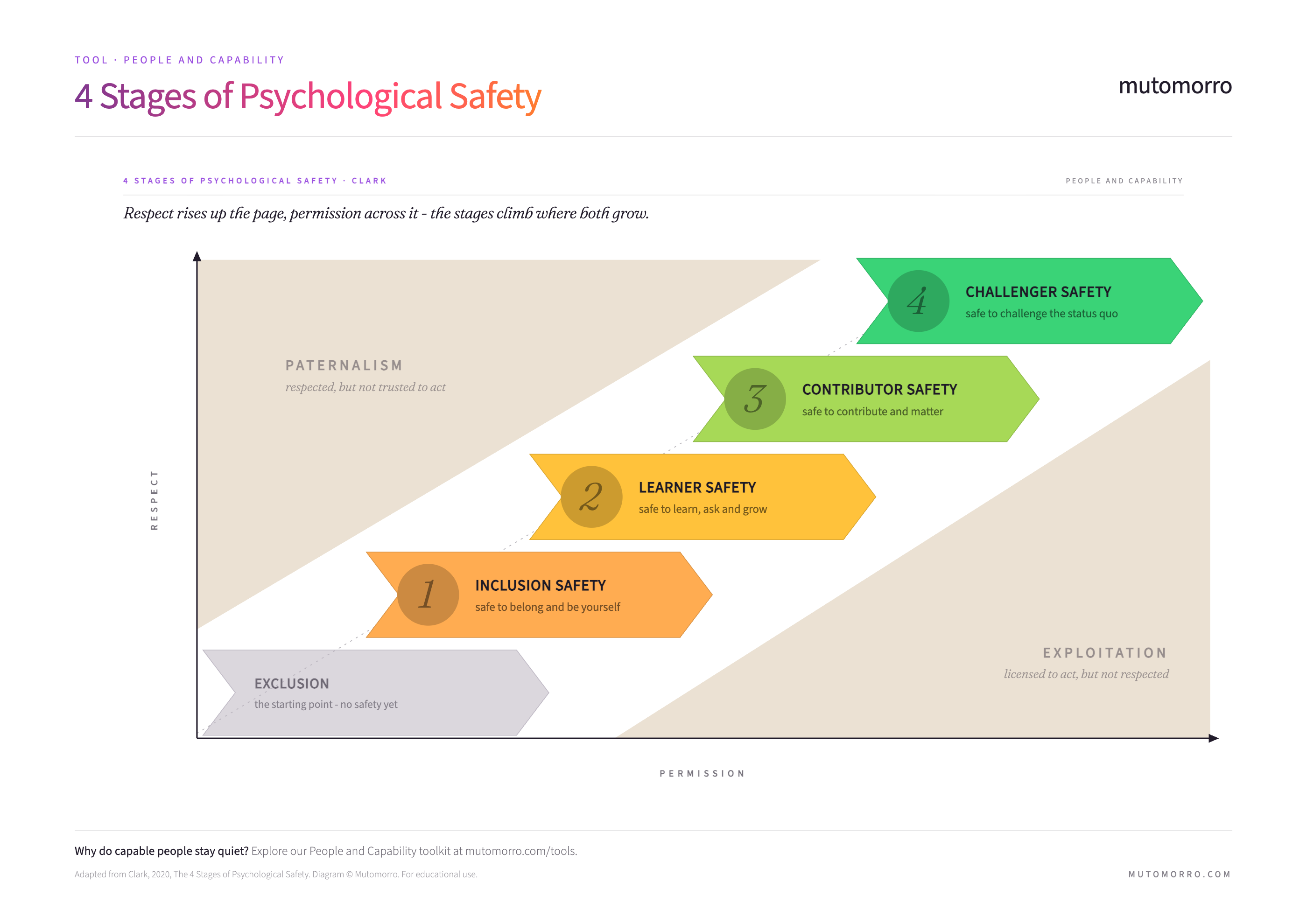
A visual PDF template mapping the four stages of psychological safety - inclusion, learner, contributor and challenger safety - with the respect and permission axes that connect them.
Based on our full guide to 4 Stages of Psychological Safety.
Get this PDF template
Fill in your details and download the PDF straight away.
What's in this 4 Stages of Psychological Safety template
The template includes the full 4 Stages of Psychological Safety model with its two axes - respect and permission - and how each stage builds on the last. You'll find all four stages mapped out (inclusion, learner, contributor and challenger safety), plus the two additional dynamics the model describes: paternalism (respect without permission) and exploitation (permission without respect). Use it as a diagnostic to explore where your team sits and what conditions might be holding them back. It pairs well with our approach to organisational development, where psychological safety often surfaces as a foundational theme.
Tips for using it
Start with inclusion, not challenge. It's tempting to jump to challenger safety because it sounds the most impressive, but teams that skip the earlier stages tend to mistake confrontation for constructive challenge. Work through the stages in order.
Use the axes, not just the stages. The respect and permission dimensions are where the real diagnostic value sits. A team might have high respect but low permission (paternalism) - that's a different problem from low respect with high permission (exploitation).
Make it a conversation, not a score. The model works best when the team discusses where they think they are together, rather than having a leader assess them from the outside.
Capacity Building
Psychological safety is a foundation for how teams perform, learn and adapt. We work with leadership teams to build the conditions that make it possible - through coaching, facilitated sessions and capability building that goes beyond the framework.
Change Management Training
A housing association in the middle of a significant transformation, with more change on the horizon than its managers had the tools or training to lead.
Read the case study →