Mendelow power-interest matrix
The Mendelow Power-Interest Matrix is a stakeholder mapping tool that helps you work out who matters most during a change or project. It plots stakeholders by their level of power and interest so you can plan how to engage each group.
Get the free template
The Mendelow power-interest matrix is a simple way to work out who matters most when you are planning a change - and how much of your attention each person or group should get. It sorts the people your work affects by two things: how much power they have to shape what happens, and how much they care about the result. What you end up with is a map that tells you where to spend your time, rather than a list that treats everyone the same.
What is the Mendelow power-interest matrix?
The Mendelow power-interest matrix - also called the power-interest grid, or simply the stakeholder matrix - is a stakeholder mapping tool. It plots the individuals and groups connected to a project or change against two axes: their power and their interest. Where someone lands on the grid suggests how closely you should work with them.
It was set out by Aubrey Mendelow in 1991, in a paper called "Environmental Scanning: The Impact of the Stakeholder Concept". It built on R. Edward Freeman's 1984 book Strategic Management: A Stakeholder Approach, which argued that organisations answer to far more than their shareholders. The grid in the form most people recognise was popularised a little later by Gerry Johnson and Kevan Scholes in Exploring Corporate Strategy, and it has since been applied widely in strategy and project research. Mendelow's contribution was to turn the stakeholder idea into something you can draw on a single page and use in a meeting.
The problem it solves is a familiar one. On any change of real size, the list of people with a view is long, and you cannot give all of them the same time and care. Spread yourself evenly and you spread yourself thin. Go on instinct and you tend to favour the people who are easiest to talk to. The matrix gives you a more deliberate way to choose.
Power and interest: the two axes
Two questions sit behind the matrix, one for each axis.
Power is the vertical axis: how much can this person or group affect what happens? Power shows up in different forms - a position in the hierarchy, control of a budget, the authority to sign things off, sway over other people, or expertise everyone defers to. Someone can hold a lot of power with no formal title at all.
Interest is the horizontal axis: how much does this person or group care about the result? Interest comes from having something at stake - a job that changes, a service they rely on, a strong view about the issue. High interest is not the same as high power. The person who emails you most about a project is often the one with the least ability to change it.
Plotting people against both at once is the whole point. A name on its own tells you little. The same name placed on the grid tells you how to treat them.
The four quadrants
The two axes create four corners, and each one suggests a different way to spend your attention. The table is the quick map; the corners below are the short tour.
Quadrant | Power | Interest | How to engage |
|---|---|---|---|
Manage closely (key players) | High | High | Bring them into decisions; keep them genuinely informed |
Keep satisfied | High | Low | Enough to hold their confidence, and no more |
Keep informed | Low | High | Regular updates; treat them as allies and early signals |
Monitor | Low | Low | A light touch; watch in case positions shift |

Manage closely (top right). These are the key players, and they reward an ongoing relationship rather than a signature chased at the last minute.

Keep satisfied (top left). The skill here is noticing when their interest is starting to rise, so you can move them up before they move themselves.

Keep informed (bottom right). The corner most often missed. Front-line staff and the people who use a service usually sit here, and they make both useful allies and an early warning when something is starting to go wrong.

Monitor (bottom left). A light touch is right - but keep half an eye out. A quiet name can climb the grid the moment a change reaches their team.
The labels are a starting point, not a verdict. Most of the value is in the conversation a team has while deciding where someone belongs - and in noticing the gap between where your attention goes now and where the matrix says it should.
How to use the matrix
You can put a first version together in a single session, with a whiteboard or a shared document. A sequence that works:
- List everyone the change touches. Cast the net wide - individuals and groups, inside the organisation and out. It is easier to take a name off later than to remember the ones you missed.
- Place each by power and interest. Judge people as they are, not by how senior they feel or how loudly they speak. An empathy map helps here, building a fuller picture of what someone thinks and needs before you decide where they sit.
- Read the quadrant, then match your effort. Let the position suggest how much attention to give - and resist the pull to do still more with the people who are already on side.
- Come back to it as the work moves. Positions are not fixed. A quiet stakeholder turns into a loud one the moment a change reaches their team, so revisit the map at each milestone.
Getting the mapping right matters most when you are building the case for change - knowing who can support or block you shapes how you make the argument. It is also worth looking beneath the surface, because someone's stated position often sits on top of deeper concerns. That is where the Iceberg Model earns its place.
An example
Imagine a mid-sized organisation rolling out a new core IT system. The team starts by listing everyone involved and plotting them on the grid.
The project sponsor and the head of the affected department land top right - high power, high interest - so they join the steering group and get a standing slot in the team's week. The finance director has the power to halt the project but little interest in the day-to-day, so she sits top left and gets a short monthly note covering cost, timeline and risk, and nothing more than that.
The people who will use the system every day have plenty of interest but little formal power. They sit bottom right - the group most often forgotten - so the team sets up regular updates, an easy way to ask questions, and early sight of the new system. Then the surprise, as there often is: the loudest voice in the early meetings turns out to belong to someone with strong opinions and no real authority over the outcome. Bottom right, not top right. The matrix gives the team permission to keep that person well informed without letting them set the agenda.
None of these placements is obvious from a job title alone. That is the work the matrix does. It turns a vague sense of who matters into a set of deliberate choices the whole team can see and agree on.
Where the matrix stops
The matrix is useful precisely because it is simple, and that simplicity is also its limit.
It is a snapshot. People move between quadrants as a change unfolds, so a map drawn once and filed away goes stale quickly. Staying tuned to change means treating it as a living picture you keep returning to, not a one-off exercise.
Power and interest are blunt measures. They say nothing about whether someone's claim is legitimate or urgent - distinctions the stakeholder salience model (Mitchell, Agle and Wood) was built to capture - and they can flatten a real person into a box. Two people in the same quadrant may need very different things from you.
And the matrix shows you where your attention should go, not what to do once it gets there. It points; it does not script. For mapping who actually decides what, the lighter DACI framework sits alongside it well. For a fuller read on whether an organisation is ready for a change at all, the ORCA assessment looks at evidence, context and facilitation as well as the people.
Getting started
The simplest way to begin is to gather your team, list the people your next change will touch, and place them on the grid quickly - first instincts are fine, and you can argue the close calls afterwards. Then ask the question the matrix is really for: where is our attention going now, and where does the map say it should go? The gap between those two answers is usually where the useful conversation starts.
Stakeholder mapping works best as part of a wider approach to change, rather than a one-off. If you are working through something complex and want the people side to hold up over time, that is the kind of thing we help leadership teams with.
We share thinking on organisational change and development on LinkedIn - practical ideas for people doing this work inside their own organisations.
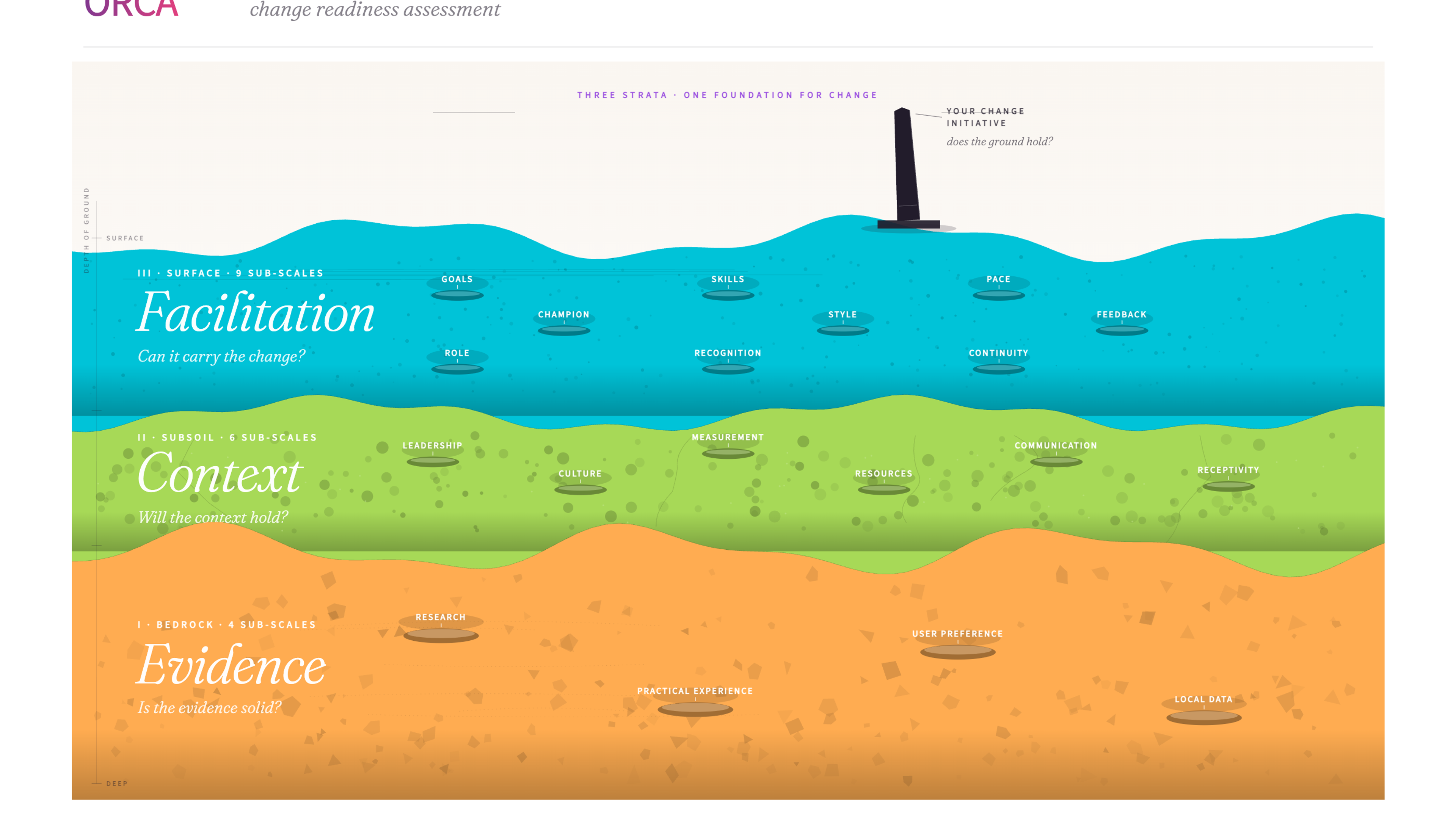
The ORCA framework helps you assess whether your organisation is ready for change by examining three dimensions - evidence, context, and facilitation.
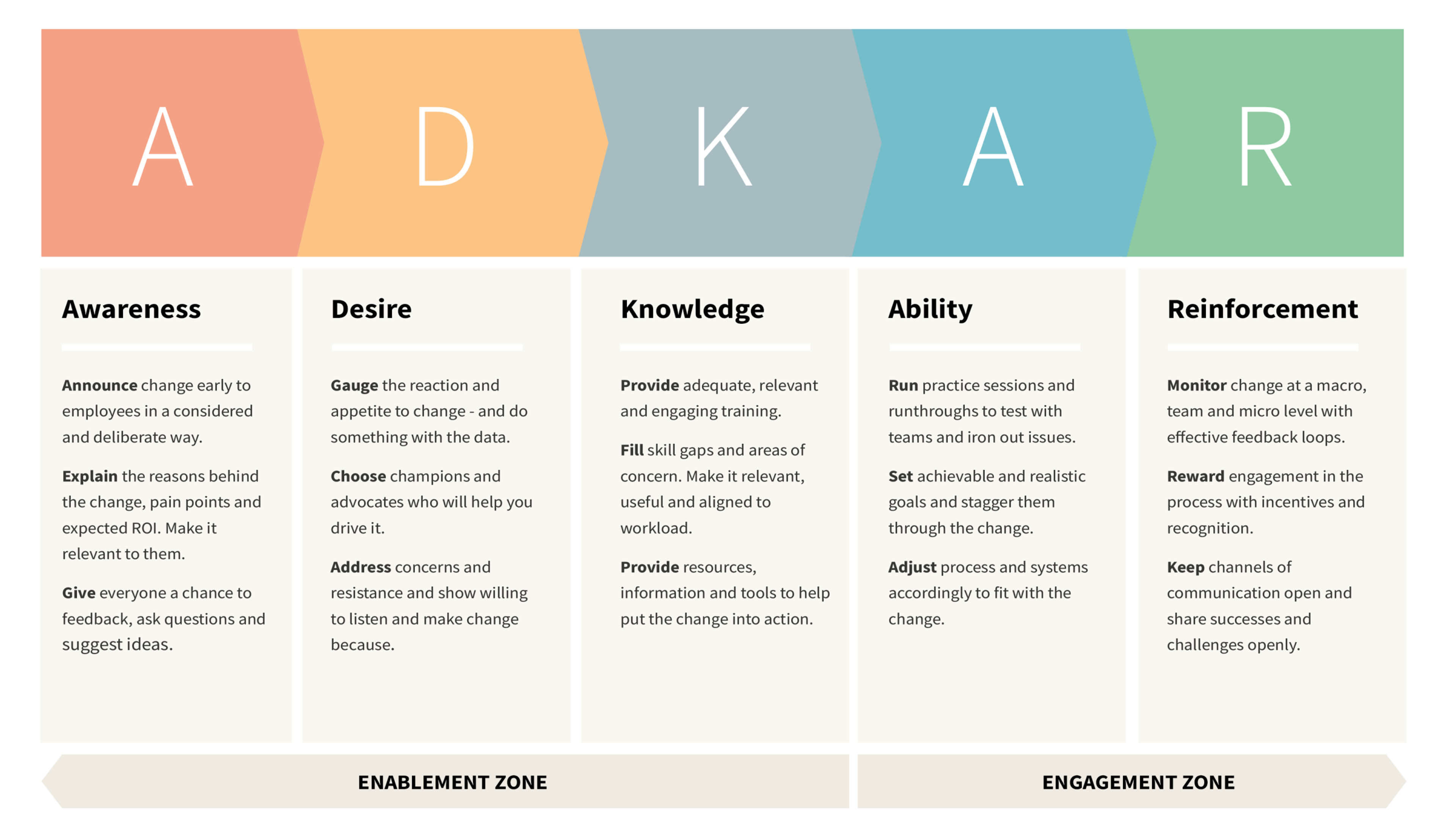
The ADKAR model is a five-stage framework for managing change at an individual level - Awareness, Desire, Knowledge, Ability, and Reinforcement. It helps organisations understand what people need at each point in a change process and where things are getting stuck.
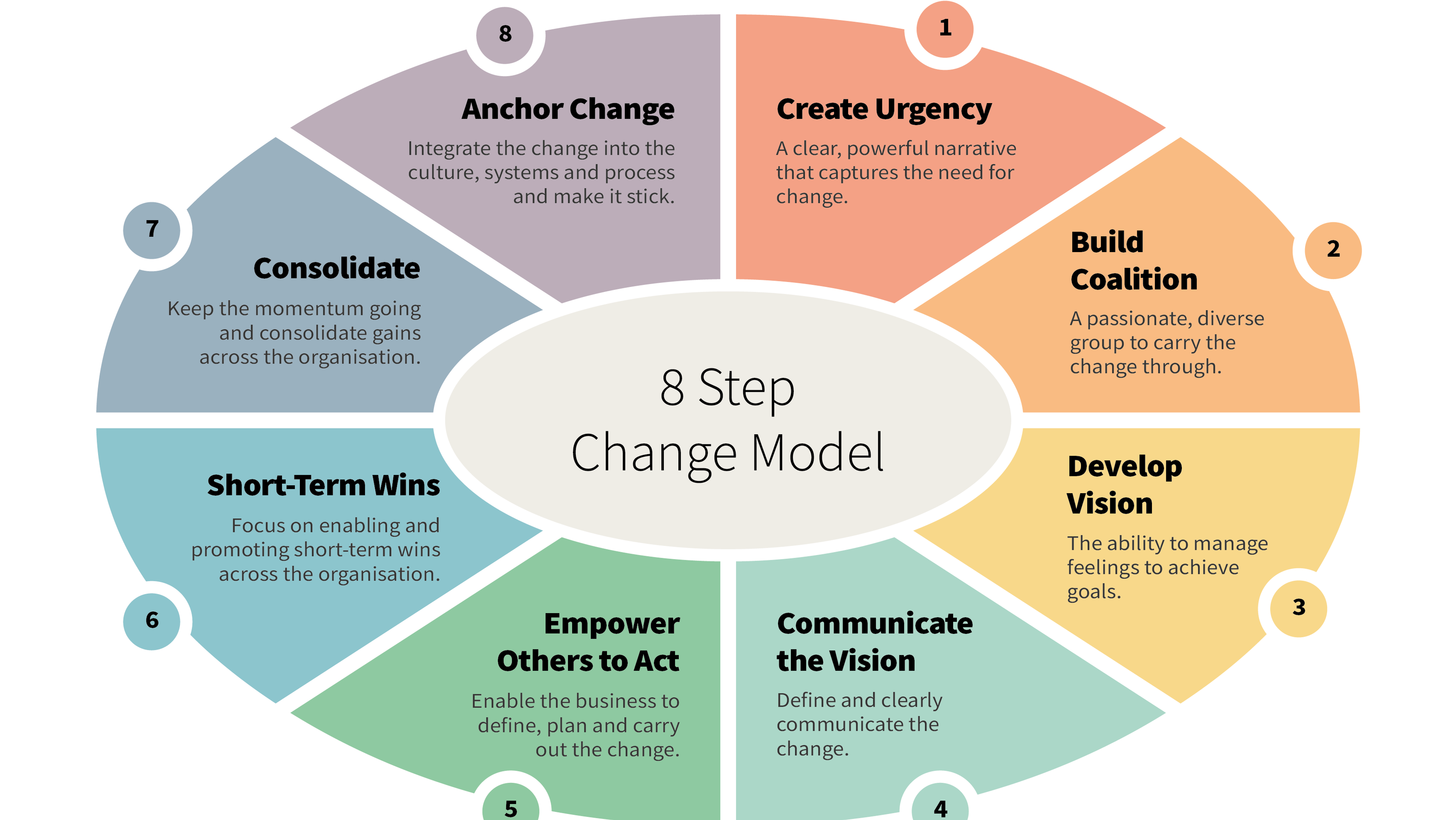
Kotter's 8 Step Change Model is a structured framework for leading organisational change, from building urgency through to embedding new ways of working. It gives leaders a clear sequence to follow when the change is big and the stakes are high.

The traditional approach to building a case for change relies on urgency and burning platforms. But urgency wears off, and fear creates resistance. This article explores a different approach - building a case for change that's rooted in honesty, shared understanding, and a genuine picture of what's possible.

How to assess whether your organisation is genuinely ready for change - looking at the whole system, not just the surface. Covers what to examine, how to gather honest insight, and how to use what you find to build a change plan that works with your organisation rather than against it.
Change Management Training
Mapping stakeholders is a core part of leading change well, and Mendelow is one of several tools we draw on in our Change Management training - applied to the people you actually need to bring with you.
James Freeman-Gray is the founder of Mutomorro. He's an organisational development practitioner who has spent over twenty years working with leaders across public, private and nonprofit sectors - helping organisations pull together around a common purpose, joined up in how they work. More about who we are and what it's like to work with us.
Stakeholder mapping with Mendelow is one of the first things I do when starting any change programme. The conversations it generates are often more valuable than the matrix itself - leaders start to realise they've been over-communicating with people who are already on board, and under-communicating with the people who could derail everything.
Last reviewed: June 2026
Ready to use Mendelow power-interest matrix?
Download the free template - includes practical guidance for workshops and team sessions.
Get the free template
Want to put these ideas into practice?
Whether you're navigating a merger, rethinking how you're structured, or trying to shift a culture that isn't working - underneath, it's the same job: getting the whole organisation pulling in the same direction. Start with a conversation.