5D’s of Appreciative Inquiry
A strengths-based approach to organisational change. The 5D cycle - Define, Discover, Dream, Design, Deliver - helps teams build on what's already working rather than fixating on what's broken.
Get the free template
Most approaches to organisational change start with a problem. Something is broken, underperforming, or misaligned - and the work begins by diagnosing what's wrong. Appreciative Inquiry turns that instinct on its head. Instead of asking "what's failing?", it asks "what's already working - and how do we build from there?" For leaders who've sat through one too many deficit-focused workshops, that shift changes everything about how the room feels and what comes out of it.
What is Appreciative Inquiry?
Appreciative Inquiry (AI) is a strengths-based approach to organisational change developed by David Cooperrider and Suresh Srivastva at Case Western Reserve University in the late 1980s. Their central insight was deceptively simple: organisations move in the direction they inquire. If you spend your time investigating problems, you'll keep finding problems. If you spend it investigating what works well, you'll discover more of what works well - and find ways to grow it. The approach has since been adopted across sectors worldwide, from healthcare and education to corporate transformation and community development.
This isn't positive thinking dressed up as methodology. It's a structured process built on the observation that human systems are shaped by what they pay attention to. The Iceberg Model helps explain why: the patterns we see at the surface are shaped by deeper beliefs, assumptions, and mental models beneath. Appreciative Inquiry works by shifting what sits at those deeper levels - changing what the organisation notices, values, and builds towards.
At the heart of the approach is the Positive Core - the collective strengths, achievements, values, and capabilities that already exist within the organisation. Every team has one. It includes the moments when things went well, the skills people have developed, the relationships that make difficult work possible, and the values that hold things together under pressure. The Positive Core isn't a feel-good concept. It's the raw material the entire process draws from.
The 5D cycle - Define, Discover, Dream, Design, Deliver - is the practical framework for working with that core. It gives teams a structured way to surface what's working, imagine what's possible, and design changes that build on real strengths rather than theoretical fixes.
How the 5D cycle works
The five stages form a cycle around the Positive Core. Each stage asks a different question and serves a different purpose, but they all draw from and feed back into the same centre. The cycle isn't rigid - some stages need more time than others depending on the context - but the sequence matters. Skipping stages, particularly Define and Discover, tends to produce solutions that don't land.
Phase | Guiding question | Focus |
|---|---|---|
Define | "What is the inquiry?" | Choose the affirmative topic - framed as a possibility, not a problem |
Discover | "The best of what is" | Surface what already works through stories of the team at its best |
Dream | "What could be" | Imagine those strengths as the norm, grounded in real evidence |
Design | "What should be" | Turn the vision into concrete proposals - structures, roles, ways of working |
Deliver | "What will be" | Put it into practice, learn, adapt, and feed success back into the Positive Core |
Define - "What is the inquiry?"

Everything starts here. The Define stage is about choosing what to focus on - and in Appreciative Inquiry, that choice is framed as an affirmative topic rather than a problem statement.
This matters more than it sounds. Compare "Why is our employee engagement so low?" with "What conditions help our people do their best work?" Both address the same concern, but the second question opens a different conversation. It invites people to think about what's possible rather than what's wrong, and the stories it surfaces are entirely different.
The affirmative topic should be specific enough to focus the inquiry but broad enough to allow genuine exploration. "How do we make meetings shorter" is too narrow. "What makes collaboration work well across our teams" gives people room to bring their experience.
Discover - "The best of what is"

This is the stage most unfamiliar to organisations used to problem-solving. Instead of gap analysis or root cause investigation, the team explores what's already working well.
Discover typically involves structured interviews and conversations where people share stories of their best experiences - times when the team was at its most effective, when a project exceeded expectations, when a difficult situation was handled well. The aim is to surface the conditions, behaviours, and relationships that made those moments possible.
What makes this powerful is that the evidence is real. These aren't aspirational ideas or imported ideas from another organisation. They're things your people have already done, in your context, with your constraints. That makes them credible in a way that external frameworks rarely are.
Dream - "What could be"

Dream is the most expansive stage. With the Positive Core visible and the team's best experiences fresh in the conversation, this stage asks: what would it look like if those strengths were the norm rather than the exception?
This isn't blue-sky fantasy. It's grounded imagination - building outward from real evidence rather than wishful thinking. "We had three projects last year where cross-team collaboration worked brilliantly. What if that was how we always worked?" is a different kind of dreaming than "imagine we had unlimited resources."
The Dream stage often produces the energy that carries the rest of the process. When people see that the future they want is built from things they've already proven they can do, commitment shifts from "we should try this" to "we know we can do this."
Design - "What should be"

Design is where imagination meets structure. The team takes the vision from Dream and works out what needs to change in processes, roles, relationships, and systems to make it real.
This is practical, detailed work. If the Dream was "cross-team collaboration is how we always work," the Design stage asks: what does that require? Different meeting structures? Shared goals? New ways of making decisions? Physical or digital spaces that bring people together? The output is a set of concrete proposals - not a strategy document, but prototypes that can be tested and refined.
Design is where Appreciative Inquiry connects to other practical tools. You might use Process Mapping to redesign workflows, or a Theory of Change to map how your proposed changes connect to the outcomes you're aiming for. The difference is that these tools are being applied to build on identified strengths rather than to fix identified problems.
Deliver - "What will be"

Deliver is about making it happen - and sustaining it. The team puts the Design proposals into practice, learns from what happens, and adapts as they go.
What's different about Deliver in an AI process is the tone. Because the changes are built from the team's own strengths and stories, there's typically less resistance than in top-down change programmes. People aren't being asked to adopt someone else's solution. They're implementing something they helped create from evidence they provided.
Deliver also feeds back into the Positive Core. As changes take hold and new successes emerge, they become part of the organisation's story - new evidence for the next cycle. This is what makes AI genuinely cyclical rather than a one-off exercise.
How to use Appreciative Inquiry
Choose your affirmative topic carefully. This is the single most important decision in the whole process. A well-framed topic opens up rich, generative conversation. A poorly framed one either constrains the inquiry too much or leaves it so broad that nothing concrete emerges. Test your topic with a few people before committing - if it sparks stories and energy, you're in the right territory.
Involve the people closest to the work. AI works because it surfaces knowledge and experience that already exists in the organisation. If you only involve senior leaders, you'll get a senior leader's view of what works well. The people who know how things really operate - and where the hidden strengths sit - are the ones doing the work every day. Bring them into the conversation from Define onward.
Give Discover the time it needs. There's a temptation to rush through Discover and get to the "action" stages. Resist it. The quality of Dream and Design depends entirely on what surfaces during Discover. If people haven't had the chance to properly explore their best experiences, the rest of the process builds on thin ground.
Use paired interviews in Discover. One of the most effective AI techniques is having people interview each other in pairs, using appreciative questions. "Tell me about a time when you were part of a team that was working at its best. What made that possible?" This structure gives everyone a voice, surfaces personal stories that group discussions miss, and builds connection between participants.
Don't skip Design. Dream without Design is inspiration without architecture. The team needs time to work through the practical implications of their vision - what structures need to change, what new practices need to be established, who needs to be involved. This is where AI earns its credibility as a serious change approach rather than a feel-good exercise.
Example
A regional health service notices that staff morale across its community teams has been declining. The traditional response would be an engagement survey, a root cause analysis, and an action plan targeting the biggest problems. The leadership team decides to try something different.
They frame an affirmative topic: "What helps our community teams thrive - even when the work is demanding?" Then they pair up 40 staff members across teams for appreciative interviews during Discover. The stories that surface are striking. Several teams describe a period six months ago when a temporary co-location arrangement meant they could share cases informally over coffee. Others talk about a team leader who made time for a ten-minute check-in every morning - not about tasks, but about how people were doing.
In the Dream stage, the staff describe a future where every team has those conditions: easy access to peers, a leader who creates space for connection, and the autonomy to organise their own working patterns. In Design, they prototype three changes: a weekly cross-team drop-in session (no agenda, just a shared space), a morning check-in format that team leaders can adapt, and a buddy system pairing experienced and newer staff.
Six months into Deliver, two of the three changes have stuck. The cross-team drop-in runs every Thursday with consistent attendance. The morning check-in has been adopted by most teams, though each has adapted it to fit their rhythm. The buddy system worked in some teams but not others - those teams are redesigning it based on what they've learned. The next engagement survey shows a measurable improvement, but more importantly, staff describe feeling that leadership listened and built on what they already knew.
Limitations
It doesn't mean ignoring problems. This is the most common misconception about Appreciative Inquiry. AI isn't about pretending everything is fine. It's about choosing a different starting point for change. If there are urgent issues - safety concerns, compliance failures, severe dysfunction - they need addressing directly. AI is best suited to developmental change where you have the space to build on strengths, not crisis management where you need to stop the bleeding.
It requires a genuine shift in approach. If leaders use appreciative language but then default to problem-solving behind closed doors, the process loses credibility fast. AI works when the commitment to strengths-based inquiry is real, not performative. Teams can tell the difference.
It can feel uncomfortable at first. Organisations with strong problem-solving cultures - and that's most organisations - often find the Discover and Dream stages awkward. Talking about what works well can feel indulgent when there's a list of things that need fixing. This discomfort is normal and usually passes once people experience the quality of conversation that appreciative questions generate. Where models like the Satir Change Model describe a predictable dip in comfort during any change, AI's version of that dip tends to happen early - in the unfamiliarity of the method itself.
The quality depends on the questions. A well-crafted affirmative topic produces rich, generative conversation. A vague or leading topic produces superficial answers. Investing time in Define pays dividends throughout the rest of the cycle. If you're new to AI, consider working with someone experienced in crafting appreciative questions before running your first full cycle.
Getting started
Pick one team meeting in the next fortnight and replace the usual agenda with a single appreciative question: "Think of a time in the last six months when our team was working at its best. What was happening? What made it possible?" Give people five minutes to think, then go round the table. Don't problem-solve, don't action-plan - just listen to the stories. Notice what comes up. That's your Positive Core starting to surface, and it's the foundation everything else builds from.
If the conversation generates energy - and it almost always does - you've got the raw material for a full 5D cycle. If you'd like to explore how AI fits into a broader approach to change management or organisational development, that's the kind of work we do with leadership teams regularly.
We share thinking on organisational change and development on LinkedIn - practical ideas for people doing this work inside their own organisations.
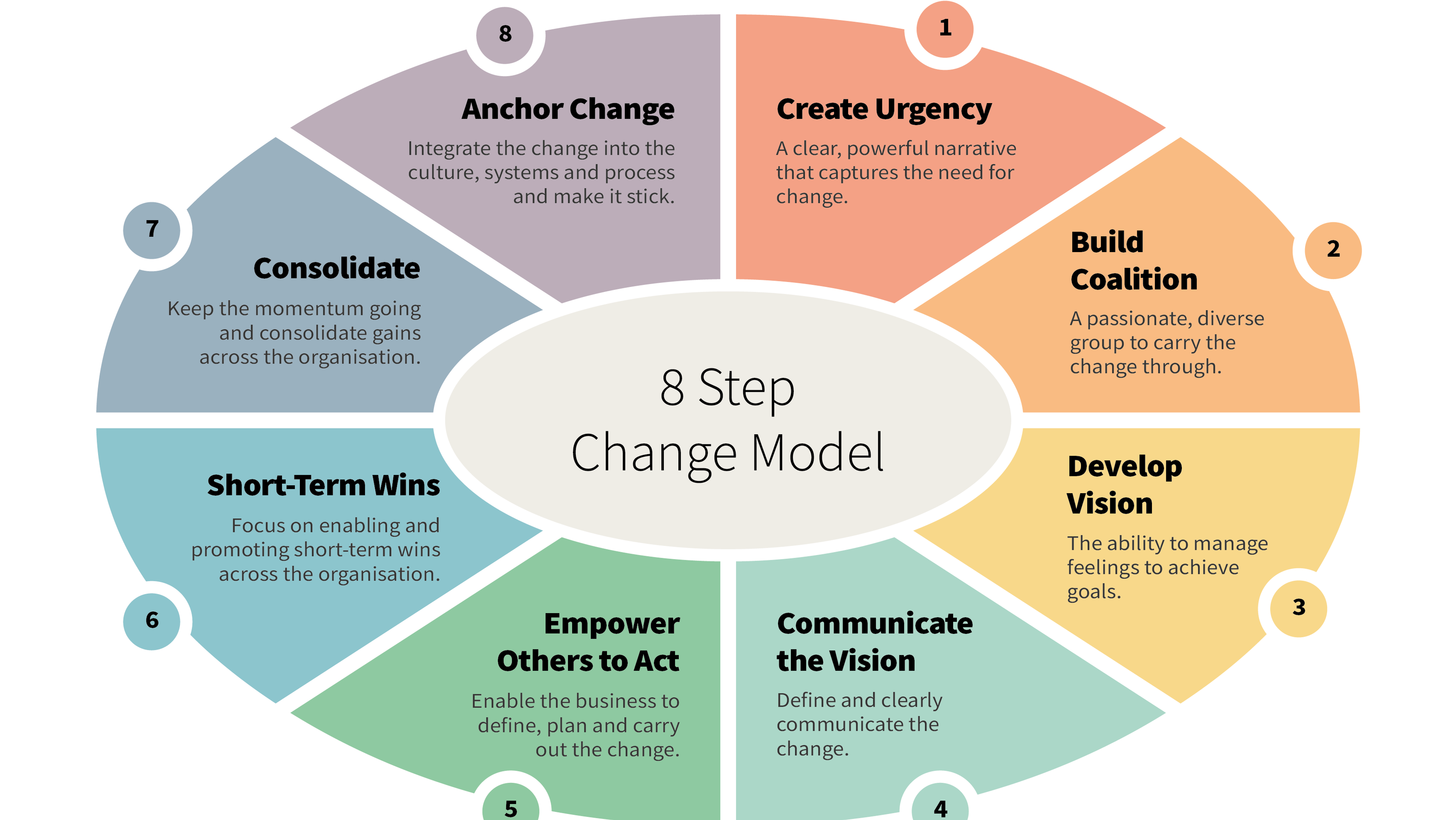
Kotter's 8 Step Change Model is a structured framework for leading organisational change, from building urgency through to embedding new ways of working. It gives leaders a clear sequence to follow when the change is big and the stakes are high.
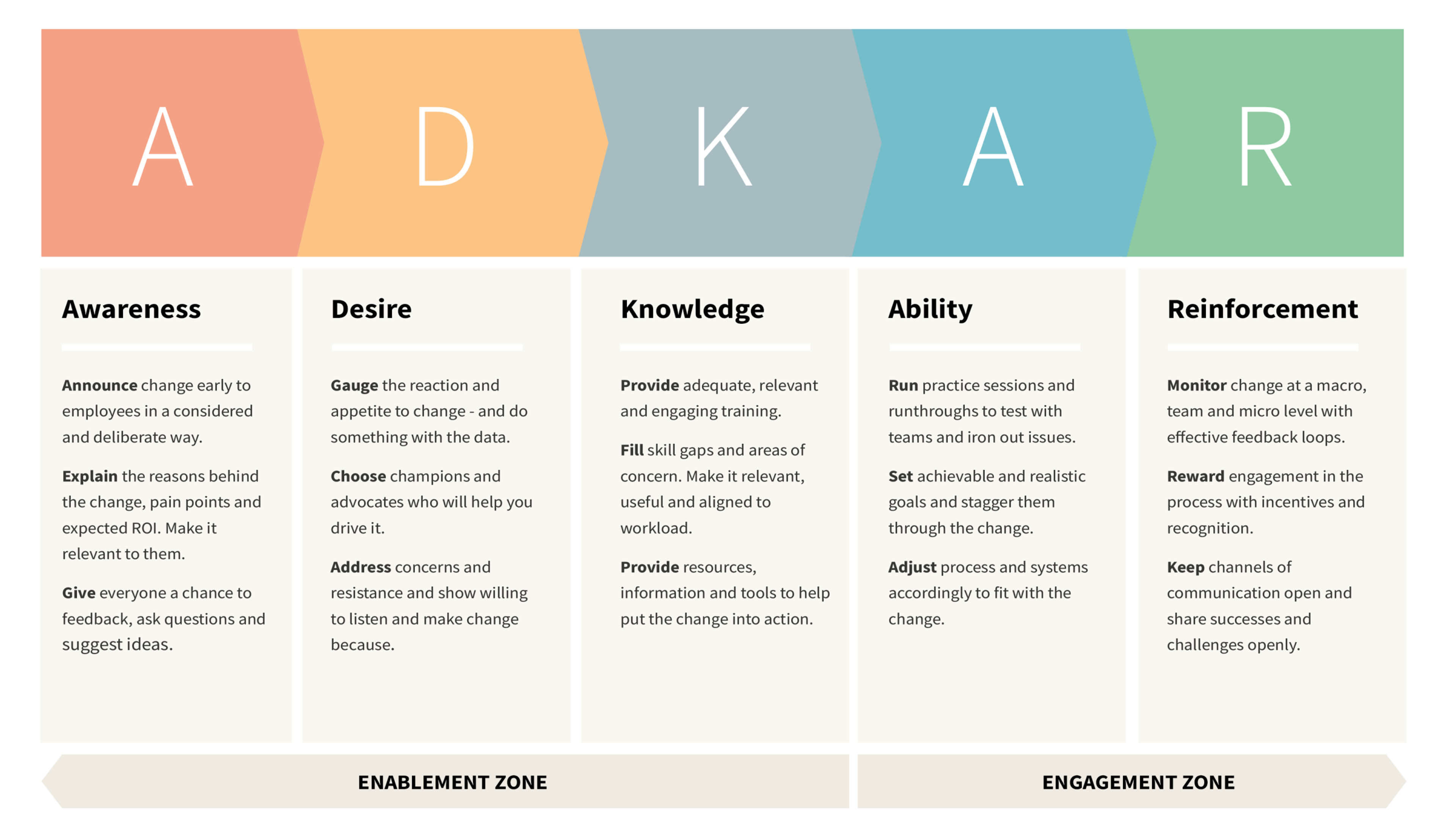
The ADKAR model is a five-stage framework for managing change at an individual level - Awareness, Desire, Knowledge, Ability, and Reinforcement. It helps organisations understand what people need at each point in a change process and where things are getting stuck.
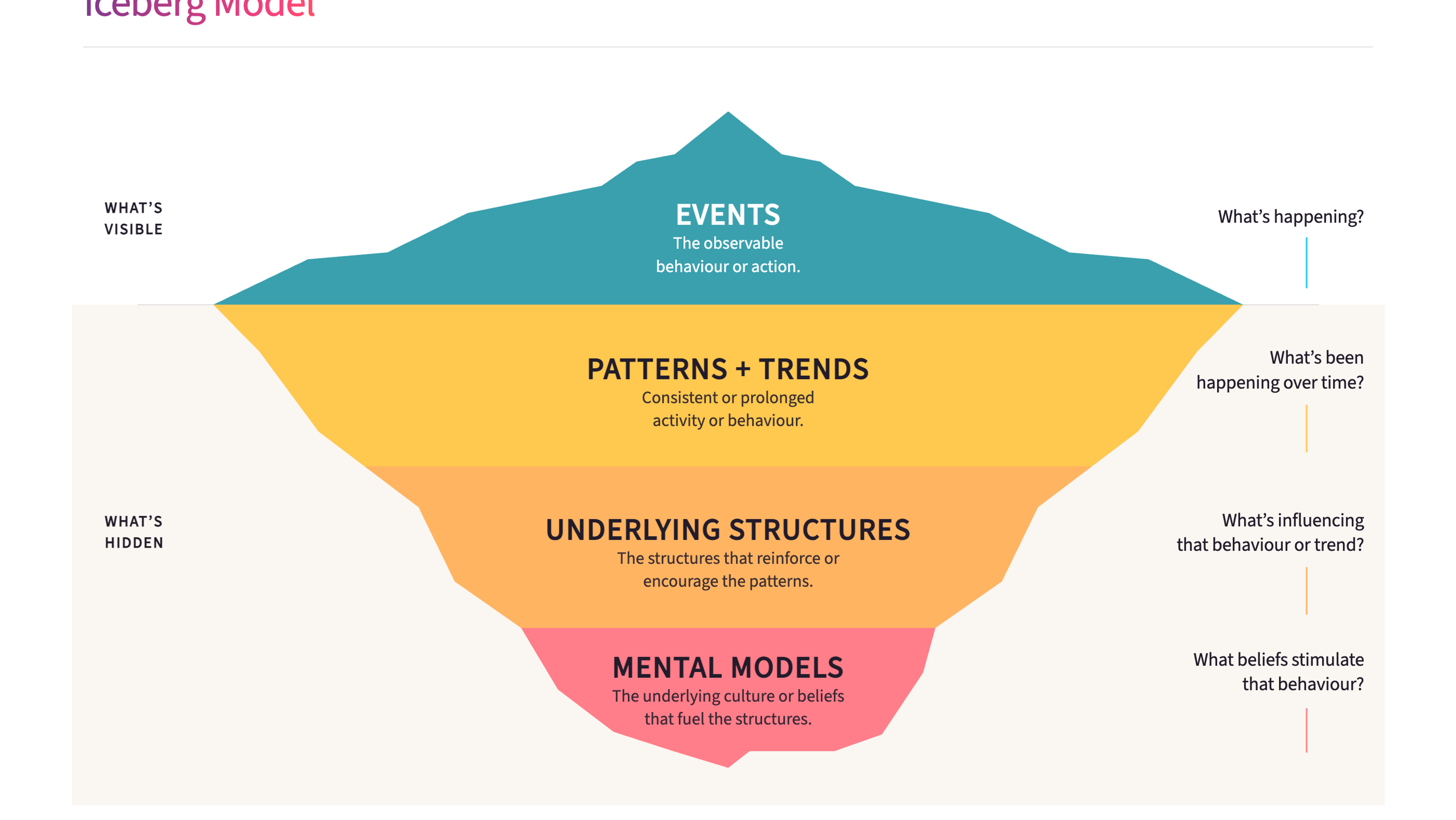
The Iceberg Model is a systems thinking tool that helps you look beneath surface-level events to find the patterns, structures, and mental models driving them. It's a way of seeing the deeper causes behind what's happening in your organisation.

Customer Experience Training
Appreciative Inquiry starts from what is working - a way of thinking we draw on in our Customer Experience training.
James Freeman-Gray is the founder of Mutomorro. He's an organisational development practitioner who has spent over twenty years working with leaders across public, private and nonprofit sectors - helping organisations pull together around a common purpose, joined up in how they work. More about who we are and what it's like to work with us.
Appreciative Inquiry has fundamentally shaped how I approach change work. Rather than starting with what's broken, you start with what's already working and build from there. I've seen this approach transform the energy in organisations that were exhausted from years of problem-focused change programmes. Starting with strengths isn't naive - it's strategic.
Last reviewed: June 2026
Ready to use 5D’s of Appreciative Inquiry?
Download the free template - includes practical guidance for workshops and team sessions.
Get the free template
Want to put these ideas into practice?
Whether you're navigating a merger, rethinking how you're structured, or trying to shift a culture that isn't working - underneath, it's the same job: getting the whole organisation pulling in the same direction. Start with a conversation.