Building the case for change
One day · in-person
A one-day course for leaders who need to build support for change. You will leave with a completed case for your real initiative - and a clear plan for getting the right people behind it.
You can see the change that needs to happen. Maybe it is a shift in strategy, a new way of working, or an investment that will transform how your organisation operates. The problem is not the idea - it is getting other people to see what you see and commit to making it happen.
Most brilliant ideas die not because they are wrong, but because the case for them was not made well enough. Data alone rarely persuades anyone. People make decisions based on a mix of logic, emotion, trust, and what they see others doing. Building a compelling case for change means understanding all of those factors - not just assembling evidence.
This one-day course teaches you how to build cases for change that actually get people moving.
What you will work on
You will work on a real change initiative throughout the day - something you are currently trying to build support for or something you know is coming. By the end, you will have a completed case ready to use.
The day covers three connected areas:
Reading the room before you make the case - Before you can persuade anyone, you need to understand what matters to them. You will map the stakeholders involved in your change, understand their priorities and concerns, and design an engagement approach that builds support in the right sequence. Getting the order right matters - talk to the wrong people first and you can create resistance before you have even started.
The Mendelow Power-Interest Matrix is one of the tools you will use to map who matters most and how to engage them.
We draw on frameworks like Kotter's 8 Step Change Model for structuring urgency and vision, and stakeholder mapping to understand who needs to hear what.
Crafting a case that works - A good case for change is not a data dump. It answers four questions clearly: why change, why now, what happens if we do not, and what does success look like. You will build your case using a structured framework that covers both the rational and emotional dimensions - because people need to feel the urgency as well as understand it.
Presenting with confidence - Having a strong case on paper is only half the job. You will practise presenting it, handling the difficult questions that senior stakeholders always ask, and maintaining momentum after the initial conversation.
Who this is for
Leaders at any level who need to build support for significant change - whether that means gaining board approval, getting cross-functional buy-in, or convincing a leadership team that the status quo is not sustainable.
Also valuable for change managers and programme leads who need to help sponsors articulate and communicate the case for their initiatives.
What you will take away
Your completed case for change - structured, tested, and ready to use. A stakeholder engagement plan showing who to talk to, in what order, and what matters to each of them. Confidence in presenting your case and handling pushback. And an understanding of why some cases succeed while others - even better ones - fail.
How the day works
The format mixes short facilitated inputs with structured working time. You will spend most of the day building and refining your actual case, with guidance and challenge from the facilitator and fellow participants. The final session involves presenting your case and getting real feedback.
Groups are kept to eight to sixteen people to allow genuine conversation and individual attention.
What makes this different
This course focuses on the human side of persuasion, not just the analytical side. Understanding stakeholder psychology, sequencing your engagement, and reading how people respond to your case are skills that most training programmes skip entirely.
You do not just learn about building cases for change - you leave with one. If your organisation is facing a larger transformation and needs help thinking through the strategy as well as the case, our change management consultancy works with leadership teams to design and deliver change that lasts.
For more on the principles behind this work, see our article on building the case for change.
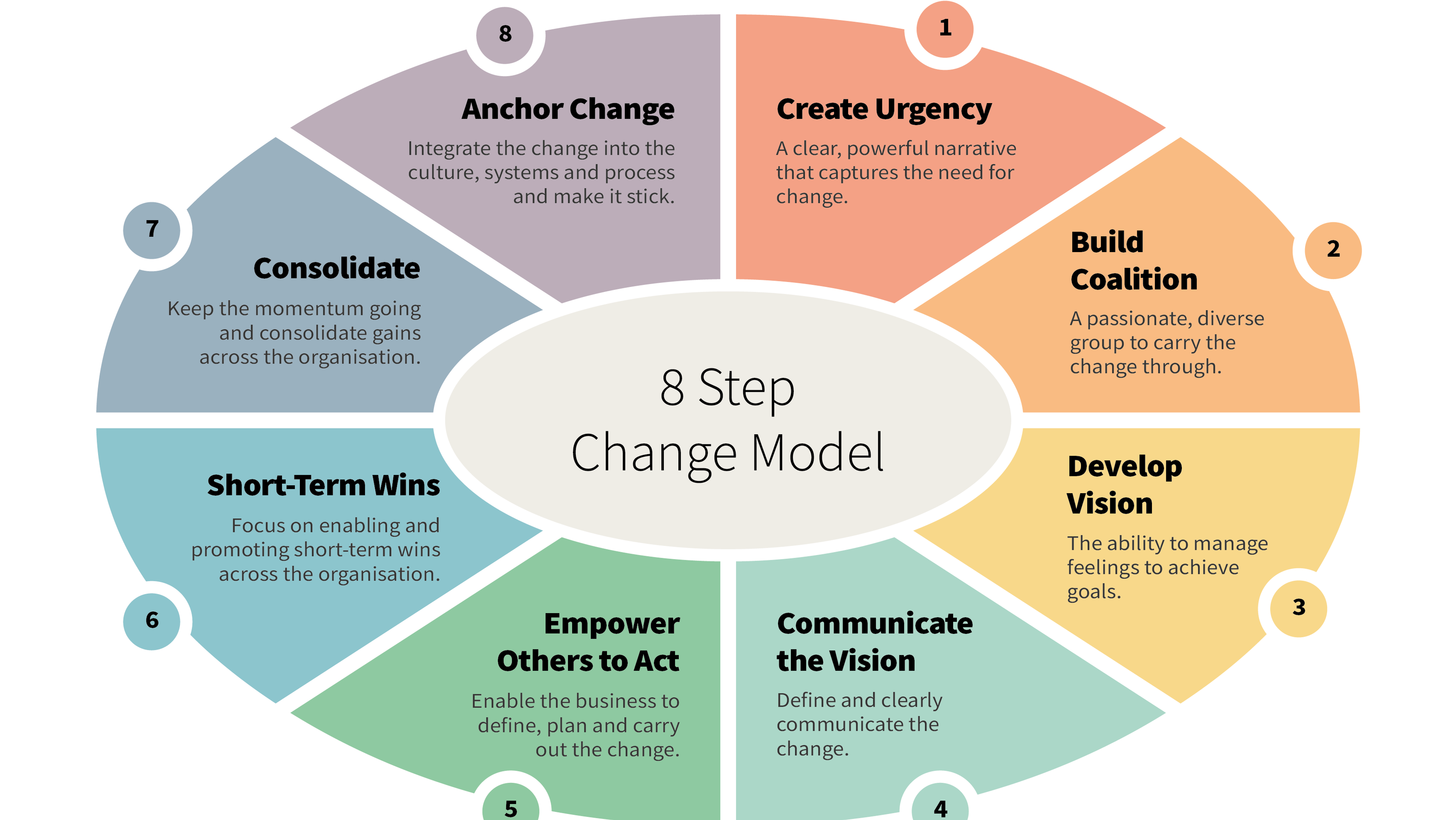
Kotter's 8 Step Change Model is a structured framework for leading organisational change, from building urgency through to embedding new ways of working. It gives leaders a clear sequence to follow when the change is big and the stakes are high.
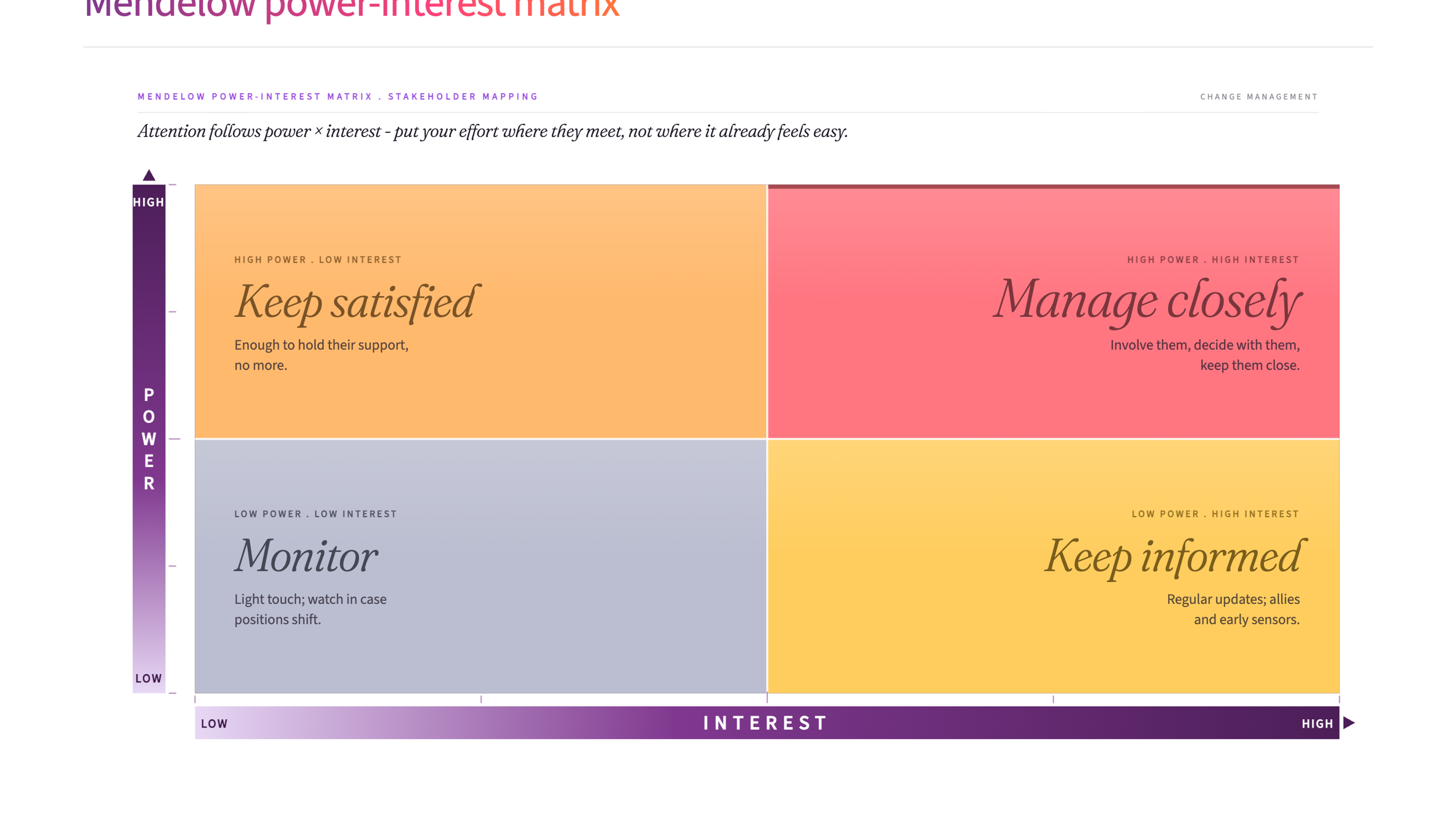
The Mendelow Power-Interest Matrix is a stakeholder mapping tool that helps you work out who matters most during a change or project. It plots stakeholders by their level of power and interest so you can plan how to engage each group.

The traditional approach to building a case for change relies on urgency and burning platforms. But urgency wears off, and fear creates resistance. This article explores a different approach - building a case for change that's rooted in honesty, shared understanding, and a genuine picture of what's possible.

How to assess whether your organisation is genuinely ready for change - looking at the whole system, not just the surface. Covers what to examine, how to gather honest insight, and how to use what you find to build a change plan that works with your organisation rather than against it.
Get in touch to find out more or book a place
Whether you're navigating a merger, rethinking how you're structured, or trying to shift a culture that isn't working - start with a conversation.