Five Dysfunctions of a Team
The Five Dysfunctions of a Team is Patrick Lencioni's framework for understanding why teams struggle. It maps five connected problems - from absence of trust to inattention to results - that build on each other when left unaddressed.
Get the free template
The Five Dysfunctions of a Team is a model of why teams struggle, and what helps them work well. It sets out five problems that build on one another, starting with trust, and gives you a shared language to name what is holding a team back before you try to fix it.
What is the Five Dysfunctions of a Team?
The model comes from Patrick Lencioni's 2002 book The Five Dysfunctions of a Team, written as a fable about a new CEO trying to pull a divided leadership team back together. Lencioni built it from years of working with senior teams through his firm, The Table Group, and it has since become one of the most widely used team models around.
Its appeal is the ordering. Rather than a list of things that go wrong, it arranges five dysfunctions as a pyramid: trust at the base, results at the top, each one resting on the one below. That structure does the useful work. When a team is missing its goals, the model points you back down the pyramid to ask what is underneath, because the problem on the surface usually traces to something deeper.
Every team carries some of these dynamics. They come with being a group of people trying to do hard things together, not with anyone doing their job badly. The model is a way of seeing them clearly, so a team can talk about them openly. Lencioni wrote it with leadership teams in mind, but the same pattern shows up in any group that has to rely on each other to get something done.
The five dysfunctions
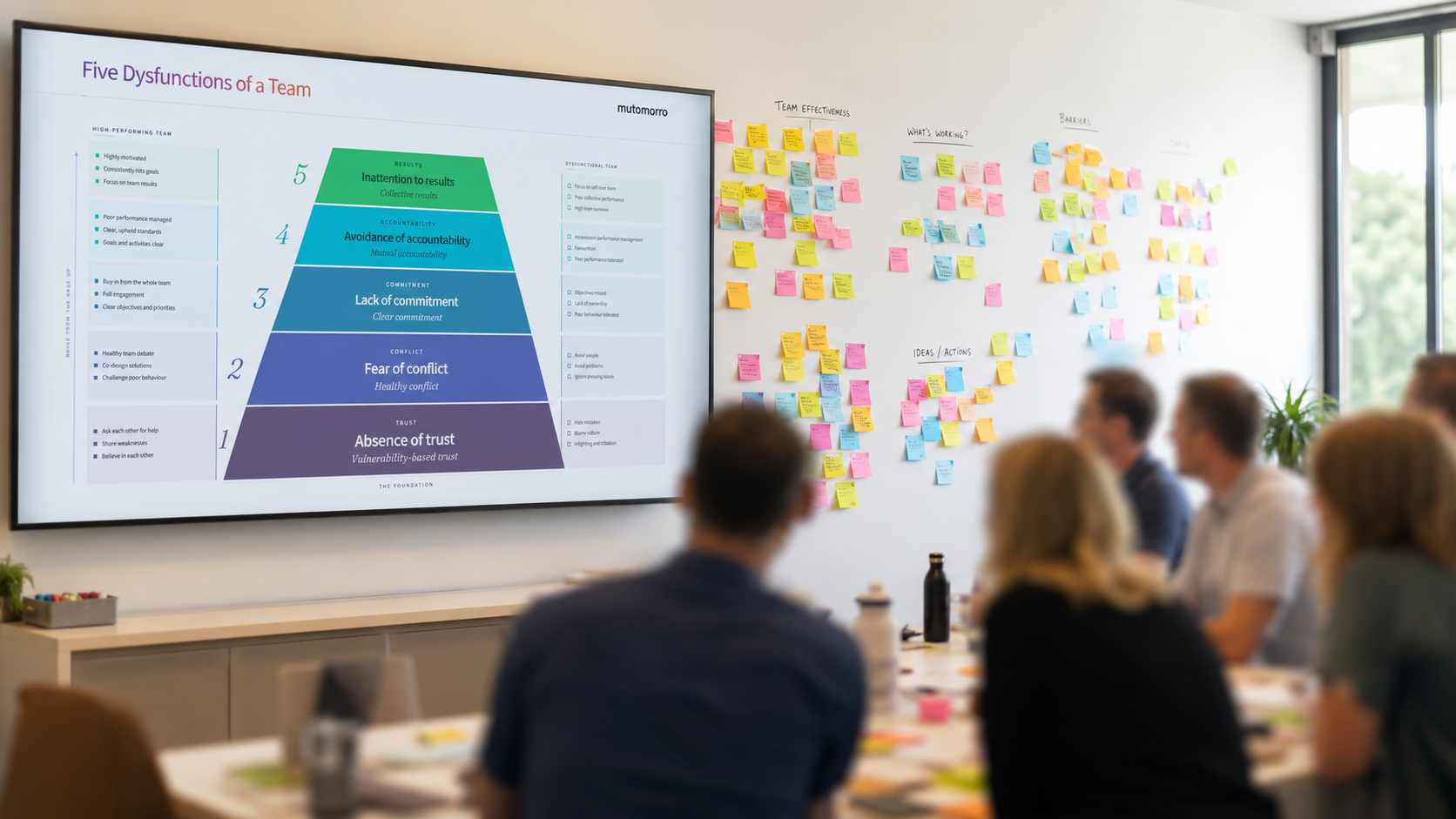
Read the pyramid from the base up. Each level is a dysfunction and, read the other way, the healthy behaviour that replaces it. Lencioni later described the same model from the positive side - the behaviours a cohesive team shows - which is why each level can be read two ways. You build a team upward: get the foundation right and the levels above become possible. Skip the foundation and the higher fixes never quite hold.
Absence of trust

Trust here is not "I think you are competent". It is the willingness to be open about your mistakes, your gaps and your need for help, without worrying it will be used against you. When that is missing, people cover up, work around each other and stop asking for help. When it is present, they ask each other for help, admit weaknesses and assume the best of one another. This first level is closely related to the work on psychological safety, which maps in more detail how trust builds from simple inclusion through to feeling safe enough to challenge. Leaders tend to build it fastest by going first - admitting their own mistakes and asking for help out loud.
Fear of conflict

Teams that trust each other can disagree well. Without trust, people avoid the productive arguments that good decisions need, and you get a kind of artificial harmony - everyone nods along in the room and then airs their real views afterwards. Healthy conflict looks like open debate about ideas, people challenging each other's thinking and difficult issues being named rather than dodged. Agreeing a few simple ground rules for disagreement, and gently naming the avoidance when it happens, gives people permission to engage.
Lack of commitment

People commit to decisions they have had a real say in, even when the decision is not the one they argued for. If the debate never happened, buy-in is thin: priorities stay fuzzy, decisions get quietly reopened and people hedge. A committed team is clear on where it is heading and what each person is doing about it. Understanding how different people prefer to contribute - which Belbin's Team Roles sets out - can help a leader involve everyone in a way that earns genuine commitment.
Avoidance of accountability

This is peer-to-peer accountability, not just the manager's job. When a team has committed to clear standards, members will call out slipping behaviour or performance in each other. Where that is missing, low standards drift along unspoken, and resentment builds. These are some of the hardest conversations a team has, and a simple structure helps - the CEDAR feedback model gives a way to raise performance issues constructively rather than letting them slide.
Inattention to results

At the top, the question is whether people put the team's shared results ahead of their own status, ego or department. When attention drifts to individual goals, collective performance suffers even if everyone looks busy. A team focused on results keeps the shared scoreboard in view and treats winning together as the point. One visible set of numbers the whole team owns, rather than separate departmental ones, keeps attention collective. Google's research into effective teams, Project Aristotle, reached a similar conclusion from data - that how a team works together matters more than who is on it.
How to use the Five Dysfunctions with your team
The model is a diagnostic. It works best when the team explores it together, because a leader's view of where the team sits is often different from what people experience day to day.
- Assess each level honestly - through a short survey, one-to-ones or an open group discussion - before drawing any conclusions.
- Start at the base. Build trust first, since every level above it depends on it.
- Use both readings of each level. The signs of a high-performing and a dysfunctional team give you a quick gauge of where you sit, level by level.
- Look for patterns rather than single symptoms, agree one or two things to work on, and revisit them. Clearing these dynamics is ongoing work, not a one-off fix.
Level | High-performing team | Dysfunctional team |
|---|---|---|
1. Trust | Ask for help; share weaknesses; assume the best | Hide mistakes; blame culture; infighting |
2. Conflict | Open debate; challenge ideas; name the hard issues | Avoid people; avoid problems; ignore what's pressing |
3. Commitment | Clear priorities; full buy-in; everyone knows the direction | Missed objectives; no ownership; drift tolerated |
4. Accountability | Performance managed; standards upheld; goals clear | Inconsistent management; favouritism; poor work tolerated |
5. Results | Motivated; hits goals together; team focus | Self over team; weak collective results; high turnover |
If you want a second lens, the 6 Team Conditions framework approaches the same goal from the other direction - the conditions a team needs to perform, rather than the dysfunctions that hold it back. Reading a team through both is often more revealing than either alone.
Example
Imagine a senior team that keeps missing its quarterly targets. The obvious reading is the top of the pyramid: inattention to results. But the model invites you to look down.
In meetings, no one really challenges the plan - people stay polite and save their doubts for the corridor afterwards (fear of conflict). Because the debate never happens, decisions get nodded through without real buy-in, then quietly worked around (lack of commitment). When deadlines slip, no one names it (avoidance of accountability). And underneath all of it, people do not trust each other enough to be honest in the first place (absence of trust).
Seen this way, another review of the targets would not move much. The real work is at the base. A frank conversation about how the team works together - with the leader going first by owning a mistake of their own - does more for next quarter's results than another look at the numbers. That is the model's central point: the surface problem is rarely where the work is.
Limitations of the model
The Five Dysfunctions is a useful map, but it has edges worth knowing.
- It names patterns, not causes. Two teams can both show "lack of commitment" for completely different reasons, and the model will not tell you which is yours - that still takes a real conversation.
- It comes from consulting practice rather than controlled study. It rings true and is widely used, but it is a practitioner's model. For a research-led view of what makes teams effective, Project Aristotle is a good companion.
- It looks inward. A team can have real trust and still struggle because of things the model does not cover - an unclear structure, an unmanageable workload or pressure from above. The T7 Model is one way to bring that wider context into view.
- Naming a dysfunction can tip into blame if you are not careful. The point is to describe a dynamic the whole team shares, not to find someone to fault.
Getting started
Start small, and start at the base. The simplest way in is a short, honest conversation about how the team works together, with the two columns of signs as a prompt: where do we look like a high-performing team, and where do we recognise ourselves in the dysfunctional one? Let people answer for themselves before you offer your own read.
If you are leading the team, go first. Trust grows when the person with the most to lose from being open is the one who opens up. From there, pick the lowest level where you saw a gap and work on that, rather than reaching straight for the result you want.
Done well, this is part of building a team's wider capacity to keep developing and adapting - not a single conversation but a habit of looking honestly at how you work. If those conversations get stuck, an experienced facilitator can help the team have them safely, which is part of what organisational development work is for.
We share thinking on organisational change and development on LinkedIn - practical ideas for people doing this work inside their own organisations.
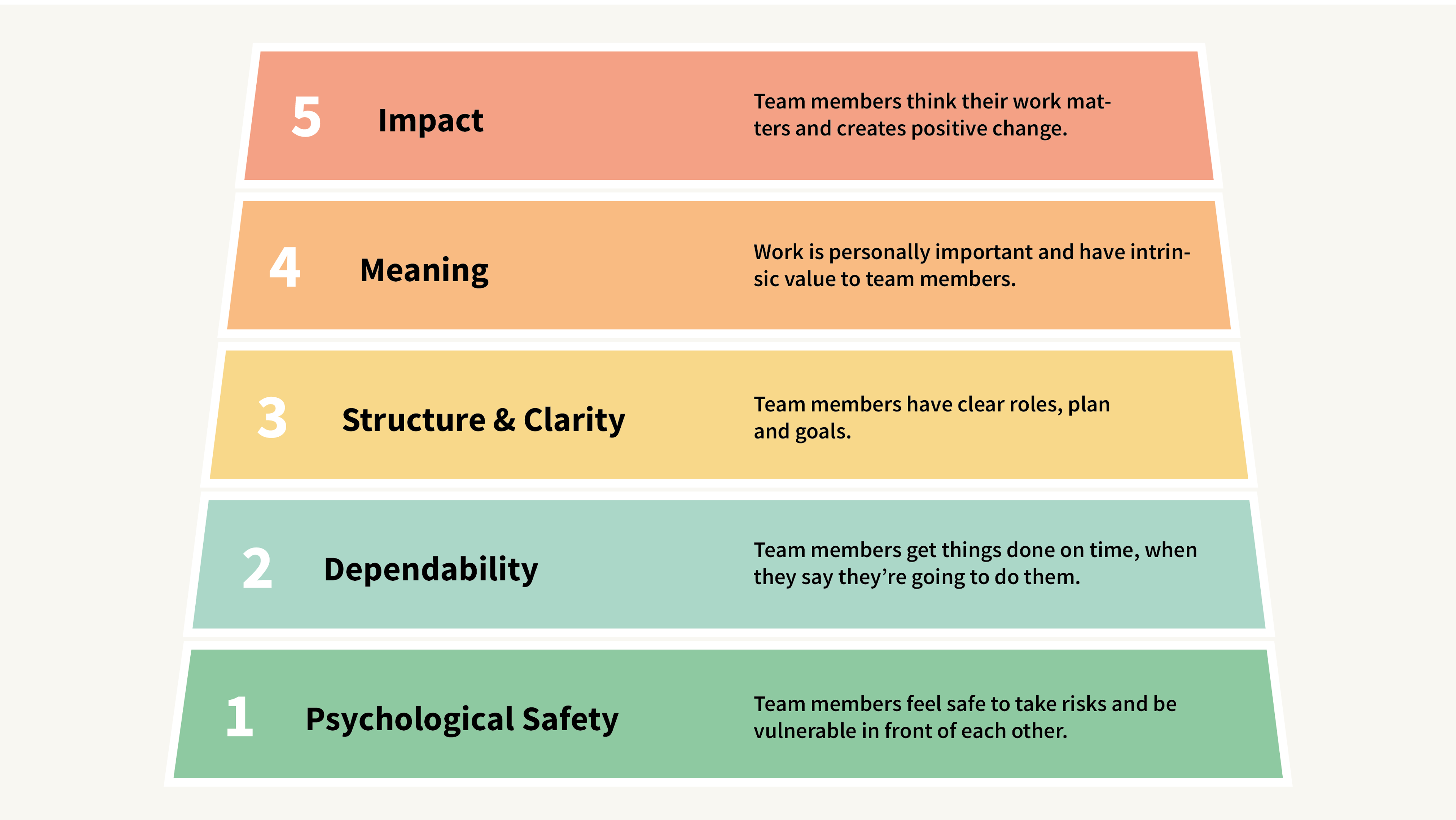
Project Aristotle is Google's research into what makes teams effective. It found that psychological safety - feeling safe to take risks and be vulnerable - matters more than who is on the team.
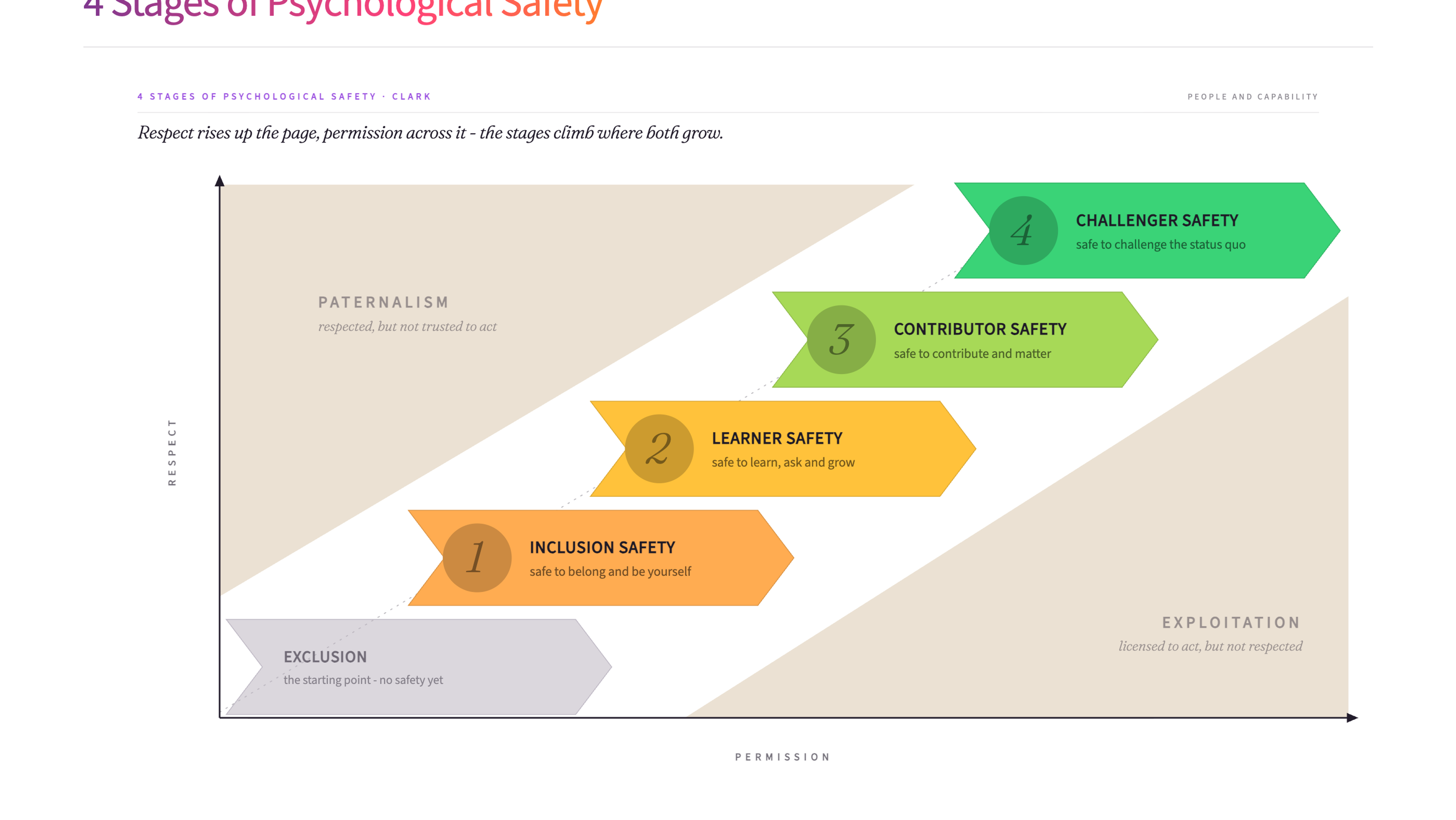
The 4 Stages of Psychological Safety is a framework that maps how safe people feel to be themselves, learn, contribute, and challenge the status quo. It helps leaders understand what conditions people need before they'll speak up and take risks.
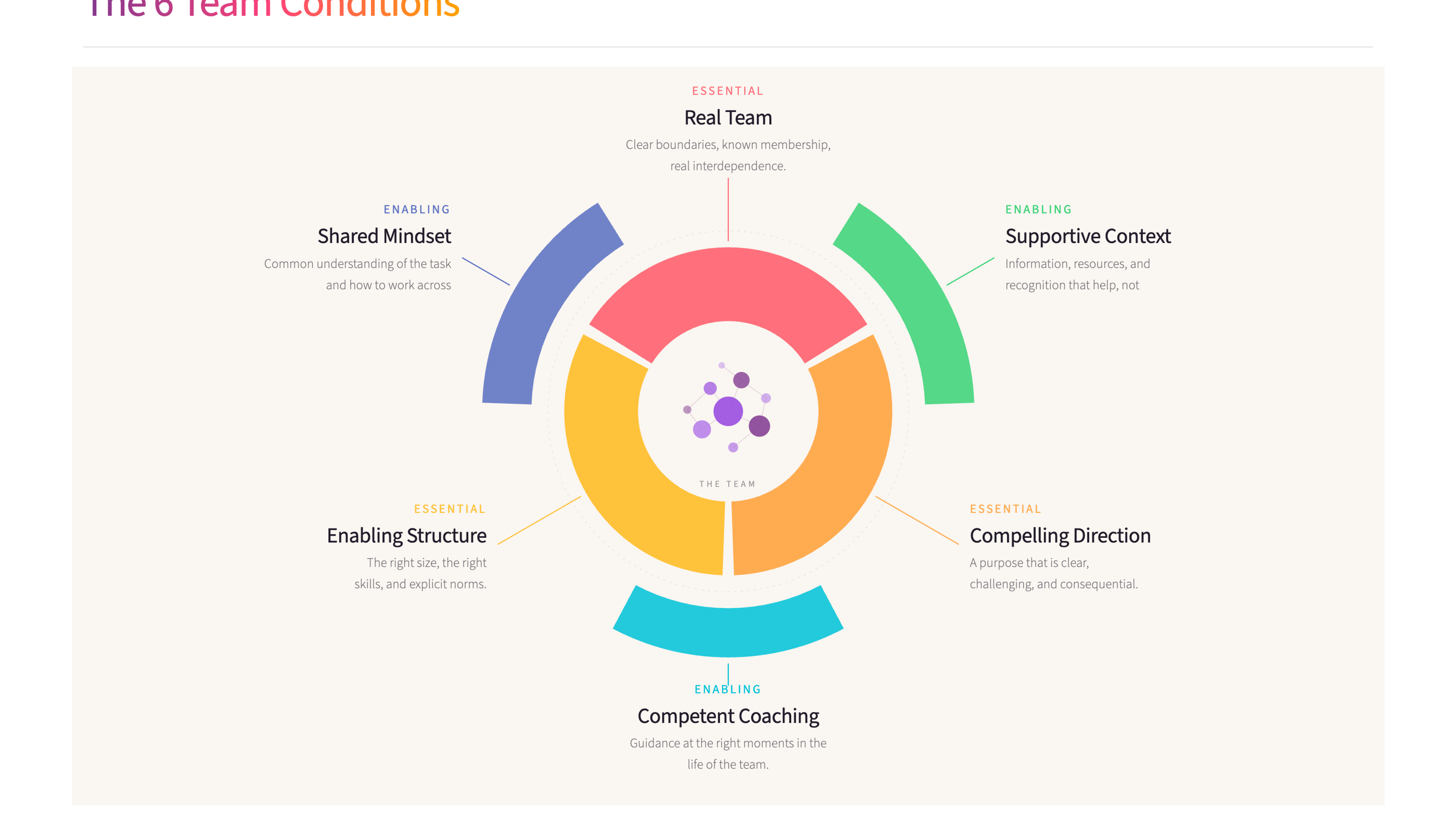
The 6 Team Conditions for Team Effectiveness is a research-based framework that identifies what high-performing teams actually need to thrive. It covers everything from having a clear direction to getting the right coaching and support.
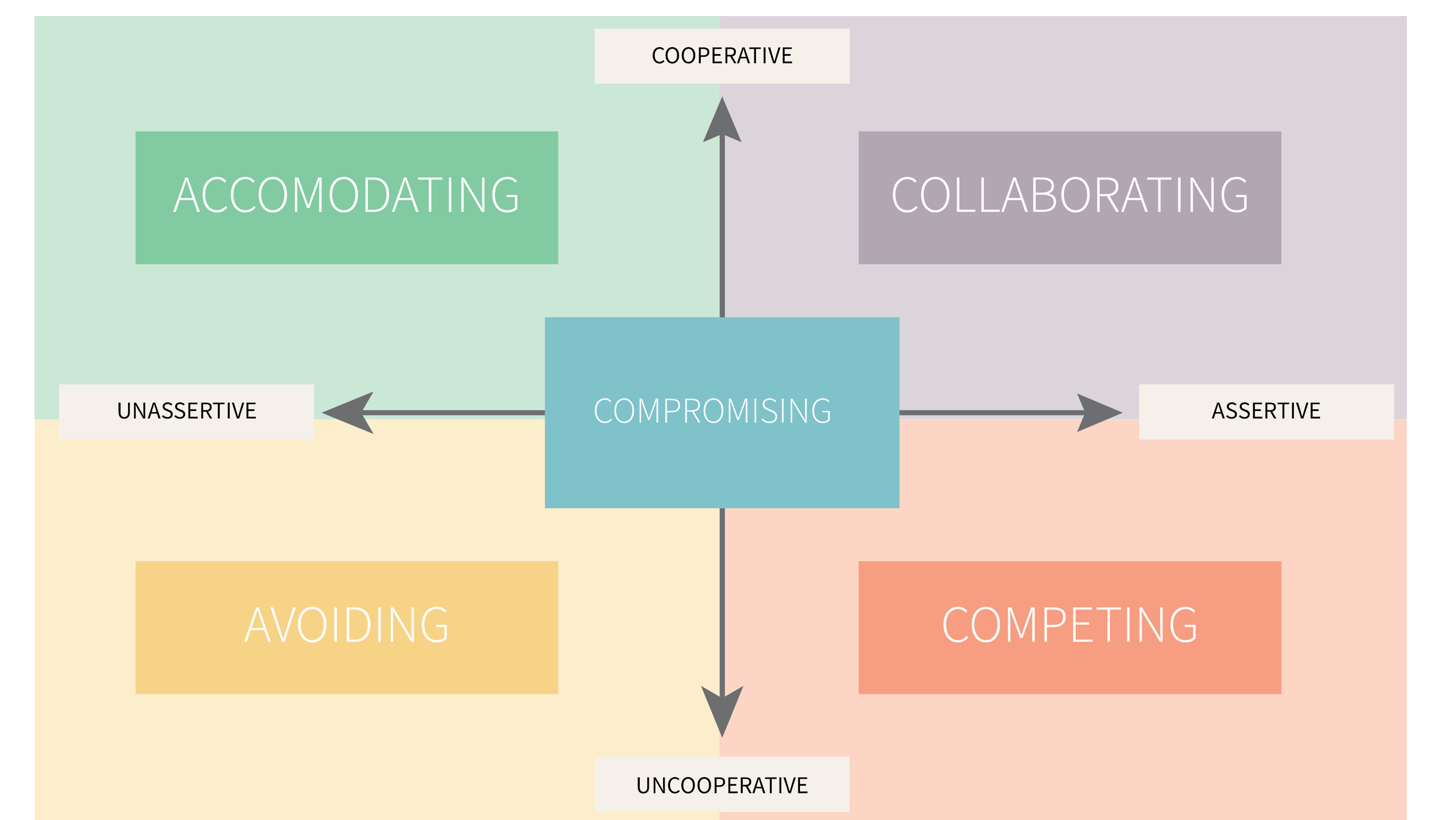
The 5 Conflict Styles model (Thomas-Kilmann) maps five different ways people approach conflict - from avoiding it to collaborating through it. It helps teams understand their default patterns and choose more effective approaches.
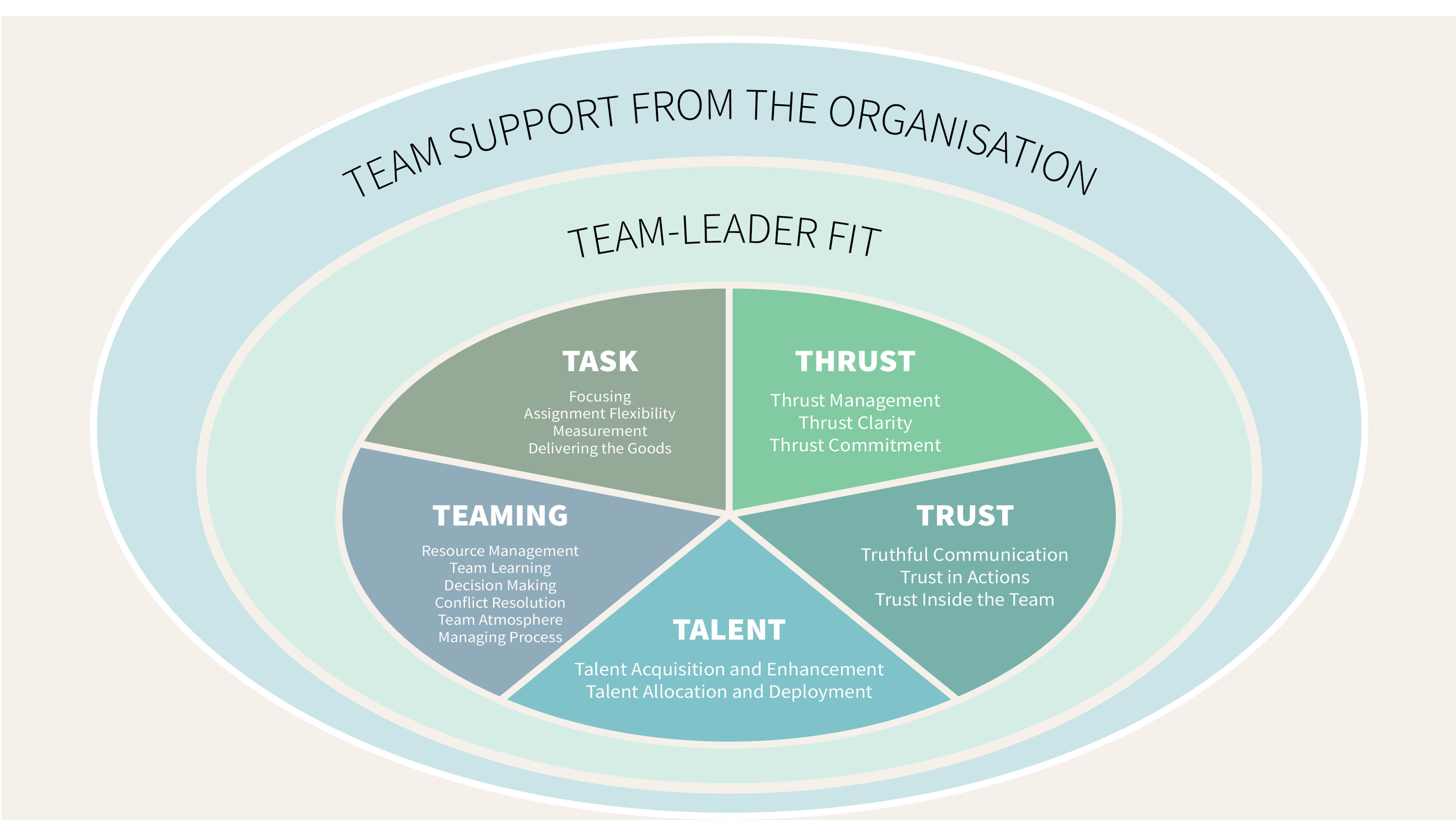
The T7 Model is a framework that identifies seven factors driving team effectiveness - five internal (like trust and talent) and two external (like team-leader fit and organisational support). It helps you diagnose where a team is strong and where it needs work.
Psychological safety is one of the strongest predictors of team performance - but it's often misunderstood. This article explores what it actually looks like in practice, why it matters beyond the research headlines, and what leaders can do to build the conditions where honesty, learning, and real collaboration become possible.
A practical guide to developing organisational culture. Cuts through the theory to explain what culture actually is, why most culture change programmes fail, and how to develop culture in a way that lasts - by working with your organisation as a living system, not a machine.
Team Effectiveness Training
Lencioni's model names what gets in the way of good teamwork - one of the ideas we build on in our Team Effectiveness training.
James Freeman-Gray is the founder of Mutomorro. He's an organisational development practitioner who has spent over twenty years working with leaders across public, private and nonprofit sectors - helping organisations pull together around a common purpose, joined up in how they work. More about who we are and what it's like to work with us.
Lencioni's model is blunt, and that's what makes it useful. I've used it with leadership teams who knew something was wrong but couldn't name it. The hierarchy of dysfunctions - starting with absence of trust - gives people a framework for honest conversation that would be difficult to start otherwise.
Last reviewed: June 2026
Ready to use Five Dysfunctions of a Team?
Download the free template - includes practical guidance for workshops and team sessions.
Get the free template
Want to put these ideas into practice?
Whether you're navigating a merger, rethinking how you're structured, or trying to shift a culture that isn't working - underneath, it's the same job: getting the whole organisation pulling in the same direction. Start with a conversation.