Continuous improvement training
This continuous improvement training for teams is focused on helping teams make small, continuous improvements in a sustainable, manageable way.
Your organisation solves problems. But does it get better? There is a difference. Solving problems is reactive - something goes wrong, you fix it, you move on. Getting better is proactive - you look for ways to improve before things go wrong, and you build that habit into how your team works every day.
The PDCA Cycle (Plan, Do, Check, Act) gives your team a repeating loop for testing whether improvements actually work before rolling them out.
That is what continuous improvement is about. Not a one-off programme. Not a transformation initiative with a deadline. A way of working where noticing what could be better and doing something about it is just normal.
This course teaches your team how to build that habit. It is a practical day where you will learn the core principles and tools of continuous improvement, apply them to real challenges in your organisation, and leave with a plan for making improvement part of your team's rhythm.
What you will work on
The day is built around learning by doing. You will work on real challenges from your own team, using proven improvement approaches to find practical solutions.
Three areas structure the day:
Seeing improvement opportunities - The first skill of continuous improvement is noticing. What could work better? Where is effort being wasted? What frustrates your team or the people you serve? You will learn simple techniques for surfacing improvement opportunities - from team retrospectives to process observation to customer feedback analysis. The goal is to make seeing opportunities a daily habit, not a special event.
Using improvement tools - There are excellent, well-tested tools for turning observations into action. You will learn how to use the Kaizen Cycle for small, rapid improvements, PDCA for testing changes before scaling them, and DMAIC for tackling larger, data-driven problems. We do not teach these as abstract frameworks - you will apply each one to a real issue during the session.
Building improvement into your rhythm - Individual improvements are good. A team that improves continuously is transformational. You will design a practical rhythm for your team - regular check-ins, improvement boards, learning reviews - that keeps improvement happening week after week without adding bureaucracy. The best continuous improvement practices are lightweight and energising, not heavy and draining.
Who this is for
This course is for teams who want to get better at getting better. It works well for operations teams, service teams, project teams, and any group that delivers work together and wants to improve how they do it. Team leaders and managers benefit particularly, because building improvement habits depends on leadership as much as technique.
What you will take away
You will leave with practical improvement tools you can use straight away, a completed improvement project on a real challenge from your team, and a plan for building continuous improvement into your team's regular rhythm. You will also have a shared language and approach that makes improvement feel like a natural part of the work, not something extra on top.
How the session works
The day alternates between short input on improvement principles, hands-on exercises where you apply them, and reflection on what is working. You will work in small groups, sharing challenges and solutions with other teams. The facilitator brings a range of globally recognised improvement approaches, adapted to fit your context.
DMAIC provides a fuller five-step structure for tackling more complex process problems when a lighter-touch approach is not enough.
What makes this different
For a broader look at what slows organisations down and how to fix it, see our guide to reducing organisational friction.
A lot of continuous improvement training comes from a manufacturing background and can feel like it belongs in a factory, not an office, a school, or a public service. This course is designed for any organisation. The principles are universal. The examples and exercises are tailored to your world.
We also connect continuous improvement to the bigger picture. Improvement is not just about fixing processes - it is about building an organisation that keeps getting better as a way of working. When improvement becomes part of the culture, the benefits compound over time.
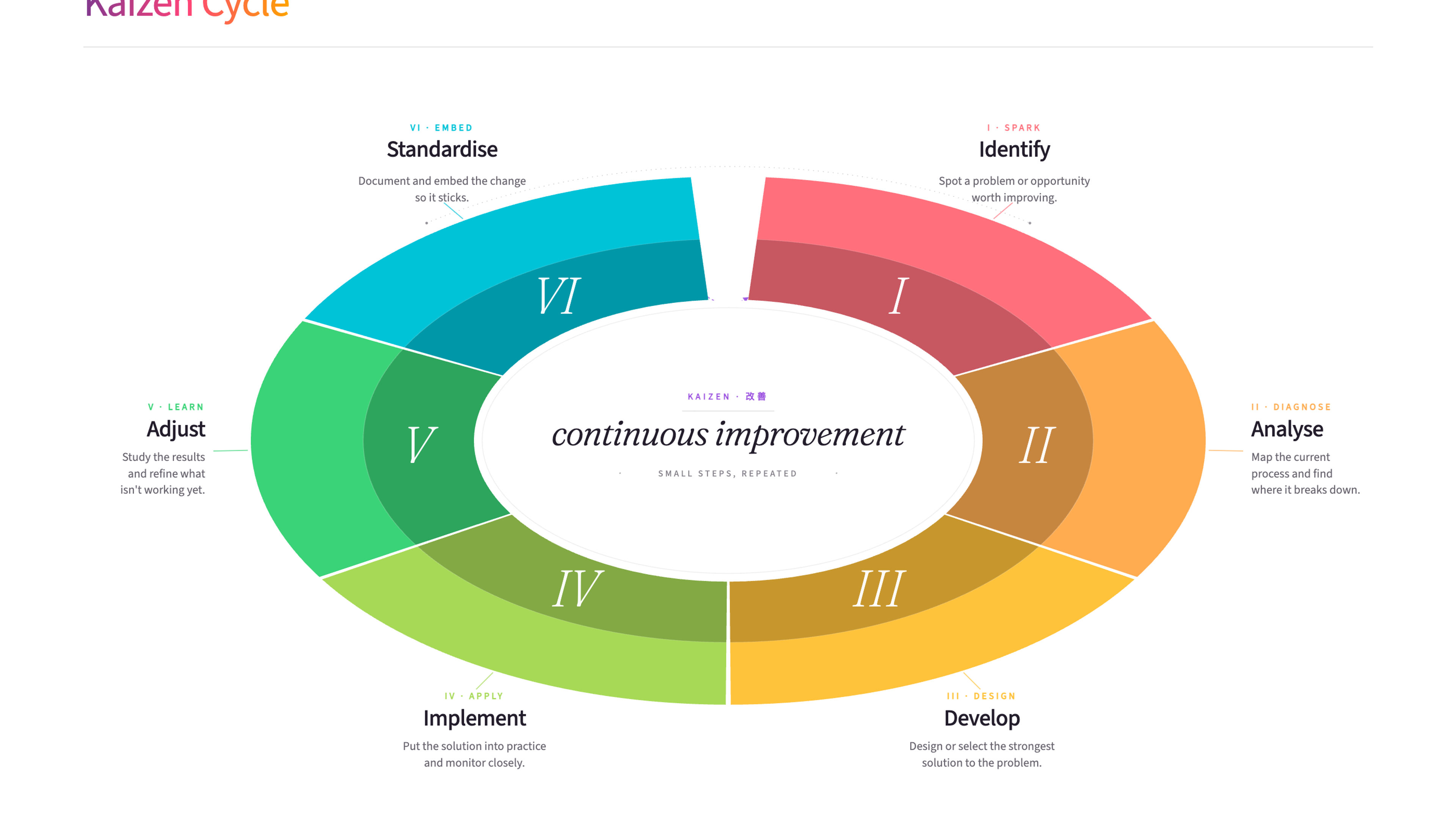
Kaizen is a Japanese continuous improvement philosophy built on the idea that small, ongoing changes add up to significant results over time. The Kaizen Cycle gives teams a structured way to identify improvements, test them, and build them into everyday work.
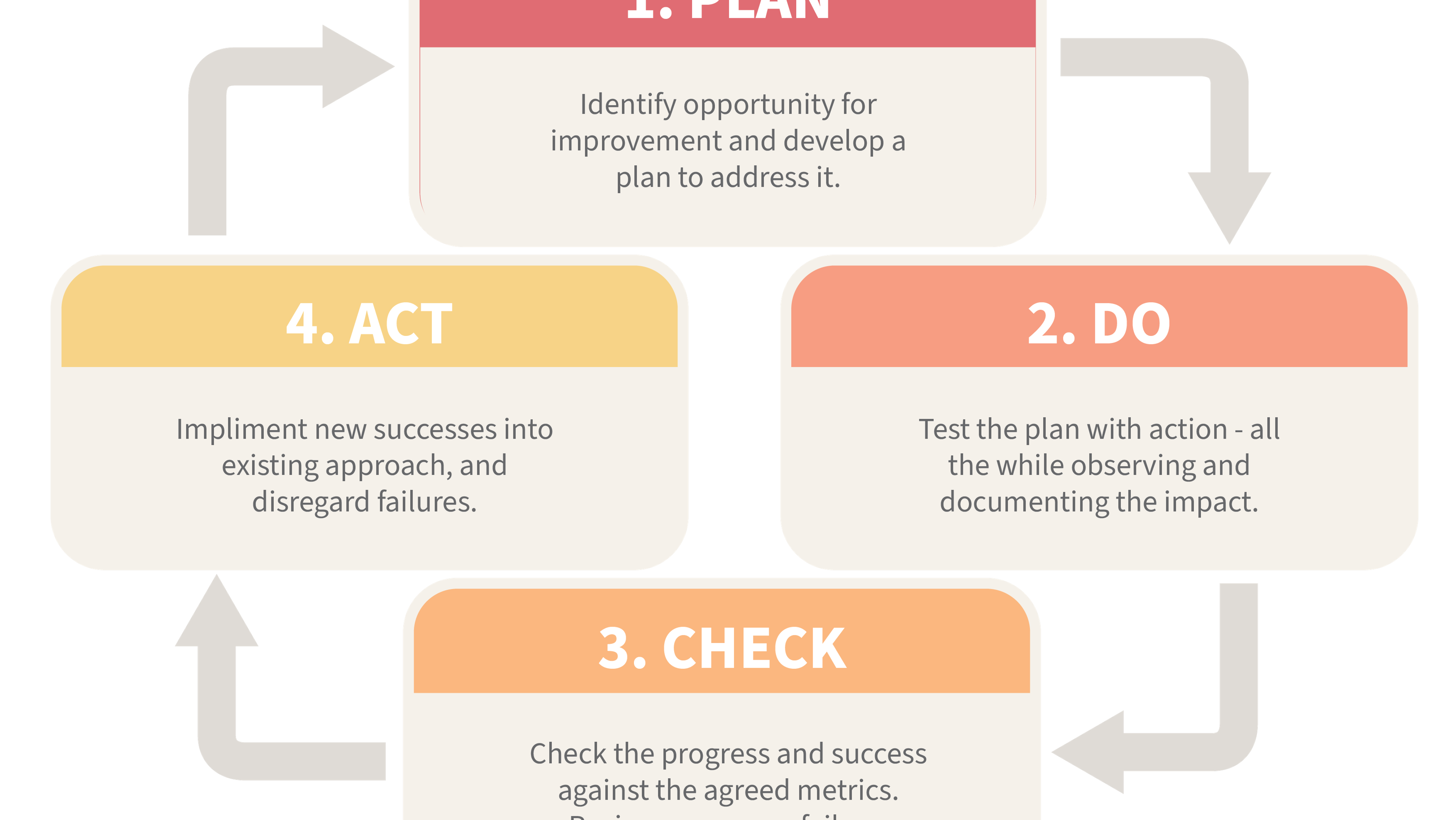
The PDCA Cycle (Plan, Do, Check, Act) is a continuous improvement framework for testing and refining processes. It creates a repeating loop of planning a change, trying it, checking whether it worked, and adjusting before the next round.
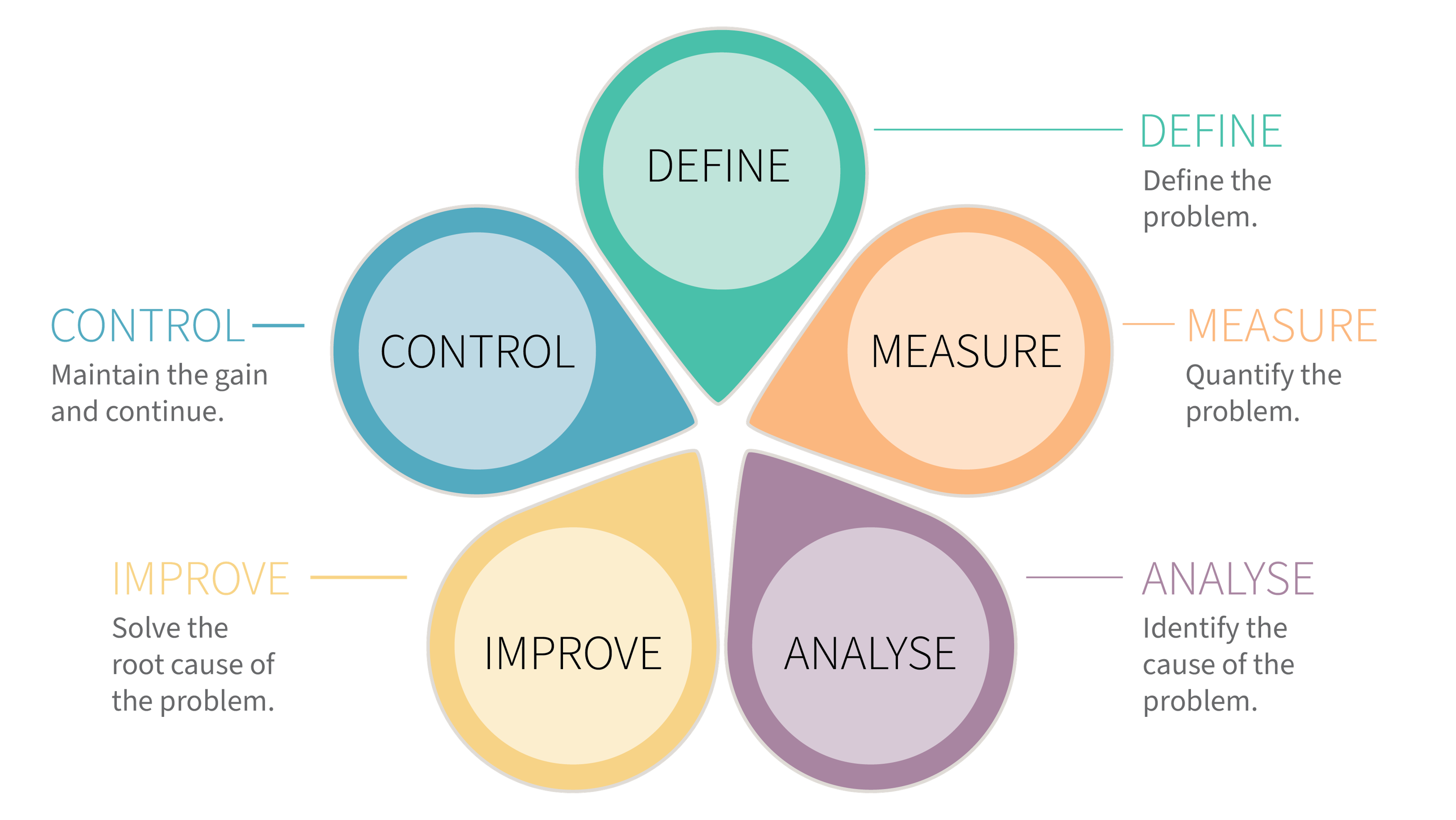
DMAIC (Define, Measure, Analyse, Improve, Control) is a structured problem-solving method from the Six Sigma toolkit. It gives teams a clear five-step process for improving existing processes using data and evidence.
Get in touch to find out more or book a place
Whether you're navigating a merger, rethinking how you're structured, or trying to shift a culture that isn't working - start with a conversation.