Operational Effectiveness
How work flows through an organisation matters as much as what the work is - and the friction usually sits at the boundaries, where work passes from one team to the next. Here you'll find practical tools and approaches for improving processes, removing that friction, and creating the conditions for continuous improvement.
Start with the 5 Whys for getting to root causes, or read on reducing organisational friction.
Services
The hands-on work behind these resources - start with the consultancy, or go straight to a stage.

Most operational improvement focuses on the visible system - processes, workflows, tools. We work with the conditions underneath that determine whether it functions well.
A clear read of how work actually flows from request to done - and where effort leaks between the steps.
Ways of working design gives you a future-state value stream design: a clear picture of how work will flow from request to delivery, with the queues removed, the handoffs redrawn, the decisions assigned and the cadence set - backed by a map of how the work flows today and a plan to get from one to the other. We design it with the people who run the work, so the result is genuinely theirs.
Ways of Working Rollout takes your Ways of Working design and makes it real across the organisation: standardised processes in daily use, clear roles and decision rights, an installed daily and weekly management system, and performance measures every team acts on. It is the programme that gets the new way of working running, team by team, until it holds without us in the room.
Continuous improvement keeps your new ways of working fit and improving, and builds your own people's ability to run them. Your teams run the improvement cycles and the daily management routines themselves, and you can keep us on a light ongoing rhythm as a critical friend to your improvement work, at a cadence you set.
Tools
Hands-on frameworks for process improvement, prioritisation, and decision-making. Many draw from Lean and continuous improvement disciplines.
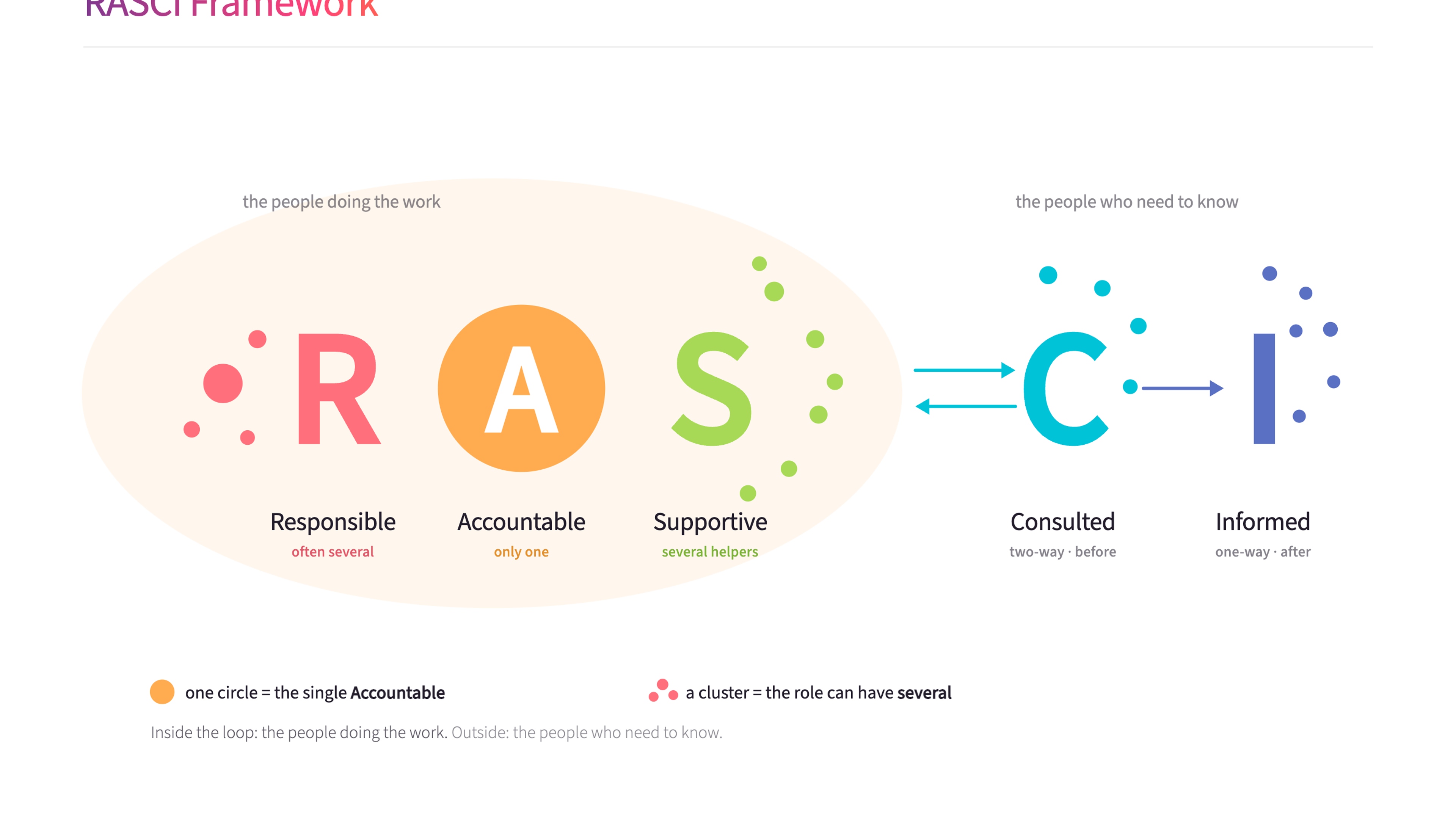
The RASCI Framework maps five roles in any project or decision - Responsible, Accountable, Supportive, Consulted, and Informed. It helps organisations clarify who does what, reducing confusion and speeding up delivery.
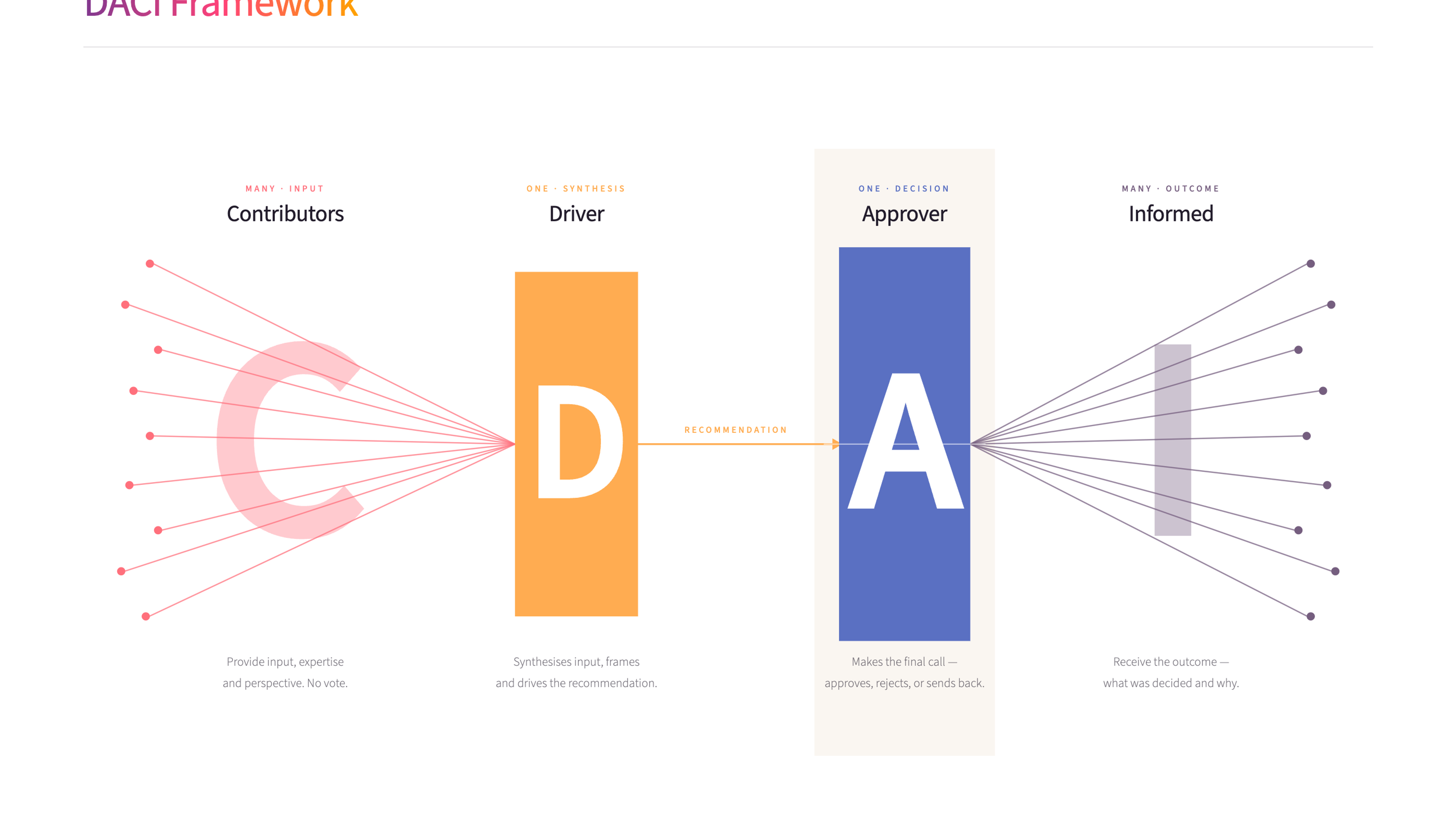
The DACI Framework is a decision-making tool that clarifies who plays what role in a decision - Driver, Approver, Contributors, and Informed. It cuts through ambiguity about who owns what, especially when decisions involve multiple people or teams.
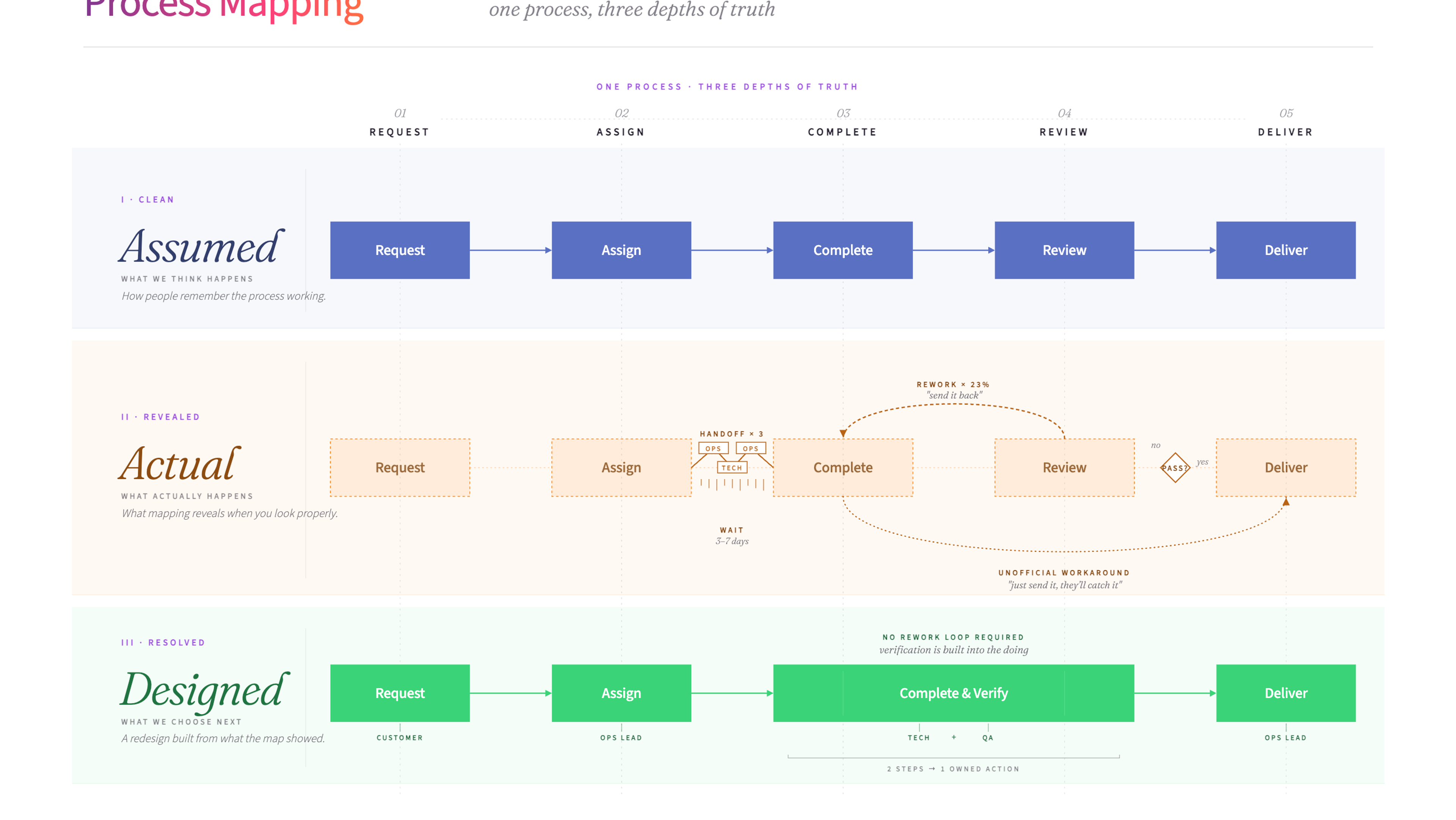
Process mapping is a visual method for documenting how a process works from start to finish. It helps teams see the full picture - every step, decision point, and handoff - so they can spot problems and design improvements.
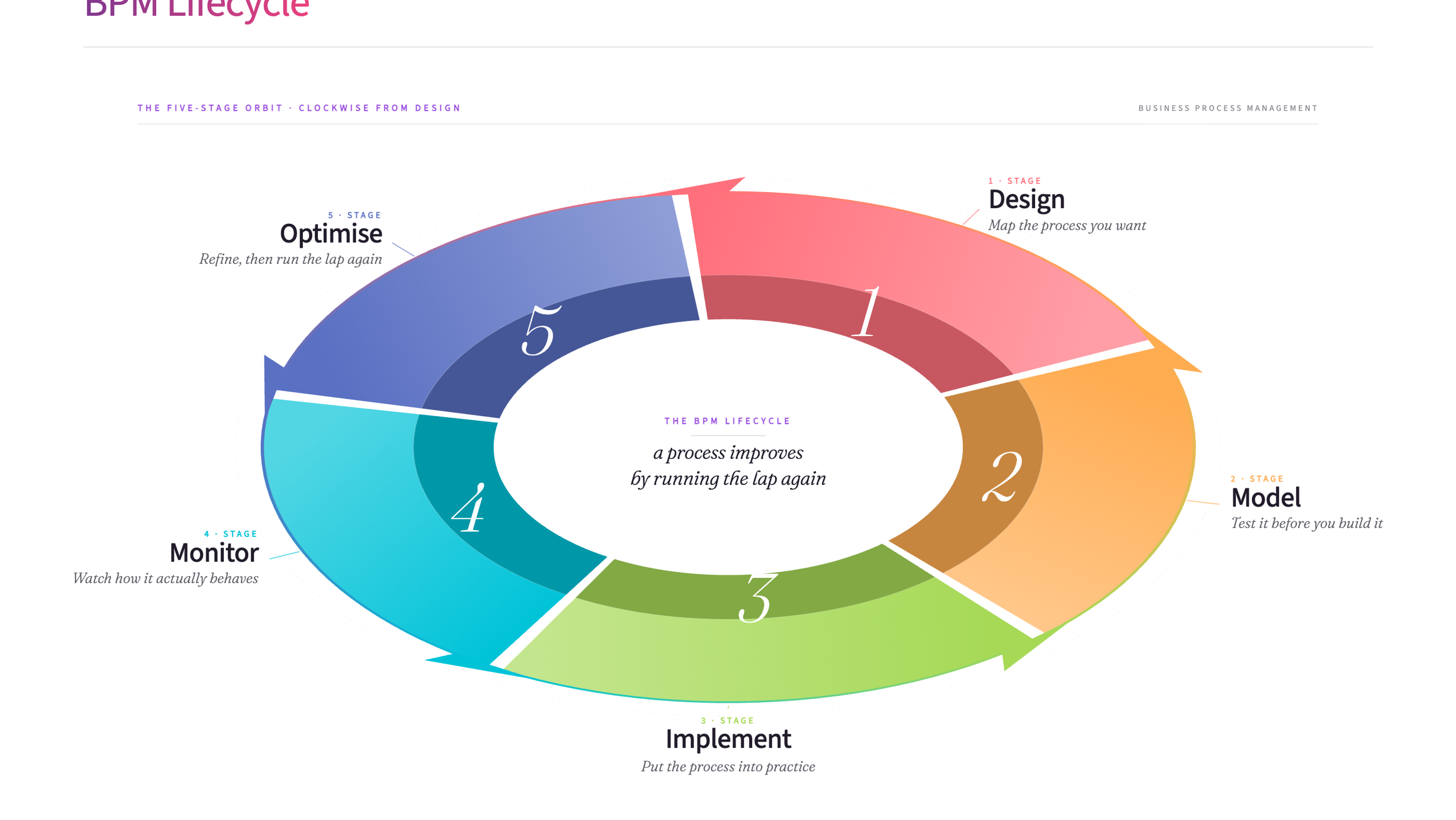
The BPM Lifecycle is a five-stage cycle for designing, modelling, implementing, monitoring, and optimising how work flows through an organisation. Each pass through the cycle - design, model, implement, monitor, optimise - refines the process further.
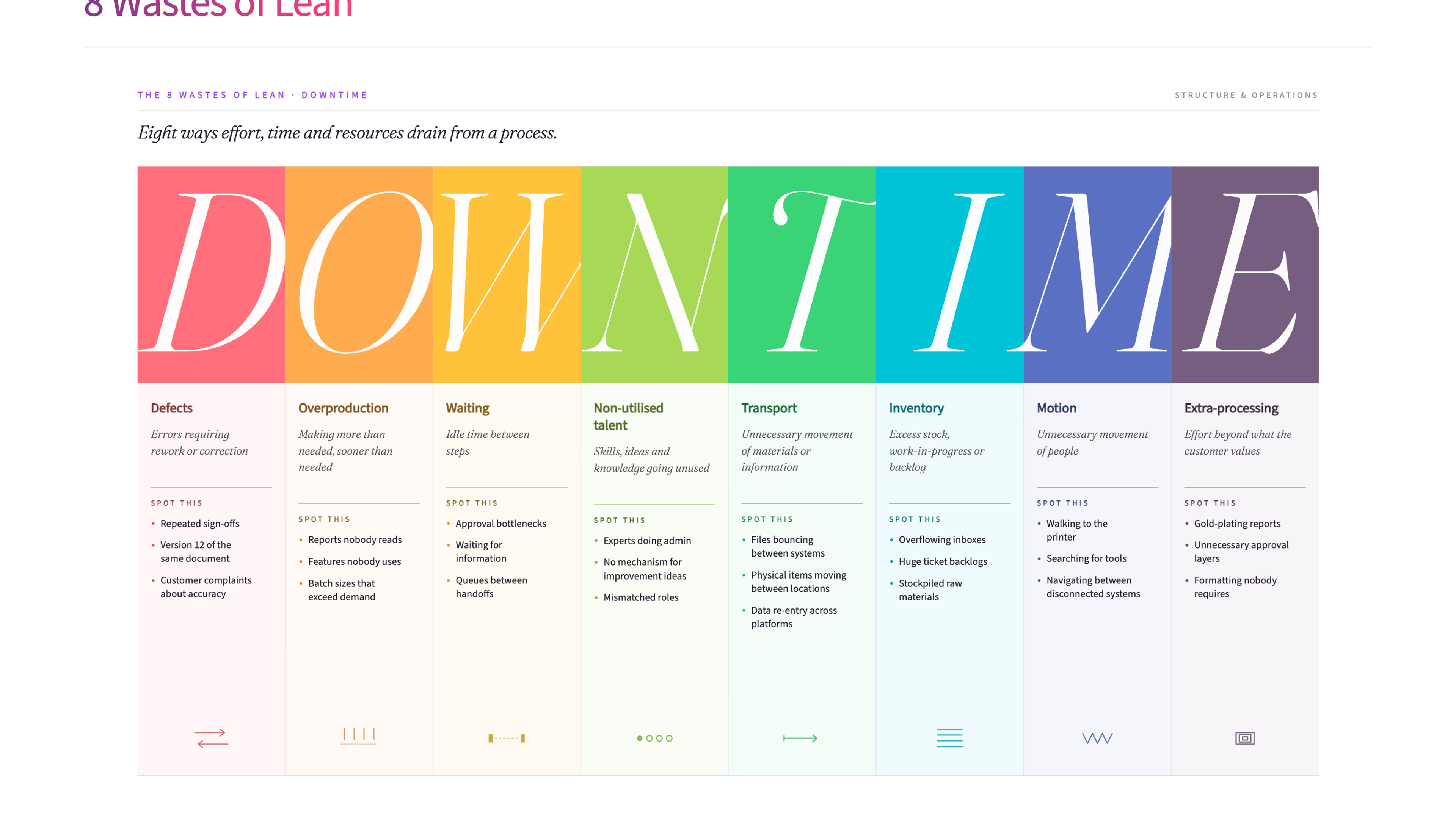
The 8 Wastes of Lean give you eight categories for finding where effort, time and resources leak from a process. Use the DOWNTIME acronym to work through each waste type systematically and build a clear picture of what to improve.
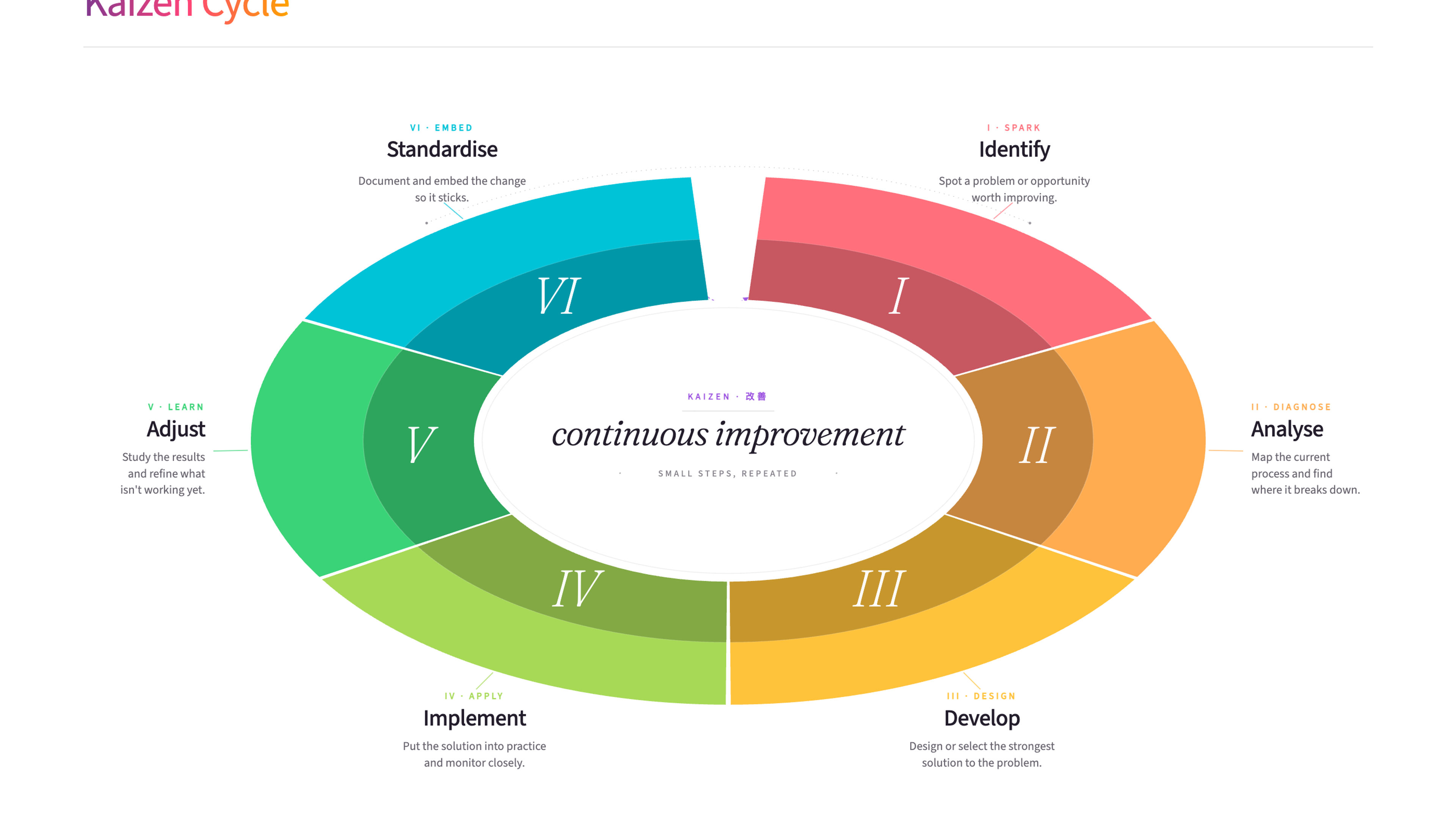
Kaizen is a Japanese continuous improvement philosophy built on the idea that small, ongoing changes add up to significant results over time. The Kaizen Cycle gives teams a structured way to identify improvements, test them, and build them into everyday work.
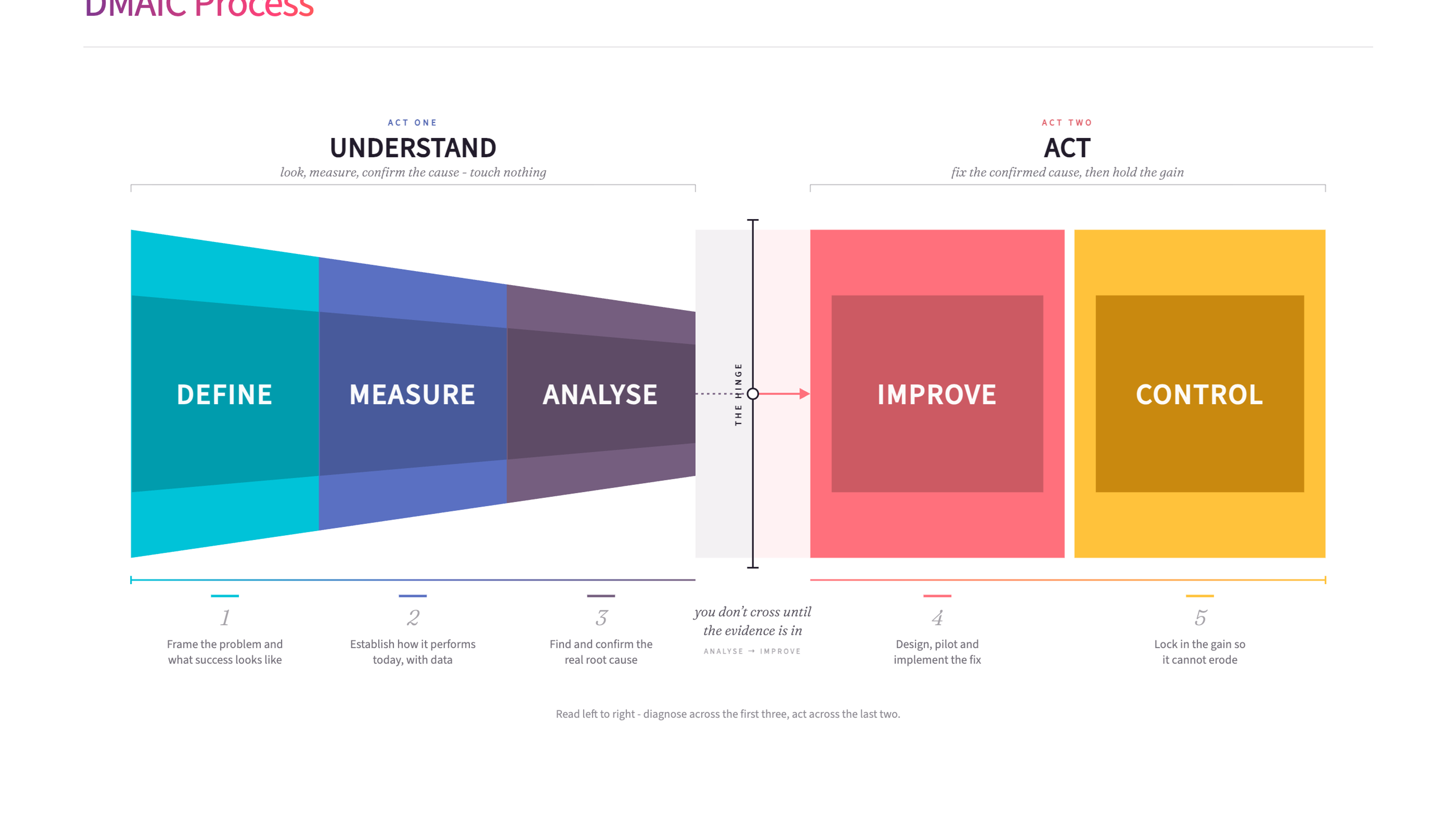
DMAIC (Define, Measure, Analyse, Improve, Control) is a structured problem-solving method from the Six Sigma toolkit. It gives teams a clear five-step process for improving existing processes using data and evidence.
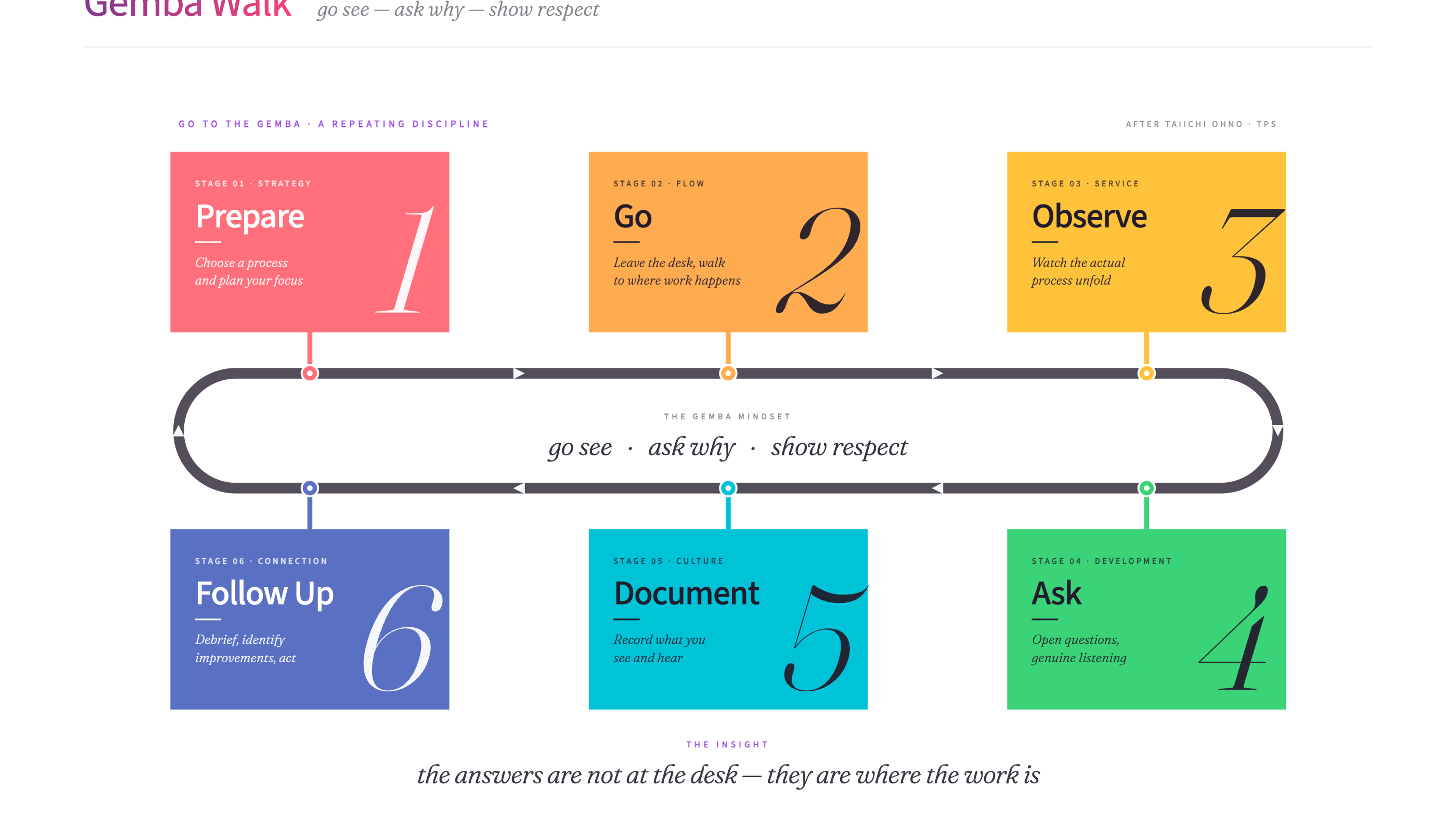
A Gemba Walk is a Lean practice where leaders go to the place where work actually happens to observe, listen, and understand. It bridges the gap between how leaders think work gets done and how it really gets done.
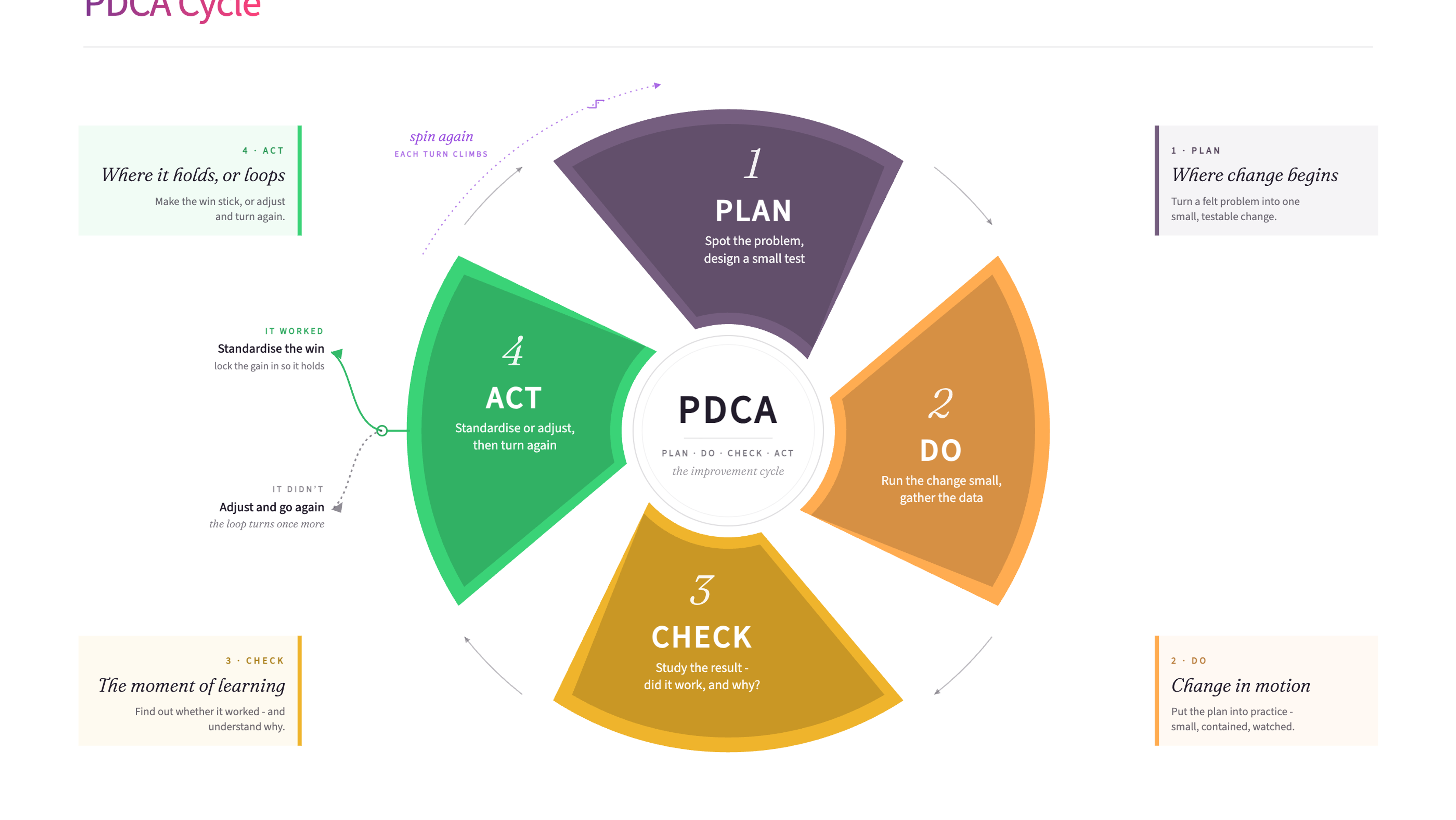
The PDCA Cycle (Plan, Do, Check, Act) is a continuous improvement framework for testing and refining processes. It creates a repeating loop of planning a change, trying it, checking whether it worked, and adjusting before the next round.
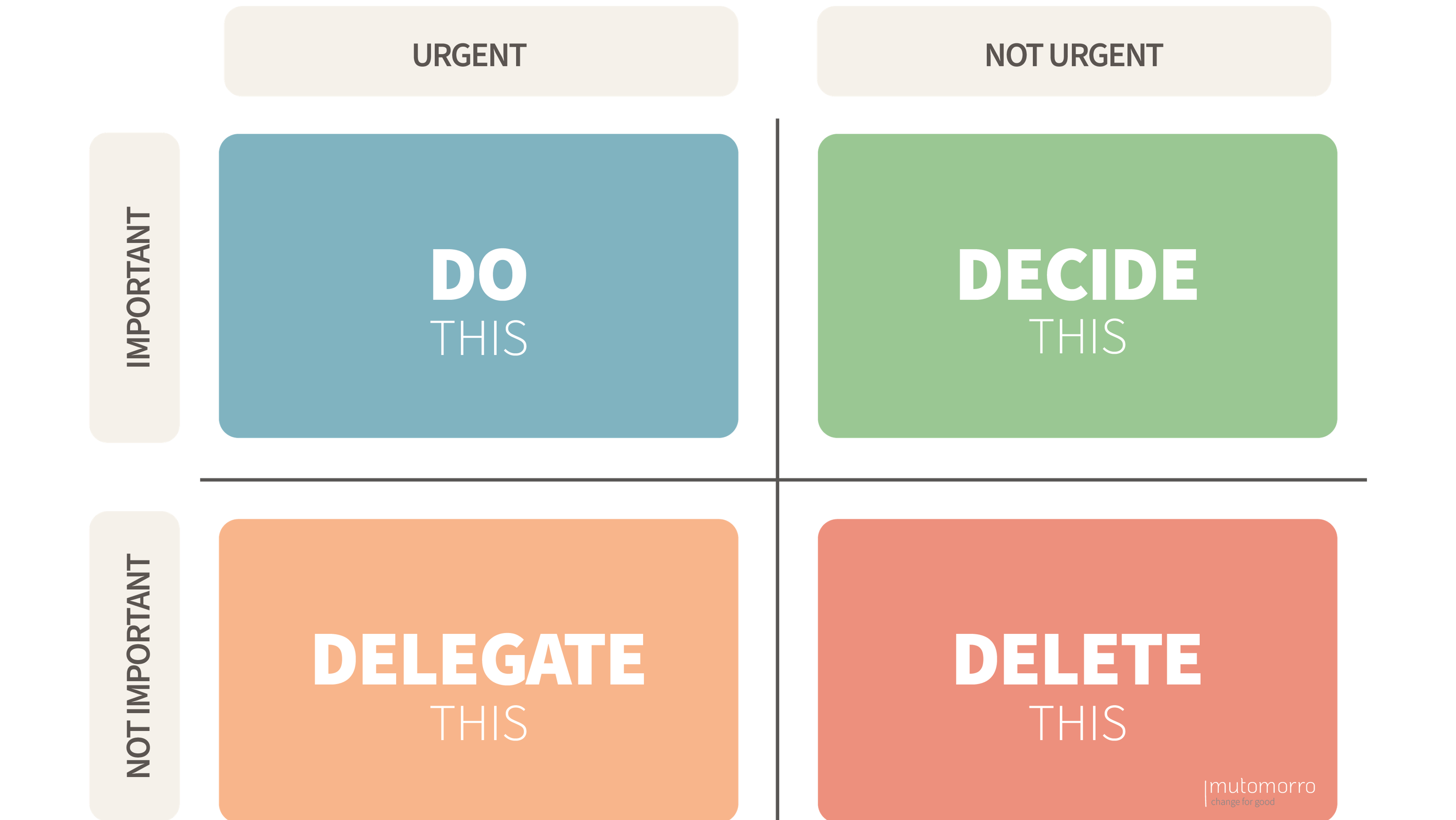
The Eisenhower Matrix is a time management and prioritisation tool that sorts tasks into four categories based on urgency and importance. It helps teams focus on what actually matters instead of just what feels most pressing.
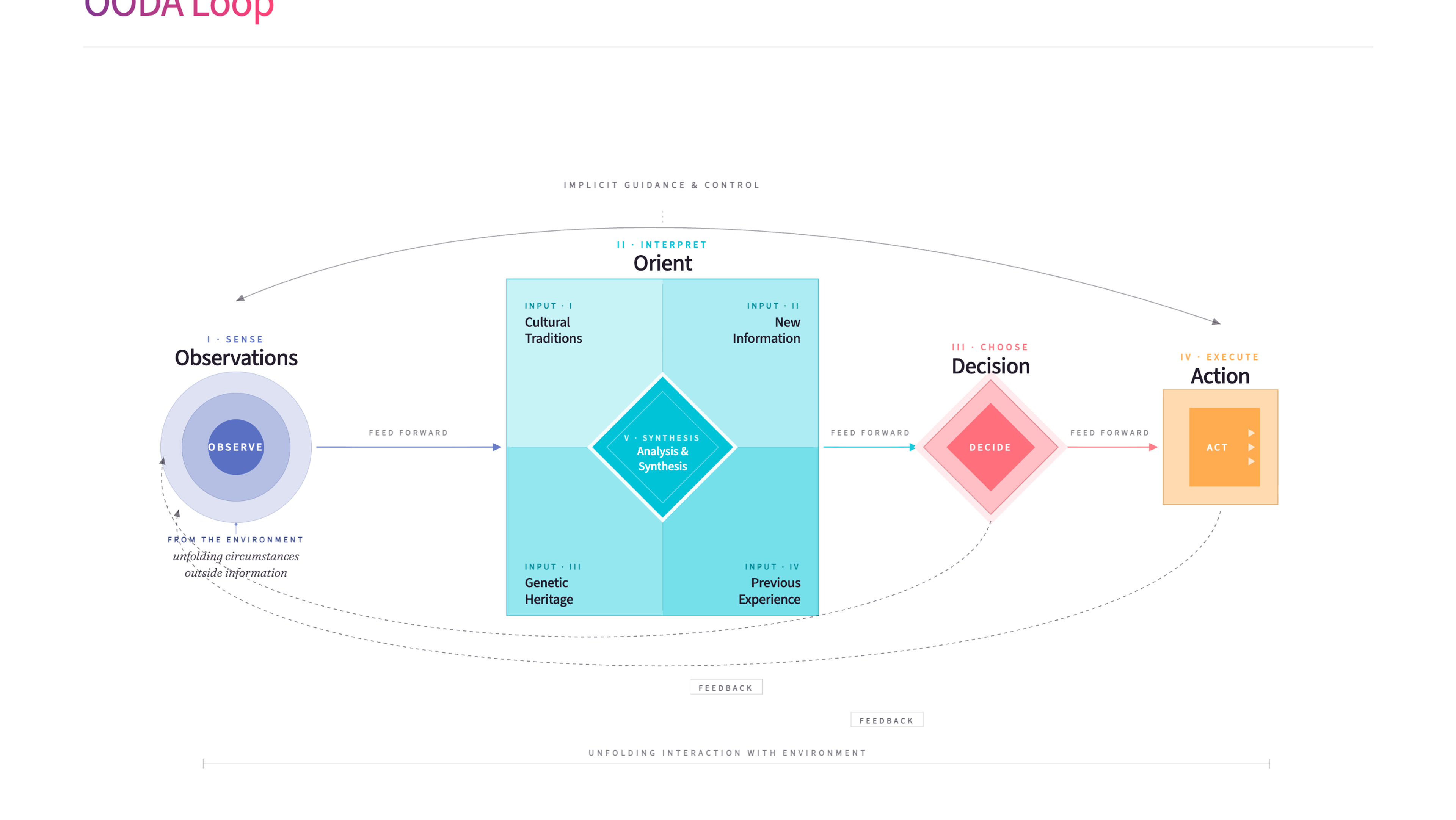
The OODA Loop (Observe, Orient, Decide, Act) is a decision-making framework designed for fast-moving, uncertain situations. It helps leaders and teams make quicker, better decisions by cycling through observation and action rather than getting stuck in analysis.
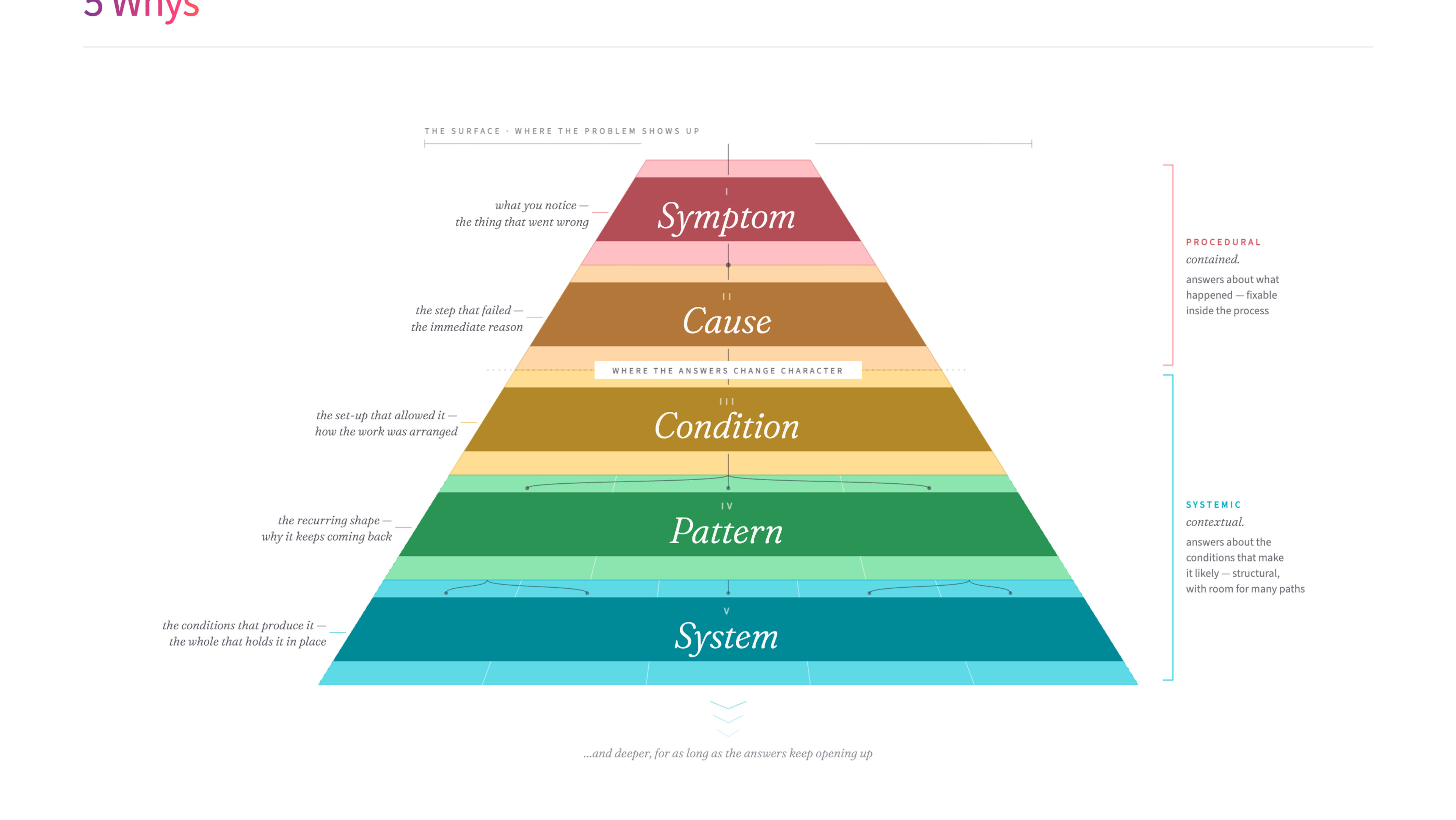
The 5 Whys is a simple root-cause analysis technique that drills into problems by asking "why?" repeatedly. It helps teams get past surface-level symptoms to find the real cause of an issue.
Articles
Thinking on how to reduce friction, measure impact, and build the operational foundations that let organisations deliver consistently.
RACI and RASCI differ by one letter - the Supportive role. What the S actually adds, when it earns its place, and how to choose between RACI, RASCI and DACI, with the same tasks mapped both ways.
Most organisations run on invisible infrastructure - the corridor conversation, the person who just knows, the relationships that bridge gaps between teams. Growth puts all of it under pressure. Scaling well means designing what replaces it.
Every growing organisation needs better processes, structures, and governance. But the operational foundations only work if the conditions underneath them - how decisions travel, how information flows, how culture holds together at scale - evolve at the same pace. Here's what's worth understanding before the scaling work begins.
Most organisations know they should measure their impact. Fewer know how to do it in a way that's genuinely useful rather than just generating reports. This article explores how to build an impact measurement framework that helps you understand what's working, learn from what isn't, and make better decisions.

Every organisation has friction - the unnecessary effort, the needless complexity, the things that make simple work harder than it should be. This article explores how to find it, understand where it comes from, and reduce it without creating new problems in the process.
Courses
Practical training in process mapping, Lean thinking, continuous improvement, and workflow design.
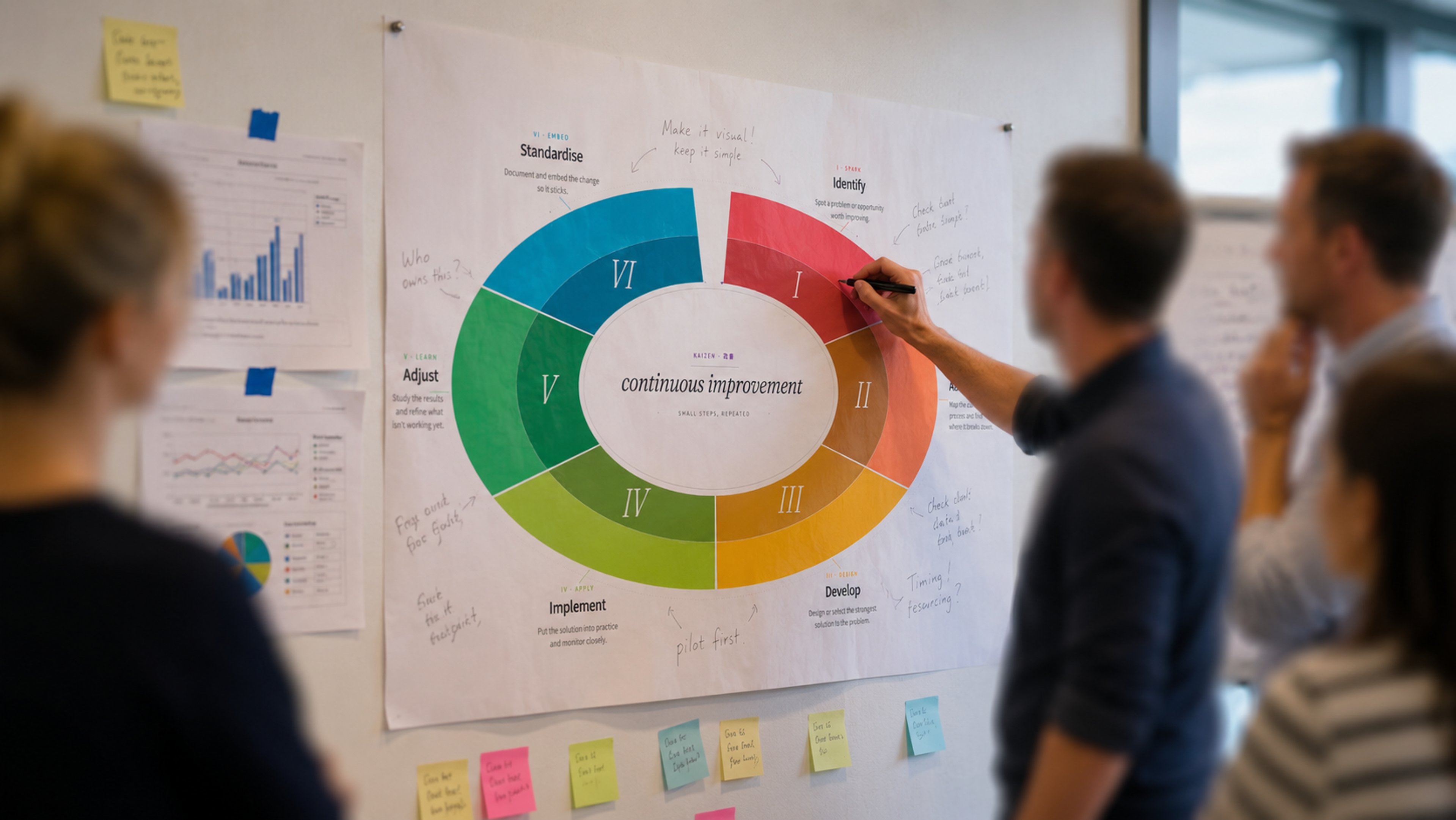
Getting better shouldn’t depend on a big transformation programme. We help your teams build the habit of improving the work as they go - practical training, built around your real processes.
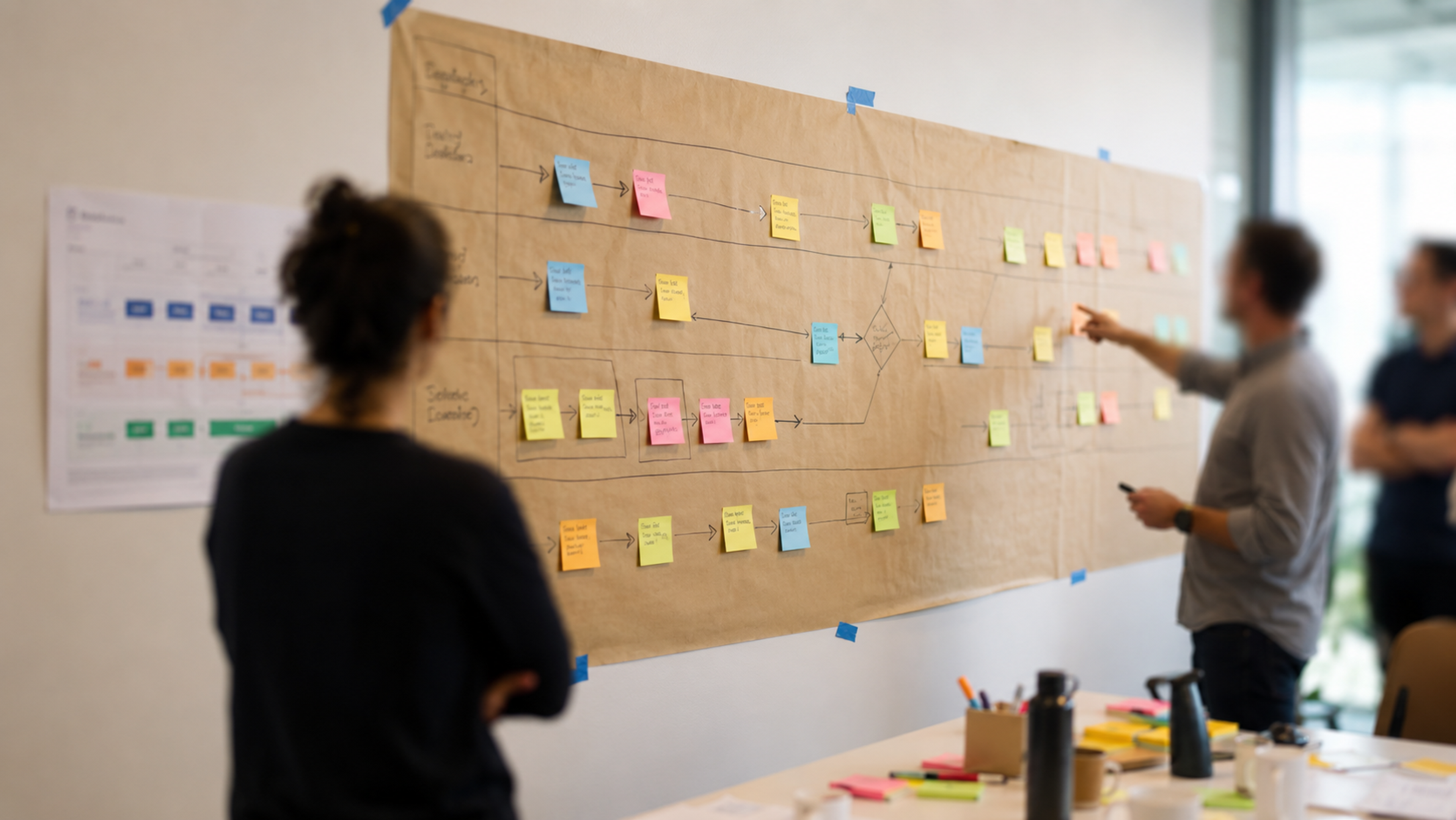
A hands-on day spent mapping a real process from your own organisation - and learning to run the sessions yourselves. Your team leaves with a clear picture of how the work actually flows, where it breaks down, and a redesigned version that removes the friction.
Let's talk about what you're working on
Whether you're navigating a merger, rethinking how you're structured, or trying to shift a culture that isn't working - underneath, it's the same job: getting the whole organisation pulling in the same direction. Start with a conversation.