Reducing customer effort
Our workshop exploring how to reduced customer effort and improve the customer experience. Grounded in years of experience making services easier and more accessible to end-users.
Your customers are working too hard. Not because your service is bad - but because somewhere in the system, things are more complicated than they need to be. Forms that ask for the same information twice. Processes that require people to chase progress. Handoffs where context gets lost and people have to start again.
Every unnecessary step, every moment of confusion, every time someone thinks "why is this so difficult?" - that is effort your organisation is creating. And effort drives people away. Research consistently shows that reducing effort matters more than delighting people. The organisations that make things easy are the ones people come back to.
This course helps your team find and remove that unnecessary effort. It is a practical day where you will analyse real services from your organisation, identify where effort is highest, and design specific changes to reduce it.
An Empathy Map helps you understand what your users are thinking and feeling at the moments of highest effort - going beyond what they tell you to what they experience.
What you will work on
You will work on real services and processes from your own organisation, using a structured approach to find and fix the effort your customers or service users face.
The day covers three areas:
Seeing effort from the outside - The effort that matters is what the customer experiences, not what the organisation measures. You will learn to identify effort from the user's perspective - where they get stuck, where they give up, where they feel frustrated. This often reveals problems that internal metrics miss entirely, because the organisation measures what it does, not what the person on the other end experiences.
Understanding why effort exists - Most unnecessary effort is not deliberate. It is the result of processes designed around organisational needs rather than user needs, systems that do not talk to each other, or policies that made sense once but have not been updated. You will learn to trace effort back to its root causes in the organisational system - because reducing effort means changing the system, not just adding a friendlier front end.
Designing lower-effort experiences - With a clear picture of where effort is highest and why, you will redesign specific parts of your service to make things easier. You will learn practical techniques for simplifying processes, reducing handoffs, improving communications, and removing steps that create effort without adding value. The changes you design will be specific and testable.
Who this is for
This course is for anyone responsible for how customers or service users experience your organisation - customer experience teams, service managers, operations teams, digital teams, and leaders who want to make their services genuinely easier to use.
What you will take away
You will leave with a clear map of where effort is highest in your service, a set of specific changes designed to reduce it, and practical tools for measuring and managing customer effort going forward. You will also have a fundamentally different lens for evaluating your services - one that starts with what the person on the other end actually experiences.
How the session works
The day combines analysis and design. You will alternate between structured exercises to identify and diagnose effort, and creative sessions to design improvements. You will work in small teams, ideally with colleagues from different parts of the same service, so you can see the full picture.
What makes this different
For a broader look at how internal friction creates external effort, see our guide to reducing organisational friction.
Most customer experience training focuses on satisfaction or delight. This course focuses on effort - the thing that research shows actually drives loyalty and retention. Making things easy is not glamorous, but it is what works.
We also look beyond the touchpoints to the operational system behind them. If your contact centre is handling calls that should not need to happen, the fix is not better call handling - it is redesigning the process that generates the calls in the first place. That systems view is what makes the improvements sustainable.
Process Mapping helps you see the full workflow behind a service - making it easier to spot where unnecessary effort is being created.
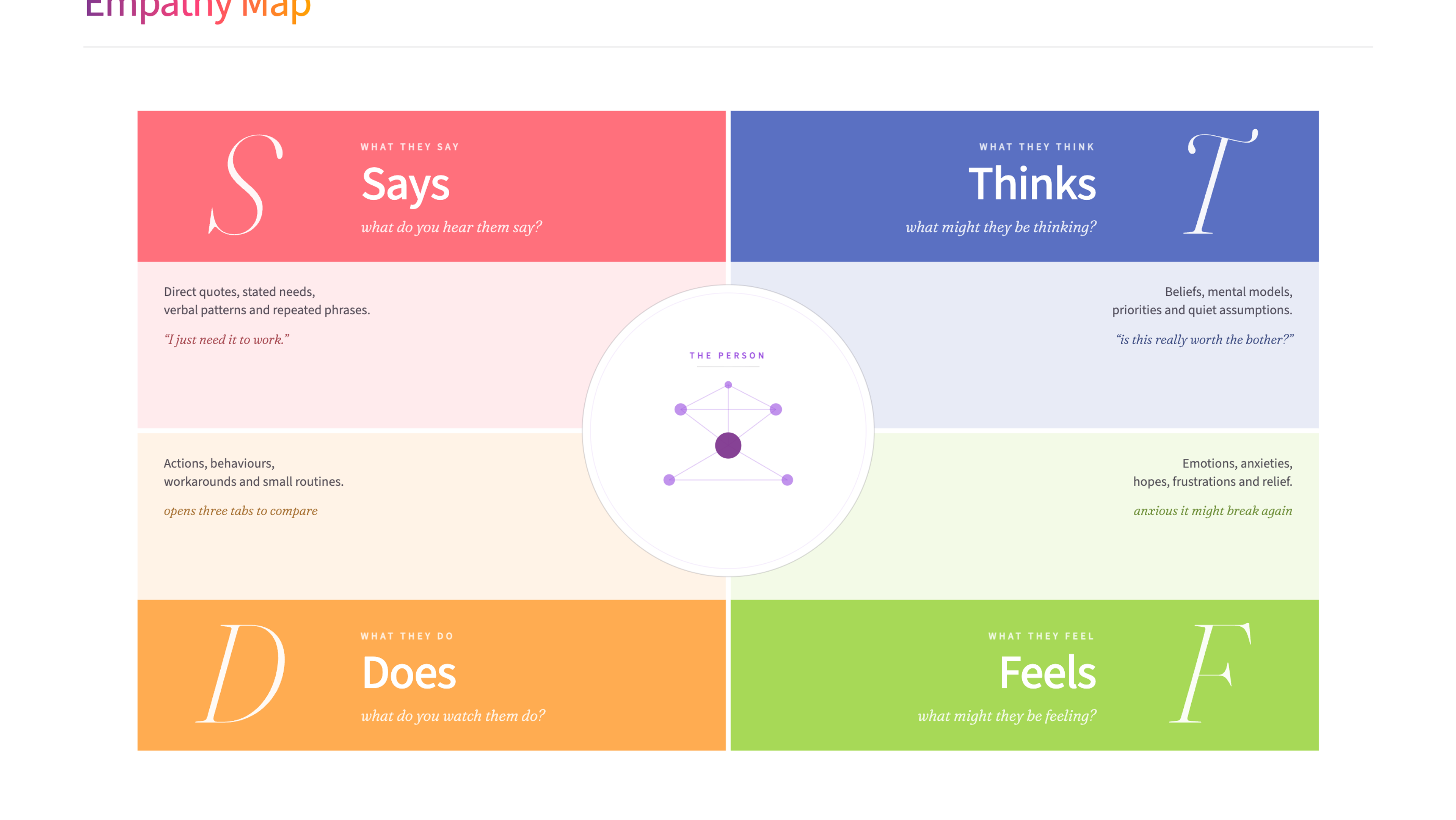
An empathy map is a collaborative visualisation tool that captures what we know about a user's behaviours, thoughts, feelings, and motivations, helping teams develop deeper understanding and more human-centred solutions.
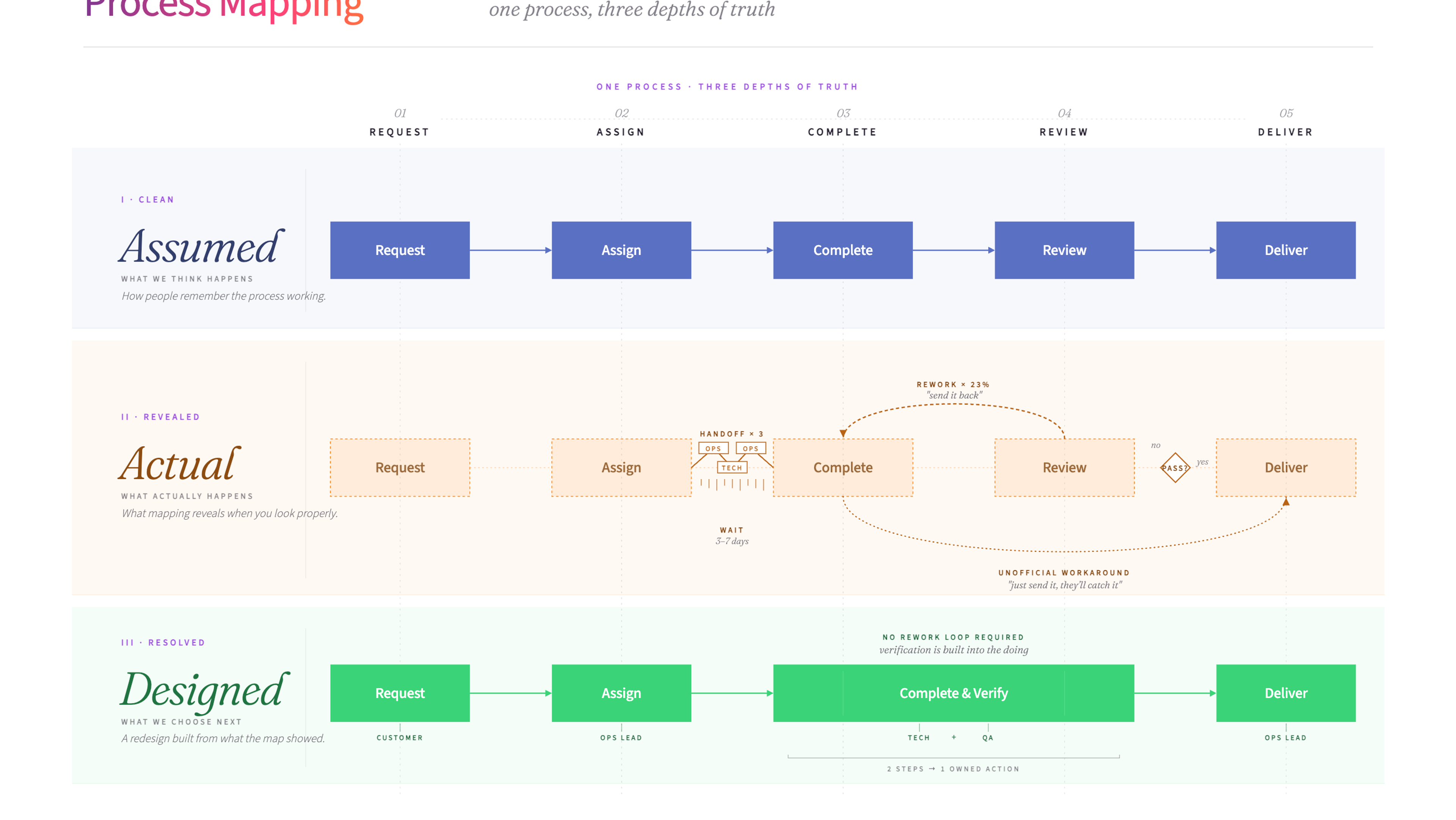
Process mapping is a visual method for documenting how a process works from start to finish. It helps teams see the full picture - every step, decision point, and handoff - so they can spot problems and design improvements.
Get in touch to find out more or book a place
Whether you're navigating a merger, rethinking how you're structured, or trying to shift a culture that isn't working - start with a conversation.