LogFrame (Logical Framework) - Free Template
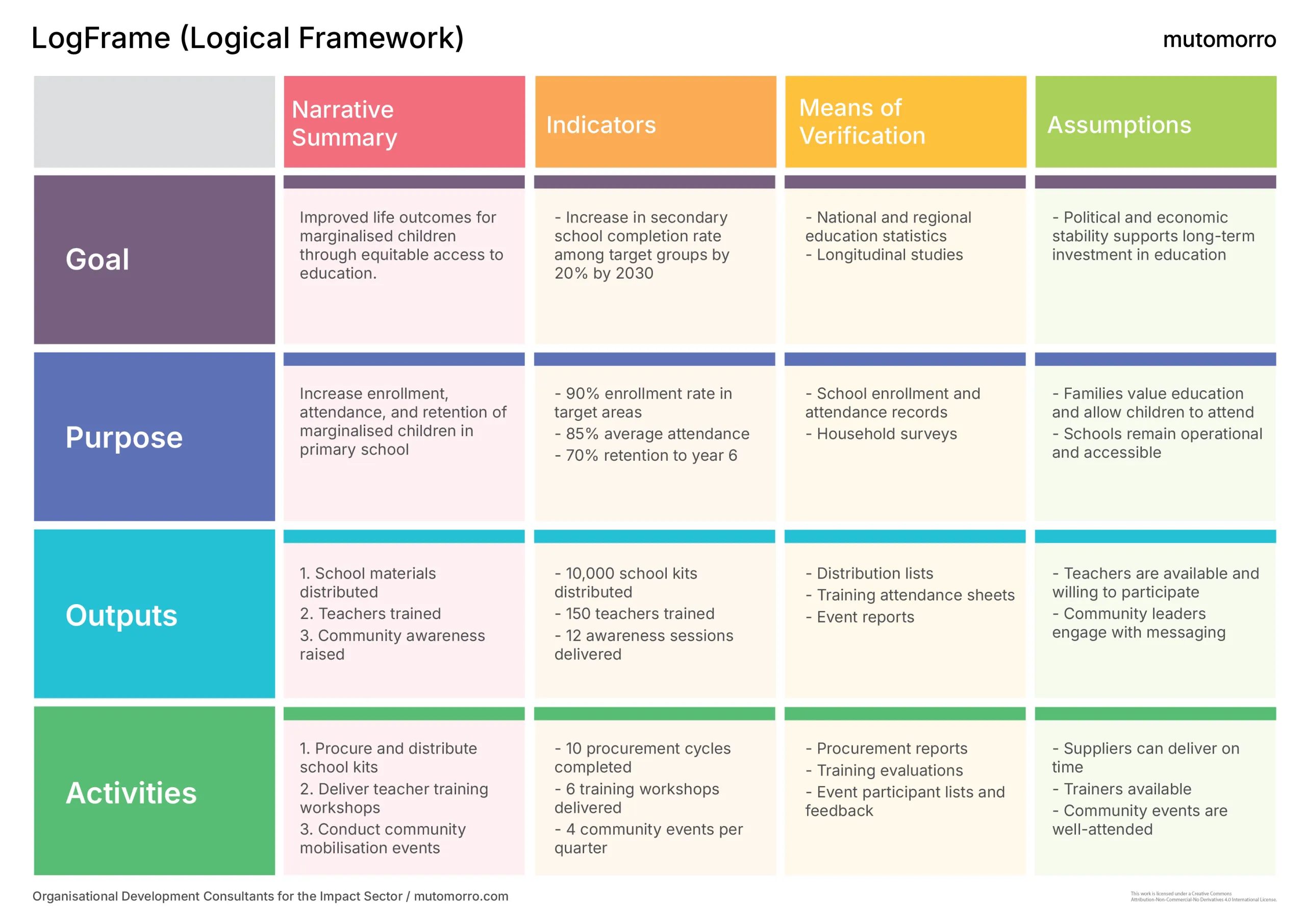
A LogFrame matrix with all four rows and four columns laid out and labelled, filled in with a worked example for a fictional education programme. Use it as the model for planning, tracking and communicating your own programme's objectives, indicators, evidence sources and assumptions.
Based on our full guide to LogFrame (Logical Framework).
Get this PDF template
Fill in your details and download the PDF straight away.
What's in this LogFrame (Logical Framework) template
The complete LogFrame matrix (Goal, Purpose, Outputs and Activities across Narrative Summary, Indicators, Means of Verification and Assumptions), filled in as a worked example.
A one-page summary that explains each row and column, when to use a LogFrame, how to build one from the Goal down, and the traps to watch for, like indicators with no reliable data source.
Tips for using it
Start with the Goal row and work down. For each row, fill in the Narrative Summary first, then the Indicators, then the Means of Verification, and finally the Assumptions. Test the if/then logic vertically - if the activities happen and the assumptions hold, do the outputs follow?
Capacity Building
We help impact-led organisations build LogFrames that connect what they do to the difference they make - turning programme logic into something measurable and fundable.
Change Management Training
A housing association in the middle of a significant transformation, with more change on the horizon than its managers had the tools or training to lead.
Read the case study →
When you need more than the template
The free template is a good start. If you want to take the next step and map a full Theory of Change with your team - the difference you're working towards and how your work gets you there - that is what we built the Theory of Change Toolkit for - a rapid primer, assessment tools for gathering stakeholder input, a slide deck, worksheets and discussion guides, facilitator notes, and a Miro board blueprint. Everything is editable, so you can fit it to your own branding and timings.
It's a paid toolkit, on our sister site toctoolkit.org. Reduced rates are available for small nonprofits, micro-organisations and students.