Building a Theory of Change
1 day · in-person
A hands-on course for programme and project teams. You will leave with a completed Theory of Change for your programme - a clear map connecting what you do to the outcomes you are trying to achieve.
You know what your programme is trying to achieve. You have objectives, activities, a team, and a budget. But can you clearly explain how what you do every day connects to the outcomes you are aiming for? Can you show the logic - step by step - of how your activities lead to your impact?
That is what a Theory of Change gives you. It is a practical map that connects your activities to your outcomes, shows the assumptions you are making, and highlights where things might not work as expected. It is one of the most useful planning tools available - and one of the most often misunderstood.
Our free Theory of Change tool and template gives you the background and framework to explore before the course.
This one-day course cuts through the confusion and helps you build a real, usable Theory of Change for your specific programme. Not a theoretical exercise - a practical document you will use to plan, communicate, and evaluate your work.
What you will work on
The day follows the natural logic of building a Theory of Change, step by step:
Starting with impact - Most planning starts with activities and works forward. A Theory of Change starts with the change you want to see in the world and works backward. You will define your long-term impact clearly and specifically - not a vague aspiration, but a concrete description of what success looks like.
Mapping your outcomes pathway - Between your activities and your impact, there are intermediate outcomes - the changes that need to happen along the way. You will map these out, step by step, creating a chain of logic from what you do to the difference you make. This is where most programmes discover gaps in their thinking - and where the real value of the process lies.
Testing your assumptions - Every Theory of Change contains assumptions - things you believe to be true that connect one outcome to the next. Making these explicit is one of the most powerful things you can do. You will identify and test your assumptions, looking for the ones that carry the most risk and thinking about how to strengthen them.
Connecting activities to outcomes - With your pathway mapped and your assumptions tested, you will connect your actual activities to the outcomes they are designed to produce. This often reveals that some activities are not clearly connected to any outcome - and that some outcomes have no activities supporting them. Both are useful discoveries.
Who this is for
Programme and project teams who need to build, refresh, or strengthen their Theory of Change. This includes teams working in charities, social enterprises, the public sector, and any organisation that needs to demonstrate how its work creates impact.
The course is particularly useful if you are applying for funding (many funders now require a Theory of Change), evaluating an existing programme, or designing a new one from scratch.
It works best when attended by the team together, so you build your Theory of Change collaboratively and leave with shared ownership.
What you will take away
Every team leaves with:
- A completed Theory of Change diagram for their programme
- Clearly defined long-term impact, intermediate outcomes, and activities
- A list of assumptions with risk ratings and strategies for testing them
- Confidence in explaining your programme logic to funders, boards, and stakeholders
- A practical document you can use for planning, communication, and evaluation
How the day works
This is a facilitated, hands-on workshop. You will spend most of the day building your Theory of Change, with short inputs from the facilitator to introduce each stage of the process. The approach draws on established frameworks while keeping things practical and jargon-free.
Teams work on their own programme throughout, with facilitator support to work through sticking points. By the end of the day, your Theory of Change is complete - not a rough draft, but a finished, usable document.
Groups typically include three to five teams of four to six people, which creates useful cross-pollination while keeping the focus on your specific work.
What makes this different
For more on connecting your Theory of Change to ongoing measurement, see our guide to building an impact measurement framework.
Many Theory of Change workshops teach you the theory but leave you to build the actual thing on your own. This course is the opposite - you spend the day building it, with expert facilitation to guide you through the tricky bits. You arrive with a programme. You leave with a completed Theory of Change.
We also take a systems perspective - helping you see how your programme sits within a wider context and how external factors might affect your pathway. This makes your Theory of Change more realistic and more resilient.
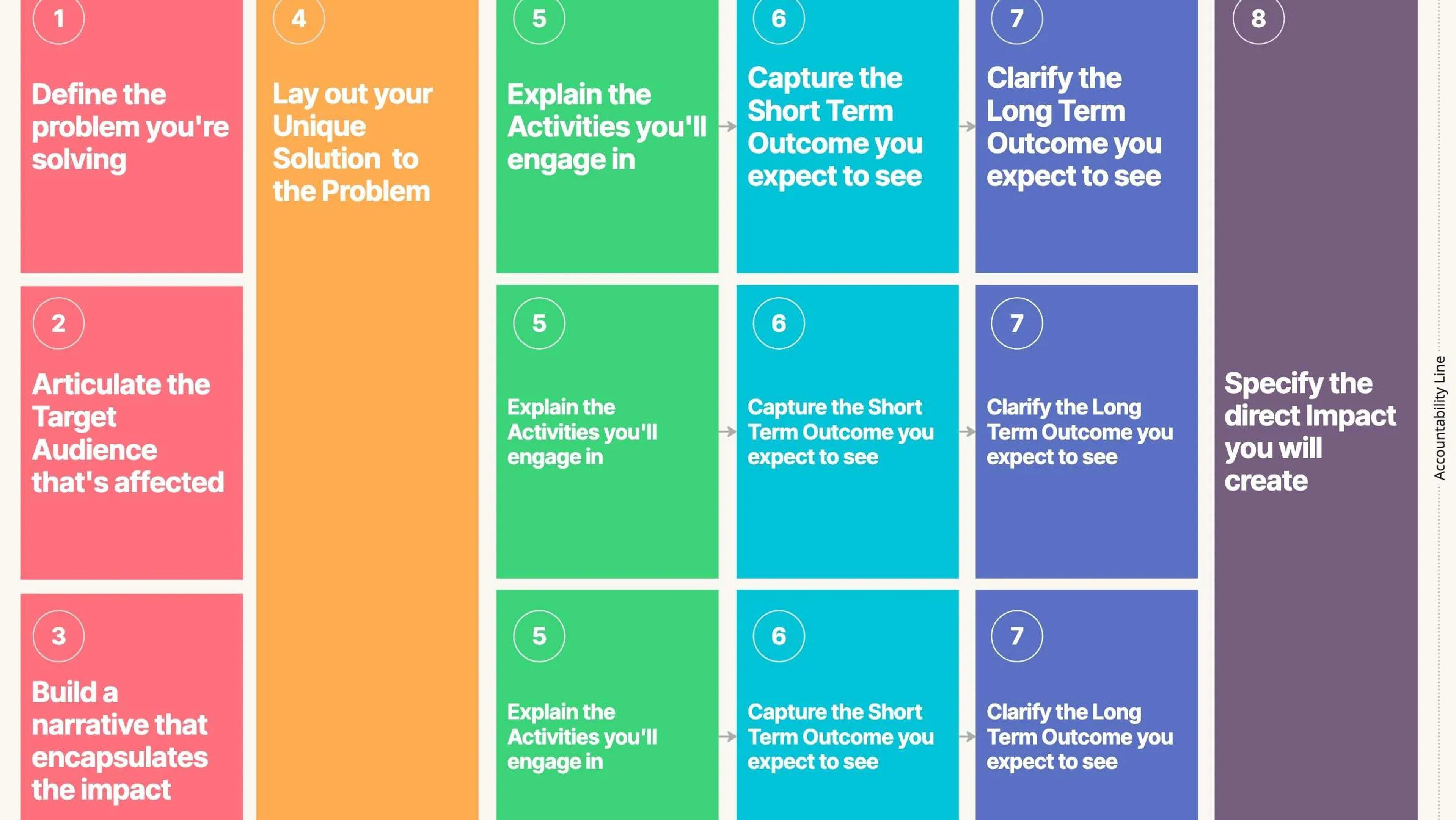
A Theory of Change is a strategic planning tool that maps out how and why you expect a desired change to happen. It connects your activities to your outcomes, showing the logical path from what you do to the impact you want to create.
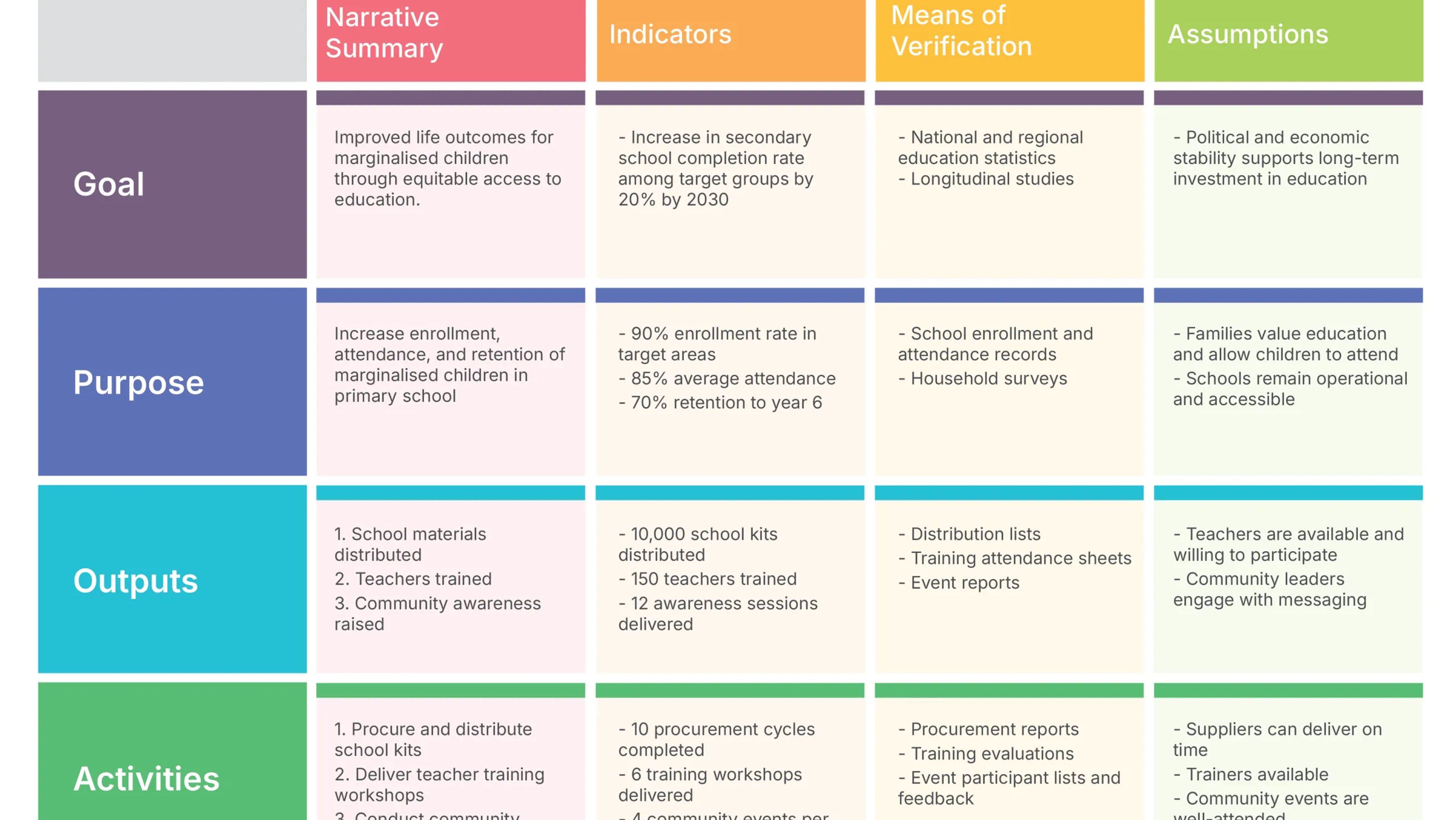
A LogFrame is a structured planning and evaluation tool that helps organisations set clear goals, define how they'll measure progress, and track what's actually being achieved. It's widely used in the nonprofit sector for programme management and impact reporting.

Most organisations know they should measure their impact. Fewer know how to do it in a way that's genuinely useful rather than just generating reports. This article explores how to build an impact measurement framework that helps you understand what's working, learn from what isn't, and make better decisions.
Most organisations have a stated purpose. Far fewer have one that shapes how people actually work. This article explores why purpose gets stuck at leadership level and what it takes to embed it into daily decisions, team dynamics, and organisational culture.
Get in touch to find out more or book a place
Whether you're navigating a merger, rethinking how you're structured, or trying to shift a culture that isn't working - start with a conversation.