Eisenhower Matrix
The Eisenhower Matrix is a time management and prioritisation tool that sorts tasks into four categories based on urgency and importance. It helps teams focus on what actually matters instead of just what feels most pressing.
Get the free template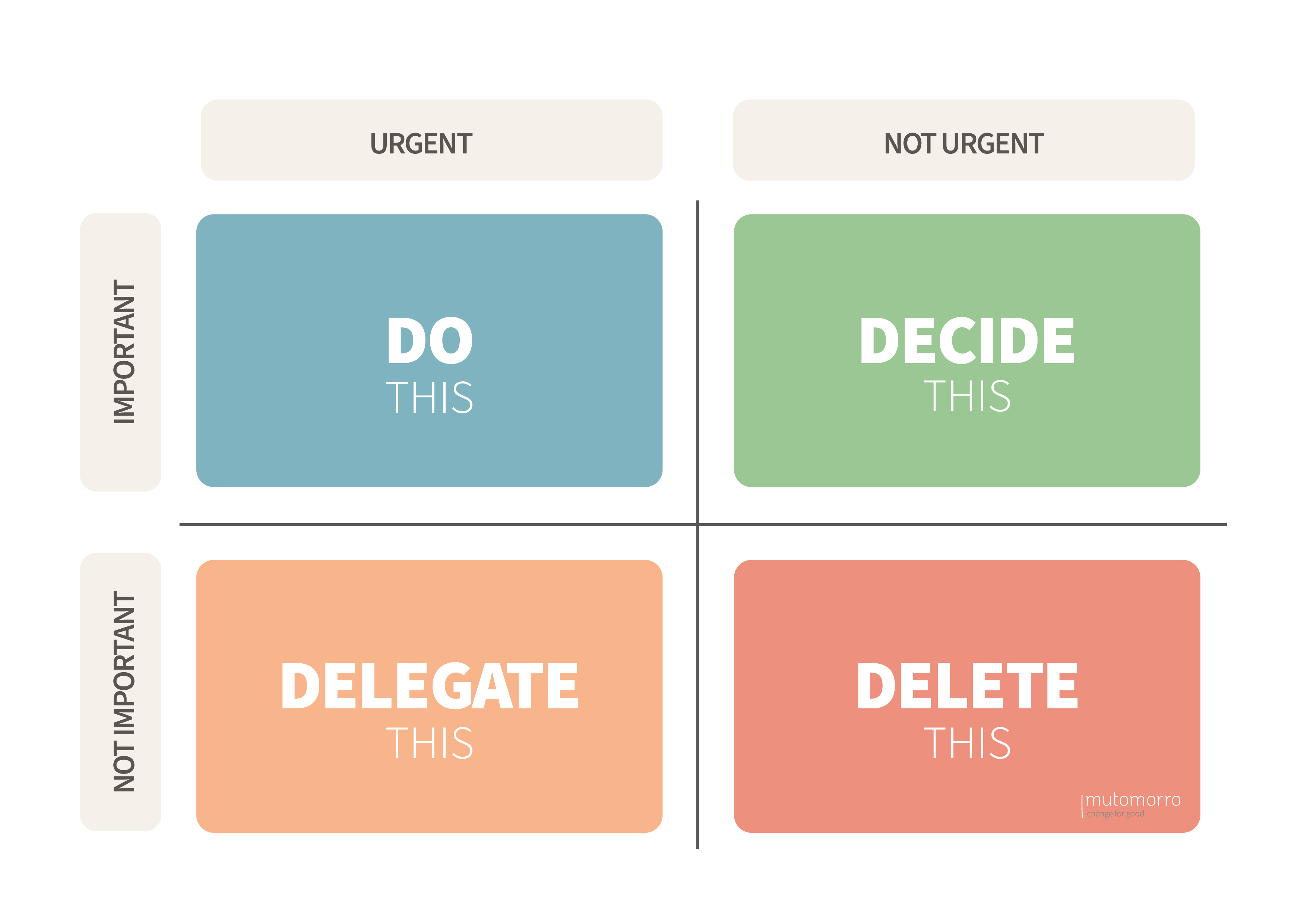
The Eisenhower Matrix is one of the simplest and most useful prioritisation tools you'll find. It sorts tasks into four categories based on two questions: is this urgent, and is this important? The result is a clear picture of where your time should go - and where it probably shouldn't.
What is the Eisenhower Matrix?
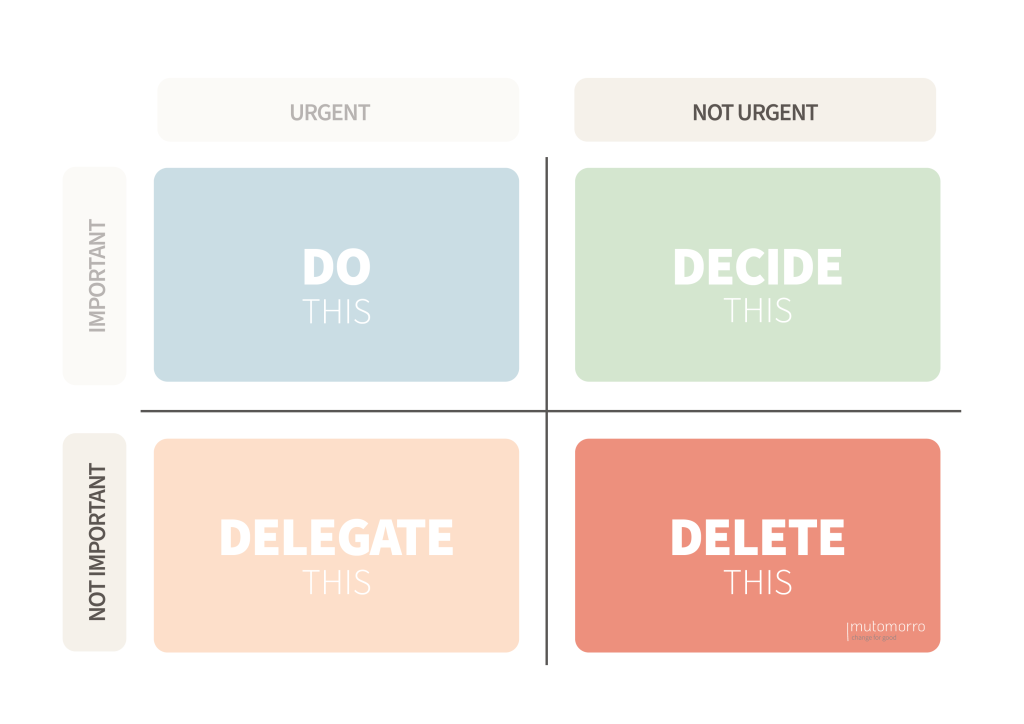
The Eisenhower Matrix - sometimes called the Urgent-Important Matrix - is a way of sorting tasks based on how urgent and how important they are. It splits everything into four quadrants:
- Do - important and urgent
- Decide - important but not urgent
- Delegate - urgent but not important
- Delete - neither important nor urgent
The name comes from Dwight D. Eisenhower, the 34th US President and former Supreme Commander of Allied Forces in Europe. He's often quoted as saying: "What is important is seldom urgent and what is urgent is seldom important." Whether he actually said it is debated, but the idea stuck. Stephen Covey later built on the concept in The 7 Habits of Highly Effective People, turning it into the four-quadrant format most people use today.
The core insight is that urgency and importance are not the same thing. Urgent tasks demand attention right now - a ringing phone, a deadline, a broken system. Important tasks contribute to your long-term goals - building capability, planning ahead, developing people. The trouble is that urgent tasks tend to crowd out important ones, which is how teams end up permanently firefighting without ever making progress on the things that matter most.
The four quadrants
Each quadrant has a clear action attached to it. Here's how they work.
Quadrant | Urgent / important | What you do |
|---|---|---|
1. Do | Important and urgent | Handle now - safeguarding concerns, imminent deadlines, outages. Mostly reactive; a permanently full quadrant signals too little time in Quadrant 2. |
2. Decide | Important, not urgent | Schedule it. Strategy, capability building, relationships, process improvement - the work that prevents tomorrow's crises. Protect this time. |
3. Delegate | Urgent, not important | Hand it to whoever's best placed. Routine approvals, certain emails, standard reporting. Works only where roles are clear. |
4. Delete | Neither | Drop it. Standing meetings that no longer serve, reports nobody reads, "we've always done it this way" tasks. Saying no protects time for what matters. |
1. Do - important and urgent
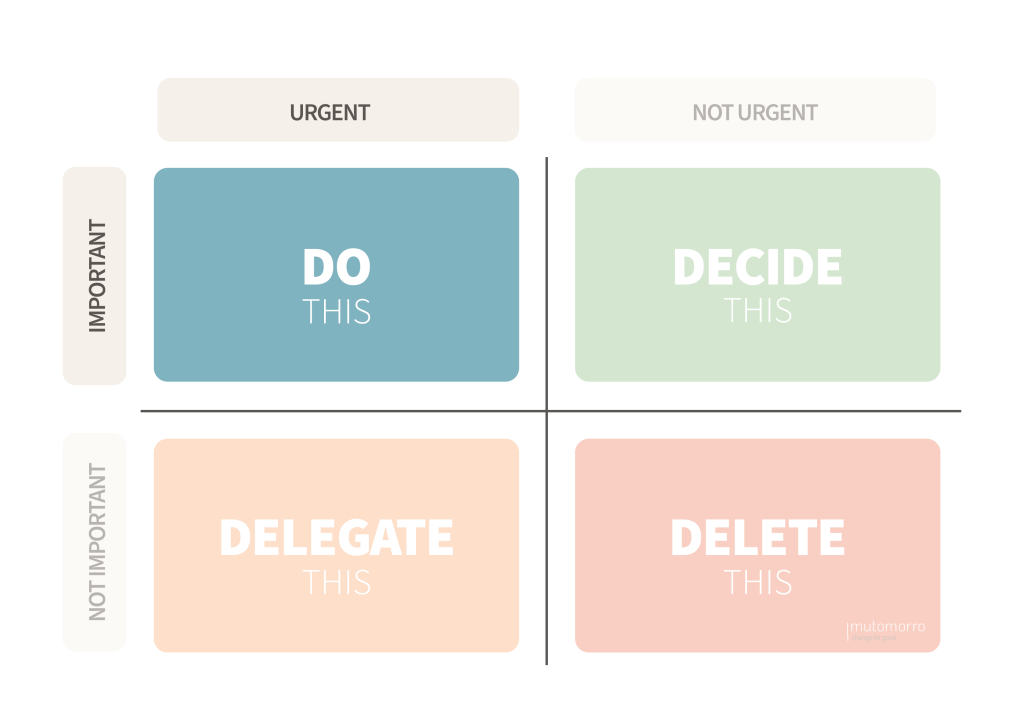
These are the tasks that need doing now. They're important to your goals and they're time-sensitive. A safeguarding concern, a funding deadline tomorrow, a system outage affecting service delivery - these can't wait.
Most tasks in this quadrant are reactive. They weren't planned - they appeared and they need handling. That's fine. The problem comes when this quadrant is always full. If everything feels urgent and important, it usually means not enough time has been spent in Quadrant 2.
2. Decide - important but not urgent
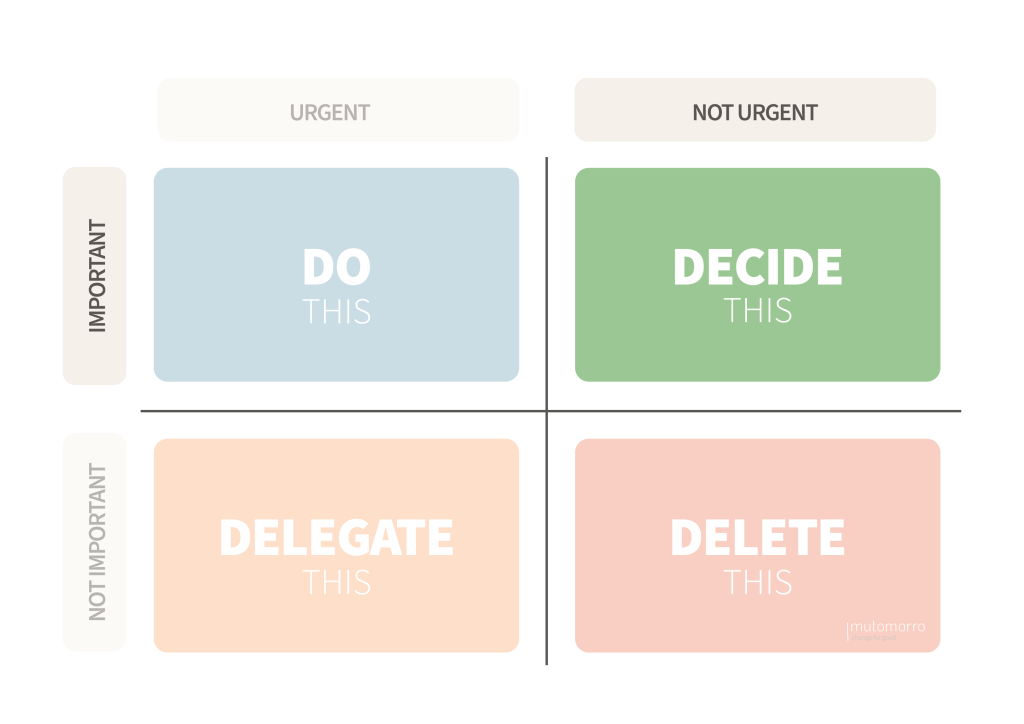
This is where the real value lives. These tasks matter for your long-term direction but nobody's chasing you for them today. Strategy development, team capability building, relationship building, process improvement - these are all Quadrant 2 work.
The challenge is that because nothing is on fire, these tasks get pushed back. Repeatedly. And then one day they become Quadrant 1 problems - the strategy review that should have happened six months ago is now urgent because the board is asking questions.
The aim is to spend more time here. The more time you invest in Quadrant 2, the fewer Quadrant 1 crises you'll face.
3. Delegate - urgent but not important
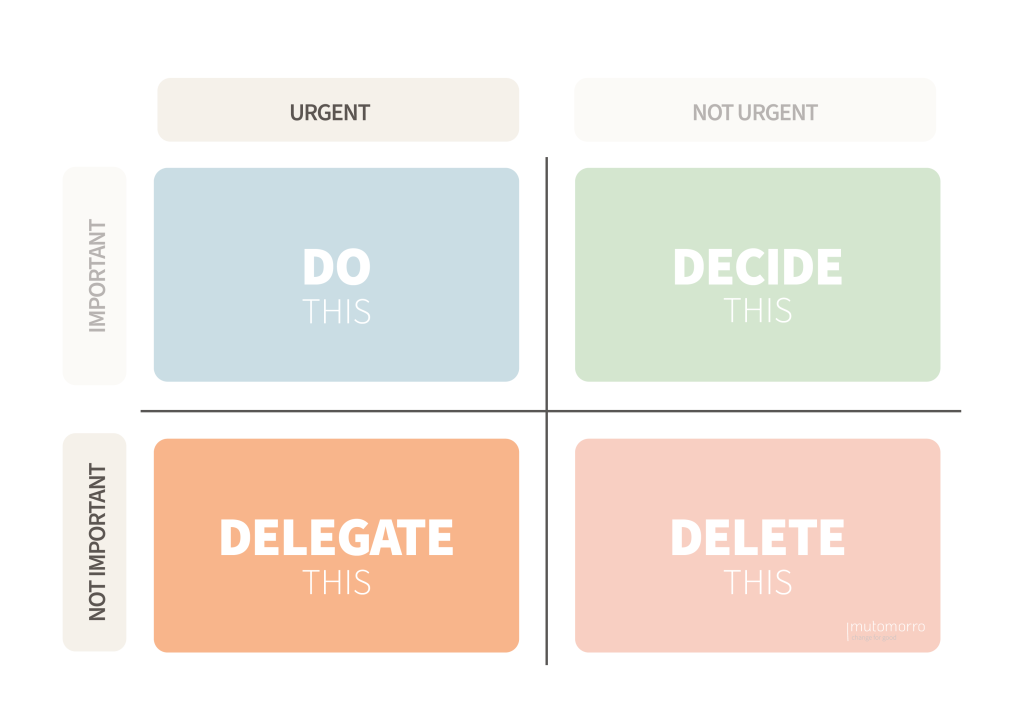
These tasks need doing soon but they don't need you. They're urgent but they don't move your goals forward. Meeting requests that someone else could attend, routine approvals, certain emails, standard reporting.
The action here is to hand them to someone else. That could be a colleague, a team member, or someone better placed to handle it. This only works well when roles and responsibilities are clear - otherwise delegation just creates confusion.
Be honest about what's actually in this quadrant. Many leaders treat Quadrant 3 tasks as Quadrant 1 because they feel pressing. Urgency creates a false sense of importance. Just because someone wants an answer today doesn't mean the task is important to your goals.
4. Delete - neither important nor urgent
These tasks don't need doing at all. They're not important and they're not time-sensitive. Standing meetings that no longer serve a purpose, reports nobody reads, tasks that exist because "we've always done it that way."
This is the hardest quadrant for most people. Deleting work feels wrong - it feels like dropping the ball. But spending time on tasks that don't matter means less time for tasks that do. Saying no to the unimportant is how you protect time for what matters.
How to use the Eisenhower Matrix
The matrix works best as a regular sorting exercise, not a one-off.
Step 1: List everything. Write down every task on your plate (or your team's plate). Don't filter yet - just get it all out. A whiteboard, sticky notes, or a shared document all work.
Step 2: Ask the two questions for each task. Is this important - does it contribute to our goals? Is this urgent - does it need doing now? Be strict. Not everything that feels urgent is urgent. Not everything that keeps you busy is important.
Step 3: Sort into quadrants. Place each task in the quadrant it belongs to. If you're doing this with a team, discuss disagreements - they're usually the most useful part. Two people often see the same task differently, and the conversation reveals assumptions about priorities.
Step 4: Act on the sort. Do the Quadrant 1 tasks. Schedule time for Quadrant 2 tasks (don't just leave them on a list). Delegate Quadrant 3 tasks with clear ownership. Delete or stop doing Quadrant 4 tasks.
Step 5: Repeat regularly. The matrix isn't a one-off exercise. Use it weekly in team planning, or monthly as part of a broader review. What's in each quadrant shifts over time, and the discipline of re-sorting keeps you honest about where time is going.
Using it with a team
When you use the matrix as a team exercise, it does more than sort tasks. It surfaces different assumptions about what matters. One person's Quadrant 1 might be another person's Quadrant 3. That's not a problem - it's a conversation worth having.
Run it in a planning session. Give everyone ten minutes to sort their own tasks, then compare. Look for patterns: if most of the team is stuck in Quadrant 1, that's a sign the team needs to invest in Quadrant 2 work to prevent future crises. If one person is carrying most of the Quadrant 1 load, that's a capacity or workload distribution conversation.
Using it as a leader
As a leader, the matrix is a useful lens for how you're spending your own time. If your week is dominated by Quadrant 1 and Quadrant 3, you're firefighting and responding rather than leading. The work that builds long-term organisational momentum - developing people, improving systems, thinking ahead - lives in Quadrant 2.
It also helps when you're coaching others. When someone brings you a problem, asking "is this urgent, important, or both?" is a simple way to help them think about priorities rather than just react.
Example
A senior leadership team in a housing association uses the Eisenhower Matrix at their Monday planning meeting. Here's a snapshot of one week's sort:
Quadrant 1 - Do: A regulator has requested data for an inspection visit on Thursday. The finance team has flagged a cash flow issue that needs a decision by Wednesday. Both are important and time-sensitive.
Quadrant 2 - Decide: The team has been meaning to review their approach to change after a restructure left some teams unsettled. It's important but nothing's forcing it this week. They schedule a half-day session for the following fortnight and protect the date.
Quadrant 3 - Delegate: Three meeting invitations have come in from partner organisations. They're time-sensitive (dates are being set) but don't need senior leadership input. The team delegates attendance to service leads who are closer to the work.
Quadrant 4 - Delete: A monthly report that goes to a steering group that was disbanded six months ago. Nobody reads it. They stop producing it.
The whole exercise takes 20 minutes. The value isn't just in sorting the tasks - it's in the team agreeing, out loud, on what matters this week and what doesn't.
Limitations of the Eisenhower Matrix
The matrix is simple by design, and that simplicity has trade-offs.
Urgency and importance are subjective. Two people can look at the same task and disagree on which quadrant it belongs in. That's partly the point (the conversation is useful), but it means the matrix doesn't give you an objective answer - it gives you a framework for thinking.
It doesn't handle dependencies. If Task B can't start until Task A is finished, the matrix doesn't show that. You'll need a separate view for sequencing - something like a simple project plan or process map - alongside the matrix.
It works best for discrete tasks. Large, ongoing pieces of work (like "improve our culture" or "develop a new strategy") don't fit neatly into a quadrant. You'd need to break them into smaller tasks first before the matrix becomes useful.
It's a sorting tool, not a planning tool. The matrix tells you what to prioritise, but it doesn't tell you how to do the work, how long it will take, or what resources you need. It's one piece of the puzzle, not the whole picture.
Getting started
The simplest way to try the Eisenhower Matrix is on your own first. Take 15 minutes, write down everything on your to-do list, and sort it into the four quadrants. Be honest - most people find they're spending more time in Quadrants 1 and 3 than they'd like.
Once you've tried it yourself, bring it to your next team planning session. Give everyone their own matrix, let them sort independently for ten minutes, then compare and discuss. Focus on the disagreements - those are where the learning is.
The goal isn't to use the matrix perfectly. It's to build the habit of asking: is this urgent, is this important, and where should my time actually go?
We regularly share thinking on organisational change and development on LinkedIn - ideas, practical approaches, and useful tools for people working on making their organisations better.
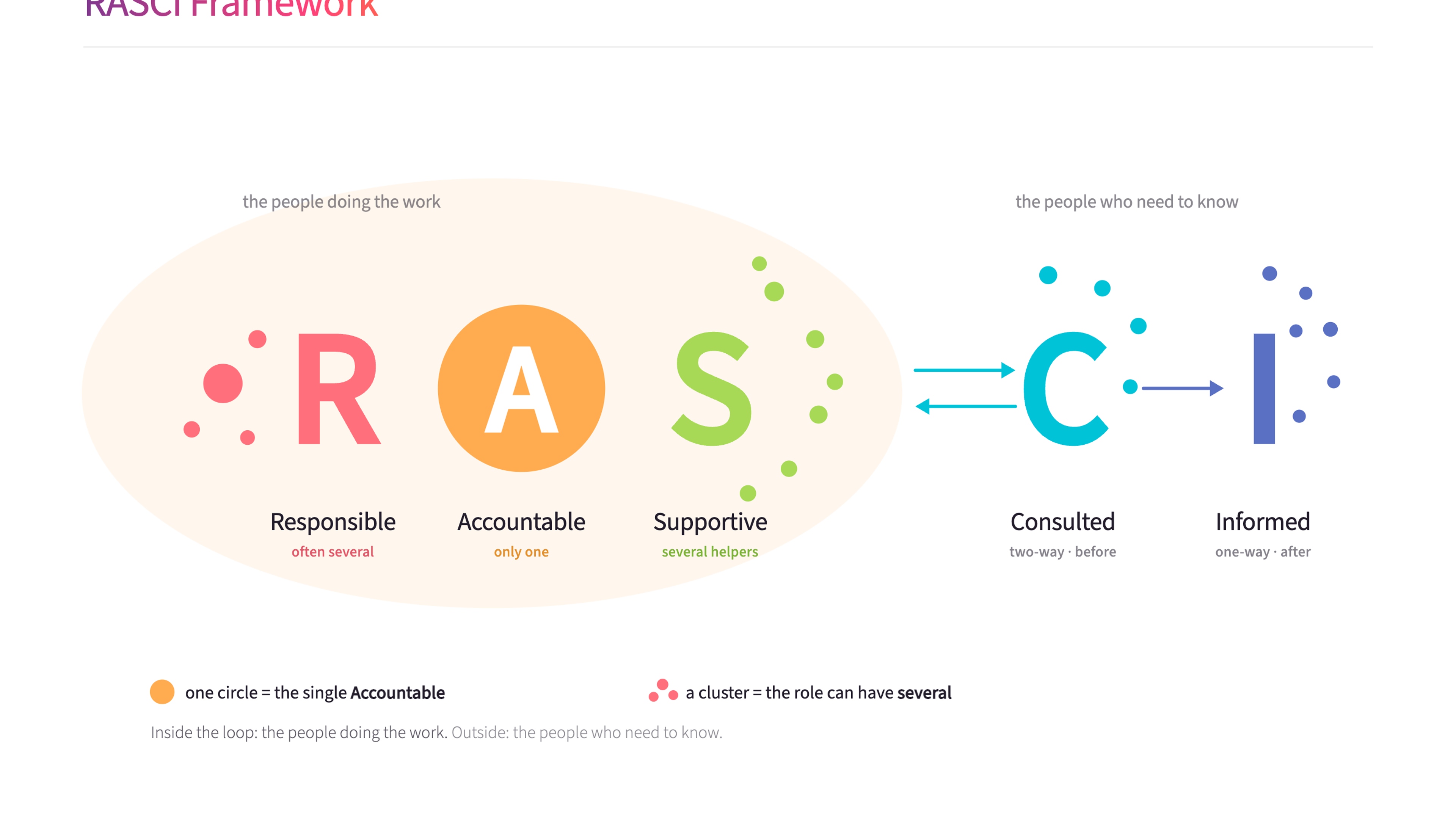
The RASCI Framework maps five roles in any project or decision - Responsible, Accountable, Supportive, Consulted, and Informed. It helps organisations clarify who does what, reducing confusion and speeding up delivery.
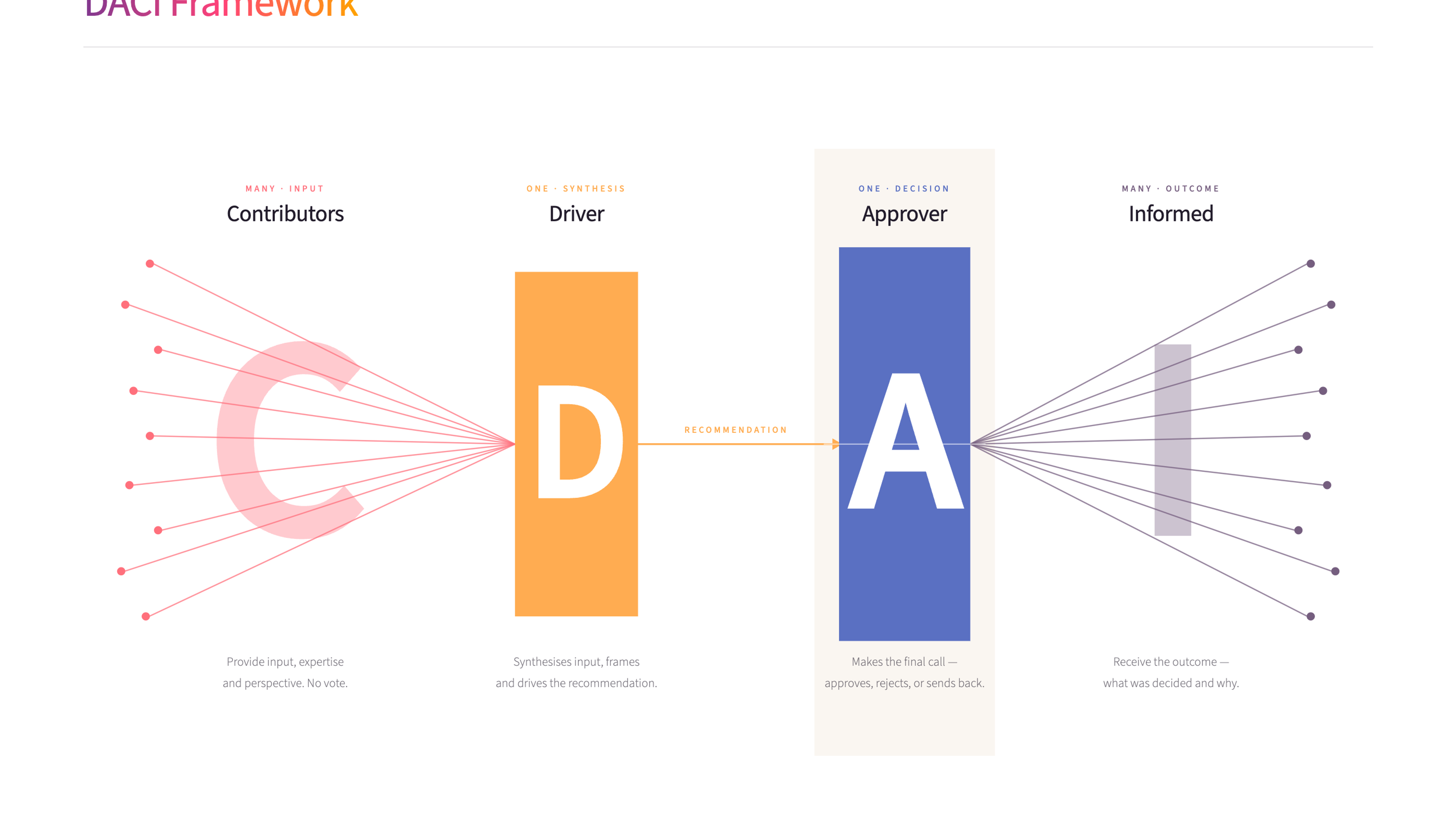
The DACI Framework is a decision-making tool that clarifies who plays what role in a decision - Driver, Approver, Contributors, and Informed. It cuts through ambiguity about who owns what, especially when decisions involve multiple people or teams.

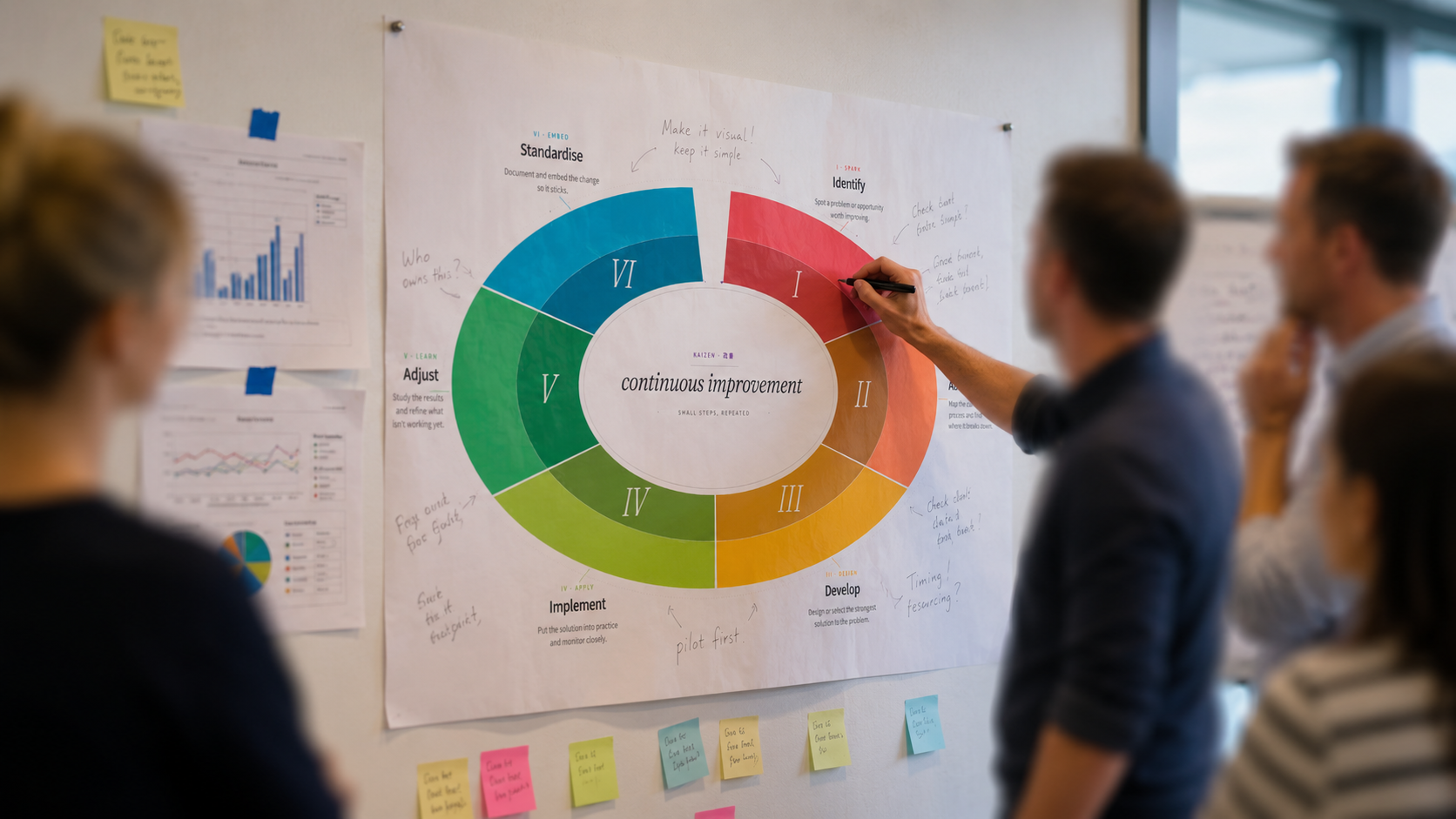
Continuous Improvement Training
Sorting the urgent from the important is a useful discipline, and the Eisenhower Matrix is one of several we work with in our Continuous Improvement training.
James Freeman-Grayis the founder of Mutomorro. He's an organisational development practitioner who has spent over a decade working with leaders across public, private, and nonprofit sectors - helping organisations navigate change, strengthen culture, and design better ways of working.
I use the Eisenhower Matrix when leaders or teams are overwhelmed and can't see the wood for the trees. It's a simple tool but the conversations it generates about what's genuinely important versus what just feels urgent are always revealing. Most people discover they're spending the majority of their time in the "urgent but not important" quadrant.
Last reviewed: June 2026
Ready to use Eisenhower Matrix?
Download the free template - includes practical guidance for workshops and team sessions.
Get the free templateWant to put these ideas into practice?
Whether you're navigating a merger, rethinking how you're structured, or trying to shift a culture that isn't working - start with a conversation.