8 Wastes of Lean - Free Template
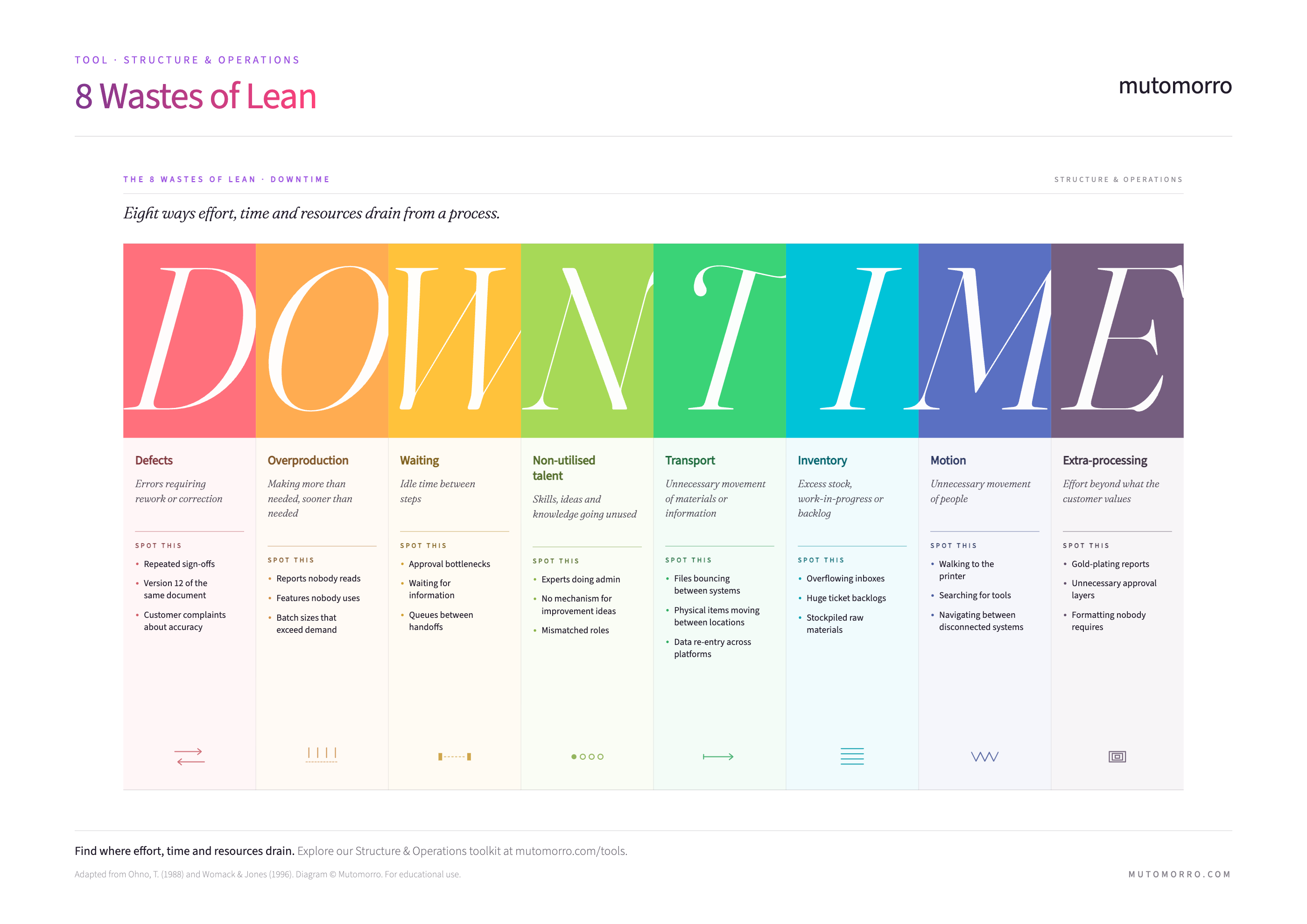
A walkthrough of the 8 Wastes of Lean using the DOWNTIME framework. Covers what each waste type looks like in practice, how to run a waste audit with your team, and where to focus improvement efforts first.
Based on our full guide to 8 Wastes of Lean.
Get this PDF template
Fill in your details and download the PDF straight away.
What's in this 8 Wastes of Lean template
The PDF toolkit includes three pages. The first is the master DOWNTIME diagram showing all eight waste types with their definitions and practical signals.
The second is a summary card with the key elements of each waste, practical tips for running a waste audit, common pitfalls to watch for, and links to related tools.
The third connects the 8 Wastes to Mutomorro's operational effectiveness work, showing how waste identification fits into a broader continuous improvement approach.
Use the diagram as a reference when walking your team through a process, and the summary card as a quick-reference guide during waste audit sessions.
Tips for using it
Start with one process, not the whole organisation. Pick something with visible frustrations or known delays and map it out before applying the DOWNTIME framework.
Walk through each waste type one at a time rather than trying to spot everything at once.
Go and look. The richest waste data comes from observation, not meeting rooms.
Prioritise by impact. When you find more waste than you can address, focus on the wastes that hit the end user or drain the team hardest.
Test improvements with small experiments before rolling them out.
Build regular waste reviews into your team rhythm rather than treating this as a one-off exercise.
Operational Effectiveness
Spotting waste is the first step. Our operational effectiveness work helps teams build the systems and habits that reduce waste sustainably - from process redesign and workflow optimisation to embedding continuous improvement into how your team operates day to day.

Organisational Alignment During Restructuring
When a global payments company prepared for independence, the challenge wasn't rebranding - it was building organisational coherence across six departments that had never needed to work as one.
Read the case study →