Contextual inquiry - Free Template
A three-page PDF toolkit for planning and running contextual inquiry sessions. Includes a visual overview of the four principles, a summary card with practical tips and common pitfalls, and a guide to connecting research findings with service design and customer experience work.
Based on our full guide to Contextual inquiry.
Get this PDF template
Fill in your details and download the PDF straight away.
What's in this Contextual inquiry template
The toolkit gives you a quick-reference guide to contextual inquiry that you can share with your team before a research session or keep on hand during one.
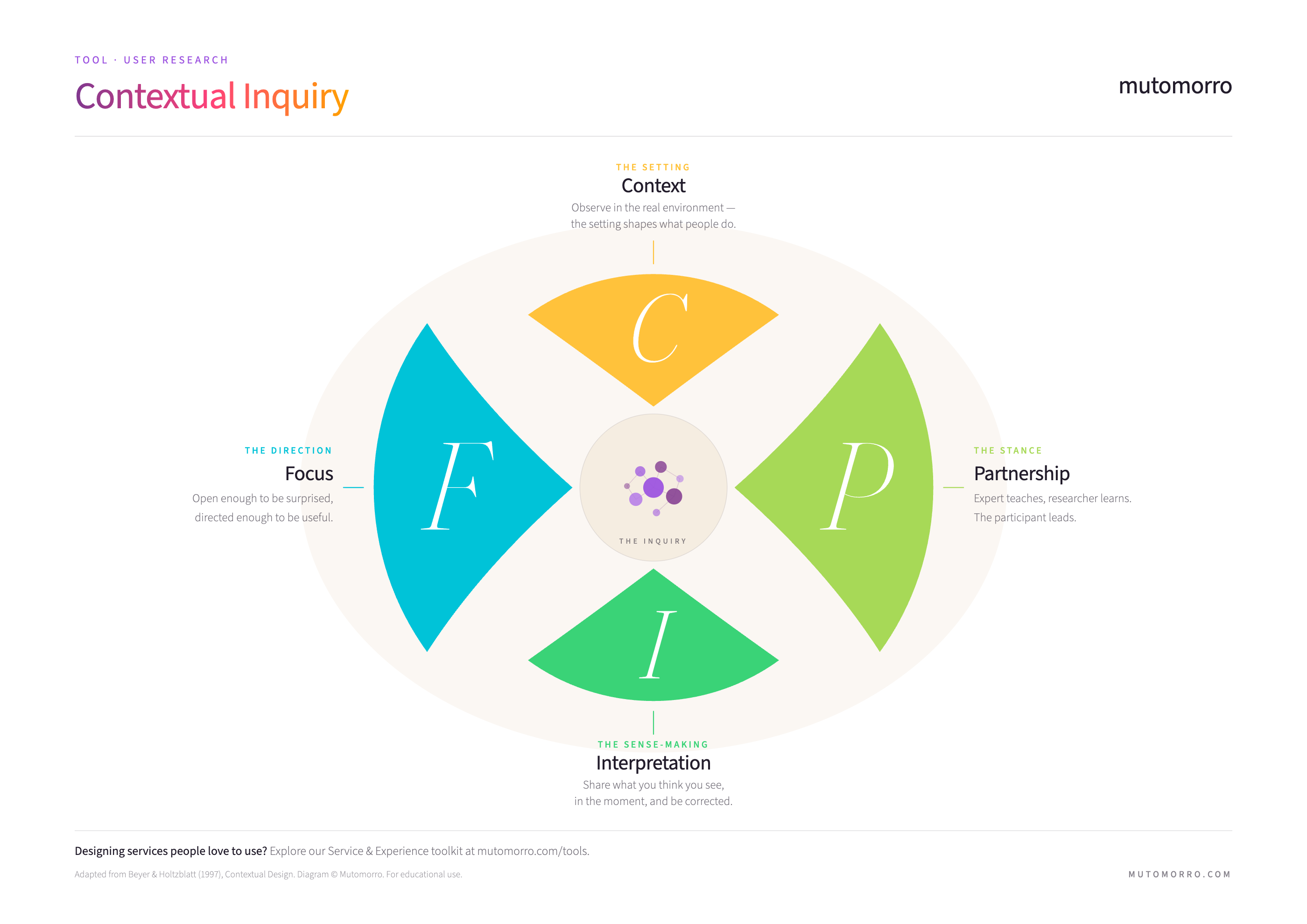
The first page is a visual overview of the four principles - Context, Partnership, Interpretation, and Focus - showing how they work together during every inquiry session. The second page is a summary card: what contextual inquiry is and when to use it, how to run a session well, and the most common pitfalls to watch for. The third page connects the method to the broader picture - how contextual inquiry findings feed into service design and customer experience improvement.
Useful for research teams, service designers, and anyone responsible for understanding how people experience a service in practice.
Tips for using it
Start with one session, not a full study. Pick a colleague or service user who does the work you are trying to understand, spend two hours observing and asking questions, and see what you learn. The first session usually surfaces enough to justify the investment in more.
Write up your observations the same day. Contextual inquiry produces rich, detailed data - but it fades fast. Capture what surprised you, where your assumptions were wrong, and what the participant did without thinking about it.
Pair your findings with broader data before acting on them. Contextual inquiry is deep but narrow - six sessions tell you a lot about those six people. Combining your observations with survey data or service metrics helps you check whether the patterns hold at scale.
Service Design
When improving a service means understanding what is really happening - not what reports and surveys suggest - contextual inquiry is often the starting point. Mutomorro's service design and customer experience work uses observation-based research to see how people experience services in practice, then designs improvements grounded in that reality.

Charity Culture Change
A community trust born from decades of activism, with brand values that felt bold on paper but hadn't yet changed how services were delivered or how teams worked day to day. Sports, housing and arts ran as different organisations to the person walking through the door.
Read the case study →