Team Effectiveness Training
You want your teams performing at their best - and you can sense where they’re not quite firing. We help you diagnose what’s really going on and build the habits that change it, with training designed around your teams.

Why team effectiveness training matters
You want your team to perform well - but high performance isn’t something you can demand. It’s something you create the conditions for, and most managers were never shown how. They’re promoted for being good at the work, then left to figure out the team part on their own.
What the research keeps showing - including Google’s study of its own teams - is that what matters most isn’t who’s on the team but how the team works together: whether people trust each other, feel safe to speak up, and are clear on what they’re doing and why. Those things are buildable. This training helps your managers and teams build them, working on the real team rather than a model of one.
How our team effectiveness training works
Every course here runs the same way - in-house, shaped to you, built around your actual teams.
In-house, for your group. In person at your place or online. We don’t run open courses with seats to fill; we bring the training to you.
Shaped before we arrive. Every course starts with a conversation: what’s the team, what’s working, where’s the friction? The day your people get works on your real team and its actual dynamics - not a generic case study.
Built for the people who lead and make up teams. Managers and team leaders, whole teams working together, and the HR and L&D people supporting them. Some courses work best with the manager; others with the team in the room together. We’ll help you choose.
The courses
High-performing teams training
A practical one-day course for managers and team leaders who want their team working better together - whether you’re leading a new team, an established one that has plateaued, or a team going through change. High performance isn’t something you can demand; it’s something you create the conditions for. The day is about diagnosing your team’s real dynamics - trust, clarity, accountability, how people actually work together - and building a plan to improve them. Also valuable for HR and L&D professionals who want a structured approach to team development they can run internally.
What you’ll work on
You’ll spend the day assessing your own team against proven frameworks, finding where the real gaps are, and building a plan to close them. The course is built around three questions.
Where is my team right now? You’ll use diagnostic tools to take an honest look at your team’s health - trust, clarity, accountability, and how well people work together in practice rather than in theory. Not a tick-box exercise; a clear-eyed read of what’s working and what isn’t. Belbin’s team roles is one useful lens, showing the mix of roles a team needs and where gaps might be holding performance back.
What does my team actually need from me? Different teams need different things from their manager - a team short on trust needs something different from one short on clarity about priorities. You’ll work out the specific interventions that will make the biggest difference for your team right now. Google’s Project Aristotle research is a helpful anchor: it found that how a team works together matters more than who’s on it, with psychological safety as the foundation.
How do I build habits that stick? One good conversation doesn’t fix a team. Lasting improvement comes from consistent rhythms - how you run meetings, give feedback, check in on progress. You’ll design a set of practical habits you can embed into your existing schedule, not bolt on top of it.
How the day works
The day mixes diagnostic exercises, short facilitated input and planning time. We draw on proven team frameworks - Lencioni’s Five Dysfunctions, team health assessments, and the T7 model with its seven factors of team effectiveness - using each as a lens on your real team rather than teaching it as theory. The day ends with a concrete plan you can act on. Groups stay at twelve to sixteen people.
What you’ll take away
A clear picture of where your team is strong and where it needs work. A prioritised plan of the interventions that will make the biggest difference. A set of management habits - meeting rhythms, feedback approaches, check-in structures - designed around your team’s needs. And the confidence to diagnose team dynamics rather than guess at them.
What makes this different
This course is about what you’ll do differently on Monday morning, not what you’ll know differently - every framework is held up against the question ‘what does this mean for my team?’ rather than taught as theory. There’s more on the research linking trust and safety to performance in our guide to psychological safety in organisations. And where your organisation needs broader support developing its people and teams, our organisational capacity building works alongside leadership teams to build lasting capability.
Building a collaborative culture
A practical one-day course for leaders, managers and teams who want collaboration to be the natural thing, not the exception. Most organisations want it; fewer have the conditions that actually support it. This day is about making collaboration real - not through team-building exercises, but by changing the structures, roles, habits and conversations that decide whether people work together or end up in silos. It works whether you’re tackling collaboration at the culture level (incentives, norms, how the organisation is wired) or the team level (handoffs, roles, day-to-day habits), and it’s strongest when the team or group attends together.
What you’ll work on
You’ll spend the day examining how collaboration actually works - or doesn’t - in your organisation, and designing practical changes. The day covers three areas.
Understanding what’s getting in the way. Silos don’t form because people are selfish; they form because the system rewards them - through how goals are set, how performance is measured, how information flows, how decisions get made. You’ll map the real barriers, looking at where work gets stuck, where decisions get made twice, where handoffs fall apart. The Competing Values Framework helps you read whether your culture leans towards collaboration or competition, and the 5 Conflict Styles model helps teams recognise how they handle disagreement and find more productive defaults.
Designing systems that encourage collaboration. Once you can see the barriers, you can change the incentives. You’ll work on practical changes to how teams connect, how goals align across boundaries, and how collaboration is recognised and rewarded - system-level changes, not individual behaviour fixes. A surprising amount of poor collaboration comes down to unclear roles, so you’ll use tools like RACI to map responsibilities for your most important processes and find the gaps.
Building collaborative habits. Culture shifts through consistent practice, not one-off events. You’ll design rituals that fit how your teams already work - regular cross-team check-ins, shared problem-solving sessions, ways of making dependencies visible before they become problems - and a simple collaboration charter your team can agree on.
How the day works
The format mixes diagnostic exercises with facilitated input and planning time. You work on your own organisation or team throughout, sharing insight with others facing similar challenges. The emphasis is on doing, not just learning. Group size depends on the focus: culture-level work suits ten to sixteen people; team-level collaboration works well from eight up to twenty - large enough for real cross-team dynamics, small enough for genuine conversation.
What you’ll take away
A clear picture of the structural and cultural barriers to collaboration, and a map of where it breaks down day to day. A set of system-level changes that shift incentives towards working together. A RACI matrix for your most important cross-team process, and a collaboration charter - a simple shared agreement on how you’ll work together. Plus practical rituals you can introduce straight away, and a realistic plan for what to tackle first.
What makes this different
This goes beyond telling people to collaborate. It works on the systems and structures that decide whether collaboration actually happens - roles, processes, incentives, habits, meetings - rather than leaving it as something everyone agrees with but nobody does. Genuine collaboration also rests on people feeling safe to speak up, disagree and share ideas; there’s more in our guide to psychological safety in organisations. And where your organisation needs deeper structural support, our organisational design consultancy can help redesign how teams connect, so collaboration becomes the default rather than the exception.
The team effectiveness tools behind it - many lenses, free to explore
Team effectiveness isn’t a single model - there’s a rich body of research and tools, each lighting up a different part of how teams work. Belbin’s team roles looks at the mix of strengths in a team. Lencioni’s Five Dysfunctions traces how trust, or its absence, shapes everything above it. Project Aristotle pins down what Google found actually predicts performance. The 6 Team Conditions focus on the structural conditions teams need to thrive.
We draw on all of them - and publish free guides to each - because the useful question isn’t ‘which model is best?’ but ‘which one helps you see this team clearly?’ That judgement is what the training builds. The guides are among the most-visited pages on this site; the training is where the thinking gets applied to your actual team.
Bespoke team effectiveness training
The observation. The same frameworks land differently with different teams - because every team is its own mix of people, history and pressures. A newly merged team needs something different from one that’s drifted apart over years, and the examples that land are the ones from your own team’s life.
What we do about it. So we design around your context. Before any course runs, we learn the team, the friction, the language you use - and shape the day to fit. The frameworks stay; the day they live in is yours.
What that makes possible. Managers and teams who don’t just know the models, but can read their own team and act on what they see - on the dynamics in front of them.
And if none of these courses is quite the shape you need, we design from scratch - that’s bespoke training.
Part of a bigger picture
Team effectiveness training is one part of how we work with organisations - and it connects to a bigger idea. High-performing teams don’t come from willpower; they come from the conditions around them - whether trust is safe to extend, whether roles are clear, whether the wider organisation helps teams work together or quietly pushes them apart. Training builds your people’s ability to create those conditions; there’s more on the thinking in our philosophy.
And if what you need is partners in the work itself, not just the capability to lead it, our organisational capacity building works alongside leadership teams to develop people and teams over the long term.
Team effectiveness training FAQs
How is the course shaped to our team?
Every course starts with a conversation about your team - how it’s set up, what’s working, where the friction is. We then shape the diagnostics, examples and emphasis around your real team, so the day works on your situation rather than a generic one.
Who delivers it, and where?
In person at your offices or a venue you choose, anywhere in the UK - or fully online, wherever your people are. The practitioner who shapes the course with you is the one who delivers it.
Should the whole team attend, or just the manager?
Both work, depending on the course. The high-performing teams day is built for the manager or team leader - they leave with a plan for their team. The collaboration course is often strongest with the team or group in the room together, building the solutions collaboratively. We’ll help you choose.
What group size works?
It varies by course - the high-performing teams day runs best at twelve to sixteen, the collaboration course anywhere from eight up to twenty depending on the focus. Each course section above gives its range. If your group is larger, talk to us; we can adapt the format or run more than one cohort.
Do participants get a certificate?
These courses build capability rather than accreditation - your people leave able to read and improve their team, not with letters after their name. If a formal qualification is what you’re after, an accredited route like an ILM programme is the better fit. What you get here is the practical skill, applied to your real team.
Can you combine courses, or run this across several teams?
Yes - often. You might run the high-performing teams day for your managers and the collaboration course for a group that needs to work better across boundaries, as a connected programme. Or run the same course for several teams in turn, so the language and habits spread. We’ll help you work out what fits.
What if we want help with the teams themselves, not just training?
That’s our organisational capacity building - working alongside your leadership team to develop people and teams directly, rather than building your managers’ capability to do it. Plenty of organisations use both: consultancy for the work, training so the capability stays when we step back.
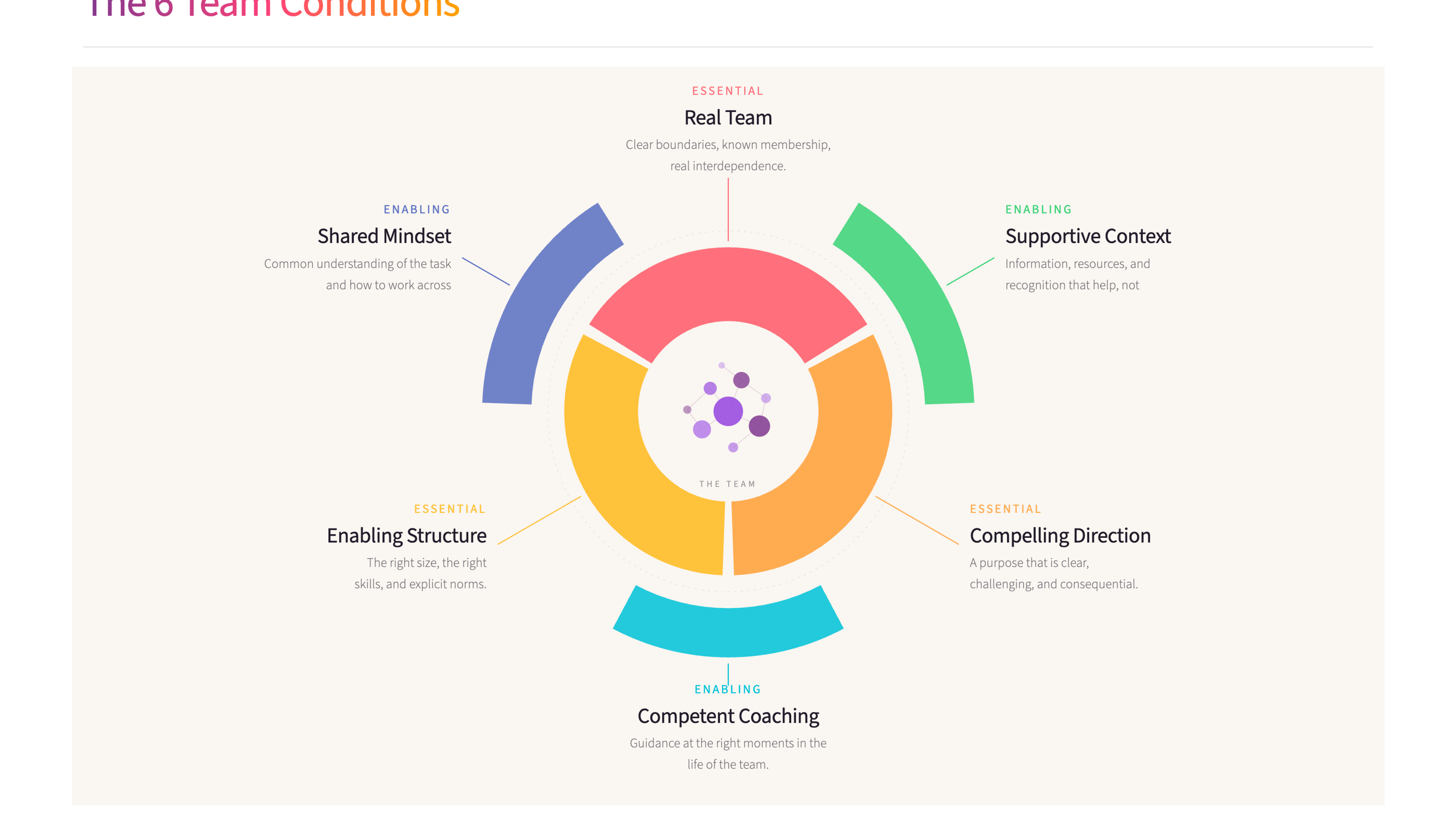
The 6 Team Conditions for Team Effectiveness is a research-based framework that identifies what high-performing teams actually need to thrive. It covers everything from having a clear direction to getting the right coaching and support.
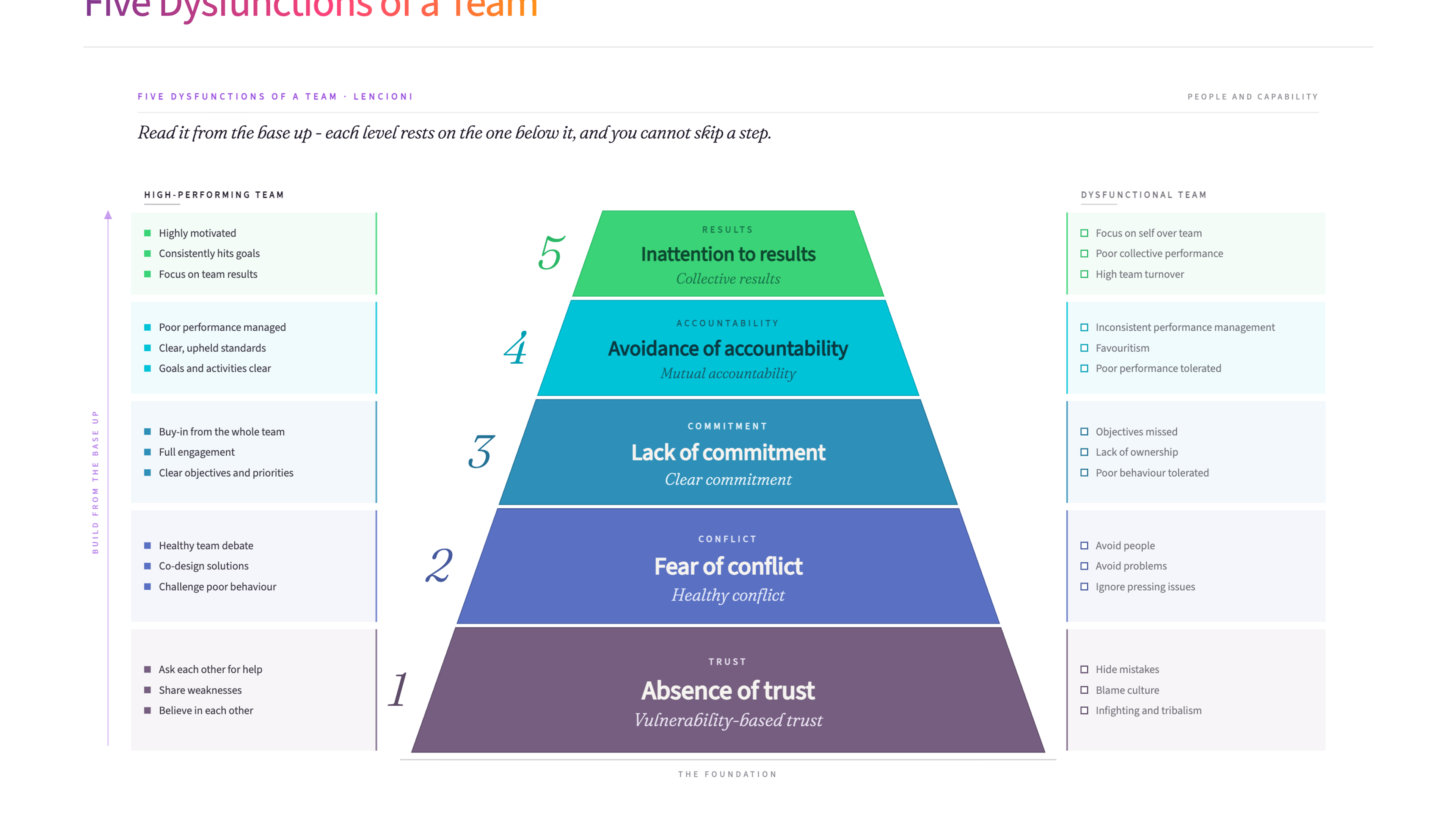
The Five Dysfunctions of a Team is Patrick Lencioni's framework for understanding why teams struggle. It maps five connected problems - from absence of trust to inattention to results - that build on each other when left unaddressed.
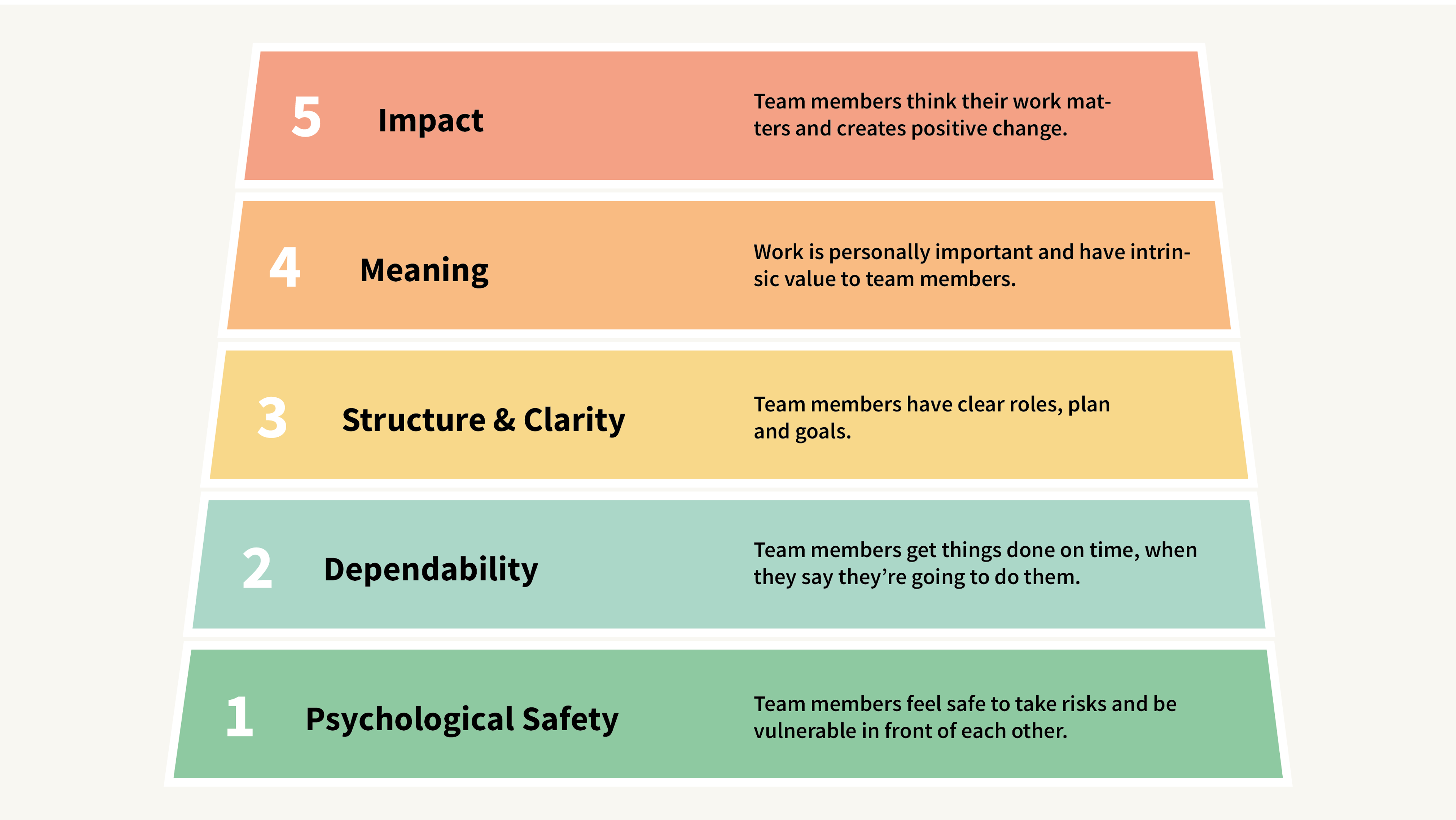
Project Aristotle is Google's research into what makes teams effective. It found that psychological safety - feeling safe to take risks and be vulnerable - matters more than who is on the team.
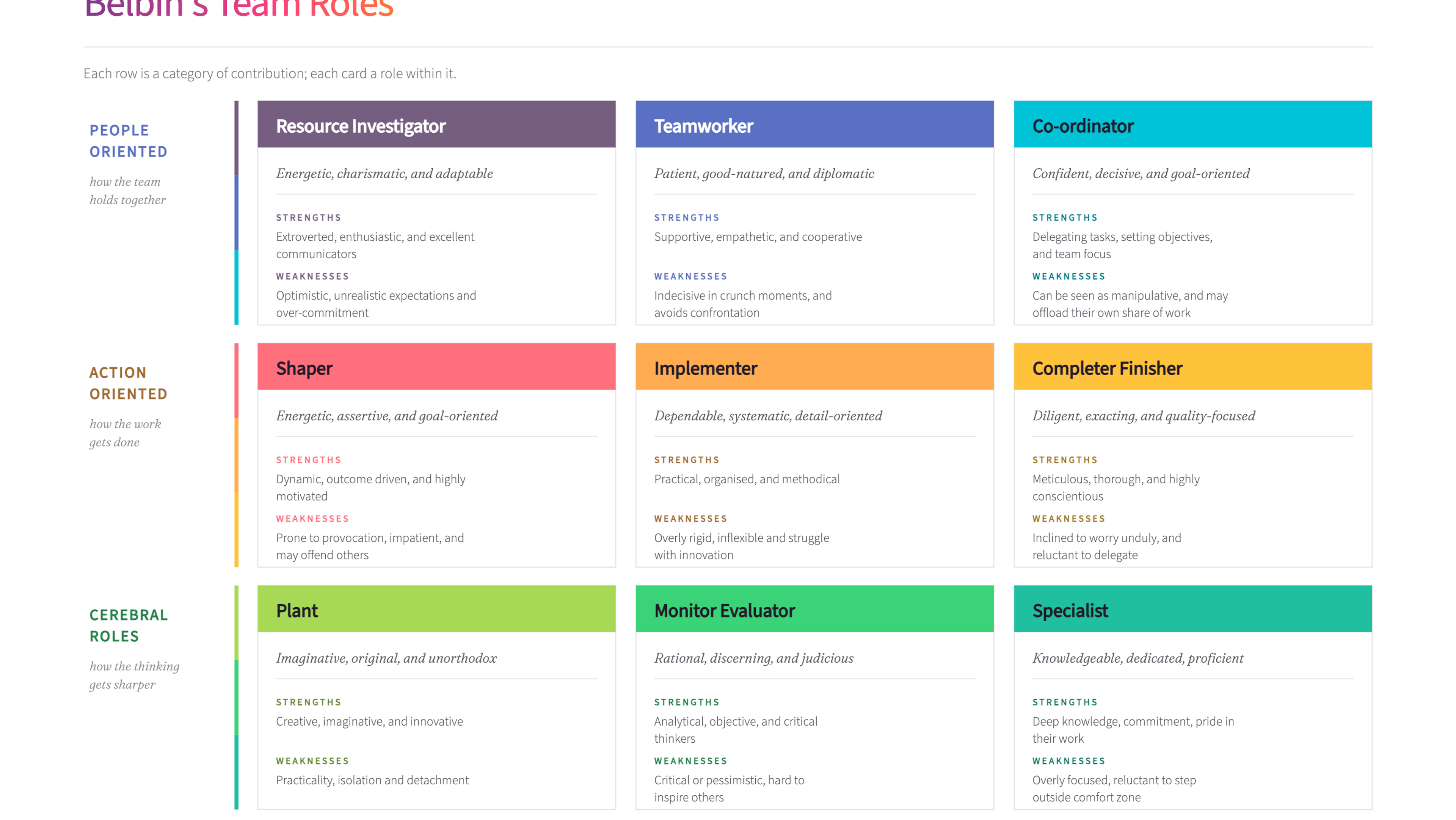
Belbin's Team Roles identify nine distinct roles that people naturally take on in a team. Understanding these roles helps you build more balanced teams and get the best from each person's strengths.
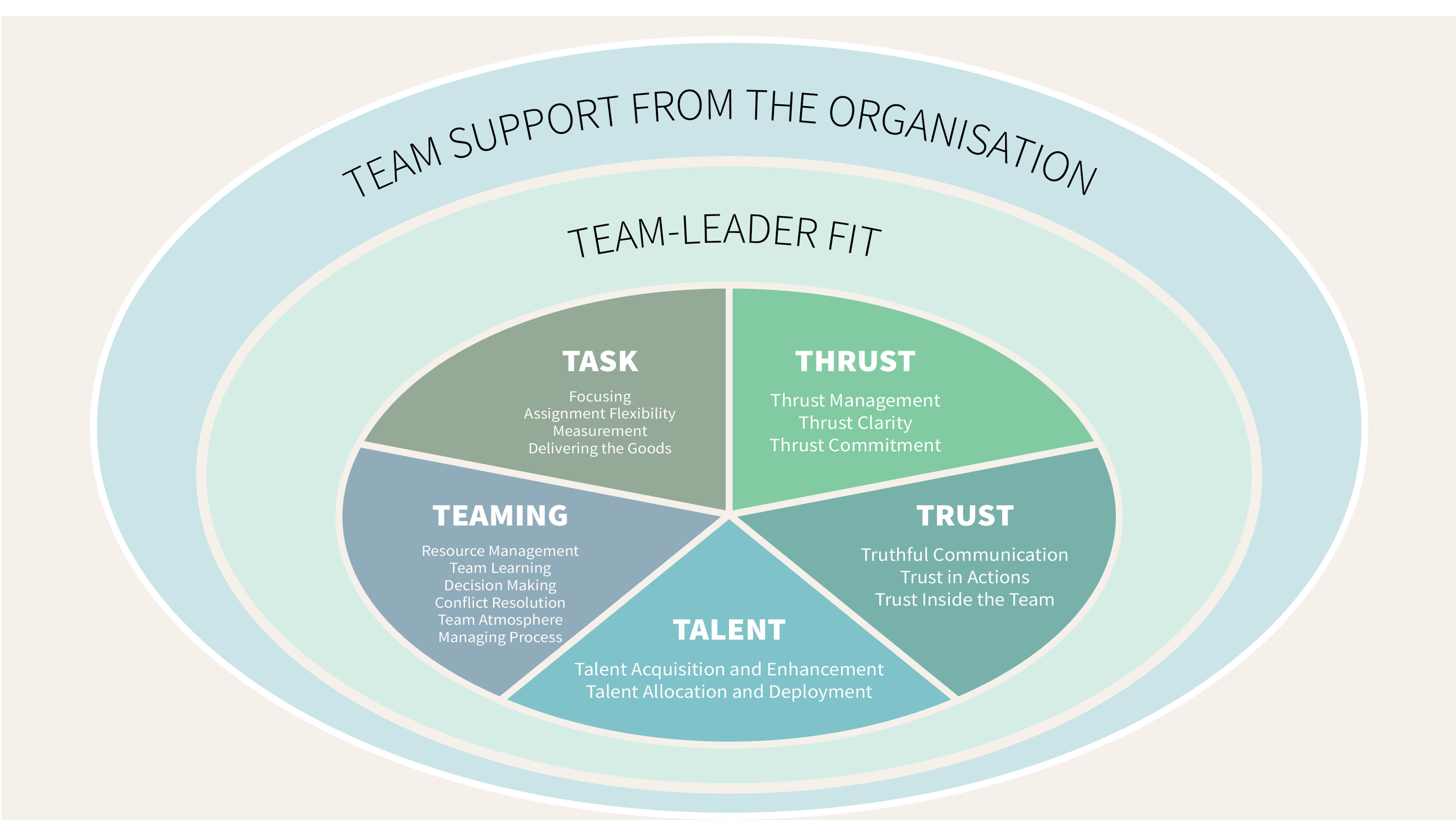
The T7 Model is a framework that identifies seven factors driving team effectiveness - five internal (like trust and talent) and two external (like team-leader fit and organisational support). It helps you diagnose where a team is strong and where it needs work.
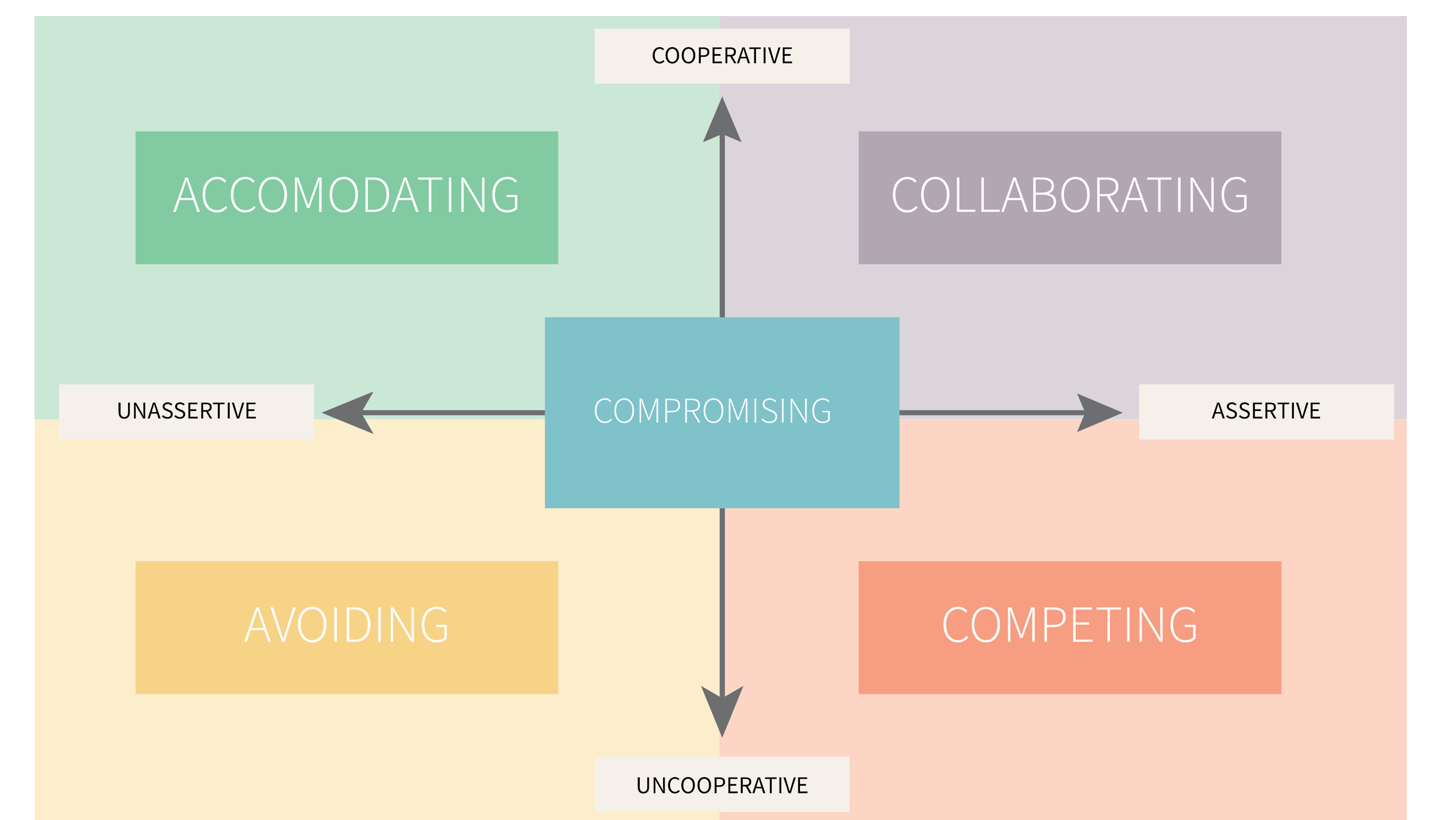
The 5 Conflict Styles model (Thomas-Kilmann) maps five different ways people approach conflict - from avoiding it to collaborating through it. It helps teams understand their default patterns and choose more effective approaches.
Psychological safety is one of the strongest predictors of team performance - but it's often misunderstood. This article explores what it actually looks like in practice, why it matters beyond the research headlines, and what leaders can do to build the conditions where honesty, learning, and real collaboration become possible.

Emotional intelligence in leadership isn't about being nice or reading a room. It's about the quality of attention you bring to how people are experiencing your leadership - and the willingness to adjust what you do based on what you notice.