Service Design
Good services start with understanding the people who use them. These resources cover design thinking, journey mapping, and the practical approaches that help organisations create services people value.
Begin with Service Blueprints, and read why design thinking has to reach beyond services.
Services
The hands-on work behind these resources - start with the consultancy, or go straight to a stage.

Most service design stops at user research and journey maps. We work both sides - designing the service and shaping the organisational conditions that determine whether it actually gets delivered.
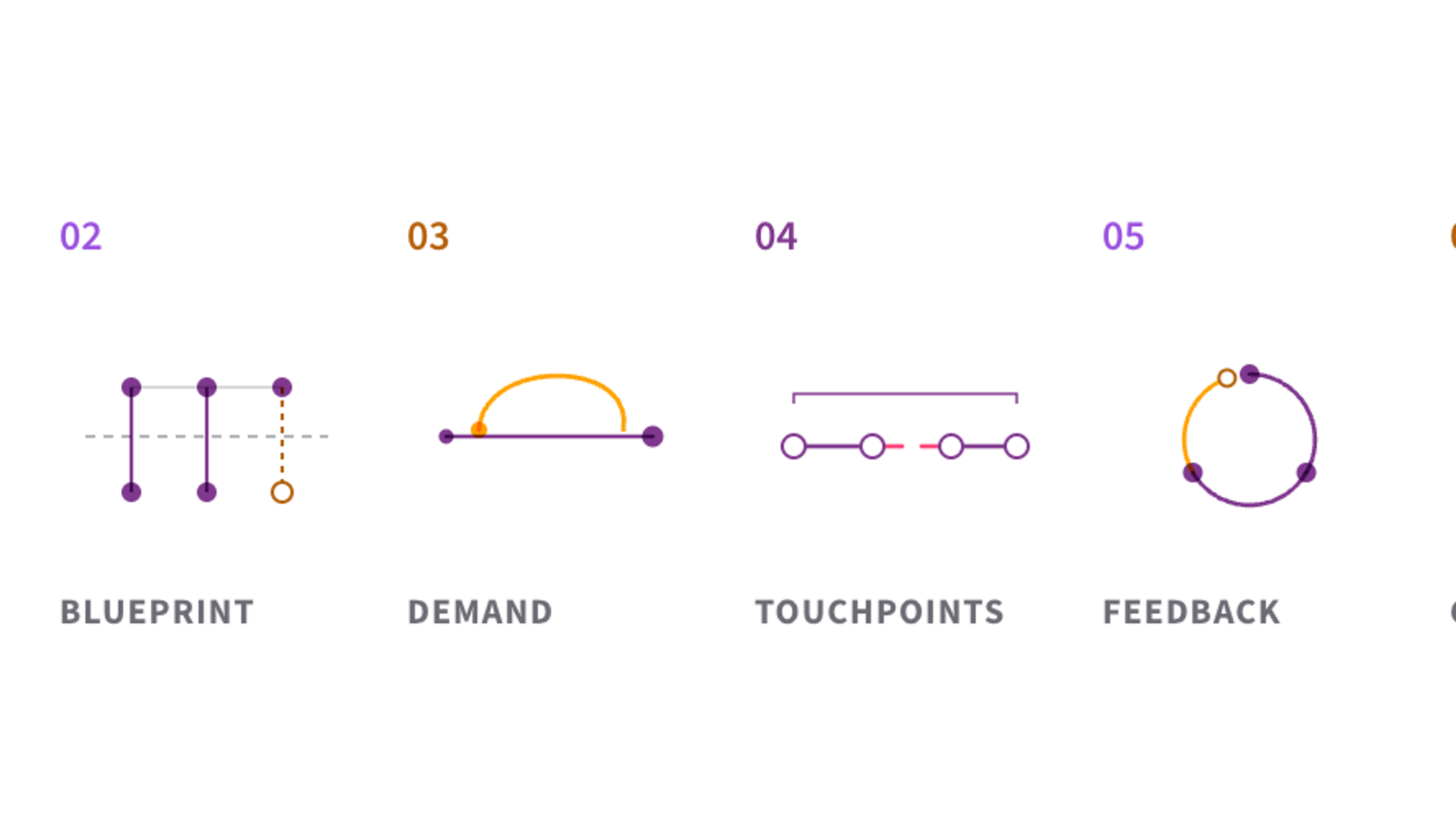
A read of the service itself, end to end - whether the backstage holds up every frontstage moment, and whether what the frontline learns ever reaches the design.
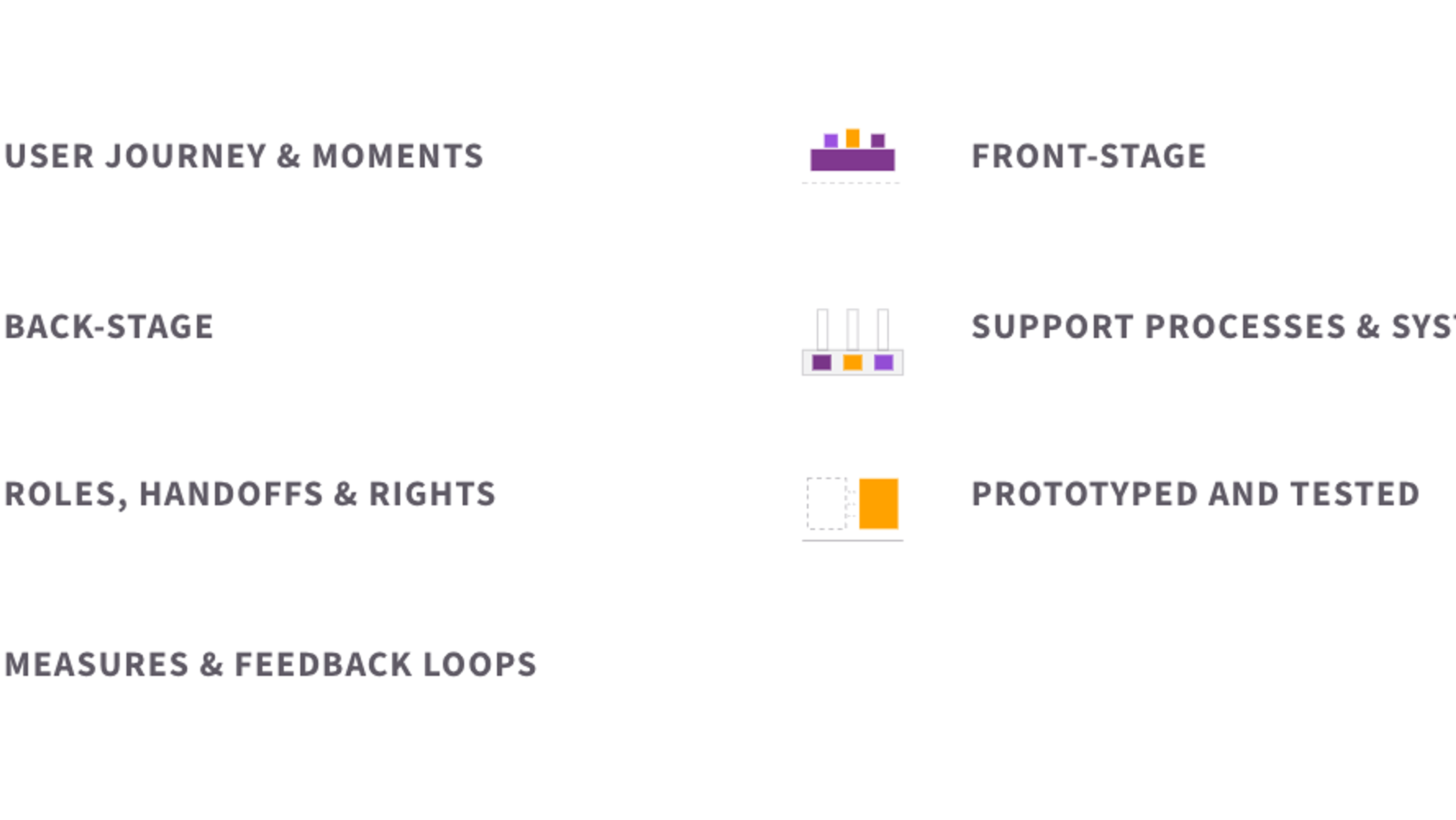
Service model design gives you your service blueprint: the end-to-end design for how the service actually runs - the user journey, what people see and touch, the work behind the front line, and the systems and evidence that hold it together, worked out in detail and ready to put into practice. We design it with your frontline staff and, where it fits, the people who use the service, so the result is genuinely theirs.
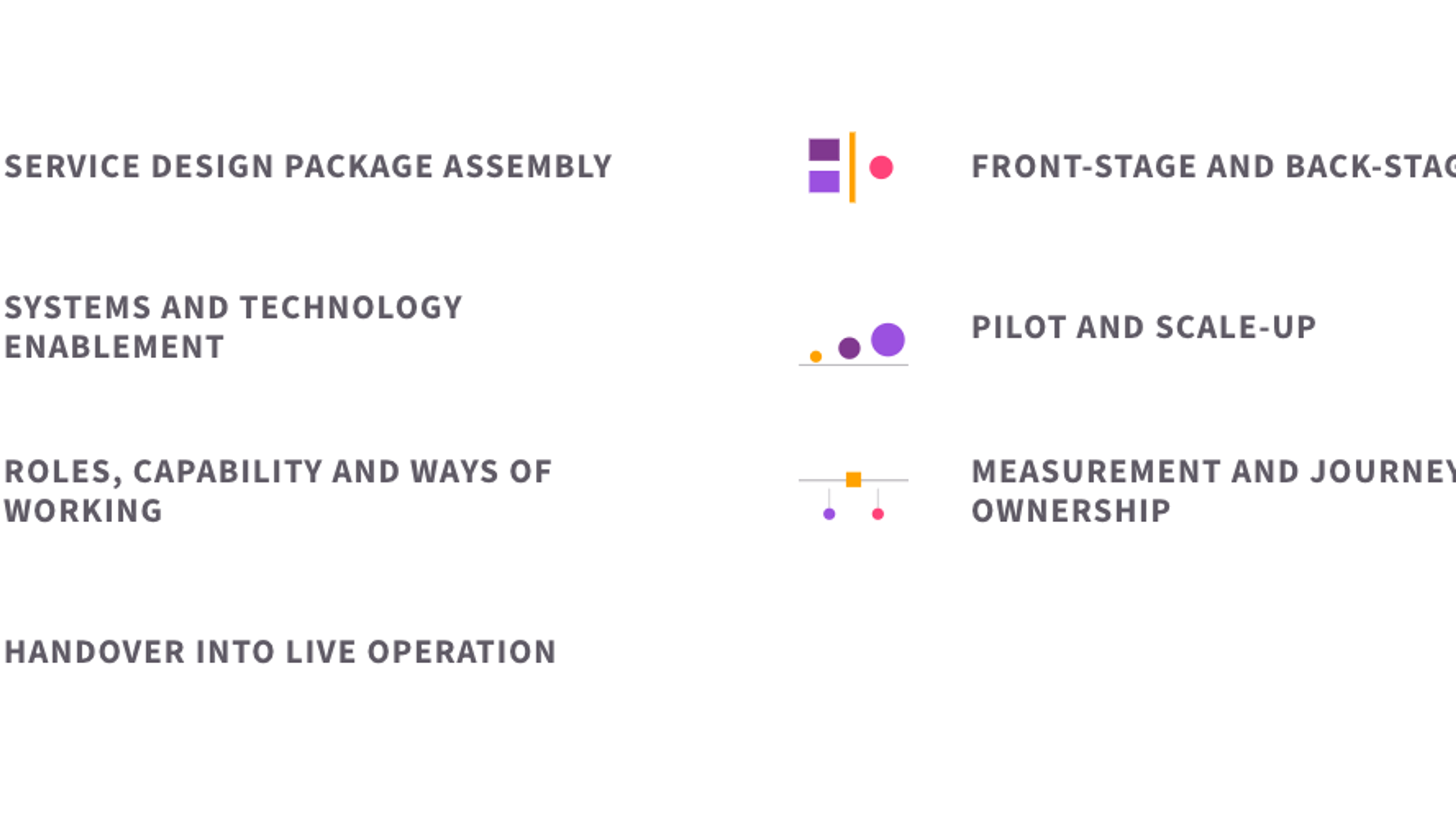
The Service Launch Programme takes your designed service live: the blueprint stood up end to end across the front-stage steps customers see, the back-stage processes behind them, the systems it runs on and the measurement that tracks it. We deliver it with your teams, so the service is running the way it was drawn and owned by the people who run it.
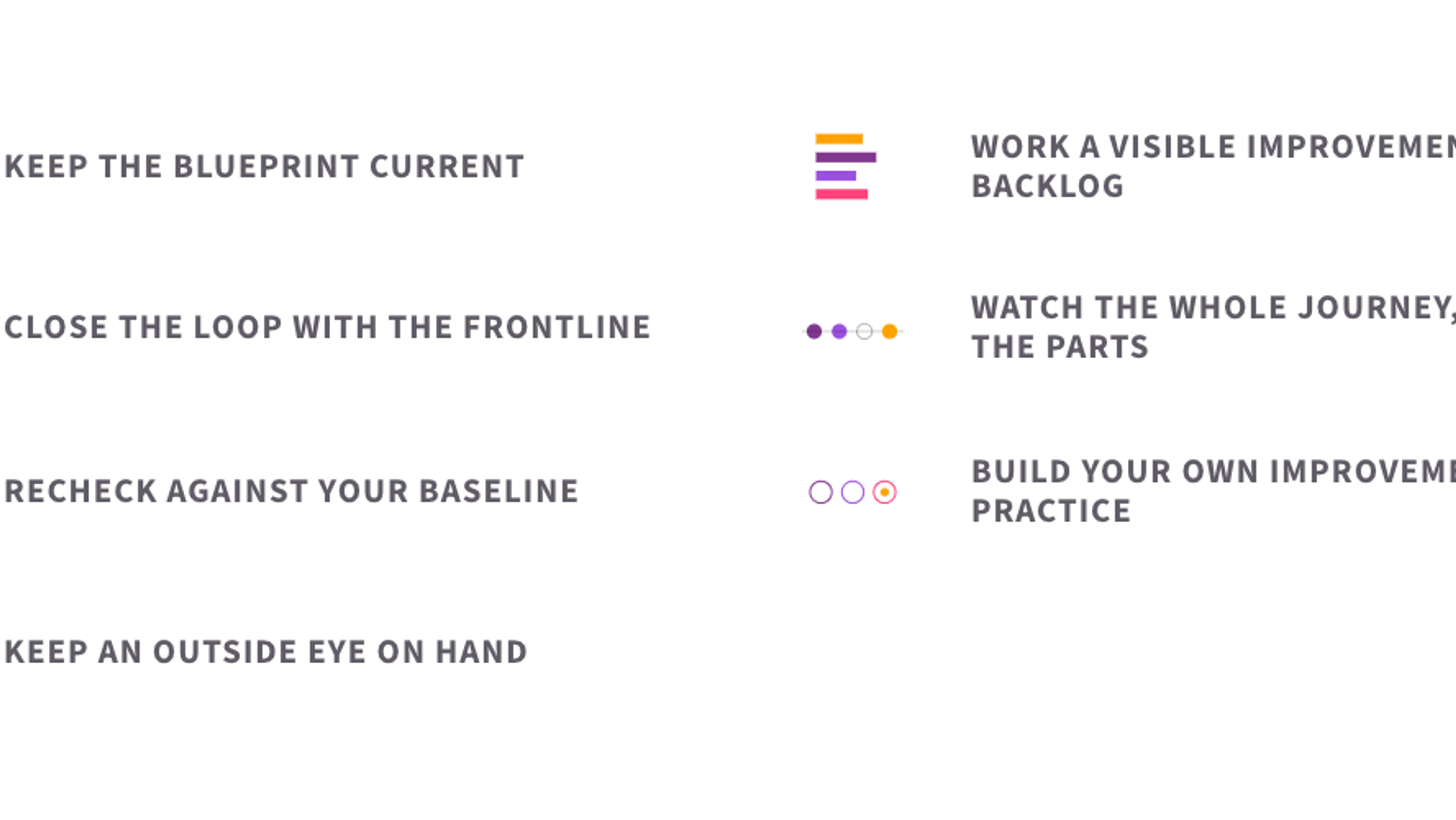
Keeping the Service Sharp keeps your live service fit and improving after launch, and builds your own people's ability to run that improvement themselves. Your service owner and team keep the blueprint current, work a live improvement backlog, and act on what the frontline sees. You can add a light ongoing rhythm with us on top, scoped to as much or as little as you want.
Case Studies
Examples of service design and improvement work across housing, public services, and beyond.

A growing housing association where staff could recite the values but customers experienced something different - and previous improvement efforts kept addressing symptoms rather than causes. Getting every team working to one standard of service, rather than handing customers between them, was the real job.

Complex political finance rules communicated through one-size-fits-all guidance - for an audience ranging from volunteer treasurers running local party branches to professional compliance officers managing millions in campaign spending.
Tools
Practical tools for understanding users, mapping journeys, and designing services that work for the people they're meant to serve.
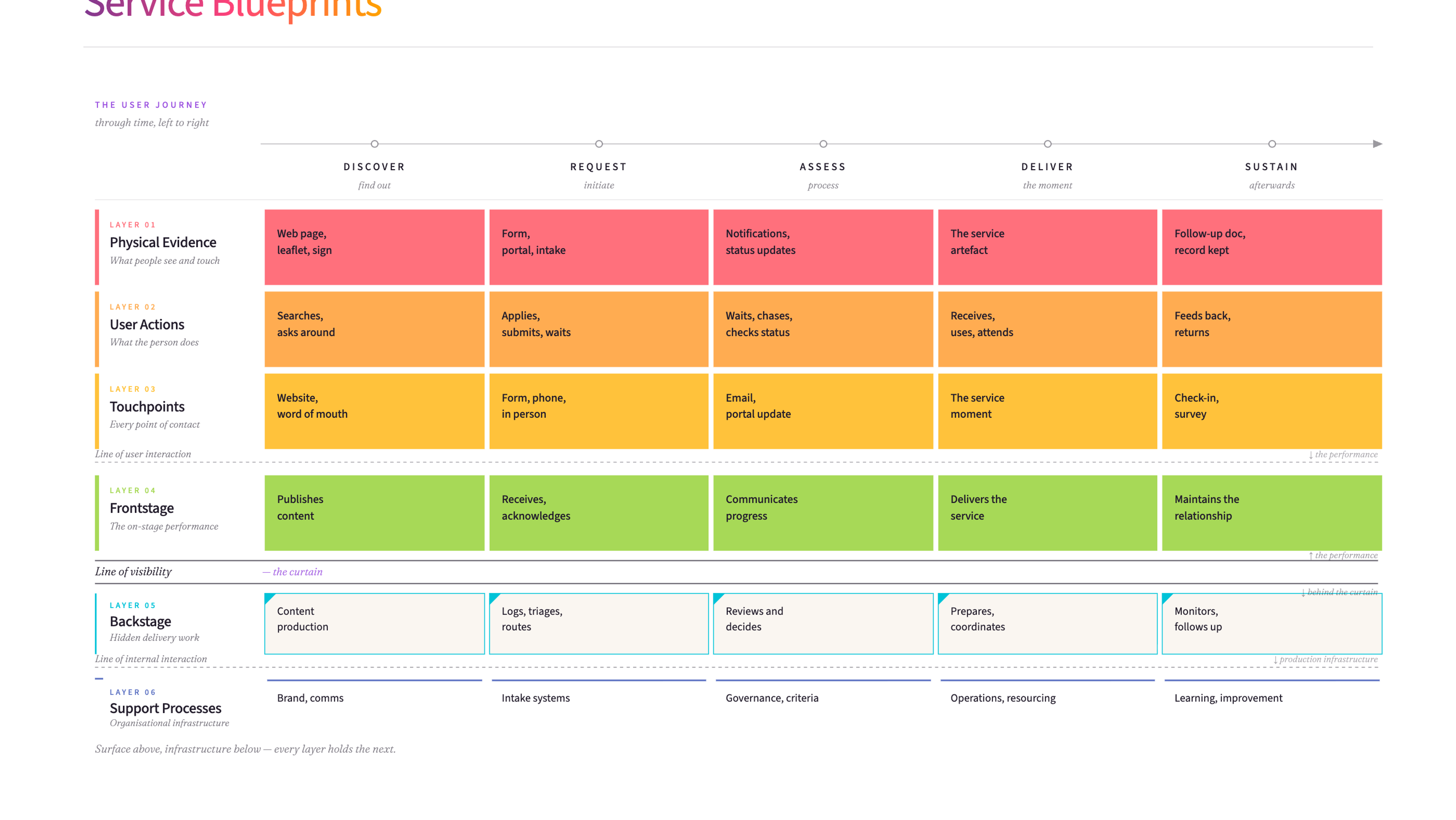
A service blueprint is a detailed map of how a service actually works - what the user sees and experiences on the front end, and everything happening behind the scenes to make it possible. It helps organisations redesign services by showing the full picture.
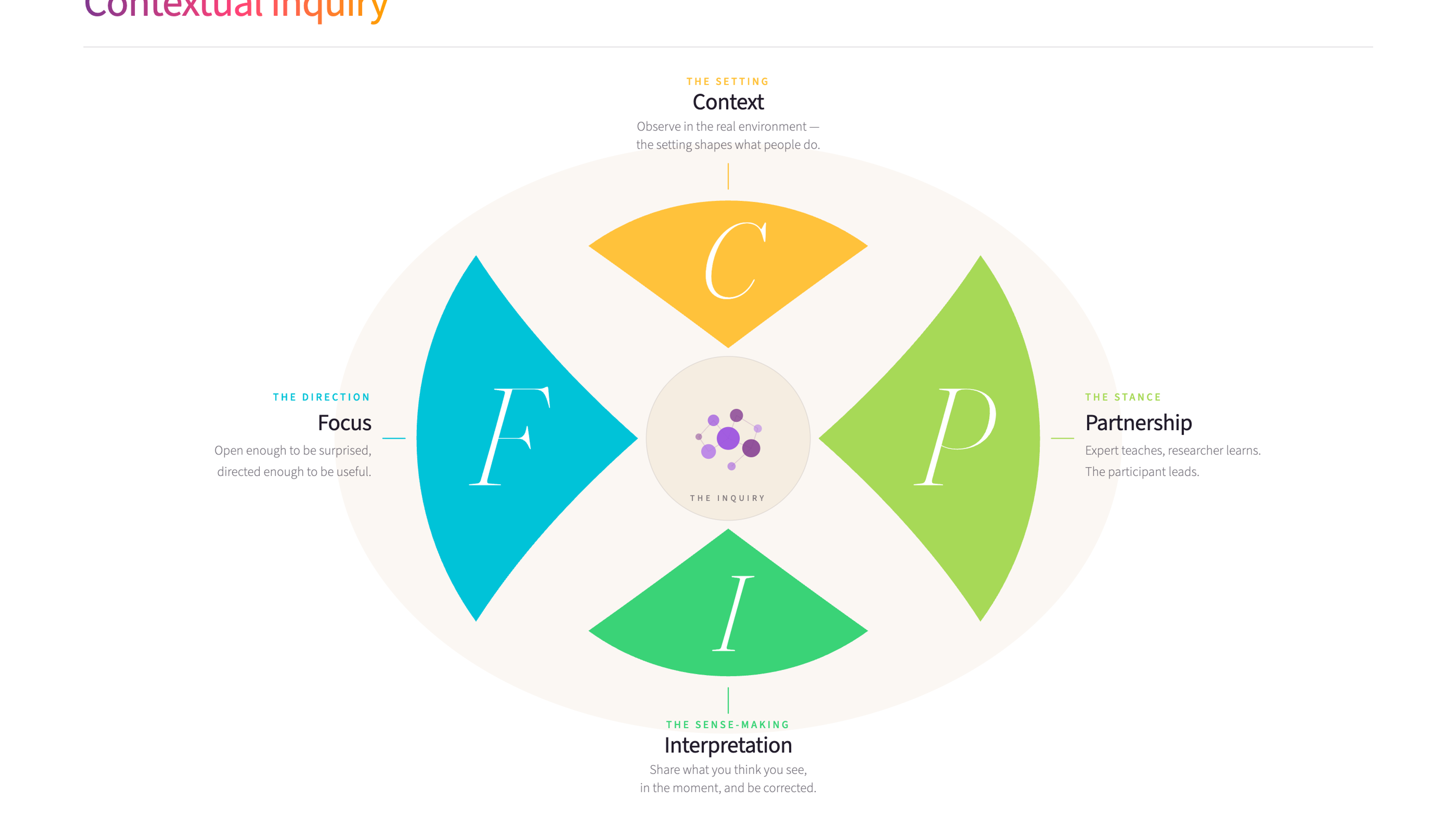
Contextual inquiry is a user research method where you observe and interview people in their actual work environment while they perform real tasks. It uncovers insights about real behaviour and needs that surveys and interviews in meeting rooms simply can't reach.
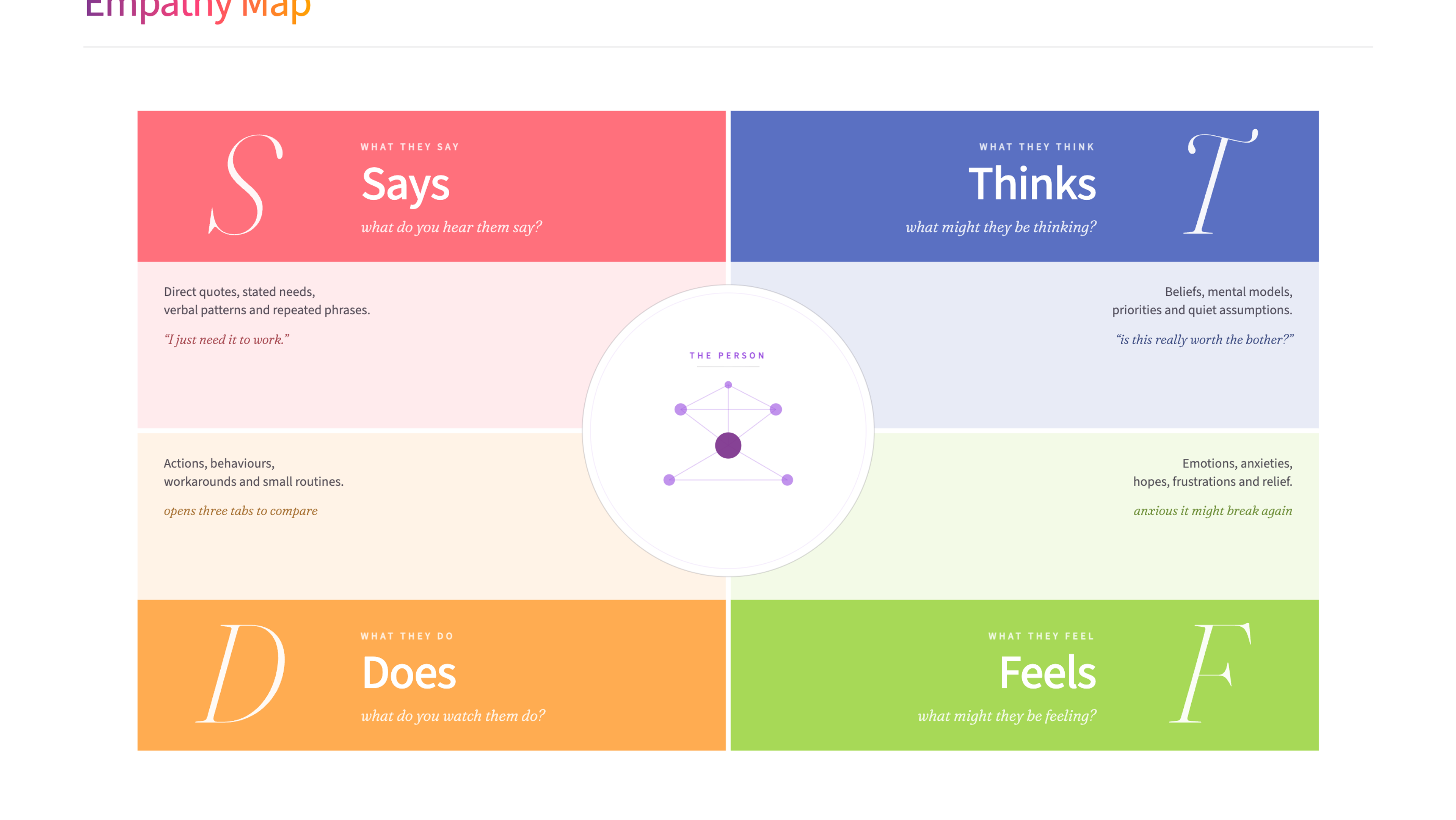
An empathy map is a collaborative visualisation tool that captures what we know about a user's behaviours, thoughts, feelings, and motivations, helping teams develop deeper understanding and more human-centred solutions.
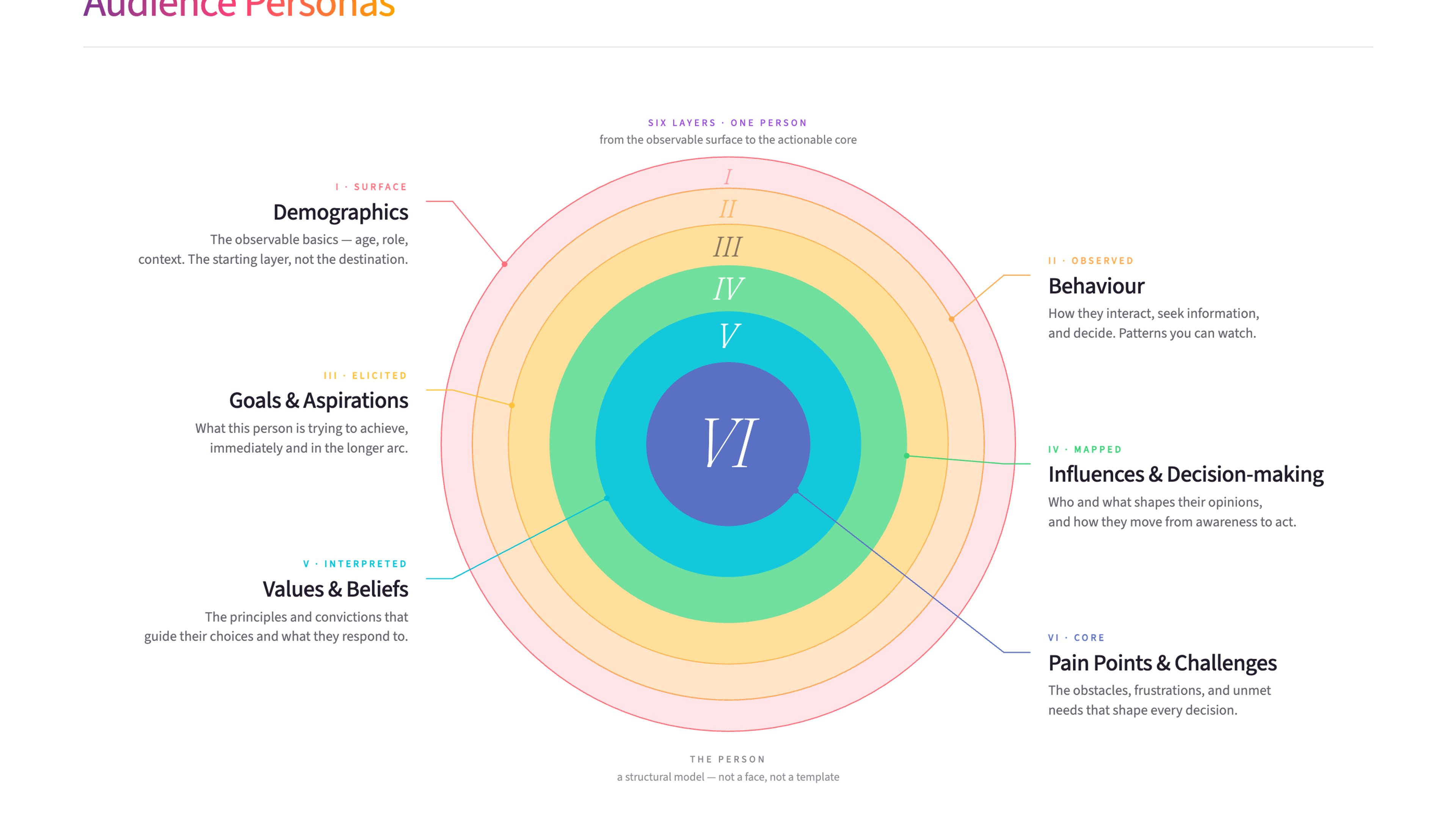
Audience personas are detailed profiles of the people you're trying to reach, built from real research into their needs, behaviours, and motivations. They help organisations design services and communications that actually resonate with the people who matter most.
Articles
Exploring how design thinking connects to business strategy and why it needs to be embedded, not bolted on.

Let's talk about what you're working on
Whether you're navigating a merger, rethinking how you're structured, or trying to shift a culture that isn't working - underneath, it's the same job: getting the whole organisation pulling in the same direction. Start with a conversation.