Journey and Experience Design
Journey and experience design gives you a redesigned service: the customer journeys reshaped end to end, a service blueprint behind each one, and the signature moments and service standards that hold the whole experience together - worked out in detail and ready to put into practice. We design it with your frontline and your customers, so the result is genuinely theirs.

Our journey and experience design gives you a redesigned service your teams can run, and we design several parts: the end-to-end customer journeys reshaped around what people are trying to get done, a service blueprint behind each journey, the signature moments and recovery points set on purpose, a service standard for each key step, and the design principles your teams carry forward. You walk away with a service designed to how you actually work, prototype-tested before rollout, and ready to put into practice.
A redesigned experience works when the people who deliver it and the customers who live it helped design it. So we design with your frontline and real customers, drawing on the knowledge already inside the service and combining it with our outside frameworks. The design comes out both accurate and owned, and you come away more able to design the next journey yourselves.
Only 5% of CX professionals report a complete view of their customers' journeys, and mapping efforts commonly fail because the map stays a poster rather than a working design. A blueprint your teams co-own and re-use is the one that gets used (Forrester Research, customer journey mapping research, 2020).
When journey and experience design helps
Journey and experience design is the next step once you know the experience needs to change - often straight after an audit has shown where. These are the situations we are most often asked into. If one sounds like yours, this is a good place to start.
The situation | How it helps |
|---|---|
You know the experience needs to change and need what comes next | Turns a clear read of the current experience into redesigned journeys and the blueprint behind them, so you move from knowing the problem to having the design |
The journey breaks at the hand-offs between teams and channels | Redesigns the hand-offs deliberately, so the experience stays whole as a customer moves between people, digital and self-serve |
Customers judge you on a few moments that keep going wrong | Designs the peaks, the endings and the failure-recovery points on purpose, because those are the moments people remember and rate you by |
Your proposition promises more than the frontline can deliver | Turns the promise into the behaviours, service rules and standards staff can actually act on, so the experience matches what you sell |
Service quality varies by team, site or shift | Sets a defined standard for each key step, so what good looks like is stated and checkable rather than left to chance |
You want a redesign your people will actually adopt | Builds it with the frontline and real customers, so it lands as theirs and gets delivered in practice |
What we design
We design several parts of the experience, and make each one concrete enough to deliver:

Redesigned journeys
The end-to-end paths a customer actually travels, reshaped in sequence around what they are trying to get done.

A service blueprint behind each journey
Every journey mapped through what customers see and what happens behind the scenes to deliver it, across the line of visibility and the hand-offs inside the organisation.

Signature moments and recovery points
The peaks, the endings and the failure-recovery moments designed on purpose, because those shape how people judge the whole service.

Service standards
A defined bar for each key step - what good looks like, stated so a team can deliver it and check against it.

Channel and hand-off design
How the experience stays whole as a person moves between people, digital and self-serve, and across the hand-offs where journeys usually break.

The proposition made real
The promise you make to customers turned into the behaviours, scripts and service rules staff can act on at the frontline.

Tested through service prototypes
The redesigned journeys walked through and pressure-tested at small scale, so weak points surface on paper and in rehearsal rather than in front of customers.

Design principles your teams keep using
The shared rules of thumb your teams carry forward to design the next journey themselves, without us.

Why these eight
These eight are the parts that have to line up for an experience to feel whole to a customer. Redesigned journeys with vague standards drift back to how each team already worked; strong signature moments with broken hand-offs still lose people between channels. The parts that get skipped most - the standards, the hand-offs, and the prototype test before rollout - are the ones that decide whether the redesign holds in practice or stays a nice map on the wall.
The eight follow the established service-design and experience frameworks, so the design covers what a full redesign should - the journeys and the blueprint beneath them, the moments people remember, the standard for each step, and the principles your teams keep using - read outside-in from the customer's seat. We use the frameworks to keep the design complete, not as a model to run at you.
How it works
The method produces one thing: a redesigned service your teams can run. It works by designing the experience with your people rather than presenting one to them. Your frontline and your customers already hold most of the knowledge about how the service really feels and where it breaks, so our job is to draw that out, combine it with the outside frameworks and pattern-recognition you bring us in for, and shape the two into a design that is both expert and genuinely owned. It works in four modes.
- We start with your experience principles - Before anything is designed, we agree a short set of principles with you - the rules every journey has to follow, like 'one owner from first contact to resolution' or 'recover fast when we get it wrong'. They turn every later trade-off into a matter of principle rather than preference.
- We design with the frontline and real customers - The people delivering the service, and the customers living it, know where it bends and breaks in ways no map shows. We build with them, turning that knowledge into design choices - so the experience fits how the service actually runs, and is owned by the people who deliver it.
- We bring the outside insight and the frameworks - An inside view on its own tends to design around today's habits, so we bring the outside pattern - what makes experiences like yours work, and frameworks that check the journeys, the blueprint and the moments all line up before you commit.
- We prototype and leave the capability behind - We walk the redesigned journeys through at small scale so weak points surface before customers meet them, and we work so your people learn to design, not just watch. By the end you have the redesigned service and a sharper sense of how the choices were made, so the next journey is one you can design yourselves.
The thinking behind the method
We design with your people rather than deliver to them because of a hard fact about redesigns: the experience that gets adopted beats the one that looks best on paper. A service is thousands of small frontline decisions a day, and people deliver an experience they helped design - they understand why it is shaped the way it is, and they trust that it fits how the work really goes.
So co-design gives you an experience that is both right and real. The knowledge inside the service makes it accurate; designing it together makes it owned; and the outside frameworks keep the two from simply reinforcing what was already there. Get all three and the experience holds in practice. Miss one and you get an expert design that gets rejected, an owned design that stays parochial, or a clever design that never reaches customers.
What you get
By the end, you have four things:

- The redesigned service itself - the reshaped journeys, a service blueprint behind each one, the signature moments and recovery points, and a standard for each key step, prototype-tested and specific enough to put into practice.
- A rollout roadmap - the sequenced plan from the experience you deliver today to the one you have designed, with the phasing and dependencies set out, so you know what to do first and what it rests on.
- A design that is genuinely yours - built with your frontline and real customers, grounded in how your service actually runs, so it is owned and delivered rather than filed.
- The capability left behind - your people come out more able to design, so the next journey is one you can redesign yourselves.
The best experience is both expert and owned, and those pull against each other: expertise wants to hand you the answer, ownership wants your people to reach it themselves. Holding both at once is the craft of the work.
How we hand it over - and what happens next
The point of the work is a redesigned service your teams can run, so we take care with how it lands. Because your frontline and your customers helped design it, the handover confirms something they already understand rather than revealing it cold. We walk through the redesigned journeys, the blueprint behind them and the rollout roadmap - why it is shaped the way it is, what it settles, what it deliberately leaves open, and what the first moves are.
From there, some organisations take the design and roll it out themselves, now more able to. Others bring us alongside for the harder parts of putting it into live operation, which is where implementation picks up. The design has done its job when you can see the new experience clearly, believe in it because you built it, and know the first steps to get there.
Where this sits
Journey and experience design is the second step in how we approach customer experience. It follows the Customer Experience Audit, which reads the experience you deliver today, and leads into implementation, which takes the design into live operation. It also stands on its own - if you already know the experience needs to change and want the journeys and blueprint designed properly and owned, this is where to start.
Common questions
Is this just a set of workshops?
No - what you get is a redesigned service: the reshaped journeys, a service blueprint behind each, the signature moments and the standards, with a rollout roadmap to put it into practice. We work with your frontline and your customers in the room, because that is how the design becomes both accurate and owned, and the sessions are the means to that. You walk away with the worked-out design itself, prototype-tested and ready to run.
What exactly is a service blueprint?
It is the design of a customer journey read from both sides at once - what the customer sees and experiences, and what has to happen behind the scenes for each step to deliver. It sets a standard for each key moment and names the channels and hand-offs the journey depends on. Designing the journey and its blueprint together, rather than mapping the customer side alone, is what keeps the experience whole when a customer moves between teams and channels.
How is this different from the Customer Experience Audit?
The audit reads the experience you deliver now - where it works, where it lets customers down, and why. Journey and experience design is the next step: it produces the redesigned journeys and the blueprint to deliver instead. The audit answers 'what needs to change'; this answers 'what to build'. Many clients do the audit first, because designing on a clear read of the current experience sets the design up well, but if you already have that clarity, you can start here.
How is this different from service design?
This is the felt customer experience - the journeys people travel, the moments they remember, the standard they are met with, read outside-in from the customer's seat. Service design, as a separate offer, works on the service machine behind that experience - the operating detail and support processes that make it run. Here we design what customers feel and set the requirements the machinery must meet; where deeper operational build is needed, we shape it alongside the specialists who own it.
Why build it with our people rather than design it for us?
Because an experience only works if it is delivered. The design that gets adopted beats the one that only looks best on paper, and people deliver what they helped design far more readily than what is handed to them. Your frontline and your customers also hold knowledge about how the service really feels that no outside team can fully see. Co-design combines that inside knowledge with our outside frameworks, so the experience is both right and real.
What happens after the design is done?
You have a redesigned service and a rollout roadmap, prototype-tested and ready to put into practice. Some organisations roll it out themselves, now more able to. Others bring us alongside for the harder work of taking it into live operation, which is what implementation covers. And because we leave the capability behind, you can keep redesigning journeys yourselves as the service changes.
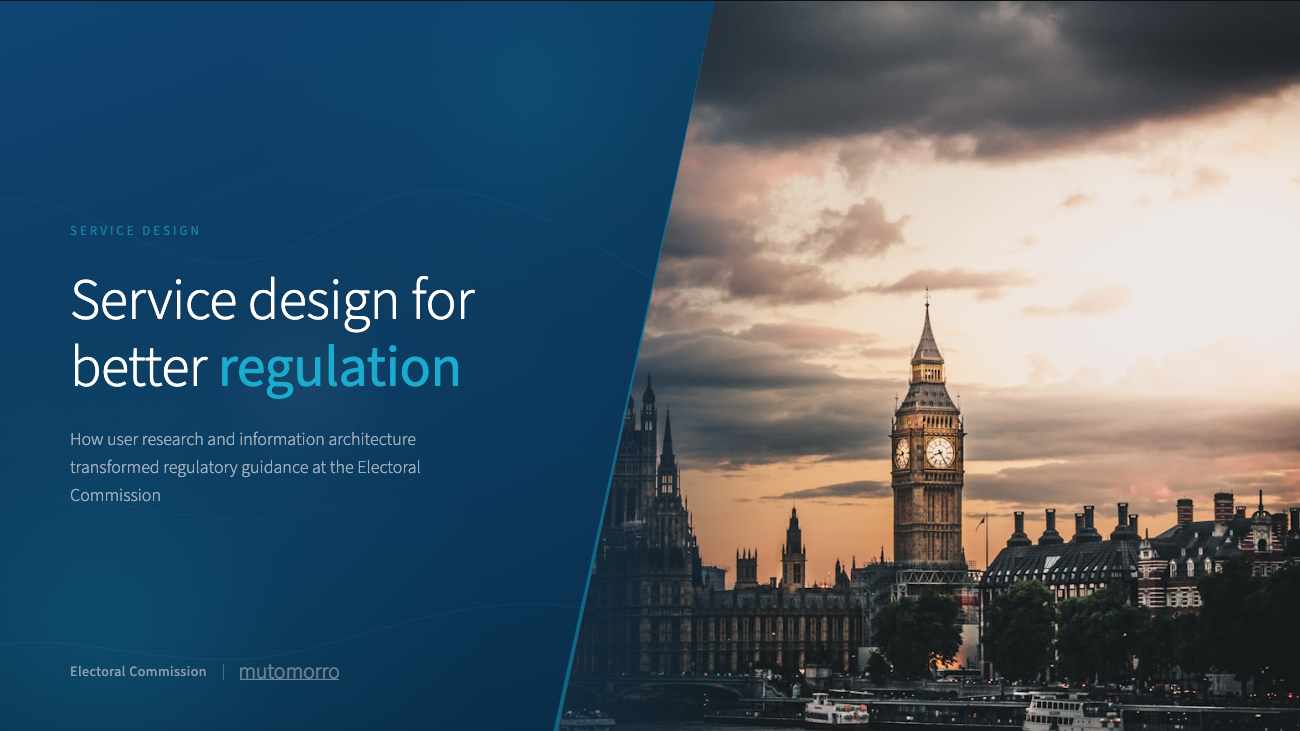
Regulatory guidance redesigned around the people who need it, not the legislation
Complex political finance rules communicated through one-size-fits-all guidance - for an audience ranging from volunteer treasurers running local party branches to professional compliance officers managing millions in campaign spending.
Read case study →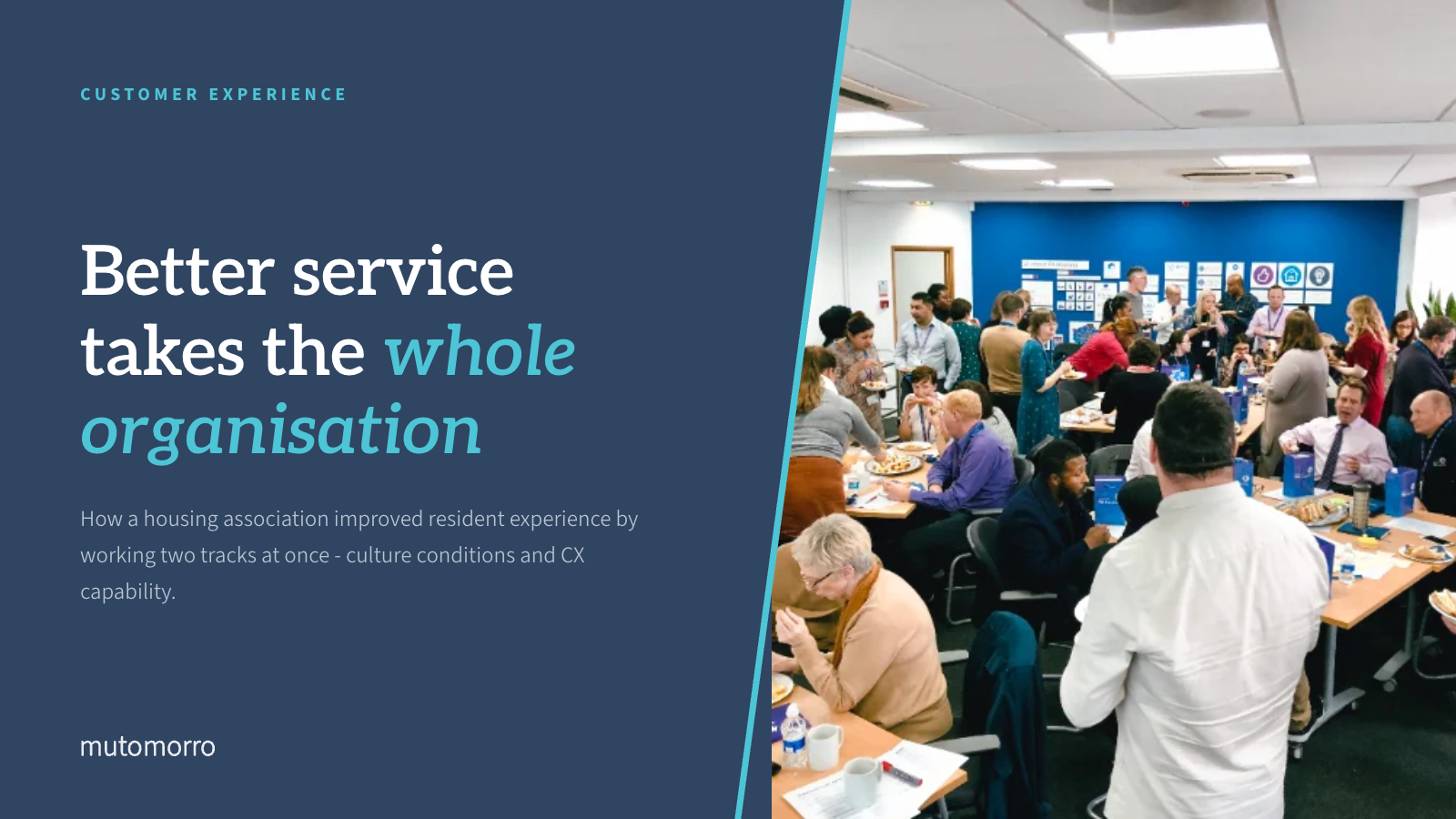
Customer experience shaped by how the whole organisation works, not just the frontline
A housing association with around 9,000 homes had invested in journey mapping, customer profiles and resident research - but the data pointed to something the CX toolkit couldn't fix alone. Culture work without CX capability would produce good intentions and no change. CX capability without the culture shift would produce better-mapped journeys that still fell through the same gaps. They needed both.
Read case study →Touchpoint work only goes so far. We help you understand the experience people have on the outside - and shape the internal conditions that produce it. The connection between the two is where the real leverage is.
Most service design stops at user research and journey maps. We work both sides - designing the service and shaping the organisational conditions that determine whether it actually gets delivered.
A service blueprint is a detailed map of how a service actually works - what the user sees and experiences on the front end, and everything happening behind the scenes to make it possible. It helps organisations redesign services by showing the full picture.
An empathy map is a collaborative visualisation tool that captures what we know about a user's behaviours, thoughts, feelings, and motivations, helping teams develop deeper understanding and more human-centred solutions.
Audience personas are detailed profiles of the people you're trying to reach, built from real research into their needs, behaviours, and motivations. They help organisations design services and communications that actually resonate with the people who matter most.
A problem statement is a clearly written summary of a problem you're facing, expressed in the simplest possible terms. It helps teams align around what they're actually trying to solve before jumping to solutions.