Customer Experience Audit
A read of the journey from the customer's seat - which moments decide how they feel, and where your view and theirs come apart.

Our customer experience audit shows you the journey from the customer's seat - the moments that actually decide how they feel, not the flow you designed on a whiteboard. We look at six things: the journey and its touchpoints, the moments of truth, the frontstage and the backstage behind it, your Voice-of-Customer evidence, the perception gap between your read and theirs, and how consistently the experience holds across channels.
You come away knowing where the experience breaks down and which touchpoint to fix first. Customers meet one organisation, however many channels you run, and how well the organisation works as one is what they end up feeling.
80% of companies believe they deliver a superior experience, yet only 8% of their customers agree (Bain, 2006, 362 firms). That gap is the reason an audit reads the journey from the customer's side, not the org's.
When a customer experience audit helps
An audit earns its place when a specific signal keeps surfacing and you need to see which moment sits underneath it:
The situation | How it helps |
|---|---|
Your scores are steady but growth isn't | Finds which moments of truth set the score, so you work the touchpoint that moves it, not the average. |
Customers churn and you can't see where | Walks the journey stage by stage to locate where people quietly disengage, before the number confirms it. |
The frontline and the dashboard disagree | Reads the backstage behind each touchpoint, so you see why the moment lands the way it does, not just that it does. |
The experience feels different channel to channel | Reads consistency across every channel, so a customer meets one organisation, not several. |
You're redesigning a journey or launching a new one | Gives you a fair read of the current experience to design from, so the redesign starts from reality. |
You've invested in CX and want to know it's landing | Reads the journey against recognised maturity stages, so you see how far the experience has actually matured. |
What we look at
Most organisations come to us with a journey already in mind - the one they designed, or one they're reshaping. We start from the customer's seat and read how that journey actually feels as they move through it. We do that through six lenses, the ones we use to test whether the experience you intend is the experience people meet:

Journey and touchpoints
The path a customer takes stage by stage, and every point where they meet you along it. We map it from the customer's seat, in the order they experience it - which is rarely the order your teams are organised in.
The map puts every touchpoint on one page, owned or unowned, digital or human. Most organisations discover touchpoints they didn't know they had - and those are often the moments quietly setting the customer's impression.

Moments of truth
The few touchpoints that carry disproportionate weight in how the whole experience is judged. Not every step is equal - a customer forgives a slow FAQ page far more readily than a fumbled claim.
We identify yours from what customers say and do, not from assumption - the moments they mention unprompted, the steps where they stall or leave. Knowing which handful matter most tells you where investment moves the whole experience.

Frontstage and backstage
The service blueprint - what the customer sees, and the behind-the-scenes activity that makes each moment land or fail. Drawing the line of visibility is often the first time both halves of the experience appear in one picture.
For each moment of truth we trace what has to happen backstage for the frontstage to work - the systems, handoffs and information behind it. When a moment wobbles, the blueprint shows which backstage link to strengthen, rather than asking more of the people out front.

Voice of the Customer
What your NPS, CSAT and CES signals are telling you, read for the story underneath the number. You almost certainly hold more signal than you're using - most organisations do.
We bring your existing data together with verbatims and complaints, and read them against the journey map. That turns a dashboard you report into a diagnosis you can act on - which moment, which channel, which cause.

The perception gap
The distance between the experience you believe you deliver and the one customers actually report. Almost every organisation believes it delivers a better experience than its customers say it does - which is exactly why it's worth measuring.
We put the two accounts side by side: what your teams believe happens at each stage, and what customers say and do at the same stage. Stage by stage, that shows where to look first - and, just as usefully, where your read of the customer is already spot on.

Channel consistency
Whether the experience holds together across every channel, and the operating model that keeps it coherent. Customers move between web, phone and person freely, and they expect the organisation to keep up.
We follow real journeys as they cross channels - whether context travels, whether the tone holds, whether the customer has to repeat themselves. Each crossing that frays points to a specific seam in ownership or handover, which gives you a short, concrete fix list.
The six lenses stay constant; how we read them, we shape around you - your journey, your channels, your segments and your operating model - so the picture fits your organisation, not a template.

Why these six lenses
We read the journey rather than the org chart because the journey is what the customer actually lives - the sequence of touchpoints they move through, whichever team owns each one. Moments of truth are where we concentrate: in most journeys a handful of touchpoints carry most of the weight, and reading them closely tells you more than scoring every step evenly.
Frontstage and backstage is the service-blueprint discipline - drawing the line of visibility, then looking behind it. A moment fails frontstage far more often because of something backstage than because of the person facing the customer, so we read both sides of the line together. Voice of the Customer is where the metric stack comes in: NPS, CSAT and CES each measure something different, and read together they point to which moment set the score.
The perception gap is the master signal. It's the distance between what the organisation believes it delivers and what the customer experiences, and it's usually where the most useful findings sit. Channel consistency closes the loop: a customer who meets you across web, phone and store should meet one organisation, and where they don't, the operating model behind the channels is usually why.
How it works
We read the journey outside-in, from the customer's seat, through more than one lens so the findings hold up:
- We walk it - we take the journey the way a customer does, touchpoint by touchpoint, and watch how each moment actually plays out rather than how the process says it should.
- We measure it - we read your Voice-of-Customer evidence across the metric stack - NPS, CSAT, CES - and show you where the signal differs by segment and by stage, not just the headline score. The variation is usually where the story is.
- We listen - we interview a cross-section of the frontline running the touchpoints, not only the people who designed the journey. We look at real, recent interactions: what actually happened at each moment, and how that squares with what the journey intended.
- We notice the gap - we build the moment-of-truth map and the service blueprint, then read the perception gap between what customers report and what the organisation believes - drawing on twenty years of organisational work to bring you the moments that matter.
The thinking behind the method
No single reading captures an experience on its own, so we take three and cross them. A metric tells you how customers score a moment, but not why - and an average hides how differently segments experience the same journey. Interviews with the frontline reach the why, but only from inside the service. Walking the journey shows you what a customer actually meets, rather than what the blueprint promises. Read together they triangulate: a finding has to show up in more than one before we treat it as real.
We read the journey outside-in on purpose. The organisation sees its touchpoints from the backstage - the systems, handoffs and teams that produce each moment - and that view is often the least able to feel what the customer feels at the frontstage. Reading from the customer's seat, and naming the distance between the two, is frequently the most useful thing we find.
Rather than asking people to rate the journey in the abstract, we anchor on real, recent interactions - what actually happened at a given touchpoint, and how it squares with what the experience intended. It's close to the critical-incident approach, and it surfaces the lived experience far better than a rating scale.
And we show you the spread, not just the average. An experience isn't one number: two journeys with the same NPS can feel completely different depending on segment, stage and channel. Where the signal diverges is where the real picture lives, and where the moment worth fixing usually hides.
What you get
A working session, not a report filed and forgotten. We walk you through:

- A moment-of-truth map of your journey - the touchpoints that carry the weight, made visible.
- The moments worth protecting - where the experience already lands, not just where it drops.
- The perception gap made visible - where what you believe you deliver and what customers meet come apart, positioned against recognised CX maturity stages.
- The handful of touchpoints that would make the most difference, and the backstage change behind each one.
Where two things are both true and in tension - "the journey scores well" and "customers still leave at this moment" - we show you both. That's usually where the useful conversation starts.
How we hand it back - and what happens next
The audit ends in a working session, not a document dropped in your inbox. We take you through the moment-of-truth map and the service blueprint in person, so the findings land as something you can act on rather than a deck read once and filed.
The sharpest findings often come as a three-way split: what customers say in the metrics, what they do as they move through the journey, and what the organisation believes it delivers. These three rarely agree, and we name where they part rather than smoothing them into one tidy message - because the gap between them is usually the thing worth working on.
From there it's your call. Sometimes the map is enough and you carry it forward yourselves. Sometimes you want us alongside for the redesign that follows - a focused piece of work on a single moment, or a fuller experience programme. And if what you need turns out to be lighter than you feared, we'll say so.
Focused now, or continuous over time
This is a focused, one-off deep read of your customer experience as it is right now. If what you want is the whole organisation tracked continuously - experience as one thread among eight - that's States of Vitality, our organisational-health platform. Different job: depth on the journey now, versus the wider picture over time.
Common questions
How is this different from running an NPS survey?
A survey gives you a score. An audit finds which moments set that score and why. We read the metric stack alongside the journey itself - walking the touchpoints, mapping the frontstage and backstage, and reading the gap between what customers report and what you believe - so you come away knowing which moment to change, not just where the number sits.
How is this different from a customer satisfaction survey?
A satisfaction survey tells you how customers feel and gives you scores. This tells you why, and what to do about it. We read more than the numbers - the journey walked from the customer's seat, the frontline running the touchpoints, and the perception gap between your view and theirs - and go deep on the experience specifically.
Who do you involve?
The frontline who run the touchpoints, not only the people who designed the journey - and your customers' own signals through the Voice-of-Customer evidence. The people who built a journey are often the least able to feel it from the outside, so the customer's read, and the gaps between what each group sees, are where the value is.
How long does it take?
It's usually weeks rather than months, but it depends on how many touchpoints and channels the journey spans and how complex the picture is. We build each audit around your journey, and agree the timeline when we scope it.
How much does it cost?
There's no standard price - we build each audit around you, so the cost reflects the size of the journey, the number of channels and segments, and the depth you need. We scope it with you and give you a clear figure before you commit.
Is it confidential?
Yes. Customer signals are read in aggregate, interviews with the frontline are confidential, and we report in patterns and moments, never in a way that identifies an individual.
Want to see the journey the way your customers do? Talk to us about a customer experience audit
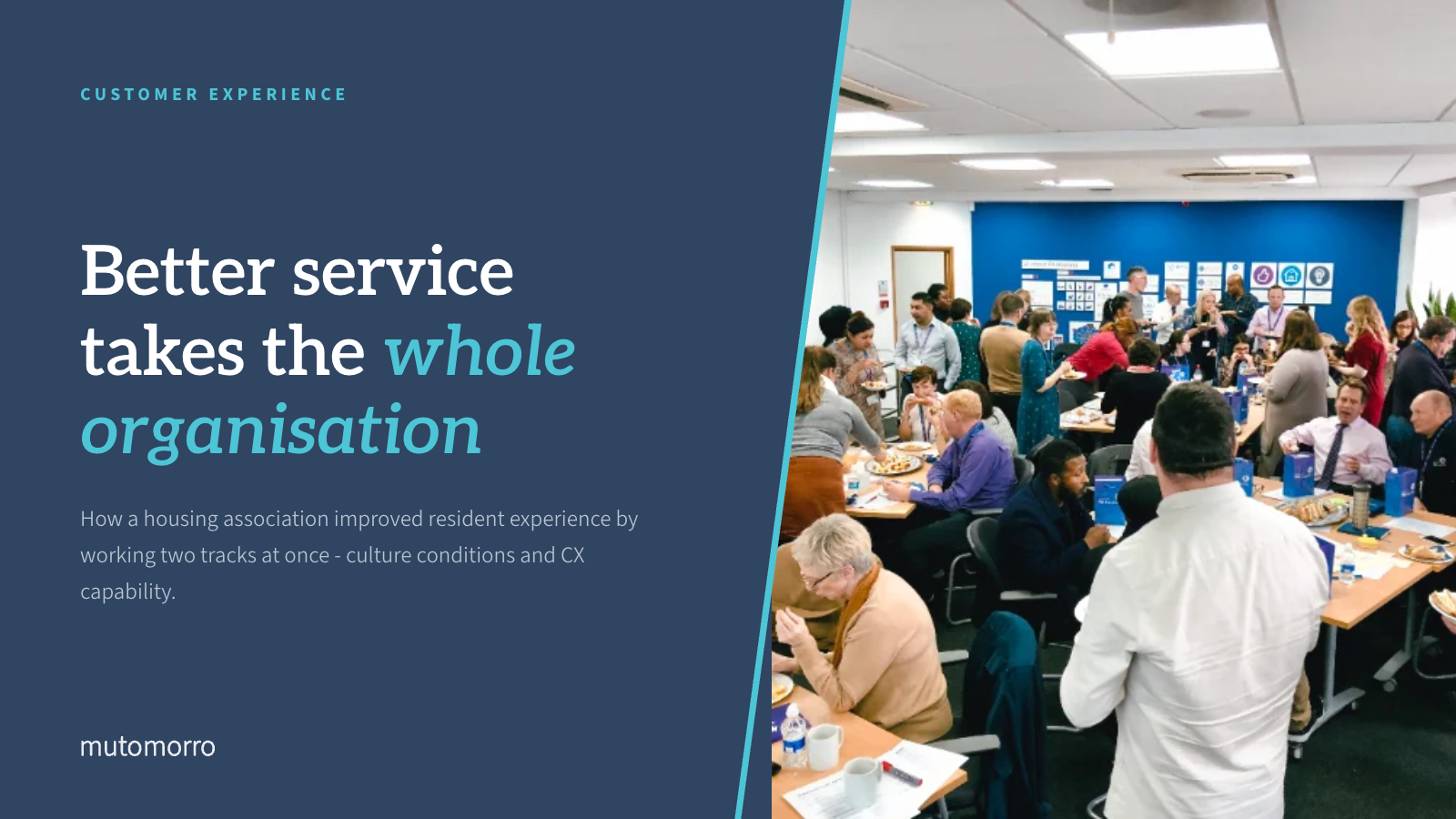
Customer experience shaped by how the whole organisation works, not just the frontline
A housing association with around 9,000 homes had invested in journey mapping, customer profiles and resident research - but the data pointed to something the CX toolkit couldn't fix alone. Culture work without CX capability would produce good intentions and no change. CX capability without the culture shift would produce better-mapped journeys that still fell through the same gaps. They needed both.
Read case study →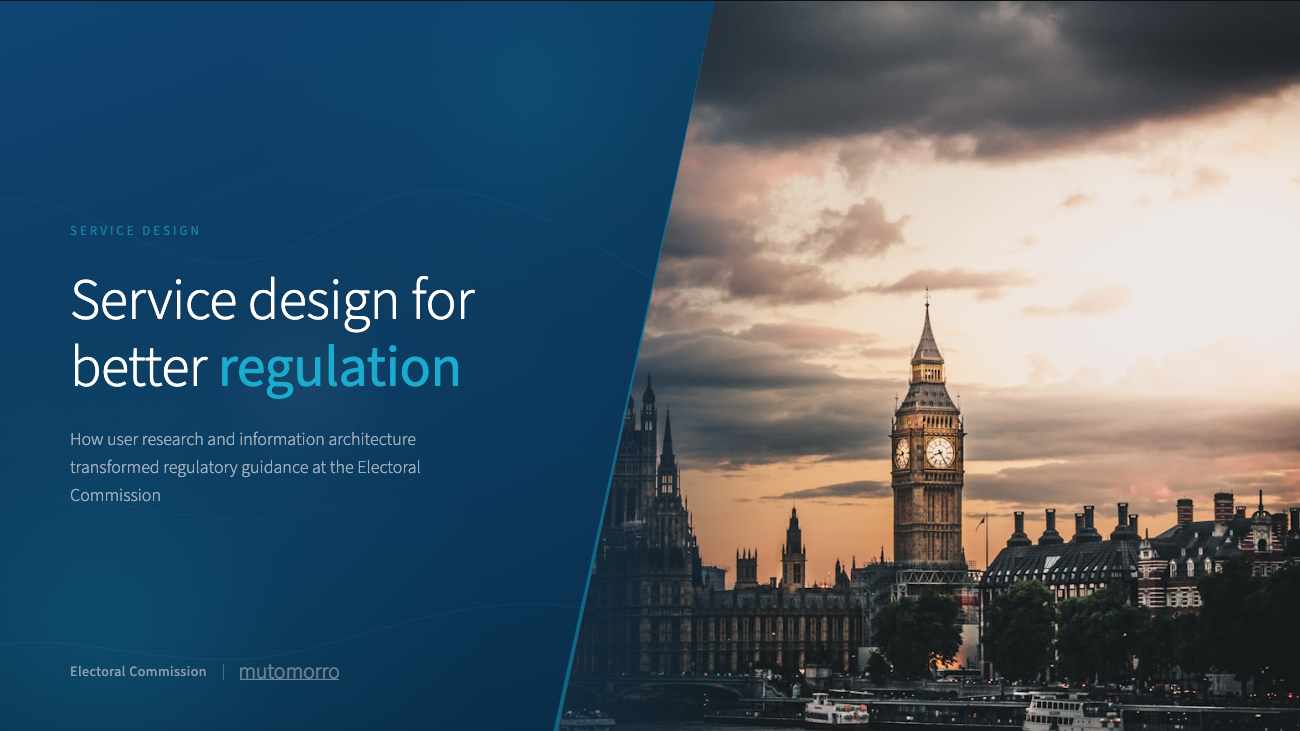
Regulatory guidance redesigned around the people who need it, not the legislation
Complex political finance rules communicated through one-size-fits-all guidance - for an audience ranging from volunteer treasurers running local party branches to professional compliance officers managing millions in campaign spending.
Read case study →Touchpoint work only goes so far. We help you understand the experience people have on the outside - and shape the internal conditions that produce it. The connection between the two is where the real leverage is.
Most service design stops at user research and journey maps. We work both sides - designing the service and shaping the organisational conditions that determine whether it actually gets delivered.
Most operational improvement focuses on the visible system - processes, workflows, tools. We work with the conditions underneath that determine whether it functions well.
Contextual inquiry is a user research method where you observe and interview people in their actual work environment while they perform real tasks. It uncovers insights about real behaviour and needs that surveys and interviews in meeting rooms simply can't reach.
An empathy map is a collaborative visualisation tool that captures what we know about a user's behaviours, thoughts, feelings, and motivations, helping teams develop deeper understanding and more human-centred solutions.
A Gemba Walk is a Lean practice where leaders go to the place where work actually happens to observe, listen, and understand. It bridges the gap between how leaders think work gets done and how it really gets done.
A service blueprint is a detailed map of how a service actually works - what the user sees and experiences on the front end, and everything happening behind the scenes to make it possible. It helps organisations redesign services by showing the full picture.
Audience personas are detailed profiles of the people you're trying to reach, built from real research into their needs, behaviours, and motivations. They help organisations design services and communications that actually resonate with the people who matter most.
Every organisation has friction - the unnecessary effort, the needless complexity, the things that make simple work harder than it should be. This article explores how to find it, understand where it comes from, and reduce it without creating new problems in the process.
The skills that make someone good at service design - empathy, experience mapping, designing conditions - are the same skills leaders need to create environments where people do their best work. What changes when that lens runs all the way through the organisation.