TESI model - Free Template
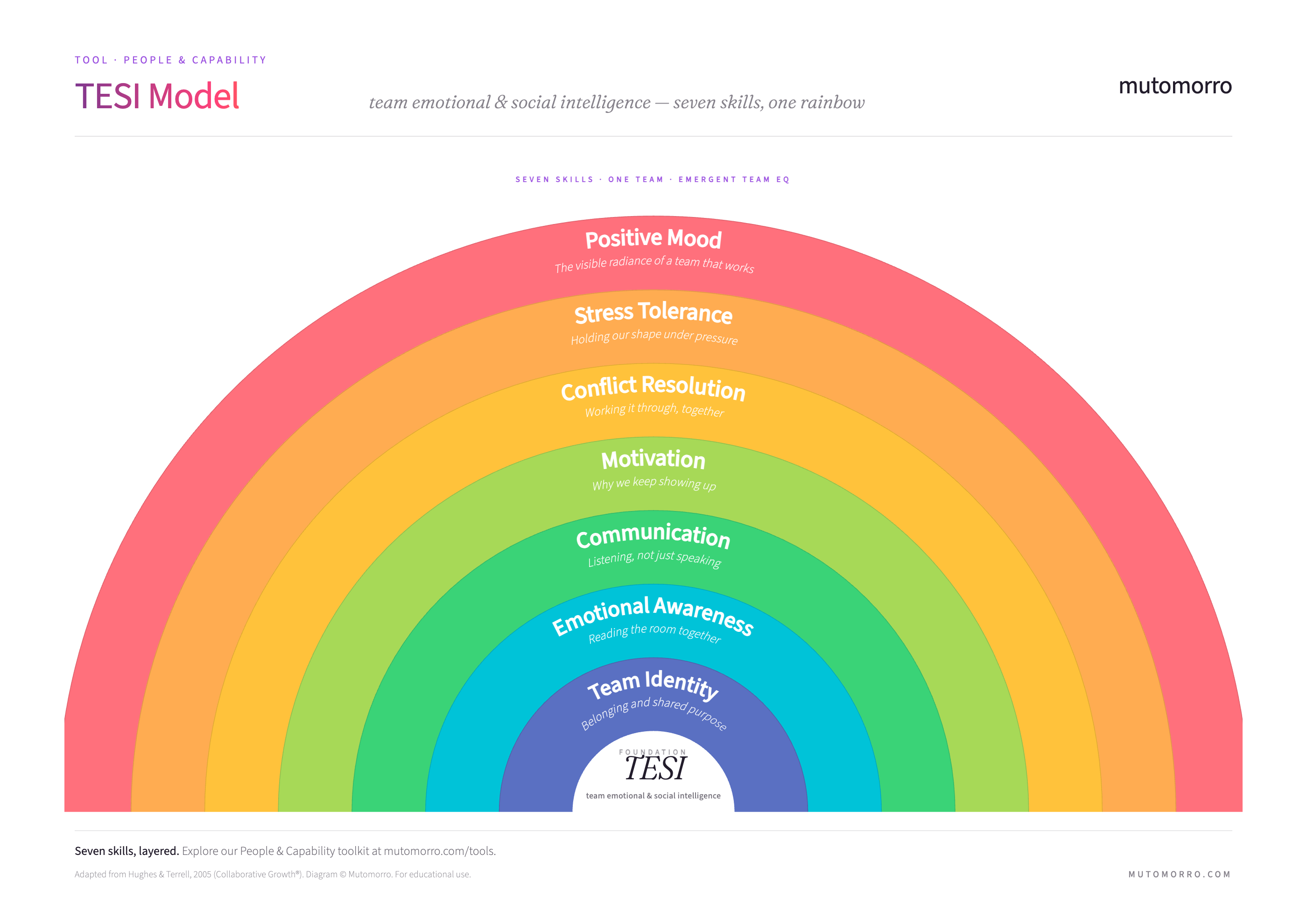
A three-page PDF toolkit for understanding and developing your team's emotional and social intelligence. Includes a visual overview of the seven TESI skills as layered capabilities, a summary card with practical guidance and common pitfalls, and a guide to connecting the framework with broader team development work.
Based on our full guide to TESI model.
Get this PDF template
Fill in your details and download the PDF straight away.
What's in this TESI model template
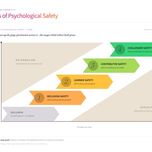
The hero diagram shows the seven TESI skills as a rainbow of layered capabilities - from team identity at the foundational core through to positive mood as the visible quality that emerges when everything beneath it is working.
The summary card gives you the essentials at a glance: what each skill means in practice, four tips for applying the model with your team, four pitfalls to watch for, and connections to related frameworks. Use it as a quick reference when facilitating team conversations or planning development work.
The third page maps the TESI model to Mutomorro's Change and Development services, showing how team emotional intelligence connects to broader organisational development. It includes entry points for coaching, sessions, and training.
Tips for using it
- Start with identity. Before assessing all seven skills, check the foundation. Ask the team: do we have a clear, shared sense of what we're here to do together? If the answer is uncertain, that's your starting point - everything else builds from there.
- Read inward, not outward. When a problem shows up in an outer layer - poor conflict resolution, low motivation, fragile stress tolerance - resist the urge to fix it at the surface. Look to the layers beneath. The root cause is usually one or two levels deeper than where the symptom appears.
- Make it a regular lens, not a one-off event. Team emotional intelligence shifts with changes in membership, workload, and context. A monthly five-minute check-in - "which layer feels strong right now, and which feels stretched?" - is more useful than an annual assessment.
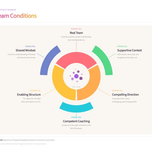
- Pair it with structural thinking. Emotional intelligence matters, but it doesn't overcome poor team design or impossible workloads. Use the TESI model alongside 6 Team Conditions or Project Aristotle to address both the emotional and structural sides of team effectiveness.
Capacity Building
When a team's emotional dynamics are getting in the way of its performance, the answer is rarely a single workshop. Mutomorro's capacity building work helps intact teams develop the collective emotional and social intelligence that turns a group of talented individuals into a team that works - and keeps working when conditions get difficult.
Change Management Training
A housing association in the middle of a significant transformation, with more change on the horizon than its managers had the tools or training to lead.
Read the case study →