Building capacity that stays after we've gone
Capacity building in practice
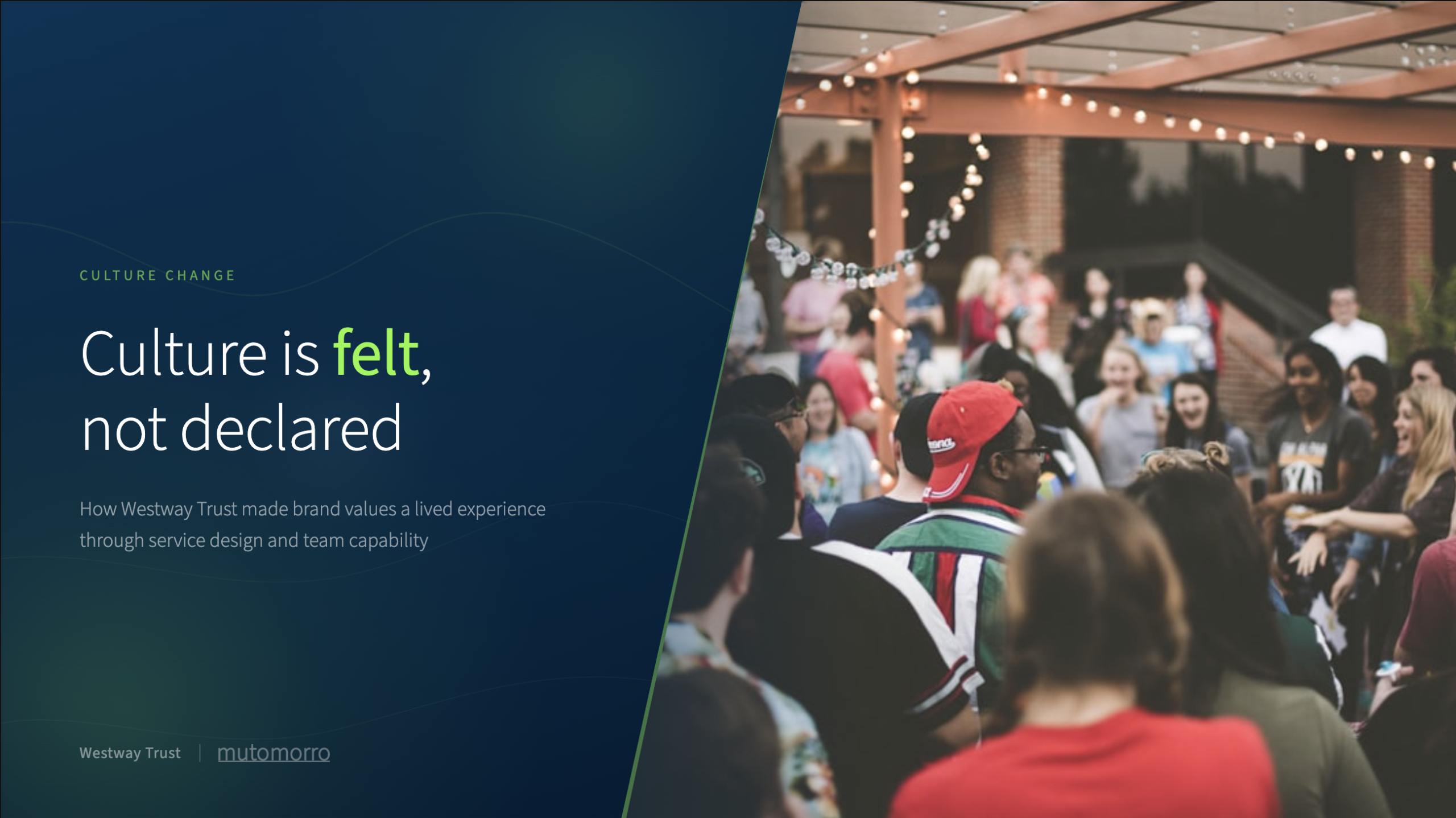
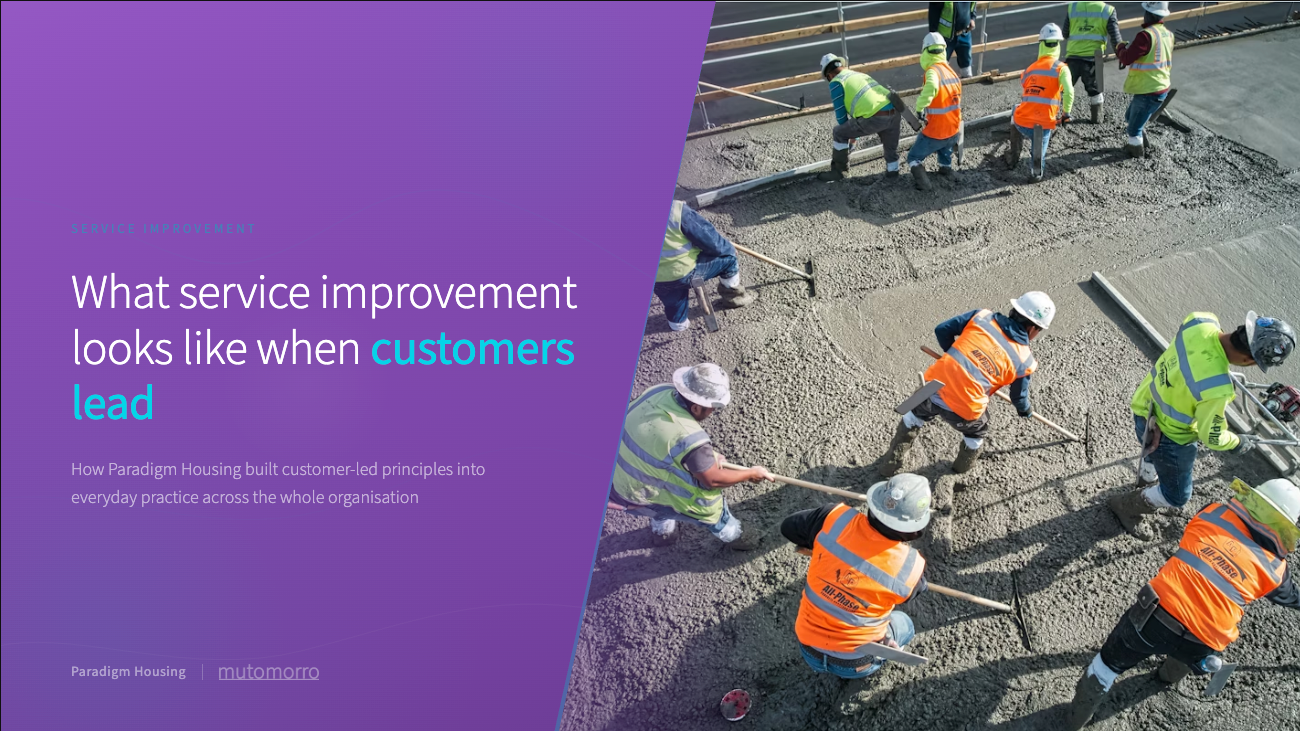
No two organisations face the same capacity building challenge. These examples draw on experience helping leaders build capability that holds across the whole organisation, not in isolated pockets.

Recognise your situation? Let’s talk about what this could look like for you.
A place to begin
Capacity grows through the work, not beside it. The first step is finding where it's most ready to grow.









































How we build organisational capability
Most development goes into individuals - send a few people on a course, build up your leaders, hope it spreads. It rarely does. We work a level up: the capability the organisation itself needs to do what it's set out to do, built so it sticks rather than walking out the door with the people who hold it.
Our work runs through four stages - seeing where capability is thin, designing how to build it, building it where the work actually happens, and getting to the point where you grow your own without us. They're not rigid. Some organisations need all four; others just need help where capability has stalled. We start wherever you are.
See where capability is thin
Before you pour money into more training, it's worth knowing what capability you're actually short of. We run a capability assessment against what you're trying to do - not a generic skills audit, but a read on where the organisation can't yet deliver on its own ambitions. And we're careful to tell a genuine skill gap apart from a system that won't let good people perform, because the two need very different fixes.
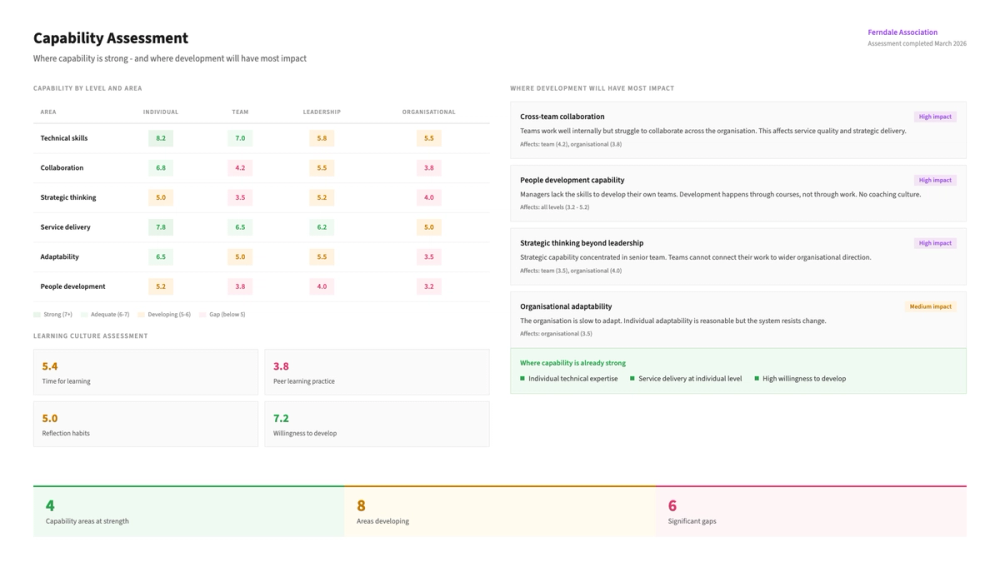
- A clear read on the capability your plans actually demand
- Where the organisation falls short of what it's reaching for
- Telling real skill gaps apart from system constraints
- Looking across individuals, teams and leadership together
What you get
An honest picture of where capability is thin - and whether the fix is building skill or removing what's blocking it.
Design how to build it
A long training menu builds plenty that nobody needed. So we build you a capability roadmap aimed squarely at the capabilities that matter to where you're headed - and nothing that doesn't. We work out what to build at individual, team and leadership level, then sequence it: what has to come first, what it unlocks, and where to start so you feel the difference early rather than waiting a year for it to land.
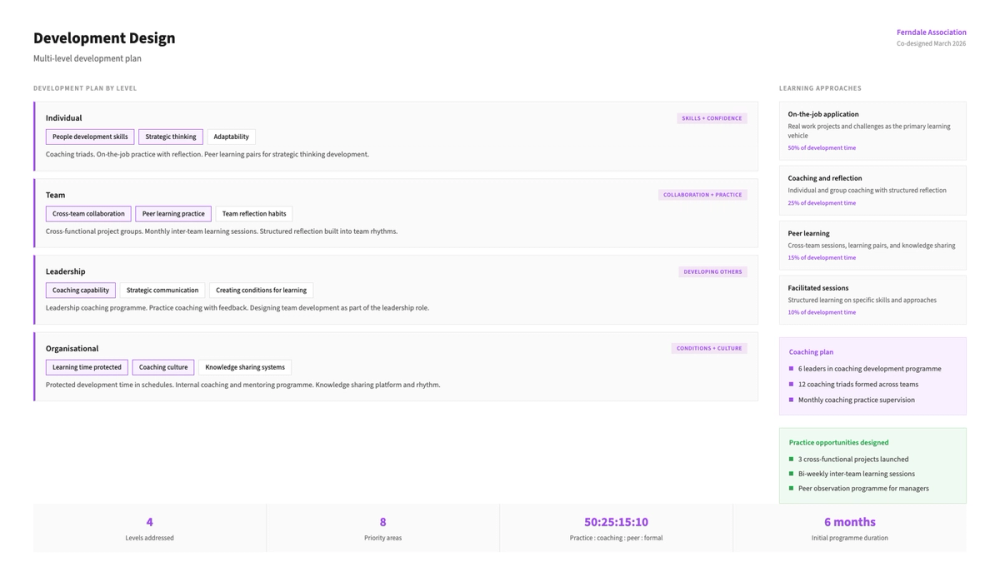
- A plan targeted at the capabilities that actually matter
- The right mix across individual, team and leadership
- A clear order - what to build first, what it unlocks
- Early wins, so progress shows before the long haul
What you get
A capacity development plan that builds what you need in the order that makes sense - not a wish-list of courses.
Build it where the work happens
Capability built in a classroom tends to stay in the classroom. So we do most of building organisational capability inside the real work - live projects, real decisions, actual problems your people are already wrestling with. We set up experiences that build genuine ability rather than just awareness, and we keep checking it transfers: that what someone can do in a session, they can still do back at their desk under pressure.
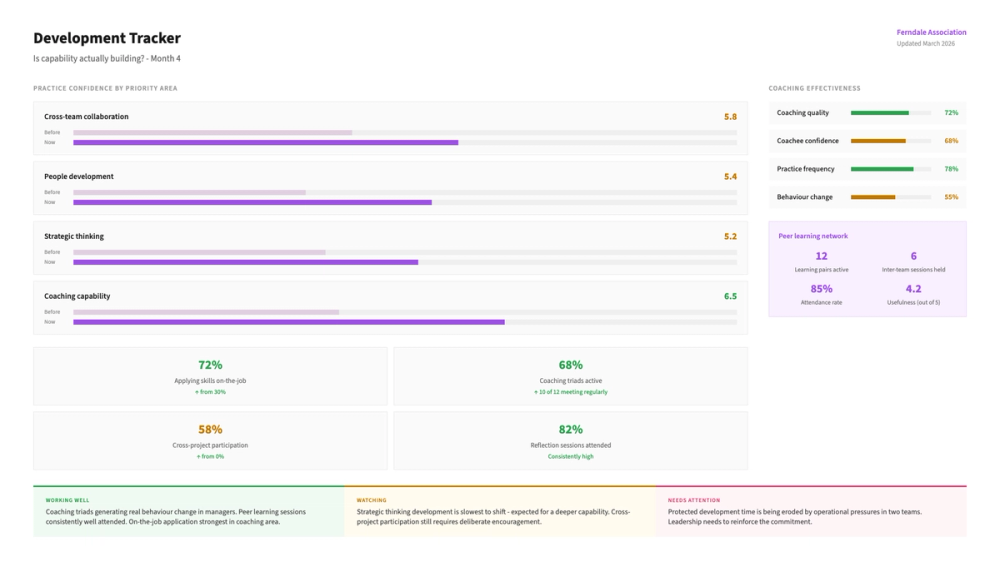
- Developing capability through real work, not abstract training
- Experiences that build genuine ability, not just awareness
- Coaching and support at the point the work happens
- Checking it transfers to the job, not just the room
What you get
Capability that holds up in the actual work - because that's where it was built, not where it was talked about.
Make it self-sustaining
The point isn't to build one round of capability and leave - it's to leave you growing your own. So we hand over the capability to develop capability: the people who can spot what's needed next, run the development themselves, and pass on what they know without us in the loop. Done well, it compounds - each cohort grows the next, and capability keeps building on itself instead of depending on the next external programme.
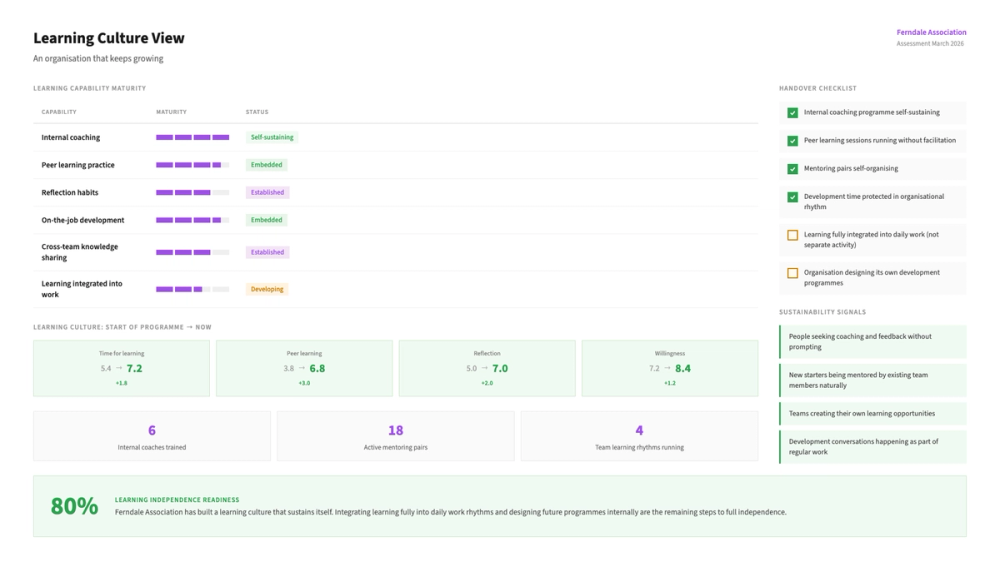
- Internal people who can develop capability themselves
- The habits to spot what's needed next and act on it
- Knowledge that passes on without depending on us
- Growth that compounds, cohort to cohort
What you get
Self-sustaining organisational capacity - an organisation that keeps growing its own capability long after we've gone.
Capability that compounds, because the conditions support it
Our capacity building consultancy works with the conditions that decide whether capability grows or fades - not another training programme on top, but a change to how learning, knowledge and development flow through the organisation.
The conditions determine whether capability grows or fades
Organisations invest heavily in development and still find capability does not stick - because the issue is not the training, it is the conditions it returns to.
We work with the patterns that enable capability to regenerate
We design learning into the rhythm of work, build managers as coaches, and create the channels for knowledge to flow - so capable people develop other capable people.
The organisation that grows itself
When the conditions are right, development becomes a property of how the organisation works - knowledge spreads through practice, and the consultancy that helped becomes unnecessary. That is the goal.
Capacity is grown, not installed
Our approach to capacity building grows from something broader: a conviction that organisations work more like living systems than machines. Capacity isn't something you install and switch on. It grows - in the right conditions, through the work itself - which is why the lasting kind tends to come from cultivating it rather than rolling it out.
It's a way of seeing, and it shapes how we approach capacity building - not as an isolated fix, but as something shaped by the whole organisation, and shaping it in turn. Our philosophy page is where the fuller picture comes together.
75%
of organisations struggle to build high-performance cultures
McKinsey State of Orgs 2026
90%
of leaders say capability building is something their organisation needs to act on now
McKinsey
70-90%
of training content is forgotten within a month if not immediately applied
Learning retention research
25%
workforce involvement is the tipping point where adoption accelerates and impact multiplies
McKinsey
Common questions about capacity building
Training develops individuals. Capability building develops the organisation's collective ability to do what it needs to do - and keep getting better at it. Training is one ingredient, but without the right conditions - management support, opportunities to practice, knowledge-sharing structures, autonomy to apply learning - even excellent training doesn't translate into organisational capability. We work at the system level: developing people AND creating the conditions for that development to compound.
Explore capacity building
Articles


Want to explore how this could work for your organisation?
Every organisation is different, so we always start with a conversation. No pitch, no obligation — just an honest discussion about where you are and whether our approach feels right.